Brake Lights a Tag Office Will Look For
One of the most frustrating parts of preparing your side-by-side or UTV for Georgia's new MPOHV registration is trying to decipher all the little requirements that might seem like minor details until they become a big roadblock at the county tag office. It can feel like a scavenger hunt just to figure out what they’ll actually check on your machine. This guide is here to clarify one of those often-overlooked but absolutely critical items: brake lights. We’ll walk through exactly what a Georgia tag office looks for, why it matters, and how to make sure your machine passes muster so you don't get turned away after waiting in line.
Why Your Side-by-Side Needs Working Brake Lights for Georgia Registration
When you decide to register your multipurpose off-highway vehicle (MPOHV) in Georgia, you're essentially telling the state that you intend to operate it on approved county roads. This means your machine has to meet certain safety standards that mirror, in part, those of other vehicles sharing the road. Brake lights are a fundamental component of this safety checklist. They're not just a suggestion; they're a non-negotiable requirement to help ensure you can communicate your intentions to other drivers, whether they're in a pickup truck, a sedan, or another UTV.
The essence of the MPOHV registration program is to bring these vehicles into a more regulated framework for limited road use. Without proper signaling, you become a hazard. Imagine a scenario where you're cruising down a dusty county road, approaching an intersection, and you need to slow down or stop quickly. If your brake lights aren't illuminating clearly, the driver behind you—who might not be expecting an off-highway vehicle on that road to begin with—won't have crucial seconds to react. This is why the state, and by extension, your local tag office, takes these lights seriously. It's all part of the overarching idea behind [Georgia MPOHV Registration Explained].
More Than Just "Having" Brake Lights
It's one thing for your side-by-side to roll off the factory floor with brake lights, and another entirely for them to be in proper working order when you pull up for your inspection. Many folks assume that because their machine came with lights, they're good to go. However, time, trail dust, mud, water crossings, and even just sitting unused can take a toll on electrical components. You might have a burned-out bulb on one side, a corroded connection causing intermittent failure, or lenses so caked with grime they barely glow.
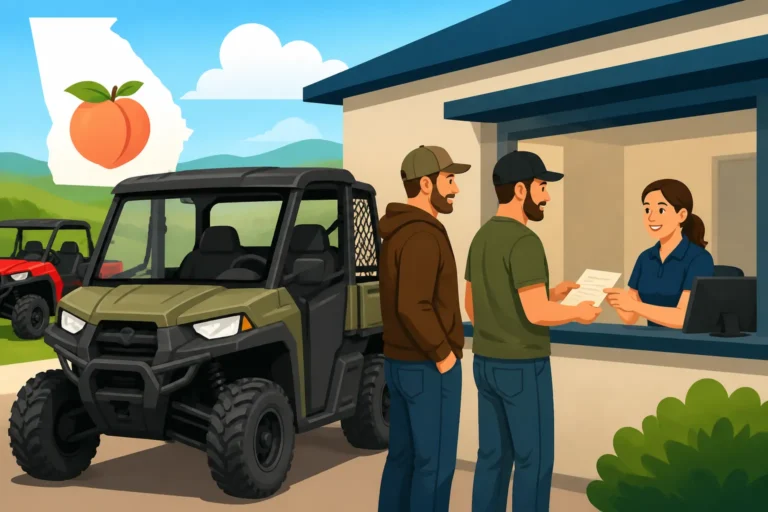
Consider the frustration: you’ve gone through the effort of gathering all your documents, filled out the necessary forms like [Georgia Form MV-OHV and What It Asks], and spent time ensuring your machine meets the size and weight requirements like [Georgia's 80-Inch Width Limit for Registration] or [Georgia's 4,000-Pound Gross Weight Ceiling]. You arrive at the county tag office, eager to get your new MPOHV plate. Then, during the quick visual inspection, the staff member asks you to press the brake pedal, and only one light comes on, or worse, none at all. Suddenly, your trip is wasted, and you're sent home to fix a seemingly small issue. This exact scenario is why pre-checking your machine thoroughly is so vital.
What Georgia Tag Office Staff Look For During a Brake Light Inspection
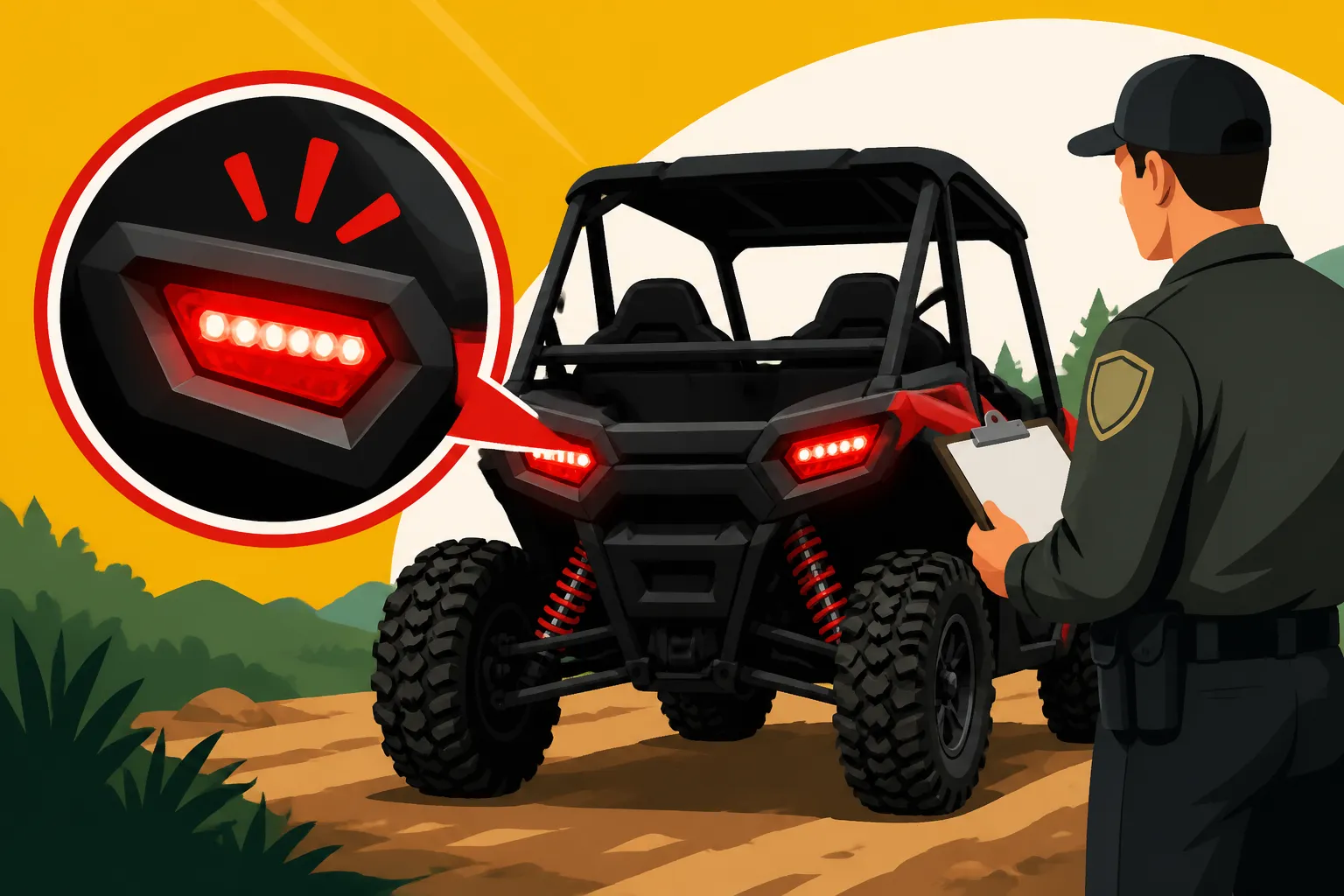
When you visit your [Georgia County Tag Office Steps for an MPOHV] for registration, especially if your machine requires a [Georgia Law Enforcement Inspection for a Branded Plate], the inspector isn't just glancing at your vehicle. They're performing a functional check of specific safety equipment. For brake lights, this isn't a deep dive into wiring diagrams, but rather a straightforward verification of operation and visibility. They want to see that when you apply the brakes, the lights at the rear of your machine illuminate brightly and consistently.
The inspector is essentially looking for compliance with basic road safety standards. This means both your left and right brake lights need to function in unison, providing a clear signal to anyone behind you. They'll also be checking for the correct color – red – and that the lights aren't obscured by mud, aftermarket accessories, or damage. This check is as fundamental as ensuring you have [Georgia Requires a Steering Wheel, Not Handlebars] or [Georgia Requires Seat Belts on a Registered Machine] if your machine has them. It's all part of making sure your MPOHV is as safe as possible for the limited road access that [What Registration Buys You on a County Road] provides.
Functionality Check: Stepping on the Brake
This is where the rubber meets the road, quite literally. The inspector will ask you to start your machine and apply the brake pedal. They'll be standing behind the vehicle, watching closely. Both brake lights need to illuminate clearly and simultaneously. If one light flickers, is significantly dimmer than the other, or fails to come on at all, it's an immediate fail for that part of the inspection.
Common culprits for brake light malfunctions can include a burnt-out bulb, a blown fuse, or a faulty brake light switch. Sometimes, it’s even simpler: loose wiring connections that have vibrated apart over rough trails. If your machine has been sitting for an extended period, especially in damp conditions, corrosion on bulb contacts or within electrical connectors can lead to intermittent or complete failure. It's a quick test for the inspector, but a crucial one for your registration success.
Visibility and Placement Considerations
Beyond just turning on, your brake lights must be clearly visible. This means they should be positioned at the rear of your MPOHV and shouldn't be covered or obstructed by anything. If you've added a large cargo box, a spare tire carrier, or a custom rear bumper that effectively hides your factory brake lights, you might run into issues. In such cases, you might need to install auxiliary brake lights that are mounted in a visible position.
The inspector isn't just checking if the lights work, but if they effectively serve their purpose of warning others. Consider the overall condition of the lenses as well. Cracked, heavily scratched, or sun-faded lenses can significantly reduce the brightness and effectiveness of your brake lights, even if the bulb inside is perfectly fine. The goal is to ensure maximum visibility, a principle that also applies to other safety gear like [Rearview Mirrors on the Required List] and [Headlights, Brake Lights and Mirrors on the Checklist].
Ensuring Your Brake Lights Pass the Test
Nobody wants to make a second trip to the tag office, especially not for something as seemingly minor as a brake light. A little proactive checking on your part can save you a lot of time and frustration. Before you even load your side-by-side onto the trailer, dedicate a few minutes to inspect its lighting system, including the brake lights. Think of it as your own personal [Georgia Side-by-Side Registration Checklist].
This preventative maintenance is part of responsible MPOHV ownership, especially if you plan to take advantage of [Georgia MPOHV Road Rules: County Roads Only]. It’s not just about passing the inspection; it’s about establishing good habits for safety whenever your machine might be near other traffic.
Pre-Inspection Checklist for Brake Lights
Before you head out, follow these simple steps to ensure your brake lights are ready:
- Start Your Machine: Turn the ignition to the "on" position or start the engine. This ensures the electrical system has power, as some brake lights only activate with the engine running.
- Get a Helper (or Use a Mirror): Ask a friend or family member to stand behind your machine while you apply the brakes. If you're alone, you can back your machine up close to a garage door or a reflective surface and watch the reflection as you press the pedal.
- Press the Brake Pedal Firmly: Apply steady pressure to the brake pedal.
- Check Both Lights: Verify that both the left and right brake lights illuminate. They should come on strongly and stay lit as long as the pedal is depressed.
- Assess Brightness and Color: Both lights should be consistently bright and clearly red. If one appears dim or flickers, you might have an issue.
- Inspect Lenses: Look for cracks, heavy scratches, or excessive dirt and mud on the brake light lenses. Clean them thoroughly with soap and water if they're dirty.
- Check for Obstructions: Make sure nothing on the rear of your machine is blocking the view of the lights.
This quick routine can pinpoint any issues before they become a problem at the county tag office.
Addressing Common Brake Light Issues
If your pre-inspection reveals a problem, don't panic. Many brake light issues are relatively simple to fix for the average owner.
- Burnt-Out Bulb: This is the most common culprit. Check your owner's manual for the correct bulb type and how to access and replace it. It's often a simple twist or clip.
- Blown Fuse: Your machine will have a fuse box, usually under the hood, under the seat, or in the dash. Consult your manual to locate the fuse for your brake lights and check if it's blown (the wire inside will be broken). Replace it with a fuse of the exact same amperage rating.
- Faulty Brake Light Switch: The switch is usually located near the brake pedal or on the master cylinder. When you press the pedal, it completes the circuit to turn on the lights. If the switch is faulty, the lights won't activate. You can often test these with a multimeter or by bypassing them temporarily (if you know how) to see if the lights then work. This might be a job for a mechanic if you're not comfortable with electrical work.
- Corroded Connections/Loose Wires: Over time, especially with exposure to the elements, electrical connections can corrode or wires can come loose. Carefully inspect the wiring leading to your brake lights. Disconnect any visible connectors, clean them with electrical contact cleaner, and ensure they are securely reconnected.
If you've tried these basic troubleshooting steps and your brake lights still aren't functioning correctly, it might be time to take your machine to a qualified mechanic or an ATV/UTV service center. Sometimes, issues like a [T-22B and When You Need It] inspection require a professional's stamp of approval, and while brake lights are typically a simpler fix, persistent electrical issues can be tricky.
The Bigger Picture: Brake Lights and Your Safety on Georgia Roads
While the immediate goal of checking your brake lights is to pass the MPOHV registration inspection, it’s vital to remember that these requirements exist for a much larger, more significant reason: your safety and the safety of everyone else on the road. The moments you spend ensuring your lights work correctly are investments in avoiding potential accidents and making your rides on approved county roads as secure as possible.
The [Voluntary Registration and Why Anyone Bothers] conversation often comes back to this point – if you're going to use public roads, even limited ones, your machine needs to be equipped for it. A non-functioning brake light isn't just an inconvenience at the tag office; it's a silent hazard waiting to happen once you’re out there.
Beyond Registration: Why Functioning Lights Matter on the Road
Imagine you’re out on a beautiful Saturday afternoon, enjoying a ride on a designated county road. The road is clear, but as you round a bend, you suddenly encounter a family car pulling out of a driveway. You hit your brakes. Those red lights flaring up are the primary visual cue to the driver behind you that you’re slowing down dramatically. If they don’t see them, they might not react in time, leading to a rear-end collision.
This scenario isn't just hypothetical; it's a very real danger that proper brake lights mitigate. On rural Georgia county roads, speeds can vary, and other drivers might not be as accustomed to seeing MPOHVs. Clear, bright brake lights provide critical communication, reducing the risk of accidents and ensuring a safer environment for all road users. This is particularly true if you're riding after dusk or in low visibility conditions, even if you are only permitted to ride during specific hours.
Integration with Other Required Safety Equipment
Brake lights are part of a larger system of safety equipment that Georgia requires for MPOHV registration. It's not just about one light; it's about how all these components work together to make your machine visible and predictable. Alongside your brake lights, you'll also need working headlights, taillights, and [Rearview Mirrors on the Required List] so you can see what’s behind you while others can see what you’re doing in front of them. Many machines also come with [Factory Seat Belts and the Eligibility Check], which are another critical safety component.
This holistic approach to safety ensures that if you're going to operate your side-by-side or UTV on public thoroughfares, even just county roads, you're doing so with the fundamental tools to protect yourself and others. It’s about building confidence – both for you as the operator and for law enforcement or other drivers who encounter you. When all these pieces of [Georgia Equipment a Road Machine Must Carry] are in place and functioning, you contribute to a safer environment for everyone.
Here's a quick comparison of what properly functioning brake lights mean for your MPOHV registration and road safety:
| Feature | Working Brake Lights | Faulty Brake Lights |
|---|---|---|
| Registration Status | Pass inspection, eligible for MPOHV plate. | Fail inspection, denied registration until fixed. |
| Road Safety | Clearly signals braking, reduces rear-end collision risk. | No clear signal, significantly increases accident risk. |
| Visibility to Others | High visibility, especially at dusk or in dust. | Poor or no visibility, unpredictable for other drivers. |
| Compliance | Meets Georgia MPOHV safety requirements. | Fails Georgia MPOHV safety requirements. |
| Peace of Mind (Operator) | Confidence in communicating intentions to traffic. | Constant worry about being seen and potential hazards. |
Disclaimer
This article is for general informational purposes only and does not constitute professional advice. Laws, prices and regulations vary by location and change over time. Consult a qualified professional for guidance on your specific situation.