Chain of Ownership Gaps
You've just found that perfect side-by-side or ATV on a local classifieds site, but when you ask the seller about the original purchase documents, they shrug and say, "Oh, I bought it from a buddy years ago, never got any official papers." Or perhaps you've inherited a beloved quad that's been in the family for ages, only to discover there's no solid paper trail. These situations, where the documented history of an off-road machine in Georgia gets murky, are what we call a "chain of ownership gap." It's a surprisingly common and frustrating hurdle for many Georgia riders, but this guide will help you understand what these gaps are, why they occur, and most importantly, how to navigate and bridge them so you can legally establish your ownership and hopefully register your machine.
Understanding the Elusive "Chain of Ownership" for Your Georgia ATV or UTV
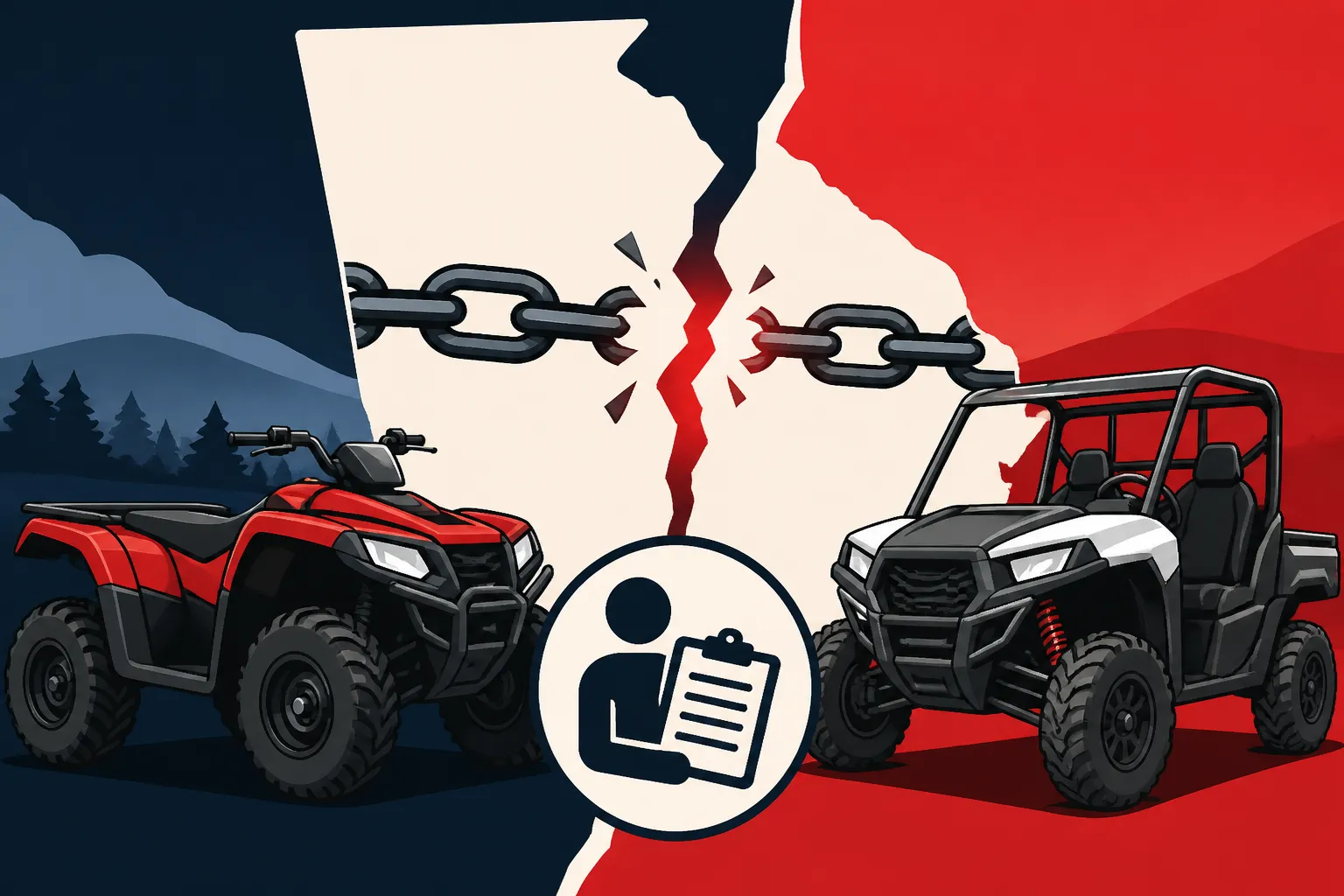
When we talk about a "chain of ownership," we're really talking about a clear, unbroken line of documentation that shows who has legally owned a piece of property, like an ATV or UTV, from its original purchase all the way to its current owner. Think of it like a family tree for your machine, but instead of births and marriages, it's a series of sales and transfers.
What Makes a Chain of Ownership "Clean"?
A clean chain of ownership is straightforward and easy to follow. It typically starts with the original manufacturer's certificate of origin (MCO) or manufacturer's statement of origin (MSO), which is the very first document for a new machine. From there, it would ideally include:
- A Bill of Sale: Each time the machine is sold, a dated and signed bill of sale should be created, detailing the buyer, seller, vehicle identification number (VIN), purchase price, and date of transaction.
- Previous Registration Documents: While Georgia ATVs and UTVs historically didn't have titles, some previous states or even some types of off-road machines might have had registration or similar documents that indicate prior ownership. For the new [Georgia MPOHV Registration Explained], this is becoming increasingly relevant.
- Transfer of Ownership Forms: Sometimes, a state might have had specific forms for transferring ownership even without a formal title.
When all these documents are present and clearly connect one owner to the next, you have a solid, undeniable chain of ownership. This makes things incredibly smooth if you ever need to register your machine, sell it, or prove it's yours in any official capacity.
Common Scenarios Where the Chain Breaks
Unfortunately, for many off-road machines in Georgia, a clean chain of ownership is more the exception than the rule. Here are some frequent ways the chain can get broken:
- Informal Private Sales: This is perhaps the most common culprit. A handshake deal in a backyard, cash exchanged, and maybe a hastily written receipt on a scrap of paper – or sometimes, no receipt at all. The buyer and seller might not realize the importance of formal paperwork, or simply don't bother with it.
- Lost Paperwork: Documents get misplaced, destroyed in a fire or flood, or simply forgotten in a box in the attic. Many owners might not think to keep a bill of sale for an ATV they bought ten years ago, especially if it was never registered or titled.
- Multiple Unrecorded Transfers: A machine might change hands several times between friends or family members without any formal documentation being created for each transfer. This creates multiple "missing links" in the chain.
- Inherited Machines: When a beloved family member passes away, their ATV or UTV might be passed down, but the original purchase documents or any informal bills of sale might be nowhere to be found among their belongings.
- Stolen or Recovered Machines: In some unfortunate cases, a machine might have been stolen and recovered, but the original owner's information is lost, or the theft report didn't fully document the VIN.
These gaps can lead to real headaches down the road, especially now with Georgia's new registration options for MPOHVs.
Why Georgia's Off-Road Machines Often Have Paperwork Puzzles
The history of off-road vehicle ownership in Georgia largely explains why so many machines have incomplete or non-existent paper trails. It wasn't until recently that there was any formal incentive or requirement for rigorous documentation.
The Historical Lack of Titling for ATVs and UTVs
For decades, ATVs and UTVs in Georgia were generally considered off-road recreational vehicles, not street-legal machines. As such, the Georgia Department of Revenue (DOR) did not issue titles for them, nor did it require them to be registered in the same way cars or trucks are. This fundamental difference removed the primary mechanism that ensures a robust chain of ownership for most vehicles. Without a title, there was no central state record-keeping of who owned what, and therefore, less pressure on private sellers and buyers to meticulously document every transaction. This is why you'll often hear people say, "[Why Georgia Does Not Title an ATV]".
This lack of formal titling meant that private sales were often incredibly casual. You bought a quad, you shook hands, you handed over cash, and that was that. No trip to the tag office, no transfer fees, no official records being updated. While convenient at the time, this informal system created the perfect environment for ownership gaps to emerge.
Informal Private Sales and Their Impact
Imagine a typical scenario: you buy a used side-by-side from someone advertising it on social media. They bought it from a friend, who bought it at an estate sale. Each transaction was a private, cash deal with no formal bill of sale. Maybe a sticky note with a price was involved, maybe not. The focus was on getting the machine and riding it, not on creating a bulletproof legal record.
When you're dealing with a private party, especially one who isn't a licensed dealer, there's often little incentive to create comprehensive paperwork. They're just trying to sell their machine, and you're just trying to buy one. The idea of establishing a perfect "chain of ownership" often doesn't even cross anyone's mind until much later, when a problem arises, such as trying to register the machine or proving it's yours if it's stolen. This is why it's always crucial to get a [Bills of Sale That Hold Up at a Tag Office] even for a private sale.
Lost or Never-Issued Paperwork
Even if an owner tried to be diligent, paperwork can simply disappear over time. Basements flood, file cabinets get misplaced during a move, or a relative cleaning out an old shed might toss what they perceive as "old junk." The original manufacturer's certificate of origin (MCO), which is vital for new machines and establishing the very first link in the chain, could easily be lost if the dealer didn't explain its importance or if it simply got tucked away and forgotten.
Furthermore, if a machine was originally purchased from an individual who never received or subsequently lost their MCO, the problem compounds. Each subsequent sale then inherits this initial gap, making it increasingly difficult to trace the machine's origins back to the manufacturer. This is particularly common for older machines.
The Frustrating Consequences of a Broken Ownership Trail
A missing or broken chain of ownership isn't just an administrative annoyance; it can lead to significant real-world headaches, especially with Georgia's evolving rules for MPOHVs (Multi-purpose Off-Highway Vehicles).
Difficulty with Georgia MPOHV Registration
The most immediate and pressing concern for many Georgia riders today is the new ability to register certain off-road vehicles as MPOHVs for limited road use. To register an MPOHV, you absolutely need to prove ownership. Without a clear chain of ownership, the Georgia county tag office will likely reject your application. They need to be sure that the person attempting to register the machine is its rightful owner. This means presenting valid documentation, which a broken chain prevents.
Imagine trying to register your side-by-side in your county for local road access, only to be turned away because you can't produce a bill of sale connecting you to the previous owner, let alone an MCO. The tag office isn't trying to be difficult; they're trying to prevent fraud and ensure legal ownership. For machines registered through this new system, you'll need the proper paperwork, and a gap in that chain will halt the process. For more specifics, check out [Georgia MPOHV Registration Explained] and [Georgia County Tag Office Steps for an MPOHV].
Challenges Proving You Own Your Machine
Beyond registration, having a broken chain of ownership can cause problems in many other situations:
- Selling Your Machine: When you try to sell your ATV or UTV, most discerning buyers will ask for proof of ownership. If you can't provide it, they'll likely walk away or offer a significantly lower price, fearing they'll inherit the same ownership problems. It also makes it harder to provide them with the information they'll need for their own [Georgia Sales Tax Paid Before Registration] efforts.
- Theft Recovery: If your machine is stolen and then recovered by law enforcement, proving it's yours without a bill of sale, MCO, or previous registration can be incredibly difficult. The police will need clear evidence to return the machine to the rightful owner, and a missing paper trail complicates everything. This is where performing a [Stolen Machine Databases and the Check] before buying can save you a lot of grief.
- Insurance Claims: While insurance companies might still process a claim for damage or loss if you have a policy, a weak ownership claim could potentially complicate things, especially if there's any dispute about who legally owns the vehicle.
- Disputes: In rare but stressful cases, a former owner or an heir might claim the machine is theirs. Without a clear chain of ownership, resolving such a dispute legally can be a nightmare. This is why having strong documentation for [Proving You Own an ATV in Georgia Without a Title] is so critical.
Impact on Resale Value
As mentioned, a missing chain of ownership can significantly depress the resale value of your ATV or UTV. Potential buyers are wary of machines with unclear histories. They worry about unknowingly buying a stolen machine, or facing the same registration and ownership hurdles you did. They'd much rather pay a bit more for a machine with a complete paper trail than deal with the uncertainty and potential legal complications of one with a broken one. This factor becomes even more pronounced when considering [Buying a Used Side-by-Side in Georgia].
Strategies for Rebuilding Your Machine's Ownership History in Georgia
While a broken chain of ownership can be daunting, it's often not insurmountable. There are several steps you can take to try and rebuild that history and establish legal ownership of your ATV or UTV in Georgia. The key is to gather as much evidence as possible and be prepared to present a compelling case to the county tag office.
Gather All Available Documentation
Start by collecting every single piece of paper you have related to your machine. Even if it seems insignificant, it could be a crucial link. This includes:
- Any Bills of Sale, Receipts, or Purchase Agreements: Even handwritten notes from previous private sales should be kept. If you have any canceled checks or electronic payment records (e.g., PayPal, Venmo, bank transfers) to a seller, these can serve as strong evidence of a transaction.
- Previous Registration Documents (Even If Not Georgia): If your machine was ever registered in another state, those documents are invaluable. Even if they're for an earlier owner, they help establish a segment of the chain.
- Maintenance Records or Repair Invoices: While not direct proof of ownership, these can support your claim by showing a history of you maintaining the vehicle. An invoice with your name and the machine's VIN can demonstrate your long-term possession and care.
- Photos of the Machine (especially with you and the VIN): Photos with date stamps can help prove when you came into possession of the machine. Make sure the VIN plate is clearly visible in some photos.
- Original Manufacturer's Certificate of Origin (MCO/MSO): If you happen to have this, even if it's endorsed over to a previous owner, it's the strongest starting point for the chain.
The more pieces of the puzzle you can bring to the tag office, the better your chances of successfully proving ownership.
Utilizing a Georgia Ownership Affidavit for an MPOHV
If you have gaps in your paper trail, especially if you bought the machine from a private seller who couldn't provide a perfect bill of sale or if you've inherited it, the Georgia Department of Revenue offers a specific form: the MV-OHV Affidavit for Multi-purpose Off-Highway Vehicle. This document is designed precisely for situations where traditional proof of ownership is lacking.
On this affidavit, you will swear under penalty of perjury that you are the rightful owner of the machine. You'll need to provide detailed information about how you acquired the machine, including the previous owner's name if known, and explain the circumstances surrounding the lack of traditional paperwork. This is where your collected documentation comes in handy – you can often attach copies of those supporting documents to the affidavit to bolster your claim. Services like LawDepot can provide customizable bill of sale templates or other legal forms that can help you document past transactions as thoroughly as possible, even retroactively, if you and a prior seller are willing to sign one now. For a deep dive into this form, read [Georgia Form MV-OHV and What It Asks].
Seeking a T-22B Inspection Certification
In some cases, especially if there's any ambiguity about the machine's VIN, or if it's an older model or one that's been significantly rebuilt, the county tag office might require a [Georgia T-22B Inspection Certification]. This form is typically completed by a law enforcement officer who verifies the VIN on the machine matches your paperwork and checks for any signs of tampering. It's an extra layer of verification that helps solidify the machine's identity and can indirectly support your ownership claim by ensuring the machine isn't stolen or misrepresented.
What to Do If You Have Absolutely Nothing
This is the toughest scenario, but even here, there might be options. If you have literally no paperwork, no receipts, and can't even contact a prior owner, your approach needs to be extremely thorough and honest.
- Start with the VIN: Locate the Vehicle Identification Number on your machine. This is non-negotiable. Without a VIN, proving anything is nearly impossible.
- Contact Former Owners (if possible): Even if they didn't provide a bill of sale at the time, they might be willing to sign one now or sign an affidavit confirming they sold the machine to you. Again, resources like LawDepot can help you generate a clear, legally sound bill of sale for this purpose.
- Use the MV-OHV Affidavit: Fill out the MV-OHV Affidavit as completely and truthfully as possible, explaining the total lack of documentation.
- County Tag Office Discretion: Be prepared that the county tag office may have some discretion in these matters. While they need proof, they also understand the realities of how many older off-road vehicles were bought and sold. They might ask for additional sworn statements or a T-22B inspection.
The Role of the County Tag Office
Ultimately, the county tag office in the county where you reside is your point of contact for resolving ownership gaps for the purpose of MPOHV registration. They are the ones who review your documentation, including your MV-OHV Affidavit and any supporting evidence. Be polite, patient, and prepared to present a clear, organized case. They've seen it all, and while they can't bend rules, they can guide you on what specific documentation they need to see to consider your ownership claim valid. Remember, their primary goal is to ensure legitimate ownership before issuing a [Georgia Plates for Off-Highway Vehicles].
Bridging a chain of ownership gap often requires persistence and careful documentation, but it's a vital step to ensure your off-road adventures are fully legitimate and worry-free.
| Missing Document Type | Impact on Ownership Chain | Recommended Action Steps |
|---|---|---|
| Original MCO/MSO | Severes the first link from manufacturer to first owner. | Contact original selling dealer (if known). Use MV-OHV Affidavit. |
| Bill of Sale (Your Purchase) | Direct link from previous owner to you is missing. | Contact seller for a retroactive bill of sale (LawDepot templates helpful). Use MV-OHV Affidavit with payment proof. |
| Intermediate Bills of Sale | One or more owners between MCO and you are undocumented. | Track down intermediate owners if possible. Rely heavily on your own bill of sale and the MV-OHV Affidavit. |
| Any Proof of Prior Owner | Hard to establish who sold to whom before you. | MV-OHV Affidavit explaining acquisition details. Consider T-22B for VIN verification. |
Disclaimer
This article is for general informational purposes only and does not constitute professional advice. Laws, prices and regulations vary by location and change over time. Consult a qualified professional for guidance on your specific situation.