Georgia’s Day and Annual Forest OHV Permits
Georgia’s Forest Service OHV permit rules can feel confusing when you are planning a ride: Is the permit for the machine or the rider, and will one pass cover every trail system? This guide explains day and annual permits, who needs one, how visitors should plan, what the permit does not authorize, and how to avoid arriving at a trailhead without the right paperwork.
What Georgia’s Forest OHV Permit Covers
A Forest Service OHV permit is tied to riding on designated off-highway vehicle areas within Georgia’s national forests. It is not the same thing as state registration, proof of ownership, insurance, or permission to use public roads. Keeping those distinctions straight helps prevent a common frustration: buying the right permit for a trail but assuming it covers other kinds of access too.
The permit is for designated OHV riding areas
Georgia’s Forest Service OHV systems include Houston Valley, Beasley Knob, Whissenhunt, Town Creek, Oakey Mountain, and Davenport Mountain. Each area has its own trail layout, conditions, access points, and operating details. Before setting out, check the rules for the specific system you intend to ride rather than assuming every Forest Service road or nearby track is open to OHVs.
A permit is best understood as one requirement in a larger checklist. You still need to follow posted trail restrictions, closure notices, machine-width limits where applicable, and any operating rules for the area. A permit does not open a closed gate or make a non-designated road legal for OHV use. The distinction is especially important in the mountains, where a road can look like an inviting trail while being closed to motorized recreation.
If you are choosing a trail for the first time, match the machine to the route before you leave home. A wider side-by-side may not fit every system or trail, and a muddy or damaged route can be unsuitable even when the area is otherwise open. For more on where riding is permitted, see Georgia’s Six National Forest OHV Systems and Georgia National Forest Trail-Only Rule.
It does not replace registration or road permission
A Forest OHV permit does not turn an ATV or UTV into a road-legal vehicle. It does not replace a registration requirement that applies to a particular machine, and it does not provide permission to ride on county roads, state highways, or city streets. Those are separate legal questions with their own requirements and restrictions.
This matters when a trailhead is reached by a road that appears to run through forest land. A permit for the trail system does not automatically allow you to ride an OHV along that access road. Follow signs and route designations, and use a properly registered, insured, and road-legal tow vehicle to get your machine to the staging area when needed. For details about road access, see Georgia MPOHV Road Rules: County Roads Only.
Nor does a permit prove that you own the machine. Carry whatever ownership or purchase paperwork is appropriate for your circumstances, especially if you are traveling with a recently purchased or borrowed vehicle. If ownership documents are unclear, Georgia Proof of Ownership on the Trail is a useful related topic.
A permit does not guarantee that a trail is open
Trail status can change because of weather, maintenance, seasonal restrictions, or damage. A permit does not override those changes. A route that was open during your last visit may be closed after heavy rain, and a trail system may have restrictions that differ from another system nearby.
This is one reason to check conditions before loading the trailer. A long drive from Atlanta, Savannah, or elsewhere in Georgia is frustrating enough without discovering at the gate that a trail is closed or a machine will not fit. Look for current Forest Service notices and trail-system information before you depart, then check posted signs when you arrive.
Even when the trails are open, use the route markers rather than treating every visible track as an approved riding route. Staying on designated routes protects fragile soil, reduces damage from rutting, and helps keep access available. For practical pre-trip planning, see Georgia Trail Conditions Before You Drive.
Day Permits and Annual Permits
The day and annual permit options are designed around how often you ride, not how many machines you own. Choosing between them is easier when you estimate your likely visits, consider whether you will use more than one Georgia system, and check the current purchase terms before committing.
When a day permit makes sense
A day permit is usually the straightforward choice for a one-time visit, a short trip, or a rider who is testing out a trail system before making future plans. It can also suit someone who rides infrequently and does not want to purchase an annual permit for a single outing.
The key is to confirm the permit’s validity period and activation instructions before you buy. Do not assume that “day” means a particular start or end time, or that a purchase made in advance automatically covers the date you have in mind. Follow the terms shown during purchase and keep the permit confirmation accessible while riding.
A day permit is also a good fit for visitors who are in Georgia temporarily. Someone driving in from Alabama or Tennessee for a weekend should check Georgia’s Forest OHV requirements rather than relying on a permit, registration, or riding credential from home. See Georgia Visitors From Alabama and Georgia Visitors From Tennessee for related visitor questions.
When an annual permit may be more convenient
An annual permit can be practical for riders who expect to visit Georgia’s Forest Service OHV systems repeatedly. Instead of arranging a separate day permit for each planned outing, an annual option may simplify preparation across the period it covers. Check the current terms to understand its exact validity dates and any restrictions.
The annual option is particularly useful for riders who enjoy visiting different systems over the course of a season. A family might choose Houston Valley for one trip, then plan a later outing at another system. Before assuming the same permit covers every trip, verify the official terms and confirm that the destination is one of the covered OHV areas.
Think about the entire riding year rather than just the next trip. If you expect one visit, the day option may be simpler. If several trips are likely, compare the current permit choices and decide whether the convenience of an annual permit makes sense. Since permit terms and fees can change, check the official purchase page before deciding rather than relying on an old screenshot or a friend’s past receipt.
Compare the choices before purchasing
| Question | Day permit | Annual permit |
|---|---|---|
| Best suited to | A single outing or occasional visit | Riders planning repeated visits |
| Coverage period | Confirm the dates and time terms at purchase | Confirm the start and expiration terms at purchase |
| Covered areas | Verify the selected system and applicable terms | Confirm which Georgia OHV systems are included |
| Who it follows | The operating rider, according to permit rules | The operating rider, according to permit rules |
| What it does not replace | Road registration, trail access rules, or closures | Road registration, trail access rules, or closures |
Use the table as a planning aid, not as a substitute for the permit’s official terms. The purchase page should answer questions about validity, required information, proof of purchase, and whether a permit can be refunded or transferred. If any detail is unclear, resolve it before driving to the trailhead.
For a closer look at the annual option, see One Annual Permit Covers All Six Georgia OHV Systems. To review the purchase process, use How to Buy a Georgia Forest OHV Permit.
Who Needs a Permit
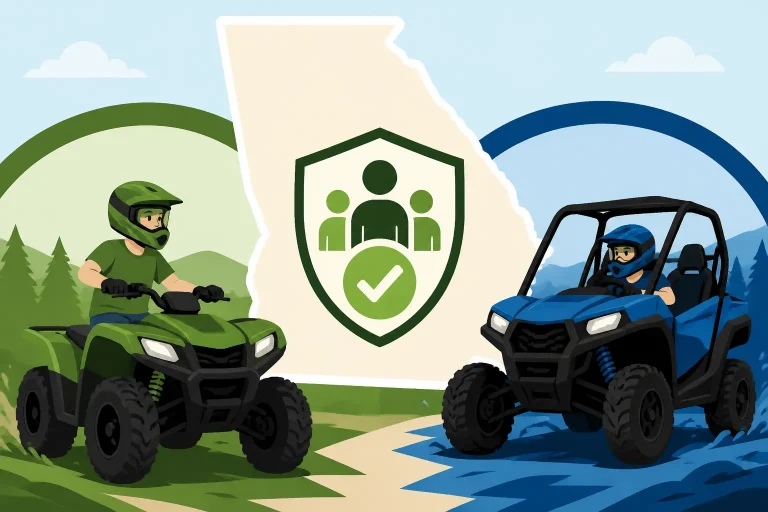
One of the most common misunderstandings is thinking the permit belongs to the ATV or UTV. Georgia’s Forest OHV permit is generally discussed as an operator permit: the person operating the machine is the person whose permit status matters. That has practical consequences for passengers, groups, and families bringing more than one machine.
The operator is the person to focus on
When you plan a ride, count the people who will actually operate machines, not just the vehicles on the trailer. If two adults take turns driving the same side-by-side, each person should check whether they need an individual permit under the applicable rules. A permit purchased for one operator should not casually be treated as a group pass.
This is especially easy to overlook when a group shares machines. For example, one family may bring two vehicles and have four adults rotate between them. The number of machines does not necessarily tell you how many permits are needed. The operating riders and the permit’s terms are the important factors.
Read the operator requirement carefully before purchase, and make sure every rider knows how to show their permit if asked. For more on this distinction, see Georgia National Forest Permits Are Per Operator and Georgia’s Per-Operator Permit, Not Per Vehicle.
Passengers are not automatically operators
A passenger who is not driving is different from a person who takes a turn at the controls. Do not assume the passenger needs a separate operator permit simply because they are riding along, but do not assume that passenger status continues if they switch seats and begin operating. Check the official permit terms for the specific situation.
This comes up often with parents and teenagers. An adult may plan to drive while a teen rides as a passenger, then consider letting the teen take a turn. Before making that switch, confirm the age, supervision, helmet, and operator-permit rules that apply. Permits are only one part of the safety and eligibility picture.
The same logic applies to group rides. A passenger riding in a friend’s machine is not the same as a second person operating another machine. If a participant could take the wheel during the day, have them verify their own requirements before the group leaves. See Georgia OHV Permit for a Passenger for a more focused explanation.
Visitors should check Georgia’s rules separately
A nonresident’s home-state permit or credential should not be assumed to substitute for Georgia’s Forest OHV permit. Rules can differ between states, and a visitor may be familiar with a different system for public land, private parks, or state-managed trails. Confirm Georgia’s requirements for the system you plan to ride.
This is true even if your machine is registered or otherwise documented in another state. Registration and OHV trail permits serve different purposes. A state plate or registration document does not necessarily satisfy a Forest Service recreation permit requirement, and a trail permit does not legalize road use.
If your trip crosses state lines, make a simple checklist that covers the Georgia permit, machine transport, required safety equipment, trail suitability, and the visitor rules for the destination. Riders coming from nearby states can review Do Visiting Riders Need a Georgia Forest Permit? before planning their first Georgia ride.
Buying and Carrying Your Permit
Purchasing a permit is only one part of being prepared. You also want to make sure the permit matches your trip, can be shown when needed, and remains accessible if your phone battery dies or you lose cell service in a remote area.
Buy through the designated channel
Use the official purchase route identified for the OHV system and follow the instructions shown during checkout. The steps may ask you to choose a permit type, identify the period it covers, and provide details needed to associate the permit with the operator. Read each screen carefully; selecting an incorrect date or permit category can create an avoidable problem at the trailhead.
Do not rely solely on a search result, a saved social media post, or an old email from a previous visit. Make sure the page is for the right permit and the right activity. If the system directs you to Recreation.gov, complete the purchase there and save the confirmation in a way you can reach offline.
If something is confusing, check the Forest Service information for the relevant ranger district or contact the appropriate office before your trip. It is far easier to clarify a permit question from home than to try to sort it out in a parking area with a trailer behind you and other riders waiting.
Keep proof available during the ride
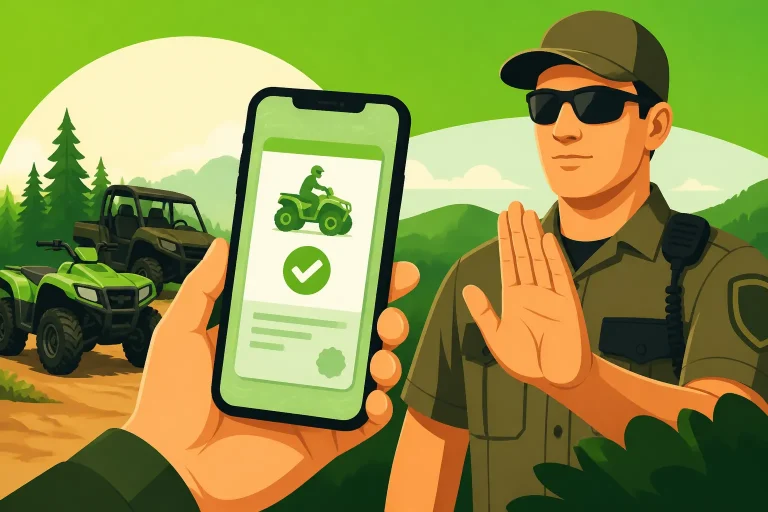
After purchasing, save the confirmation and any permit details in an accessible place. If your phone has no signal at the trailhead, an online account may be difficult to reach, so consider downloading or saving the confirmation in advance. A paper backup can also be helpful for groups that travel in remote areas.
A simple waterproof document sleeve can keep a printed confirmation or other essential paperwork from getting soaked or smeared. Riders sometimes look for basic protective accessories through retailers such as Amazon, but the holder itself is not proof of a valid permit; the official permit or confirmation is what matters. Keep it somewhere secure and reachable, rather than buried at the bottom of a gear bag.
Before unloading, check that the permit details match the person who will operate the machine and the date or period of the visit. If you bought an annual permit, make sure you can demonstrate that it remains valid. If you bought a day permit, confirm that it applies to the planned ride date.
Do not assume a purchase is refundable or transferable
Permit purchases may have terms governing refunds, changes, or transfers. Read those terms before paying, especially if your plans depend on weather, a group schedule, or a long drive. A decision to postpone the trip may not automatically mean you can move the permit to another date.
Likewise, do not assume that you can hand your permit to a friend if you cannot attend. If the permit is associated with an operator, another rider may need to obtain their own. Verify the actual transfer rules instead of relying on informal advice from someone who purchased a different permit under different conditions.
This is another reason to purchase thoughtfully. Check the trail status, machine eligibility, planned visit date, and operator details first. For more on the fine print, see Georgia Permits Are Non-Refundable and Georgia Permits Are Non-Transferable.
Reciprocity and Out-of-State Riders
“Reciprocity” can mean different things in outdoor recreation. A rider may wonder whether an Alabama, Tennessee, or other out-of-state credential is accepted in Georgia, whether a state registration travels across the border, or whether a private park’s pass works on national forest trails. Those are separate questions, and one kind of document should not be assumed to replace another.
An out-of-state document may serve a different purpose
A machine registration from another state may help establish how the vehicle is documented there, but it does not automatically serve as a Georgia Forest OHV permit. Similarly, an out-of-state trail pass may apply only to the land or program that issued it. Check whether Georgia’s permit is required for your intended riding area even if you already carry other credentials.
The reverse is also true: a Georgia Forest OHV permit does not automatically satisfy another state’s trail permit requirement when you travel elsewhere. Permits are usually connected to specific land managers and recreation systems. Crossing a state boundary means checking the rules of the next destination, not assuming the previous permit follows you.
Visitors should keep the paperwork categories separate: vehicle documents, operator permit, park waiver, insurance, and any required safety or age documentation. They may all matter for different reasons. For an overview of Georgia’s visitor considerations, see Georgia Visitors From South Carolina or the more general Georgia Visitors From Other States.
Private parks have their own admission and safety rules
A Forest Service permit does not necessarily pay admission or satisfy the waiver requirements at a private riding park. Private properties set their own conditions, which may include separate access fees, check-in procedures, machine restrictions, age rules, and waivers. A rider visiting both a national forest trail and a private park should verify each destination independently.
This distinction can catch people who plan a multi-stop weekend. They may have purchased the forest permit and assume the same paperwork applies everywhere they unload. But a private facility operates under its own policies, while a Forest Service OHV permit applies within its designated program. Neither permission should be treated as universal.
Before heading to a private park, review its own current requirements and ask about any special rules for passengers, minors, rentals, or machines that are unusually wide. For more context, see Georgia Private Park Waivers and Rules. Keep the forest permit available for the forest riding portion of your trip, and keep park paperwork separate.
Reciprocity does not erase local access restrictions
Even if your out-of-state registration or permit is accepted for one purpose, it does not override Georgia trail signs, closures, or machine restrictions. A rider arriving with a machine that is too wide for a particular route still needs to respect the route limitation. A document cannot make a closed or unsuitable trail open.
Likewise, the route to a riding area may pass through a mix of public roads, forest roads, and designated OHV trails. A trail permit does not authorize riding wherever the machine can physically travel. Follow signs, stay on marked routes, and transport the machine when riding it to the trailhead would violate road rules.
A good cross-border plan is simple: identify the land manager for each destination, check that manager’s permit and access rules, verify the machine fits, and carry proof that the operator has met the relevant requirements. This avoids treating “I have a pass” as a complete answer to every question.
Planning a Safe, Legal Ride
A permit can feel like the main administrative hurdle, but trail preparation matters just as much. The most enjoyable trips are usually the ones where the group knows the route, understands the machine limits, and has a backup plan for weather or closures.
Match your machine to the system
Before you travel, confirm whether the OHV system allows the type and width of machine you plan to bring. A full-size side-by-side may not be suitable for every trail, and a sport ATV may face different practical challenges from a utility machine. A machine that fits the trailer is not necessarily a machine that fits the trail.
Measure the machine at its widest point, including accessories that affect clearance. A wheel offset, aftermarket fender, or added attachment can change the actual width from the factory figure. If the system has a width restriction, measure carefully and confirm how the limit is applied rather than relying on a sales brochure.
Think about terrain as well as dimensions. Steep climbs, tight turns, water crossings, and uneven surfaces can make a route difficult for a novice or an unfamiliar machine. Check the trail descriptions and choose a route that suits the least experienced operator in your group. Carrying a permit does not make a challenging trail an appropriate first ride.
Check weather, closures, and trail etiquette
Georgia’s red clay can become slick and deeply rutted after rain. Riding a wet trail can damage the surface, create hazards for other users, and contribute to a closure. If conditions are poor, consider postponing rather than trying to force the planned outing.
Check notices close to departure, not only when you first begin planning. Conditions can change during the week, and a storm may affect a trail system shortly before your visit. The Forest Service or the relevant ranger district is the appropriate place to confirm official closures and access information.
On the trail, yield as required by signs and local rules, avoid cutting new routes, and do not bypass a closure around a gate or barrier. Travel at a speed that allows you to respond to other riders, obstacles, and changing surfaces. Responsible riding helps preserve access for the next visit and keeps the experience better for everyone sharing the system.
Prepare for weak signal and basic setbacks
Cell service can be unreliable in forested and mountainous areas. Download directions, save permit proof, and agree on a meeting point before the group separates. If someone gets delayed or takes a wrong turn, a clear plan can prevent a minor mix-up from becoming a stressful search.
Carry basic recovery and repair equipment appropriate for your machine and route. That may include a first-aid kit, water, a tire repair kit, tools, and a tow strap. A waterproof sleeve sourced from a retailer such as Amazon can help protect paper documents, while a printed route note can be more dependable than expecting a map app to load in a dead zone.
Let someone outside the riding group know where you plan to go and when you expect to return. The permit does not provide emergency assistance, and it does not replace sound judgment about weather, fuel, daylight, or the abilities of the riders. If conditions or fatigue make continuing unsafe, turn back.
Common Permit Mistakes to Avoid
Most permit problems are preventable. They tend to come from confusing the permit with another document, misunderstanding who needs one, or assuming that a previous trip’s arrangements still apply.
Treating the permit as a vehicle registration
A Forest OHV permit is not a registration plate and does not automatically authorize road use. Riders sometimes hear that a machine is “permitted” and interpret that as permission to use it on any road leading toward the trail. That is not a safe assumption.
Keep trail access documents with the machine paperwork, but understand what each one does. A permit may address recreation access in a designated area; registration and road requirements relate to different legal conditions. If your question is whether a particular machine can use a public road, research that issue separately rather than relying on the forest permit.
Also, do not assume a permit substitutes for insurance or proof of ownership. If you are uncertain about the machine’s documentation, review the relevant Georgia rules before the trip. Having several papers in a folder is helpful only when you know which document answers which question.
Buying for the machine instead of the operator
A group may count vehicles and conclude that one permit is enough for the day. But the operator-based structure means the number of drivers matters. If two people switch between machines, verify the permit requirement for both rather than assuming a single purchase follows the vehicle.
This is particularly important for a family where adults and older children may take turns driving. Decide in advance who will operate, check age and supervision rules, and make sure each person has the required documentation. A last-minute seat swap at the trailhead is a poor time to discover that the driver’s permit status is unclear.
If the group has passengers who will not operate, review the passenger rule rather than buying unnecessary permits or making a casual assumption. The relevant distinction is whether someone is operating the machine, not simply whether they are present on the ride.
Relying on old information or someone else’s permit
Permit details can change, and the terms you saw on a previous trip may not apply to a future one. Fees, sales steps, validity periods, and operating instructions should be checked through the official channel before purchase. Avoid relying on a saved image that does not show the date or the permit terms.
A friend’s confirmation is not proof that your own operator requirement has been met. Do not assume a permit can be shared, transferred, or used by a different person unless the official terms allow it. Each rider should be able to explain what permit applies to them and show the required proof.
Finally, do not treat the permit as permission to ride outside the designated area. Stay within the marked OHV system, respect closures, and verify road rules for any route beyond the trail. When something is uncertain, confirm it with the land manager before unloading.
Disclaimer
This article is for general informational purposes only and does not constitute professional advice. Laws, prices and regulations vary by location and change over time. Consult a qualified professional for guidance on your specific situation.