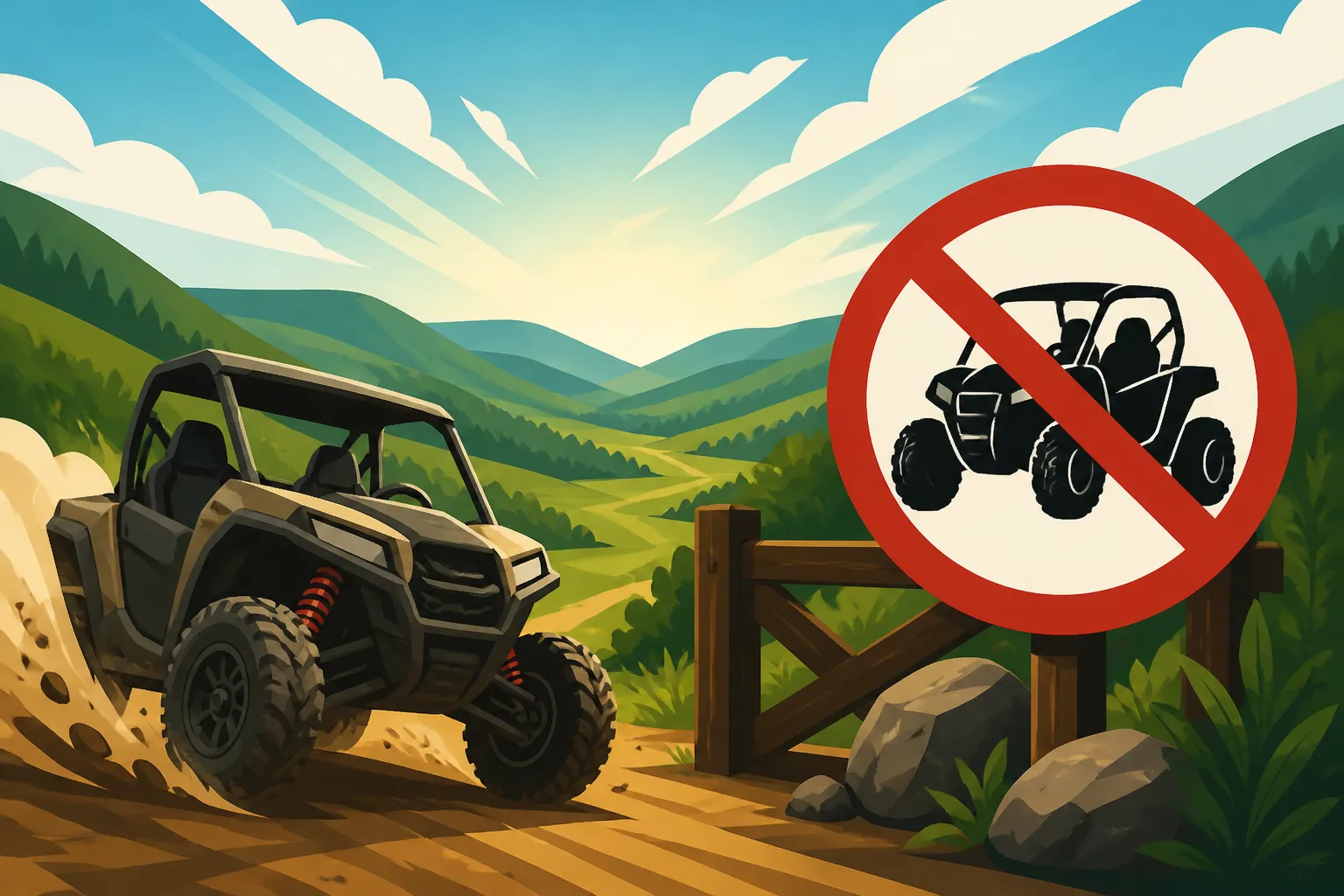
Why Houston Valley Turns Away Side-by-Sides
A side-by-side can look trail-ready, fit on your trailer, and still be turned away at Houston Valley. The sticking point is often width: Houston Valley has a 50-inch limit, and many UTVs are wider than that before you add tires or accessories. This guide explains what the limit means, how to check your machine, and how to avoid a wasted drive.
Why Houston Valley turns away side-by-sides
The 50-inch limit is the key issue
Houston Valley OHV Trail System, in the Chattahoochee-Oconee National Forest area near Dalton, is known for trails with a 50-inch width restriction. That limit makes a major difference when you’re choosing a machine. Many recreational side-by-sides are built wider than 50 inches, so they may not be allowed on the trail system even if they are otherwise in good condition and equipped for off-road riding.
The restriction is about whether the machine fits the trail rules, not whether the driver feels confident threading it between trees. A narrow trail may have tight turns, rocks, trees, or other features that leave little room to maneuver. A wider vehicle can damage trail edges or vegetation, struggle to turn safely, or block the route for other riders. Keeping machines within the permitted width helps protect the trail and makes shared riding more manageable.
That’s why a side-by-side can be turned away at check-in even when it seems small compared with a full-size utility vehicle. Before making plans, review [Houston Valley's 50-Inch Width Cap in Georgia] and [Georgia ATV Trails That Ban Side-by-Sides]. Restrictions can differ between riding areas, so permission to take a UTV somewhere else in Georgia does not automatically mean it can ride at Houston Valley.
“Side-by-side” does not tell you the machine’s measured width
The vehicle category alone may not settle the question. Side-by-sides vary in width, and the listed factory measurement may not reflect the machine as it sits today. Wider replacement tires, wheel spacers, fender extensions, or other modifications can change the overall width. Even a machine advertised as narrow should be measured rather than judged by appearance.
Pay attention to the widest point. Depending on the setup, that may be the tires, fenders, or another part of the vehicle. Measure carefully and compare the result with the trail’s stated limit. If your measurement is close to the maximum, don’t assume that a slight discrepancy will be overlooked. Ask the land manager or trail contact what measurement method they expect riders to use before you tow.
A useful starting point is [Measuring Your Machine Before You Tow]. It can help you catch a mismatch at home, when you still have time to choose another destination. For a broader explanation of how machine width affects access, see [Georgia Trail Widths and What Fits].
| What to check | Why it matters | Practical step |
|---|---|---|
| Published trail width limit | Houston Valley has a 50-inch restriction | Confirm the limit before leaving |
| Actual machine width | Modifications can change the factory measurement | Measure the widest point on your setup |
| Tire and fender changes | These parts may extend beyond the original configuration | Measure with the current tires and accessories installed |
| Trail status and restrictions | Access details may change with conditions or management decisions | Check official trail information before the trip |
| Alternative riding area rules | Nearby systems may have different vehicle allowances | Verify the rules for each destination separately |
How to check whether your machine qualifies
Measure the vehicle you will actually bring
Start with the machine in its current configuration—not the width in a brochure, a model name, or a measurement from a different trim package. Park on level ground, set the tires straight, and identify the widest point from one side to the other. A tape measure and a second person can make the task easier, especially if the widest point is difficult to see from above.
If you have changed wheels, tires, suspension, or bodywork, measure after those changes. A machine that qualified when it left the factory may no longer fit the restriction once it has been modified. Likewise, don’t rely on a quick estimate based on tire size or the distance between the seats. The relevant question is the overall width of the machine under the trail’s measurement rules.
If you aren’t sure how the trail manager measures width, ask before loading the vehicle. A short phone call or message can prevent a long drive followed by a frustrating turn-around. Keep the answer with your trip notes, but recheck the information before future visits rather than assuming the rules or conditions are unchanged.
Confirm access, not just the machine’s dimensions
A width measurement is only one part of planning. Check whether the area is open, whether the trails are suitable for your vehicle, and whether there are seasonal closures or other restrictions. Heavy rain can make trail conditions a concern, while maintenance or management needs can affect which routes are available. A machine that meets the width limit still needs an open, appropriate route.
Use official Forest Service or ranger-district information to verify access and conditions. Maps can help you understand where the trails run, but don’t treat an app map or an old screenshot as proof that a route is open or that your vehicle is permitted. [Georgia Trail Conditions Before You Drive] and [Georgia ATV Trail Map Downloads] are useful starting points for trip planning, alongside direct confirmation from the managing office.
Apps such as onX Offroad can help you organize routes, locate trail information, and keep a trip plan handy. Use mapping tools as a planning aid, then confirm current access and vehicle restrictions through the official source. That extra step matters when a trip depends on a specific trail system and a strict vehicle-width limit.
What to do if your side-by-side is too wide
Choose a destination that allows your machine
If your UTV exceeds Houston Valley’s limit, don’t try to squeeze onto the trail or rely on the hope that nobody will check. A machine that does not meet the stated restriction may be denied access, and using a route anyway can create safety, trail-damage, or enforcement problems. The better solution is to pick a riding area that allows your vehicle’s actual width.
Georgia has riding areas with different trail designs and vehicle rules. Compare destinations based on the width and type of machine they accept, the trail difficulty, and whether the route system is open to side-by-sides. [Georgia ATV Trails That Allow Side-by-Sides] can help you begin that comparison. Check each location’s own information before you go, because general descriptions and old trip reports may not reflect current conditions.
An app such as onX Offroad may be useful while comparing locations and sketching out a route, but don’t use it as the final authority on vehicle access. Confirm the width rules with the site or managing agency. If a trail system has multiple routes with different restrictions, ask specifically whether your machine can use the routes you plan to ride—not merely whether the area is open.
Think carefully before modifying a machine to fit
Some owners consider changing tires, wheels, or other parts to bring a UTV under a width limit. That can involve more than swapping to a narrower tire. Wheel offset, clearance, stability, handling, and manufacturer recommendations all matter. A change that reduces the measured width may also affect how the machine behaves on uneven ground or during a turn.
Don’t make a modification based only on a quick measurement or an online discussion. Ask a qualified mechanic or dealer whether the setup is appropriate for your model, and verify how the trail manager measures the machine. Even if the machine measures within the limit, the route may have other restrictions that apply. Confirm those separately before making the trip.
For many riders, choosing a wider-vehicle-friendly trail system is simpler and safer than reworking a machine for one destination. Consider where you ride most often before spending money on changes. If Houston Valley is the main goal, measure first and get a clear answer from the managing office. If the machine is too wide, plan a different ride rather than arriving at the gate and hoping for an exception.
A practical Houston Valley trip-planning checklist
Check the details before loading
A little preparation can spare you the awkward moment of unloading at home, driving to the trailhead, and then learning the vehicle cannot enter. Before the trip, write down your machine’s measured width and the source of the trail’s limit. If you’ve added accessories or changed tires since the last ride, measure again.
Use this simple sequence:
- Find the current stated width limit for Houston Valley.
- Measure your side-by-side in its present configuration.
- Ask the managing office how width is assessed if your measurement is close.
- Confirm that the trail system is open and check for any additional access restrictions.
- Plan a permitted alternative in case the trail is closed or your machine does not qualify.
It’s also worth reviewing [Reading a Forest Service Trail Sign] so you know how to interpret restrictions posted at the trailhead. Signs and official information should guide your decisions on-site. If something is unclear, pause and ask rather than assuming a sign applies only to another route or vehicle type.
Set expectations with everyone in your group
Group rides can become complicated when one person brings a wider machine than the rest. Before meeting at the trailhead, ask each driver to confirm the width and type of their vehicle. That avoids a situation where several riders have traveled together, but one machine cannot enter and the whole group must change plans.
If you are organizing the trip, share the relevant restriction in the group chat and ask riders to verify their own machines. Don’t rely on a model name alone; versions of the same vehicle can have different widths, and modifications can create differences between otherwise similar machines. A quick check at home is less stressful than sorting out the problem in the parking area.
Use onX Offroad or another mapping tool to keep the group’s route and destination notes together, but include the official access information as well. Having both a map and a verified plan makes it easier to choose another legal riding area if conditions or vehicle eligibility rule out Houston Valley.
Disclaimer
This article is for general informational purposes only and does not constitute professional advice. Laws, prices and regulations vary by location and change over time. Consult a qualified professional for guidance on your specific situation.