Mud Pits at Georgia Off-Road Parks
A Georgia mud pit can turn a fun ride into a stuck machine, overheated belt, or long walk back to the trailer—especially after a heavy rain. This guide explains how to find mud-friendly off-road areas, prepare your ATV or UTV, and ride responsibly. It also covers why a park’s designated mud feature is different from a muddy trail.
Finding mud pits at Georgia off-road parks
Check what the park actually offers
“Good for mud” can mean very different things. One park may have a designated mud hole or play area; another may simply have red-clay trails that get slick after rain. A muddy trail is not necessarily a mud pit, and a mud pit is not necessarily open every day. Park operators may close specific areas to manage damage, protect riders, or respond to changing conditions.
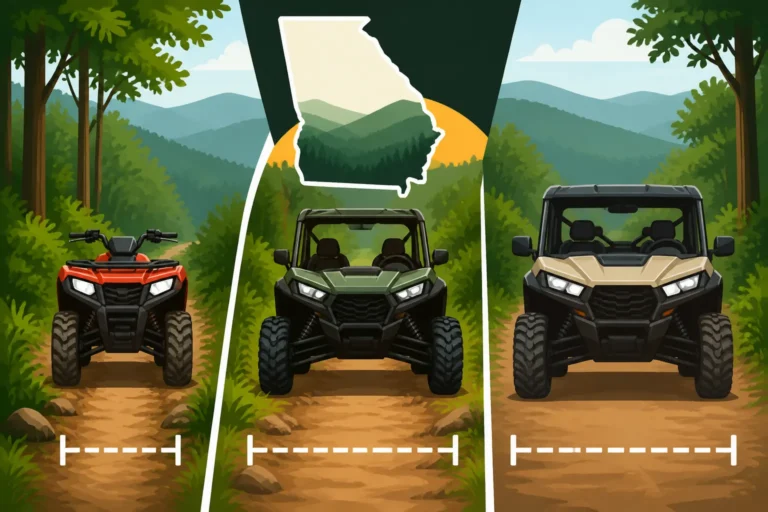
Before loading up, check the park’s own rules and ask whether its mud features are open to the kind of machine you plan to bring. Confirm whether the area is intended for ATVs, side-by-sides, or both, and ask about any width, tire, passenger, or age restrictions. A feature that looks wide enough in a photo can still be unsuitable for a large UTV.
Georgia destinations such as Iron Mountain Off-Road Resort and Highland Park Off-Road Resort have off-road riding areas, but individual features and access rules can vary. Don’t assume that a park has a dedicated mud pit—or that a particular feature is open—just because it has extensive trails. Check directly with the park before you travel, and review [Georgia Private Off-Road Parks Compared] when deciding what kind of riding area suits your group.
Separate dedicated mud areas from public trails
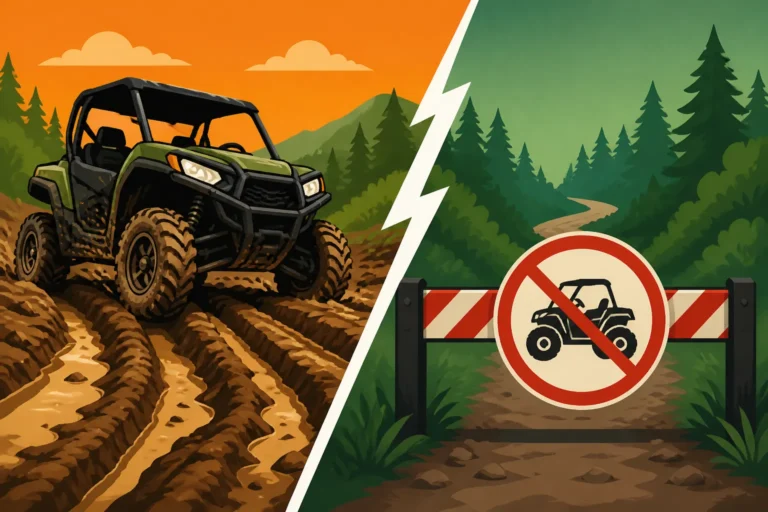
A purpose-built feature at a private park is different from a muddy section of a public trail. The designated area is managed for riding, with access and rules set by the operator. Public-land trails, including systems in the Chattahoochee-Oconee National Forest, have their own designated routes and restrictions. A muddy stretch is not permission to leave the trail, spin tires into the woods, or create a new mud hole.
That distinction matters in Georgia, where wet red clay can rut quickly. A trail that appears firm at the entrance may be soft farther along, and repeated wheelspin can make the damage worse for the next rider. Stay on marked routes, obey closures, and turn around when conditions are beyond your machine or your comfort level. For an overview of public riding areas, see [Georgia ATV Trails: Where You Can Legally Ride] and [Georgia's Six National Forest OHV Systems].
| Riding option | What it may offer | What to confirm before riding |
|---|---|---|
| Designated mud feature at a private park | A managed area intended for muddy riding | Whether it is open, which machines may use it, and any operating rules |
| Private park trail system | Marked routes with different terrain and difficulty | Current trail access, machine width limits, and closures |
| National forest OHV trail | Designated public trail riding | Permit requirements, trail status, and whether the route is open to your vehicle |
| Unmarked muddy ground or roadside | No assurance that riding is allowed | Don’t enter unless the land manager or owner explicitly permits it |
If a public trail is muddy, it may be tempting to ride around a puddle or take a shortcut through the brush. Resist that urge. The bypass can widen the trail, damage vegetation, and create a new rut that holds water. [Georgia Trail Closures After a Storm] explains why conditions can change quickly and why closure signs should be treated as a firm stop.
Preparing your ATV or UTV for mud
Inspect the machine before the ride
Mud puts extra strain on components that may barely be noticed during a dry ride. Before leaving home, check tire condition and pressure against the manufacturer’s recommendations, inspect the brakes, and make sure the throttle and steering move freely. Check that the radiator area is clear if your machine uses a radiator, and look for loose wiring, damaged boots, or missing fasteners.
On a side-by-side, inspect the seat belts, doors or nets, lights, and any accessories that could come loose in deep ruts. Make sure recovery points are accessible and that your winch, if fitted, operates correctly. A winch is useful only if it is powered, the cable or rope is in good condition, and you know how to use it safely. A tow strap should be rated for the job and attached only to suitable recovery points—not a bumper or hitch ball.
Mud can also conceal rocks, holes, branches, and abrupt changes in depth. A machine that has handled shallow puddles comfortably may struggle in a deep, soft pit. Don’t use another rider’s successful pass as proof that the same line is safe for your machine; tire setup, ground clearance, vehicle weight, and driver skill all affect the outcome.
Pack for getting stuck and getting dirty
Plan for a slow ride and a messy cleanup. Bring water for the group, basic first-aid supplies, gloves, eye protection, and a change of clothes sealed in a bag. Carry a charged phone, but don’t count on reliable service throughout every riding area. If you use onX Offroad, download the relevant map information before you lose signal and use it as a navigation aid—not as a substitute for signs, park instructions, or official trail information.
For a group ride, agree on a simple check-in plan before anyone heads into a mud feature. Keep riders within sight or establish meeting points, and make sure everyone knows how to stop the group if a machine gets stuck. If one vehicle needs recovery, other riders should stay clear of the winch line and the moving machine. A vehicle under tension can shift suddenly, and a crowded recovery scene creates avoidable risk.
Think through the return trip as well. Mud packed into wheel wells or around a radiator can affect how the machine runs, while heavy clay left on components can be difficult to remove once it dries. Pack cleaning supplies that the park allows, and check whether it has designated wash areas. For more on how Georgia clay can affect a machine and trail, read [Georgia Red Clay and What It Does to a Machine].
Riding a mud pit with control
Read the area before entering
Pause at the edge and watch a few passes, if park rules allow. Look for the intended entrance and exit, visible depth changes, and places where riders are lining up. Watch for a marked boundary or a signal from staff. If you cannot tell where the feature begins or ends, ask instead of guessing.
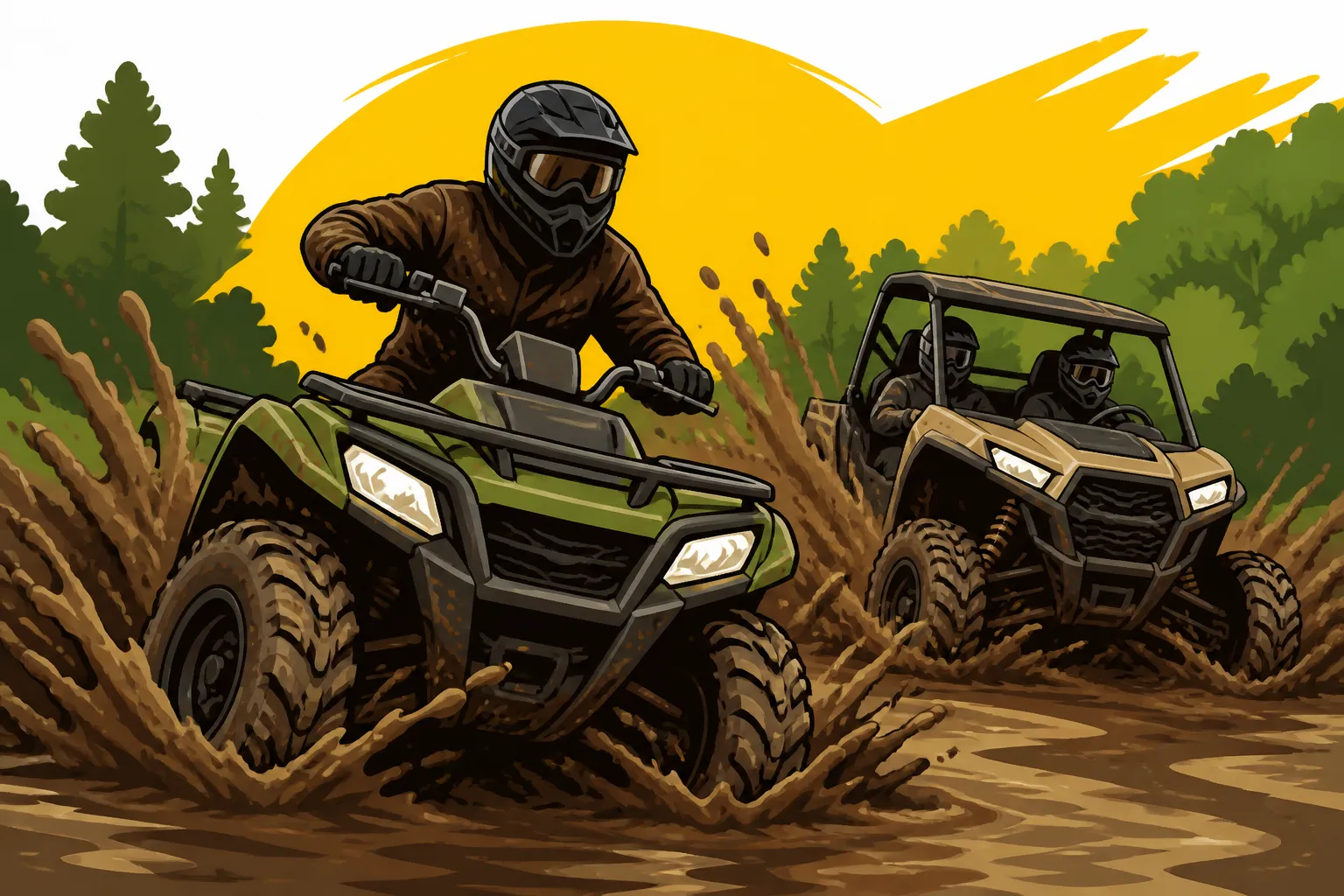
A controlled approach is usually safer than charging in. Use a steady pace, avoid sudden steering changes, and don’t follow another vehicle so closely that you have no room to react. High speed can hide hazards and make a loss of control more severe. If the machine starts to bog down, repeated hard acceleration may dig the tires deeper and throw mud at people nearby. Stop, assess, and use a safe recovery plan rather than turning a small problem into a bigger one.
Don’t enter water or mud when you cannot judge its depth or what lies beneath the surface. Water can conceal holes, debris, or a sudden drop, and deep immersion can damage equipment. If the feature looks beyond your machine’s ability—or you feel unsure—skip it. There is no shame in choosing a firm route and enjoying the rest of the park.
Keep passengers and other riders safe
Passengers should be seated properly and use the machine’s safety equipment. A passenger should not lean out to help push, grab a recovery line, or stand beside a moving vehicle in the pit. If you ride with children, check the park’s age and supervision rules before arrival and make sure the child’s machine and protective gear are appropriate.
Give other riders room to enter, exit, and recover. Avoid stopping where you block the route or where another vehicle may not see you. At a private park, staff instructions take priority over a rider’s preferred line. On public trails, stay on the designated route and follow posted signs. For more on trail etiquette and operating conditions, see [Georgia Trail Etiquette on One-Way Loops] and [Georgia Trails That Close After Rain].
A map app can help with planning, but don’t use it to justify entering a closed area or crossing private land. onX Offroad may help you orient yourself and review mapped routes before the ride; confirm access and current conditions with the park or land manager. Conditions change with rainfall, maintenance, and seasonal closures, so a route shown on a map is not a guarantee that it is open or suitable that day.
After the ride and before your next trip
Clean and inspect the machine
Remove packed mud before it dries, paying particular attention to the radiator area, brakes, wheels, and moving parts. Use the cleaning methods recommended for your machine, and avoid directing high-pressure water at seals, bearings, electrical connections, or other sensitive components. If the park has a wash station, follow its instructions and dispose of waste properly.
After cleaning, inspect the machine again. Look for damaged tires, loose parts, scraped boots, debris around the axles, and signs of fluid leaks. Check that the brakes feel normal before trailering home or riding again. If the machine struggled, overheated, or took on water, stop and inspect it rather than assuming it will be fine after a rinse.
Mud can also hide damage until the vehicle is clean. A fresh scrape, bent guard, or loose fastener is easier to notice before the next outing. Keep a short note of anything that needs attention, especially if several family members share the machine and no one person handles every inspection.
Leave the riding area in good shape
Follow the park’s cleanup, parking, and waste rules. Don’t wash a machine in an undesignated area or leave mud, trash, or broken equipment behind. If a vehicle becomes disabled, tell park staff and follow their recovery directions. On public land, report a blocked or damaged trail through the appropriate land-management contact rather than trying to repair or reroute it yourself.
If the ride was on a forest trail, confirm the trail’s status before planning a return visit. Weather can turn a route from manageable to unsafe, and land managers may close trails to prevent long-term damage. onX Offroad can be useful for preparing a route and keeping your group oriented, but pair any mapping tool with current official notices and signs at the trailhead. More planning guidance is available in [Georgia Trail Conditions Before You Drive] and [How to Check Georgia Forest Trail Status].
A satisfying mud ride is not about pushing every machine to its limit. It’s about choosing an area that permits the activity, matching the feature to your vehicle and experience, and leaving the route in a condition other riders can enjoy. When in doubt, ask the park, take the easier line, or skip the pit and ride another day.
Disclaimer
This article is for general informational purposes only and does not constitute professional advice. Laws, prices and regulations vary by location and change over time. Consult a qualified professional for guidance on your specific situation.