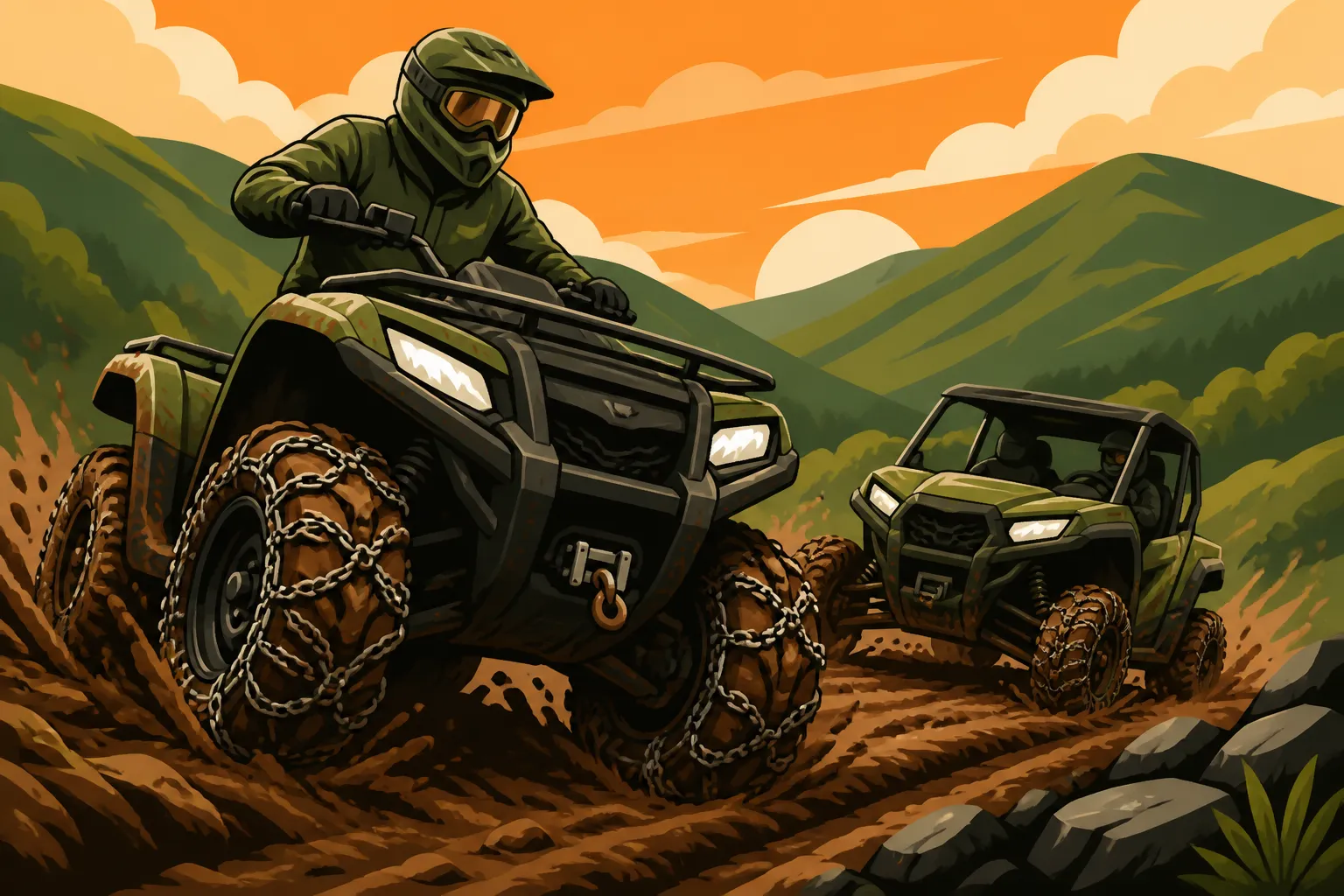
Chains and Mud in the Foothills
Georgia’s foothill mud can turn a familiar ATV or UTV trail into slick red clay in minutes, especially after a hard rain. Tire chains may seem like an easy fix, but they can create clearance, traction, and trail-damage problems of their own. This guide explains when chains help, when they don’t, and how to ride muddy Georgia trails more safely.
Why Georgia foothill mud is so difficult
Red clay changes the ride quickly
Across the North Georgia foothills, rain can make clay-heavy surfaces slick and sticky at the same time. Tires may lose grip on top of the mud, while packed clay fills the tread and reduces its ability to bite. A machine that climbed a slope easily on a dry morning may start sliding sideways after a short shower.
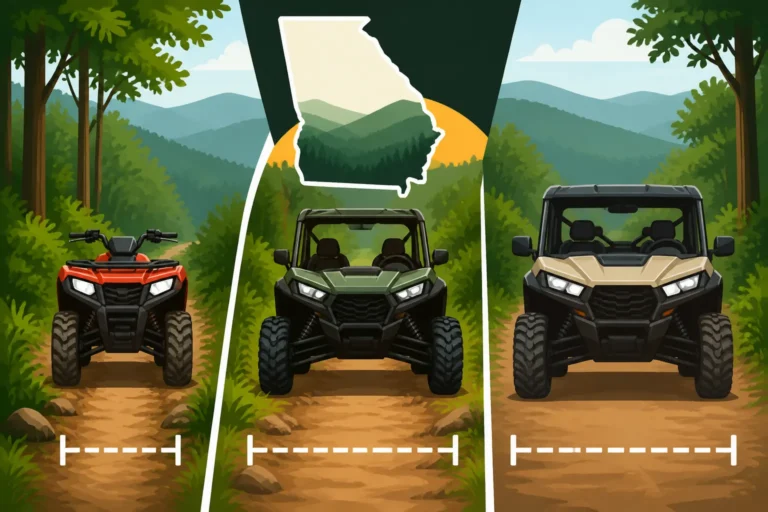
The problem isn’t limited to steep hills. Ruts, shaded hollows, stream approaches, and low spots can stay wet after the exposed trail looks dry. In areas such as the Cohutta region, changing elevation and shade can mean very different conditions on the same ride. A route that begins with firm gravel may lead to a clay section where braking and steering feel dramatically less predictable.
Mud also builds up around tires, suspension parts, and underbody components. That added material can affect ground clearance and make a machine feel heavier or less responsive. If your tires are spinning without moving you forward, adding more throttle can deepen the rut rather than solve the problem.
Wet trails can become a safety and access problem
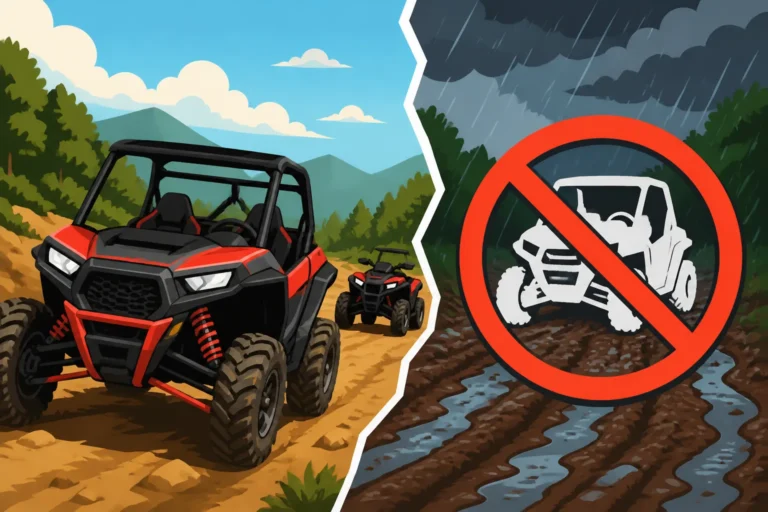
A muddy track is not automatically a suitable track to ride. Spinning tires can cut deep grooves, loosen the trail surface, and send water running down the new ruts. That damage can make the route harder to maintain and more hazardous for the next rider. Managers may close trails when conditions are too wet, so check access before heading out. Georgia Trails That Close After Rain explains why a route’s condition can matter as much as whether it is normally open.
Treat a wet trail as a reason to slow down and reassess, not as a challenge to conquer. If the machine is sliding, the trail is visibly eroding, or you would need repeated attempts to climb a section, turning around may be the better choice. Keep an eye out for posted signs and gates, and don’t assume that a route shown on a map is open for riding.
Before you leave home, check trail notices and the land manager’s information for the specific area. Mapping tools such as onX Offroad can help you understand your route and identify nearby trail connections, but a map should not replace current closure information from the land manager. Georgia Trail Conditions Before You Drive is also useful when you’re planning around recent rain.
Do tire chains help on an ATV or UTV?
Chains can add bite, but they are not a cure for mud
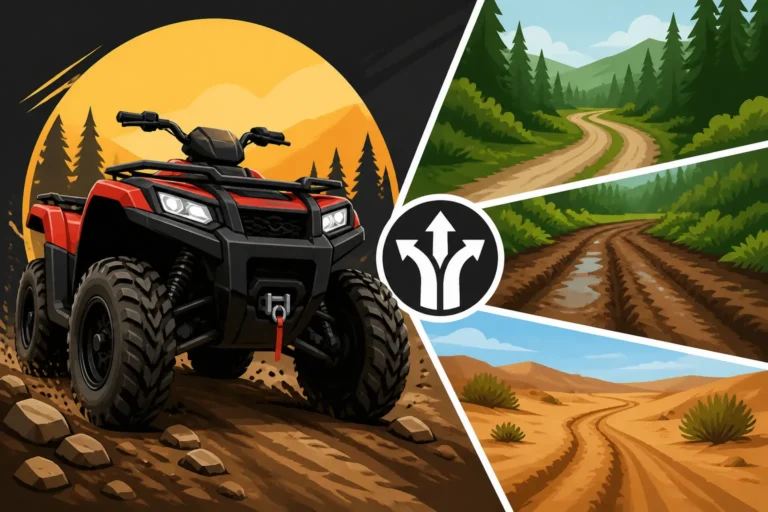
Tire chains are best understood as a traction aid for certain surfaces, not a universal mud upgrade. Depending on the chain design, tire, and ground conditions, they may help a machine find grip where a smooth or packed surface is slippery. But in deep, sticky clay, chains can become coated, lose their advantage, or dig aggressively into the ground.
Chains can also change how a machine handles. More bite at one wheel or axle than another may affect steering, turning, and braking, particularly on a slope. A chain that fits poorly can shift, loosen, or contact a fender, brake line, suspension part, or other component. That’s a machine-damage risk as well as a potential safety problem.
For many riders, properly chosen mud tires and sensible riding technique are a more practical starting point than chains. Tread pattern, tire pressure within the manufacturer’s guidance, and the machine’s weight all influence performance. Chains may be worth considering for a specific use, but check your owner’s manual and the chain maker’s fitment guidance before installing them.
Check trail rules and machine clearance before fitting chains
There is no reason to assume chains are permitted on every riding area. They can scar the trail surface, particularly when riders spin their tires, and individual parks or land managers may set equipment or trail-use rules. Contact the location before riding with chains rather than waiting until you arrive at the trailhead. Georgia Private Park Rules and Waivers covers why a private park’s rules are worth checking before a visit.
If you’re considering chains for a machine you also take onto public roads, check the applicable road-use requirements and the machine manufacturer’s instructions. An accessory that is appropriate for one terrain or use may be unsuitable for another. Don’t let improved traction create a false sense of control: chains cannot make a steep, deeply rutted, or closed trail safe.
Use this checklist before deciding:
| Question | Why it matters | Practical next step |
|---|---|---|
| Does the chain match the tire size and pattern? | A poor fit can shift or come loose. | Confirm fitment with the chain and machine manufacturers. |
| Is there enough clearance? | Chains can contact bodywork, brakes, or suspension. | Check clearance through steering and suspension movement as directed by the manufacturer. |
| Are chains allowed at the riding area? | Some surfaces and facilities may prohibit or discourage them. | Ask the land manager or park before traveling. |
| Is the trail too wet to ride responsibly? | Extra traction can still damage a saturated trail. | Check closures and turn back if the surface is rutting or eroding. |
| Will you be riding on pavement? | Chains may be inappropriate for road surfaces and handling. | Follow the owner’s manual and applicable road rules. |
How to ride muddy foothill trails with better control
Prepare the machine and route before you set out
Start with the machine, not the mud. Check tire condition, steering, brakes, lights, and any equipment you might need for recovery. If you use chains, inspect their fit and fastening before departure and again after a short, low-speed test in a safe area. Stop immediately if you hear unusual contact or notice a chain has shifted.
Plan a route that matches your experience and the machine’s capability. Look at the trail’s surface, width, elevation, and recent conditions instead of choosing only by distance. onX Offroad can help you review route options and keep track of your planned path, but verify access and closures with the relevant trail authority. Georgia Trails in the Blue Ridge Mountains provides broader context for planning rides in the region.
Pack for delays, not just for the ride you hope to have. A tow strap, gloves, basic tools, drinking water, and a charged phone can make a difficult stop less stressful. Tell someone where you’re going and when you expect to return, especially if cell service may be limited. Carrying a Tow Strap in the Mountains offers more guidance on planning for recovery in hilly terrain.
Use smooth inputs and avoid digging deeper
On a muddy section, make gentle changes to speed and direction. Sudden throttle can spin the tires and excavate a rut. Abrupt braking or steering can also make a machine slide, especially on a slope. Keep enough distance from other riders to avoid having to stop suddenly in the worst part of a hill or muddy hollow.
Choose a line with care, but don’t leave the established route to skirt a puddle or rut if that would widen the trail or damage vegetation. If a hill feels too slick, stop in a safe place before committing to it. Don’t ride across a slope simply because the direct route looks difficult; a sideways slide can be hard to recover from.
If you lose momentum, avoid repeated high-throttle attempts. Let the wheels stop, assess the situation, and consider whether backing out on the same line is safer. Keep people clear of the machine and its recovery path, and follow the manufacturer’s recovery points and instructions. Winches and Steep Clay Climbs discusses recovery considerations for steep, slippery terrain.
What to do after a muddy ride
Clean and inspect before the clay hardens
Red clay is easier to manage before it dries into a hard layer. Rinse mud from the tires, wheel wells, suspension, radiator area, brakes, and underside, following the machine’s cleaning instructions. Avoid directing high-pressure water at seals, electrical connections, or bearings unless the manufacturer says it is safe.
After cleaning, look for packed clay that remains hidden around moving parts. Check the tires for cuts or lodged debris, and inspect chains for loosened links, damage, or signs of rubbing. If the machine’s handling changed during the ride, don’t assume it was only the mud. Check the steering, brakes, and suspension before your next outing. Washing Clay Off Before It Sets offers additional post-ride cleaning tips.
Use trail condition as a reason to change plans
Sometimes the best mud strategy is not riding that trail that day. If the ground is saturated, a route is visibly rutting, or a posted closure is in place, choose another open area or reschedule. Georgia Trail Closures After a Storm explains why closures can follow heavy weather, while Tread Lightly on Erodible Clay focuses on limiting damage to vulnerable surfaces.
For future trips, keep notes about how rain affected the route, where the mud was deepest, and which sections were difficult to turn around in. onX Offroad can help you keep your planned route organized, but pair that planning with official access and condition updates. The more deliberately you choose a route, the less likely you are to end up trying to force a machine through terrain that is unsafe for you or damaging for the trail.
Disclaimer
This article is for general informational purposes only and does not constitute professional advice. Laws, prices and regulations vary by location and change over time. Consult a qualified professional for guidance on your specific situation.