Sharing a County Road With Log Trucks
A quiet Georgia county road can change quickly when a loaded log truck appears around a bend. The truck may need much of the lane, and its driver may not see a small ATV or UTV right away. This guide explains how to check that your route is legal, prepare your machine, and handle close encounters with logging traffic more safely.
Check that your county-road route is legal
Confirm the road and machine qualify
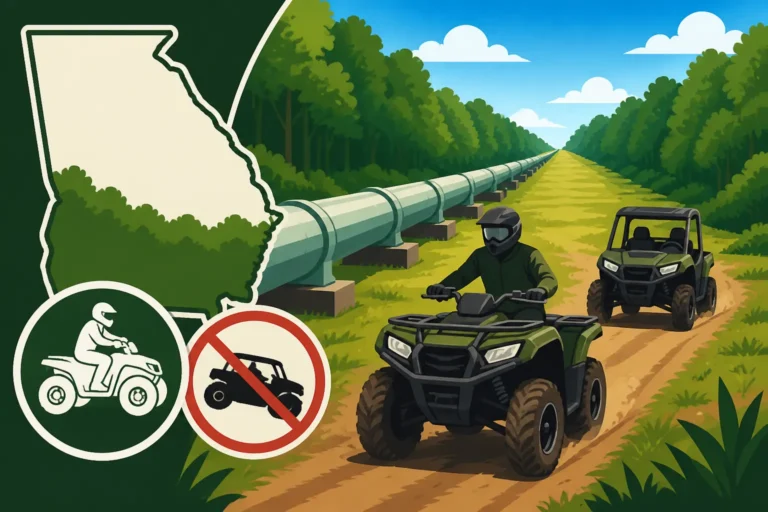
A road that looks rural, quiet, or locally maintained is not automatically open to an ATV or UTV. Georgia road access depends on the machine, its registration and equipment, and the type of road. Start by confirming that your machine qualifies for the applicable registration and that the road is part of a system where that access is permitted. [Georgia MPOHV Road Rules: County Roads Only]
This distinction matters if you are following a logging truck or heading toward a timber tract. A route may begin on an eligible county road and later connect to a state highway, a private timber road, or land where you do not have permission to ride. Check the whole route rather than assuming that one legal segment makes the rest of the trip legal. [What a County Road System Includes]
The same caution applies to a registration plate. A plate does not mean every road is open to your machine, and it does not give you permission to ride on private land. Before setting out, check road signs and restrictions and confirm any route-specific rules with the county or relevant land manager. [Georgia Registration Versus Just Riding Private Land]
Keep county roads and state highways distinct
A county road can meet or cross a state route without making that state route part of your approved riding route. Plan to avoid riding along a state highway, and do not treat a crossing as permission to travel down it. If a route requires a crossing, find out whether and where that crossing is allowed before you ride. [Why Georgia State Highways Stay Off Limits]
This is especially important around logging operations. A map may show a short road connection that looks convenient, but the actual road may be posted, gated, privately maintained, or unsuitable for your machine. If you cannot tell whether a road is open and eligible, choose a different route instead of following a truck onto it.
A useful pre-ride check is to identify your starting point, destination, every road connection, and a safe place to turn around. Make sure your navigation app is not automatically sending you onto a highway or a private access road. Treat uncertainty as a reason to stop and verify, not as a reason to continue.
Understand what makes log trucks difficult to share the road with
Expect a wide vehicle with limited visibility
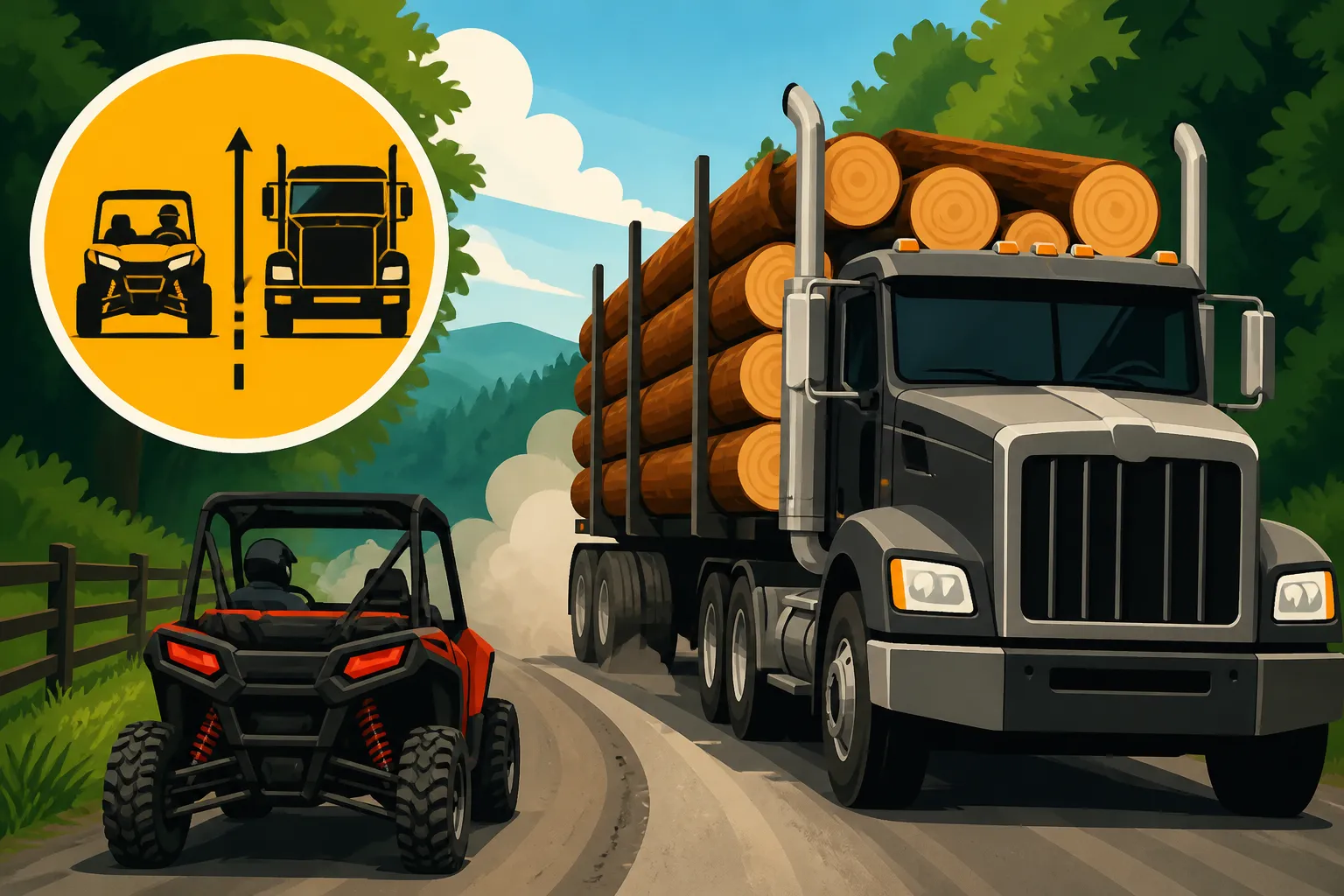
Loaded log trucks are large, heavy vehicles. Depending on the road, their load and trailer may need extra room through a turn, around roadside obstacles, or on a narrow stretch. A truck approaching from the other direction may appear to take up the full roadway. Do not assume the driver can move over enough to give a small ATV or UTV a comfortable margin.
Visibility is another challenge. The cab, mirrors, trailer, trees, dust, and road curves can all affect what the driver can see. A driver may be concentrating on the road surface, a steep grade, or the position of the load. Even if you can see the truck, that does not mean the driver has noticed you.
Give the truck room and time. Avoid riding beside it, darting around it, or stopping in a position where the driver has to guess whether you will move. On a narrow road, the safest choice is often to slow well before the meeting point and move to a firm, visible place where you can wait without blocking the roadway.
Leave extra room around turns, hills, and loose surfaces
A bend, hill crest, or dusty stretch can hide an approaching truck until you have little room to react. Reduce speed before entering a blind section, keep to a predictable line, and avoid riding close to the center of the road. If you cannot see far enough ahead to stop comfortably, treat the road as if a truck could appear at any moment.
Loose gravel and dust can make a close encounter more stressful. A truck may throw up dust that briefly reduces your visibility, while gravel can scatter near the road edge. If dust reaches you, slow down and increase your following distance rather than trying to stay close to the truck. Do not pass until visibility and road conditions are clearly safe.
The road shoulder is not always a safe escape route. It may be soft, sloped, rutted, or bordered by a ditch. Before pulling off, look for a stable, level area with enough room to get fully clear of the truck’s path. If the shoulder is unsafe, slow down and stop at a safer spot before the two vehicles meet.
| Road situation | Safer response | Avoid |
|---|---|---|
| Truck approaching on a narrow road | Slow early and move fully clear only if the shoulder is firm and visible | Waiting until the last moment to swerve |
| Dust behind a truck | Increase distance and wait for visibility to improve | Following close or passing in the dust |
| Blind curve or hill crest | Reduce speed before entering and stay predictable | Riding fast because the road seems empty |
| Truck stopped or turning | Wait where the driver can see you and give the vehicle room | Squeezing between the truck, trailer, and roadside |
| Unclear road access | Stop and verify the road and route | Assuming a nearby logging road is public |
Prepare your ATV or UTV before riding
Make yourself visible and keep the machine predictable
Use the required equipment for your machine and road use, and check that it is working before you leave. Lights, mirrors, and other required safety items are not just paperwork details when you share a road with large vehicles. A properly positioned mirror can help you notice traffic behind you, but it cannot replace looking around and leaving enough space. [Georgia Equipment a Road Machine Must Carry]
Make sure your registration and insurance documents are in order, and confirm that the machine remains eligible for the road access you plan to use. [Georgia Registration and Proof of Insurance] Registration and insurance do not remove the need to ride defensively or follow road restrictions. For specifics about required coverage, registration, or equipment, check the applicable rules and your county’s instructions before your ride.
Aftermarket parts can affect visibility, control, or fit. For instance, some riders look at products from SuperATV when considering mirrors or other accessories, but an accessory should be chosen for the machine and installed securely. A particular product does not establish that a vehicle is legal for road use, and it cannot substitute for required equipment.
Match your pace to the road and the machine
Do not assume that a machine’s top speed makes it safe or legal to use on a road. The machine must meet the applicable requirements, and your speed should leave enough room to respond to gravel, potholes, traffic, and limited sightlines. [Georgia's 25 to 65 mph Speed Requirement] On a road shared with logging traffic, riding much slower than the posted limit may be sensible when visibility is poor or the surface is rough.
Before you ride, check your tires, brakes, steering, lights, mirrors, and fuel. Secure tools, bags, and any cargo so they cannot shift or fall into the road. In a UTV, make sure seat belts are available and used as required. If the machine pulls to one side, has weak brakes, or has a light or mirror that will not stay in place, fix the problem before using a public road.
Plan for the unexpected rather than relying on speed to get out of trouble. Leave enough distance to stop smoothly. Avoid sudden turns onto a shoulder, especially if the machine is carrying cargo or has passengers. A measured, visible response is easier for a truck driver to understand than a sharp maneuver at the last second.
Handle encounters with logging traffic calmly
When you meet a truck coming toward you
As soon as you see a log truck, reduce speed and assess the road ahead. Look for a broad, firm pull-off or a place where you can wait without entering a ditch, blocking a driveway, or standing in the truck’s path. If you can move safely and predictably, do so early enough that the driver has time to understand your position.
Avoid stopping directly at the narrowest point of a bend or on the crest of a hill. The truck driver may not see you until late, and a stopped machine can be difficult to distinguish from roadside clutter. If there is no safe place to pull aside immediately, slow down, keep your line steady, and move to the first safe location rather than making a sudden turn.
Once clear, wait until the entire truck and trailer have passed. Do not pull back onto the road while the trailer is still alongside you or while dust and loose material obscure what is behind it. Take a moment to recheck the road before continuing.
When you are behind a truck or riding at night
Following a logging truck too closely leaves little time to react to braking, debris, dust, or a sudden turn. Keep a generous gap, and do not use the truck’s size as a shield from oncoming traffic. If the truck is slowing, turning, or stopping, wait for the driver’s movements to become clear rather than trying to pass around it.
Passing is particularly risky on a road with bends, hills, loose gravel, or limited visibility. Do not pass unless it is legal, the road is clear far enough ahead, and you can complete the maneuver without crowding the truck or meeting oncoming traffic. If any part of that decision is uncertain, stay back and wait for a safer opportunity.
Night riding adds another layer of difficulty. A small machine is harder to notice, and headlights may not reveal the full width or position of a truck and its trailer. Make sure required lights are working, reduce speed to suit what you can actually see, and avoid riding after dark when you cannot confidently identify hazards and pull-offs. [Georgia Night Riding on a County Road] For additional equipment and visibility considerations, see [Georgia Rules for Riding After Dark].
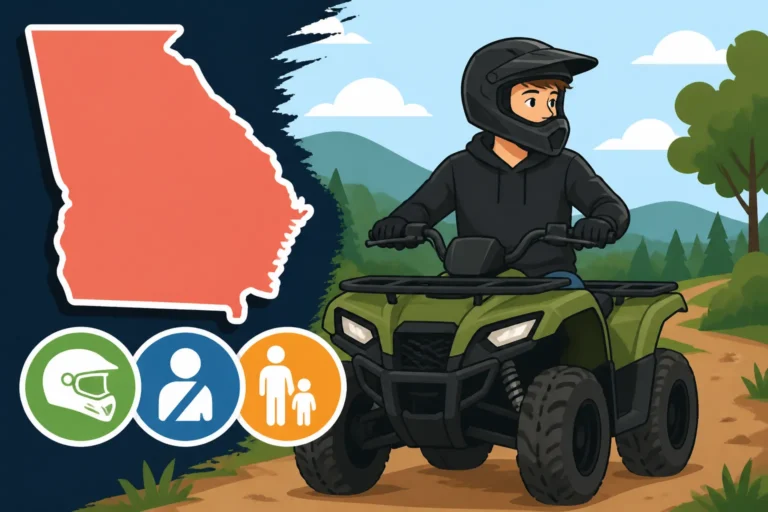
If you ride on public roads, follow the rules that apply to the machine and operator, including applicable licensing, helmet, registration, and insurance requirements. Review the road-use rules before a trip rather than relying on what another rider says is allowed. [Can You Drive a UTV on the Road in Georgia?]
Make a practical plan for timber-country routes
Before leaving, tell someone your route and expected return time, particularly if you will ride in an area with active timber operations. Keep your phone charged, carry water, and know where you can safely turn around. On rural roads in Georgia’s timber-producing areas, including parts of South Georgia, a short route can involve long stretches with few safe places to stop.
If a truck is entering or leaving a work site, assume it may turn, slow, or swing wider than you expect. Keep clear of gates and entrances, do not park where a truck needs to maneuver, and never follow a vehicle through a gate unless you have permission to enter. A road that connects to a timber tract may not be public or open to recreational riding.
If you are unsure whether a road is open, whether your machine qualifies, or whether a specific crossing is permitted, pause the ride and verify first. A small detour is a much better outcome than ending up on a prohibited road or in a dangerous encounter with a loaded truck.
Disclaimer
This article is for general informational purposes only and does not constitute professional advice. Laws, prices and regulations vary by location and change over time. Consult a qualified professional for guidance on your specific situation.