Georgia Rules for Towing With a Side-by-Side
It's a common sight in Georgia: a powerful side-by-side machine, built for rugged terrain, suddenly needs to pull a small trailer, a utility cart, or even a disabled piece of equipment. The question isn't always "Can it physically do it?" but more often, "Is it legal and safe to do this, especially if I need to venture onto a public road?" This guide will clear up the confusion surrounding Georgia's rules for towing with your side-by-side, making sure you can haul your gear without hitting a legal snag or compromising safety.
The Basics of Towing with Your Side-by-Side in Georgia
Before you even think about hitching up a trailer and hitting the trail, or perhaps a county road, it's crucial to understand your side-by-side's inherent capabilities and what's truly safe. Many owners get excited about the raw power of their UTVs and assume they can tow anything, anywhere. However, the reality of physics and legal limits can quickly put the brakes on those assumptions.
Understanding Your Machine's Towing Capacity
Every side-by-side is designed with a specific towing capacity, usually outlined in your owner's manual. This number is critical and should never be exceeded. Think of it this way: a machine like a Polaris Ranger or a Kawasaki Mule might feel incredibly strong, effortlessly pulling logs on your property, but that doesn't mean it's equipped to handle a heavy trailer with a full load on varying terrain or public roads. Overloading can lead to dangerous situations, from loss of braking control to damage to your machine's frame, transmission, or suspension.
Consider the kind of work you typically do. Are you hauling firewood from your back forty, moving feed around a farm, or simply taking a small utility trailer to a hunting camp? These tasks often stay on private property, where the rules are set by the landowner. On private land, your primary concern is the machine's mechanical limits and your personal safety. However, once you think about a public road, even a dirt county road, a whole new set of legal requirements kicks in. Understanding your actual towing capacity, not just what it feels like it can pull, is step one in responsible towing.
Beyond the weight of the trailer and its contents, remember to factor in the weight of any passengers and cargo in your side-by-side itself. Every pound adds to the overall strain on your machine. Your side-by-side also has a [Georgia's 4,000-Pound Gross Weight Ceiling] and a [Georgia's 350-Pound Payload Requirement] when it comes to MPOHV registration, but these apply to the machine itself, not necessarily its towed load in a public road context. However, they highlight the general design limitations. If you frequently find yourself pushing the limits, it might be time to consider whether your current machine is truly suited for the heavy-duty towing you require, or if you need to upgrade components to enhance its capability and safety.
Essential Equipment for Safe Towing
Towing safely isn't just about having a powerful machine; it's about having the right equipment and ensuring it's in top condition. At a minimum, you'll need a proper hitch receiver and ball, correctly rated for the load you intend to tow. Many side-by-sides come with a basic hitch, but for heavier or more frequent towing, you might consider aftermarket upgrades. Companies like SuperATV offer a range of heavy-duty hitches, reinforced frames, and suspension components that can significantly improve your machine's ability to handle a load safely.
Beyond the hitch itself, safety chains are non-negotiable. These provide a critical backup should your primary hitch connection fail. They should be crossed under the trailer tongue to cradle it in case of detachment. Properly functioning trailer lights, including brake lights and turn signals, are also essential, especially if you plan to venture anywhere near public roads or operate after dark, even on private land. Without adequate visibility, you're not just risking a ticket; you're risking a serious accident.
Finally, consider your braking system. While your side-by-side has its own brakes, a heavy trailer can easily push your machine, increasing stopping distances dramatically. For heavier loads, a trailer with its own braking system is highly recommended, if not legally required in some situations. Always perform a pre-tow checklist: check tire pressure on both your side-by-side and the trailer, ensure all lights work, confirm safety chains are secure, and verify the hitch connection. These few minutes of preparation can prevent hours of headaches, or worse, a dangerous incident.
Navigating Georgia's Roads: When Your Side-by-Side Can Tow
This is where things can get a bit more complex, and where many side-by-side owners in Georgia find themselves scratching their heads. The general rule of thumb for off-road vehicles is that they belong off-road. However, Georgia has carved out specific allowances, particularly with the advent of the Multi-Purpose Off-Highway Vehicle (MPOHV) registration. This registration opens up limited road access for qualifying side-by-sides, but it comes with strict conditions, especially when towing.
MPOHV Registration and Road Access for Towing
If you intend to tow anything with your side-by-side on a public road in Georgia, even for a short distance, your machine generally needs to be legally registered as an MPOHV. Without this registration, your side-by-side is strictly an off-road vehicle, and driving it, let alone towing with it, on any public road is illegal and can lead to significant penalties. [Georgia MPOHV Registration Explained] outlines the process. This special registration grants your side-by-side some of the same privileges and responsibilities as other vehicles on certain roadways.
Once registered as an MPOHV, your side-by-side will receive a special license plate. [Georgia Plates for Off-Highway Vehicles] are easily distinguishable. This plate signifies that your machine has met specific criteria, including certain safety features. However, even with an MPOHV plate, you cannot just tow anything, anywhere. The registration is specifically for the operation of the MPOHV itself, and any towed unit must also adhere to road safety standards. This means proper lighting, safety chains, and potentially brakes for the trailer, depending on its weight. A common misconception is that if your UTV is registered, then its towing capabilities on public roads are the same as a truck's, which is simply not true.
The MPOHV rules are specific about the machine itself, but they inherently imply that if you're operating on a road, anything you're towing must also be road-legal in terms of safety equipment. This isn't just about avoiding a citation; it's about making sure your entire setup is visible and controllable to other drivers. Remember, the privilege of using public roads comes with the responsibility of ensuring your vehicle – and anything attached to it – is safe for everyone. You'll also need [Georgia Liability Insurance Tied to Registration] if you're going to be on public roads, and this insurance typically extends to cover damages caused by a properly attached and road-legal trailer.
Permitted and Prohibited Roadways for Side-by-Side Towing
The most crucial distinction to understand is that MPOVHs, even when registered, are generally limited to county roads. You absolutely cannot drive, or tow with, your side-by-side on state highways or interstates in Georgia, except for specific [Georgia Crossings at Designated Points]. This is a hard-and-fast rule, and ignoring it can result in severe consequences. So, while you might be able to pull your fishing boat a mile down a dirt county road to the ramp, you can't take it on a major state route. [Georgia UTV Road Rules by County] details these limitations, emphasizing that access is often restricted to local county networks.
Furthermore, individual counties and municipalities have the authority to create their own ordinances regarding MPOHV use on their roads. This means that while one county might be perfectly fine with you towing a small utility trailer on its designated county roads, another might have tighter restrictions or even ban MPOVHs entirely on certain routes. Before you plan any trip involving towing on public roads, it's wise to check with the local county sheriff's office or municipal authorities. [Can a Georgia County Close Its Roads to UTVs?] is a question many ask, and the answer is yes, they can. Always err on the side of caution.
If you are on an approved county road, remember that your side-by-side is still operating in a mixed traffic environment. This means adhering to speed limits, signaling turns, and generally driving defensively. Towing a trailer can significantly alter your machine's handling, braking, and acceleration, so adjust your driving style accordingly. A small UTV towing a trailer is much less visible and less maneuverable than a full-size truck, and other drivers may not anticipate its presence. Understanding and respecting these roadway limitations is paramount for both your safety and legal compliance.
Smart Towing Practices for Georgia's Diverse Terrain
Even when you're legally squared away and have the right equipment, the act of towing itself requires smart practices. Georgia's landscape is varied, from flat agricultural lands to steep mountain trails, and each presents its own challenges when you're pulling a load. Preparing properly and maintaining your machine are key to a smooth and safe towing experience.
Pre-Towing Checks and Load Distribution
Before every tow, whether it's across your pasture or down a county road, a thorough pre-check is essential. Start with the basics: inspect your tires for proper inflation and wear, not just on your side-by-side but on the trailer as well. Under-inflated trailer tires can lead to sway and instability. Next, check all lights – headlights, taillights, brake lights, and turn signals – on both your machine and the trailer. A burnt-out bulb is an easy fix that can prevent a serious issue. Finally, confirm your hitch connection is secure and your safety chains are properly attached and crossed. Many close calls could have been avoided with a simple five-minute walk-around.
Load distribution is another critical factor. The general rule is that about 10-15% of the trailer's total weight should be resting on the hitch (tongue weight). Too little tongue weight can cause severe trailer sway, making your setup incredibly unstable and difficult to control, especially at speed or on bumpy terrain. Too much tongue weight can overload the rear suspension of your side-by-side, potentially lifting the front wheels and impairing steering and braking. Imagine trying to steer your UTV on a bumpy Georgia dirt road with the front end light – it's a recipe for disaster.
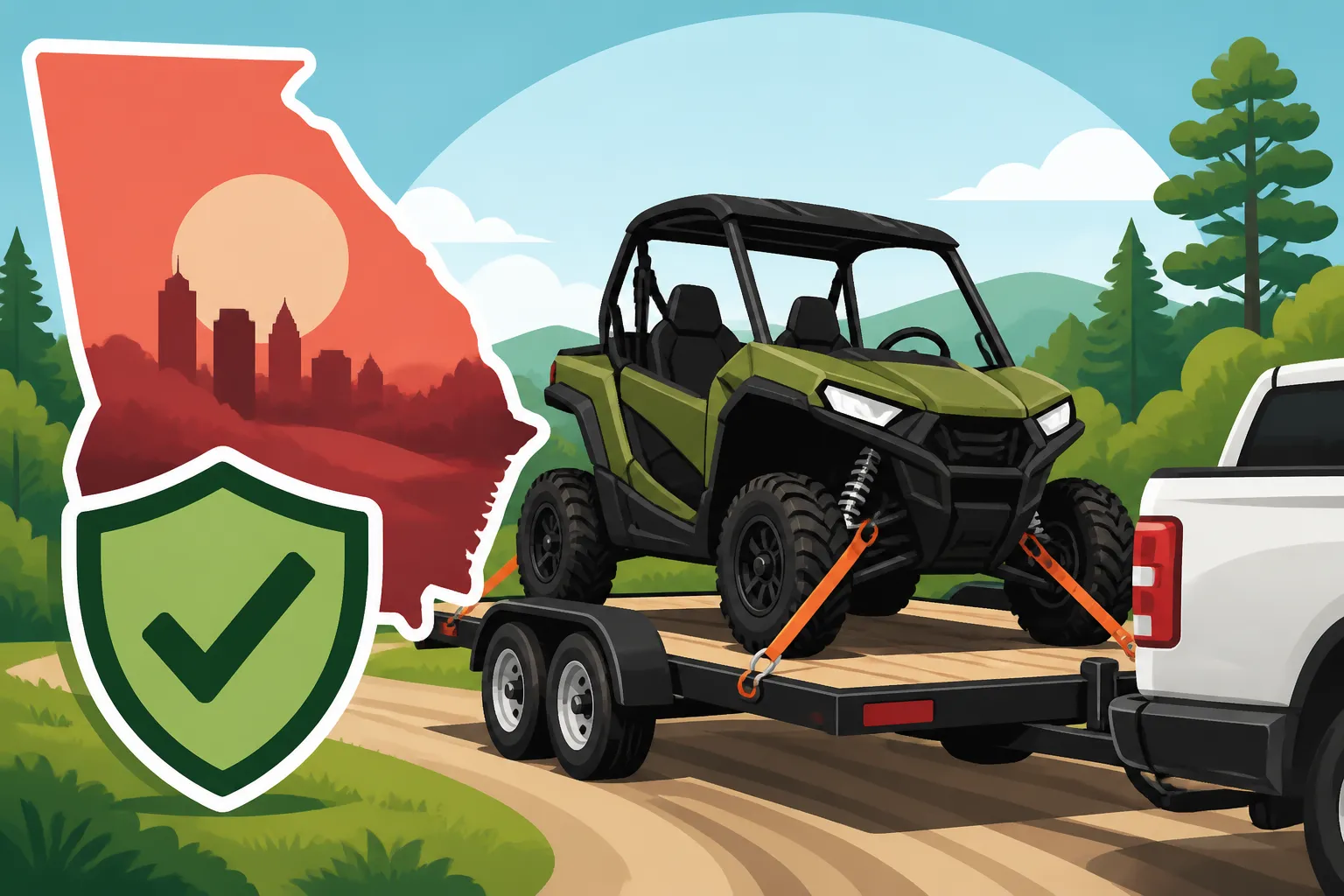
When loading your trailer, place heavier items over the trailer's axle or slightly forward of it. Secure everything tightly with straps or tie-downs to prevent shifting during transit. A shifting load can drastically change your tongue weight and upset the balance of your entire rig, turning a stable tow into a white-knuckle experience. Taking the time to distribute your load properly not only makes the tow safer but also reduces strain on your side-by-side, extending the life of its components.
Maintenance and Upgrades for Consistent Towing Performance
Regular maintenance is always important for your side-by-side, but it becomes absolutely crucial when you're frequently using it for towing. Towing puts extra strain on your engine, transmission, brakes, and suspension. Keeping up with oil changes, checking fluid levels, and inspecting brake pads are non-negotiable. Pay particular attention to your belt drive system (if applicable), as heavy loads can accelerate wear. A slipping belt while climbing a hill with a trailer attached is not just inconvenient; it can be dangerous.
For those who tow regularly, consider upgrades that enhance your machine's towing capabilities and longevity. Heavy-duty springs or aftermarket shocks can help manage the added weight and prevent sagging, which is not only bad for handling but can also affect your headlight aim. Upgraded brakes can provide much-needed stopping power. Even something as simple as a winch, perhaps a robust unit from SuperATV, can be invaluable for self-recovery or assisting others if a towed load gets stuck on a muddy trail or uneven ground.
Remember, [Georgia Equipment a Road Machine Must Carry] includes basic safety items, but for towing, your maintenance should go above and beyond. Think of your side-by-side as a workhorse. Just like any work animal, it needs proper care and conditioning to perform its duties reliably. Investing in preventive maintenance and smart upgrades will not only make your towing experiences safer and more efficient but will also protect your investment in your side-by-side for years to come.
Avoiding Common Pitfalls When Towing with Your Side-by-Side
Even with the best intentions and proper equipment, it's easy to fall into common traps when towing with a side-by-side. Many of these pitfalls can lead to dangerous situations, vehicle damage, or legal trouble, especially when operating near or on public roads in Georgia. Being aware of these common mistakes is the first step in avoiding them entirely.
Overloading, Speed, and Braking Concerns
The most common mistake is simply overloading the trailer or the side-by-side itself. Just because your machine can move a heavy load on flat ground doesn't mean it can safely stop that load, especially on a decline or in an emergency. Exceeding your manufacturer's towing capacity puts immense strain on your drivetrain, chassis, and brakes. This can lead to brake fade, where your brakes lose effectiveness due to overheating, or even catastrophic failure. Imagine going down a steep incline on a Georgia logging road with a heavy load and suddenly realizing your brakes aren't enough – it's a terrifying scenario.
Speed is another critical factor. Your side-by-side's top speed capabilities are rarely relevant when towing. A general rule of thumb is to reduce your speed significantly when pulling a trailer, especially on uneven terrain or public roads where other vehicles are present. High speeds can amplify trailer sway, reduce your reaction time, and make it much harder to control your rig. Even on a straight, smooth county road, unexpected bumps or turns can quickly destabilize an overloaded or improperly distributed trailer at higher speeds.
Furthermore, be mindful of the difference in braking performance. A loaded trailer pushes your side-by-side forward, significantly increasing your stopping distance. Always leave extra space between yourself and the vehicle in front, and anticipate stops far in advance. If you have a trailer with its own brakes, ensure they are properly adjusted and working in conjunction with your side-by-side's braking system. [Georgia MPOHV Eligibility: The Eight-Point Test] touches on general machine capabilities; a UTV that barely meets basic requirements might struggle significantly with an added load.
Understanding and Respecting Local Regulations
Many side-by-side owners assume that if they're just crossing a short stretch of road or operating in a rural area, local laws won't apply or won't be enforced. This is a dangerous assumption. As mentioned, [Georgia MPOHV Road Rules: County Roads Only] are very specific, and local jurisdictions can further restrict or permit use. Failing to understand these nuanced regulations can lead to citations, fines, and even impoundment of your machine. [Georgia Penalties for an Unregistered Road Machine] can be steep, and those penalties often extend to improperly operated registered machines as well, especially if they are involved in an accident while towing.
It's not just about the MPOHV registration; it's about the trailer too. While smaller utility carts might fly under the radar, any trailer used on public roads typically needs to meet specific lighting, reflective, and safety chain requirements. Some larger trailers may even require a separate tag or registration, depending on their size and weight. Don't assume that because your side-by-side is registered as an MPOHV, anything you attach to it is automatically road-legal.
Before you tow anything with your side-by-side on a public road in Georgia, take the time to do your homework. Check your owner's manual, understand Georgia's MPOHV laws, and, if in doubt, contact your local county tag office or sheriff's department. It’s far better to ask a few questions beforehand than to face the frustration and expense of a roadside stop, a traffic ticket, or a preventable accident.
| Towing Component | Key Safety Check | Importance for Side-by-Side Towing |
|---|---|---|
| Hitch & Ball | Correct weight rating, secure attachment | Prevents detachment, ensures proper load transfer |
| Safety Chains | Crossed, securely attached to tow vehicle and trailer | Critical backup if hitch fails, prevents runaway trailer |
| Trailer Lights | Brake, turn, running lights all functional | Ensures visibility to other drivers, prevents rear-end collisions |
| Trailer Brakes | Functional, properly adjusted (if equipped) | Greatly reduces stopping distance, essential for heavy loads |
| Tires (UTV & Trailer) | Proper inflation, no excessive wear or damage | Prevents blowouts, reduces sway, ensures stable handling |
| Load Distribution | 10-15% tongue weight, secured cargo | Prevents sway, maintains steering control, reduces strain |
| Suspension (UTV) | No excessive sag, proper ride height | Maintains stability, prevents damage to UTV components |
| Brakes (UTV) | Pads, fluid, master cylinder in good condition | Crucial for stopping safely, especially with added weight |
| Fluids (UTV) | Engine oil, transmission, coolant levels | Prevents overheating and mechanical failure under strain |
Disclaimer
This article is for general informational purposes only and does not constitute professional advice. Laws, prices and regulations vary by location and change over time. Consult a qualified professional for guidance on your specific situation.