Georgia Rules for Carrying a Rifle on a Quad
There's nothing quite like heading out into Georgia's beautiful wild, whether it's for a hunt, some land management, or just exploring, and often, that means bringing along a trusty rifle. But for many ATV and UTV owners, the big question mark hangs over how exactly to transport that firearm legally and safely. It's not always as straightforward as just throwing it in the back, and the rules change dramatically depending on where you are and what kind of machine you're riding. This guide is here to untangle those Georgia rules, helping you understand the nuances of carrying a rifle on your quad or side-by-side, so you can enjoy your time outdoors without any unexpected legal bumps in the road.
The General Principle: Private Land vs. Public Land
When it comes to firearms, Georgia law often distinguishes between private property and public spaces, and this distinction is absolutely critical when you’re on an ATV or UTV. What you can do on your own land might land you in hot water just a few feet away on a county road or within a Wildlife Management Area. It’s like having two sets of rules for the same game, and knowing which game you're playing at any given moment is key to staying legal and safe.
Carrying on Your Own Private Property or Leased Land
Ah, the freedom of your own land, or a property where you have explicit permission to hunt and operate your machine. This is where you generally have the most leeway when it comes to carrying a rifle. On private property, Georgia law grants landowners and authorized users significant rights regarding firearms. You can typically carry a loaded rifle on your ATV or UTV without much fuss, as long as you're doing so responsibly and not creating a public nuisance or danger.
Think of it this way: if you're riding around your family farm, checking fences, or heading to a deer stand on land you own or lease, you're usually operating under fewer restrictions. The focus here shifts from legal compliance to personal safety and common sense. You'll still want to make sure the rifle is secured, whether in a sturdy SuperATV gun scabbard or a secure rack, to prevent it from bouncing out or getting damaged. The main concern is ensuring the firearm is handled safely, pointed in a safe direction, and that you're always aware of its loaded status. While the law might allow it, an accidental discharge is always a devastating possibility if proper gun safety rules aren't followed. Keep your fingers off the trigger, and always assume the gun is loaded, even when you know it's not. This is also where you might be more comfortable with a round in the chamber if you’re actively hunting or dealing with potential threats like nuisance animals on your property. However, this comfort level should never extend to public access points.
Navigating Public Roads and Ways
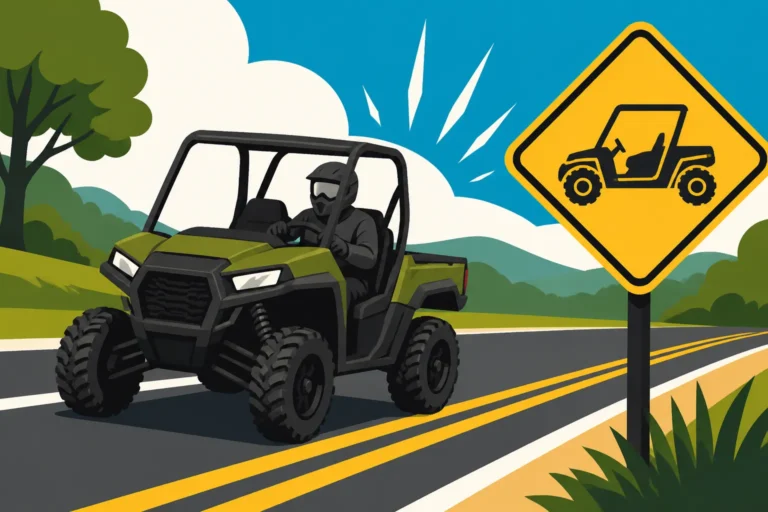
Here’s where things get considerably tighter, and confusion often reigns. Once you leave the bounds of private property and enter any public road, trail, or right-of-way, Georgia’s rules for carrying firearms on vehicles come into play, and they are much stricter. This applies even if your side-by-side or ATV is registered as a Multipurpose Off-Highway Vehicle (MPOHV) for county road use. While [Georgia MPOHV Registration Explained] grants you limited road access, it doesn't grant you special privileges regarding loaded firearms.
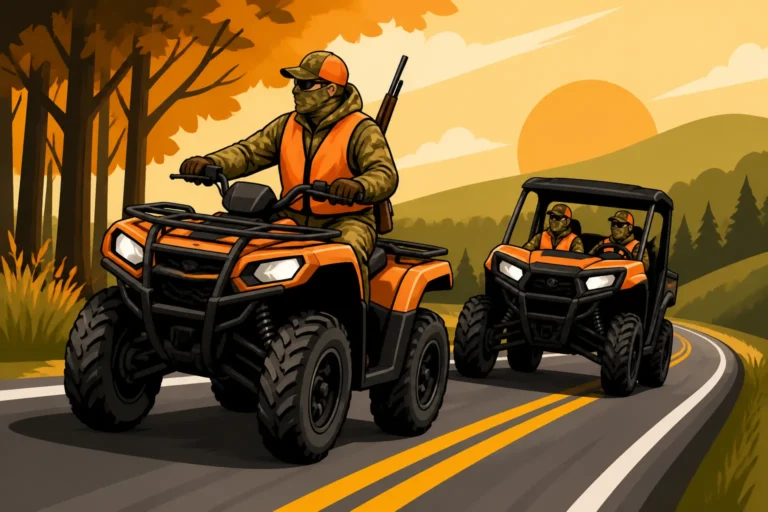
The golden rule for transporting a rifle on an ATV or UTV on public roads in Georgia is almost always this: it must be unloaded. What does "unloaded" mean in this context? It means there should be no round in the chamber, and typically, the magazine should not be inserted into the firearm. Some interpretations might even suggest the ammunition should be stored separately from the firearm itself, perhaps in a different compartment. This is especially true if you're on a county road, crossing a state route, or any other public thoroughfare where your machine is merely a mode of transport, not a mobile hunting blind. A side-by-side with a cargo bed might offer a bit more flexibility for secure, out-of-sight transport in a case, but the fundamental unloaded rule still applies. For traditional ATVs, using a sturdy, secure gun rack with a scabbard (like those durable options from SuperATV) is common, but it's paramount that the rifle within is unloaded when you're traversing public roads. Crossing a ditch to get from one section of your land to another that involves a quick hop over a county road? Your rifle needs to be unloaded for that brief public stretch. This rule is designed to enhance public safety and prevent incidents involving readily accessible, loaded firearms in areas shared with other citizens.
Specific Scenarios: WMAs, Hunting, and Law Enforcement Encounters
The broad strokes of private versus public land are just the beginning. Specific public land types, like Wildlife Management Areas, have their own intricate layers of rules. And then there's the broader context of firearm carry laws and how you interact with law enforcement. Understanding these details can prevent a great day outdoors from turning into a costly legal headache.
Transporting Firearms in Wildlife Management Areas (WMAs)
Wildlife Management Areas (WMAs) are a fantastic resource for hunters and outdoor enthusiasts in Georgia, but they come with very specific regulations, especially regarding firearms. These aren't just general public lands; they are managed specifically for wildlife and hunting, and the rules reflect that. When you're driving your ATV or UTV in a WMA, the expectation is generally that your rifle will be unloaded, cased, and out of immediate reach until you are at your designated hunting stand or area. You can't just cruise down a WMA road with a loaded rifle openly displayed on your machine, ready to fire at a moment's notice.
The Georgia Department of Natural Resources (DNR), through its game wardens, actively patrols WMAs to ensure compliance. They are exceptionally knowledgeable about these specific rules and will not hesitate to issue citations for violations. These rules are in place not only for hunter safety but also for the safety of other WMA users, who might include hikers, birdwatchers, or campers. Always check the specific WMA regulations for the area you plan to visit, as they can sometimes have unique stipulations. Often, the firearm must be encased, meaning it's in a soft or hard case, making it clear it's not ready for immediate use. This is crucial even if you hold a hunting license and are actively participating in a legal hunt. For more specific details, you might want to review [Georgia WMA Rules for ATV Riders] and [Georgia Hunting Access by ATV] to ensure you're squared away before heading out.
Open vs. Concealed Carry on an ATV/UTV
Georgia is an "open carry" state, meaning that if you are legally allowed to possess a firearm, you can generally carry it openly without a permit. For concealed carry, you need a Georgia Weapons Carry License (WCL). However, applying these general principles directly to an ATV or UTV, especially one that is moving or on public land, requires careful thought.
While you can openly carry a handgun on your person while riding (assuming you are legally allowed to possess it), this doesn't automatically extend to openly carrying a loaded rifle on the vehicle itself on public roads or in WMAs. The distinction is between carrying a firearm on your person versus transporting a firearm as cargo on a vehicle. As discussed, when a rifle is being transported on an ATV or UTV on public roads, it generally must be unloaded. The presence of a WCL or the right to open carry a handgun does not override the specific vehicle transport laws for long guns.
If you have a WCL, you could potentially carry a handgun concealed on your person while operating your ATV or UTV, even on public roads (where MPOHVs are permitted, as outlined in [Are Side-by-Sides Street Legal in Georgia?]). But this is a separate consideration from the transport of a rifle on the vehicle. The rules for long guns are designed around the potential danger of having a high-powered firearm readily accessible in a public setting. It’s always best to err on the side of caution and ensure any rifle on your quad or side-by-side is unloaded and securely stowed when on public land or roads.
What to Expect from Law Enforcement
A run-in with law enforcement, whether it's a Georgia Department of Natural Resources game warden or a county sheriff's deputy, can be an anxious moment for anyone, especially when a firearm is involved. The key to a smooth interaction is cooperation, clear communication, and knowing your rights and responsibilities. If you're stopped while carrying a rifle on your ATV or UTV, here's what you can generally expect:
First and foremost, comply with all instructions. Keep your hands visible, and inform the officer immediately and calmly that you have a firearm on your vehicle. Do not reach for the rifle unless specifically instructed to do so. They will likely ask about its status – is it loaded? Is it cased? They might also inquire about your hunting license if you're in a WMA or hunting area, or ask to see your driver's license if you're on a public road ([Georgia Driver's License Rules for MPOHV Operators] are important here).
Game wardens are particularly focused on hunting and fishing regulations, including firearm transport within WMAs and during hunting seasons. They're looking to ensure that you're operating within the rules designed to protect both wildlife and public safety. County deputies, on the other hand, might be more concerned with general public safety laws, ensuring the rifle is unloaded on public roads, and checking for things like [Georgia DUI Law and Off-Road Machines] or proper [Georgia MPOHV Registration Explained].
If you are following the rules – rifle unloaded and secured on public roads, or unloaded and cased in a WMA – the interaction should be straightforward. If you're found to be in violation, expect a citation. Ignorance of the law is rarely an excuse, so understanding these nuances before you head out is your best defense. Remember, these officers are doing their job to keep everyone safe, and a respectful, cooperative attitude goes a long way.
Best Practices for Secure and Legal Rifle Transport
Beyond just knowing the letter of the law, implementing smart practices for carrying your rifle can drastically improve safety, prevent damage to your firearm, and ensure you remain on the right side of any regulations. It's about combining legal compliance with practical wisdom for the best possible experience.
Essential Gear: Gun Racks and Scabbards
The days of just bungee-cording your rifle to your ATV are, thankfully, largely behind us. Modern ATVs and UTVs, combined with a robust accessory market, offer excellent solutions for secure rifle transport. The right gear not only protects your firearm but also ensures it stays put, regardless of the terrain you're tackling.
For ATVs, handlebar-mounted racks, fender-mounted racks, or even rear basket systems with gun mounts are popular. Handlebar racks offer quick access, which might be desirable on private land for pest control, but they also expose the rifle more to elements and potential damage. Fender and rear racks, especially when paired with a scabbard, offer better protection and a more secure carry. A good scabbard, like those designed for rugged use, will keep mud, water, and debris off your rifle and prevent it from rattling around. Brands like SuperATV offer a range of durable gun racks and scabbards specifically designed for the demands of off-road riding, ensuring your firearm is snug and protected. These can be hard plastic cases, providing maximum protection against impact and moisture, or heavy-duty soft cases that offer flexibility and lighter weight.
For UTVs (side-by-sides), you have even more options. In-cab overhead racks keep the rifle out of the elements and secure, yet still relatively accessible. Rear window racks or bed-mounted cases offer excellent protection and keep the rifle out of the way of passengers. The key is to choose a system that holds your rifle firmly, prevents it from bouncing or shifting, and protects it from the elements. Consider the type of terrain you ride, the weather conditions, and how frequently you'll need to access the rifle. A poorly secured rifle can not only be damaged but also become a dangerous projectile in a sudden stop or rollover.
| Transport Method | Pros | Cons | Ideal Use Case |
|---|---|---|---|
| ATV Handlebar Rack | Quick access, easy to install | Exposed to elements, less secure, prone to vibration | Private land, light use, immediate access needed |
| ATV Fender/Rear Rack | Better protection with scabbard, more stable | Can be cumbersome, harder to access quickly, takes up cargo space | Private/leased land, hunting, improved security |
| UTV In-Cab Overhead Rack | Protected from elements, secure, good accessibility | Can obstruct rearview, limited to specific UTV models | All-terrain, secure, quick access, weather protection |
| UTV Bed-Mounted Case | Maximum protection (hard case), out of the way | Takes up bed space, less accessible, requires unmounting | Public roads (unloaded), long transport, maximum security |
Loaded vs. Unloaded: Understanding the Nuances
We've touched on this, but let's dive a little deeper into what "loaded" truly means and when it's appropriate. In Georgia, a firearm is generally considered "loaded" if there is ammunition in the chamber or in an attached magazine. This definition is important because it dictates how you must transport your rifle on public land and roads.
- When Unloaded is Non-Negotiable: As a rule of thumb, anytime your ATV or UTV is operating on a public road (a county road, forest service road, or crossing a state highway), your rifle must be unloaded. This means no round in the chamber, and the magazine should ideally be removed from the firearm itself. Some go as far as to store ammunition in a separate compartment. This applies even if you're just going a quarter-mile down the road to another section of your property. The brief time on public access means following public access rules.
- When Loaded May Be Permitted: On private land that you own or have explicit permission to hunt on, you typically have more latitude. You might choose to carry a loaded rifle if you are actively hunting, scouting, or dealing with nuisance animals. However, this is a decision based on personal safety and responsibility, not public law. In specific designated hunting zones within WMAs, once you are at your stand or designated hunting area, a loaded firearm may be permissible during legal hunting hours, but you must transport it to that point unloaded and cased. Always consult the specific WMA regulations for precise details on this.
The crucial takeaway is that the "unloaded" rule on public thoroughfares is about minimizing risk to the general public. A rifle that's unloaded and secured in a case is a far lower risk than one that's loaded and ready to fire, especially when traversing bumpy terrain or encountering unexpected obstacles.
Preventing Accidents and Thefts
Safety is paramount, and preventing accidents and theft should always be at the forefront of your mind when transporting a rifle on your ATV or UTV. These machines can be bouncy, and a firearm is a serious piece of equipment.
- Muzzle Control and Trigger Discipline: Even if your rifle is unloaded, always treat it as if it were loaded. This means keeping the muzzle pointed in a safe direction (away from yourself, passengers, or potential trails) and keeping your finger off the trigger until you are ready to shoot. A well-designed gun rack or scabbard will help maintain safe muzzle direction.
- Secure Storage: Ensure your rifle is securely mounted and protected from bumps, branches, and sudden movements. Hard cases offer the best protection against impacts and moisture, while quality soft cases can also do the job if well-padded and secured. Consider adding a small lock to your gun case or scabbard, especially if you're stepping away from your machine for a moment. This offers a layer of protection against opportunistic theft.
- Theft Prevention: ATVs and UTVs are unfortunately targets for theft, and any valuable items left on them, including firearms, amplify that risk. Never leave your rifle unattended on your machine, especially in public areas or even at camp, without taking precautions. If you have to leave your machine, take the rifle with you or lock it securely out of sight in a robust, locked storage box or a vehicle. Simply having it in a scabbard on a parked machine, even if unloaded, is an invitation for theft. Think about securing your machine itself to prevent theft, which in turn helps secure anything you might have attached to it. For instance, a GPS tracker on your ATV/UTV might not directly secure your rifle, but it could help recover both if stolen.
By combining an understanding of Georgia's laws, using appropriate gear, and adhering to strict safety protocols, you can confidently and responsibly carry your rifle on your ATV or UTV, making your outdoor adventures safer and more enjoyable.
Disclaimer
This article is for general informational purposes only and does not constitute professional advice. Laws, prices and regulations vary by location and change over time. Consult a qualified professional for guidance on your specific situation.