Georgia Golf Cart Registration by City
Navigating the world of golf cart regulations in Georgia can feel like trying to hit a moving target, especially when you consider how rules seem to shift from one city limit to the next. Many folks assume a golf cart is just a golf cart, and if it's legal in one town, it's legal everywhere. The truth is, local ordinances can create a dizzying patchwork of requirements, leaving owners frustrated and confused about where, when, and how they can legally operate their machines. This guide aims to clear up that confusion by diving deep into city-specific registration and usage rules, helping you understand what it takes to drive your golf cart lawfully in various Georgia municipalities.
Understanding Georgia's General Approach to Golf Carts (and the Confusion)
It's easy to think of Georgia as a single entity when it comes to vehicle laws, but when you bring golf carts into the picture, the reality is far more nuanced. While the state provides a broad framework, many municipalities have taken it upon themselves to craft their own specific rules, especially regarding what can and cannot be driven on their local streets and paths. This creates a significant challenge for golf cart owners, because what's perfectly fine in one county might earn you a citation just a few miles down the road in another city. It's a source of genuine frustration for many, and frankly, it can be hard to keep up.
The Difference Between Golf Carts and PTVs (Personal Transportation Vehicles)
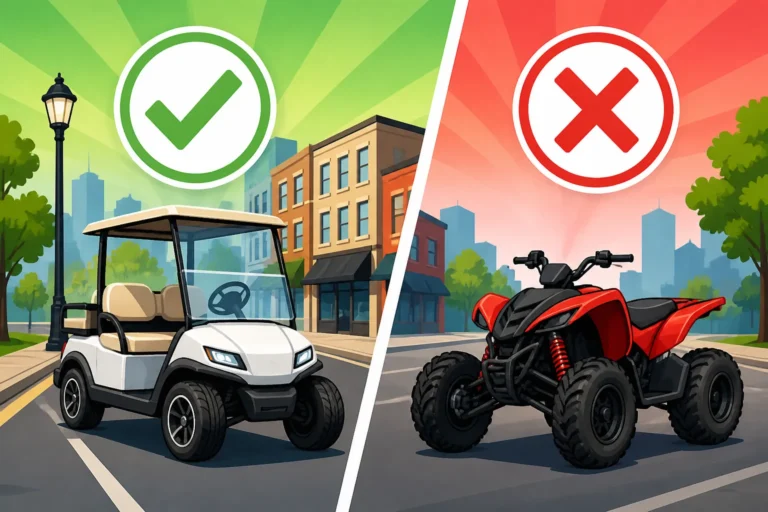
Here's where a lot of the initial confusion stems from: the distinction between a "golf cart" in the traditional sense and what many cities have reclassified as a "Personal Transportation Vehicle" or PTV. A true golf cart, as defined by state law, is primarily designed for use on a golf course. It's typically slower, has less robust safety features, and isn't intended for general road use.
However, as golf carts grew in popularity for local errands, community transportation, and just plain fun, many municipalities began to adopt ordinances that allowed these vehicles, or slightly modified versions of them, to be used on public roads or designated paths. To do this, they often reclassified them as PTVs. A PTV, under many local ordinances, is essentially an enhanced golf cart that meets certain safety and equipment requirements. This might include features like headlights, taillights, brake lights, turn signals, a horn, rearview mirrors, and often a speed limitation. For example, some cities might say a PTV can't exceed 20 mph, aligning with [Georgia Low-Speed Vehicles Capped at 20 mph], but a regular golf cart might only hit 15 mph. This distinction is absolutely crucial because the requirements for registering and operating a "golf cart" versus a "PTV" can be wildly different within the same city. You might own a machine that looks like a golf cart, but if it has added lights and a higher top speed, a city might treat it as a PTV, subjecting it to a whole different set of regulations.
Why State Law Isn't Always the Final Word for City Riding
It's completely understandable to assume that if Georgia state law says something about golf carts, then that applies everywhere. Unfortunately, this isn't always the case, and it's a major point of friction for residents. The state often sets minimum standards or offers guidelines, but it also grants local governments the authority to pass their own ordinances that can be more restrictive or detailed than state law. Think of it like this: the state might say "golf carts can generally cross certain roads," but then a city council, looking at their unique traffic patterns and pedestrian safety concerns, might pass an ordinance saying, "golf carts are permitted only on designated paths and specific low-speed streets, and they must be registered with the city."
This local control is why you'll find such variance. A city might have a dense network of multi-use paths, making golf carts an ideal transportation solution, and thus, they'll create a robust system for them. Another city might have narrow, busy streets and decide that golf carts pose too much of a risk, so they'll severely restrict or even ban their use on public ways. It's a reflection of community needs and priorities, but it leaves the individual golf cart owner with the burden of researching specific municipal codes. This is precisely why just because your neighbor in the next county over rides their cart everywhere, it doesn't mean you can do the same in your town without checking your local [Georgia Golf Cart Laws and PTV Ordinances].
Navigating City-Specific Golf Cart Registration and Rules
Given the local control over golf cart operations, the most important thing you can do as a current or prospective owner is to understand your specific city's ordinances. This isn't just a suggestion; it's a necessity if you want to avoid fines or having your pride and joy impounded. Each city that allows golf carts on its public ways usually has a clearly defined set of rules, and they can vary dramatically in terms of registration, equipment, and even who can drive.
Peachtree City: The Grandparent of Golf Cart Communities
When we talk about city-specific golf cart rules in Georgia, Peachtree City immediately comes to mind. It’s practically the poster child for golf cart communities, boasting an incredible network of over 100 miles of multi-use paths. They didn't just allow golf carts; they built an entire lifestyle around them. Because of this, Peachtree City has one of the most developed and comprehensive sets of rules for golf cart usage in the state.
For residents, registration is mandatory. You'll need to register your golf cart with the city, and there's typically a fee involved. For instance, [Peachtree City Cart Registration Fees in Georgia] are structured to support the maintenance of their extensive path system. This usually involves an initial registration and then a renewal process every few years. Non-residents aren't exempt either; if you plan to visit Peachtree City and use your golf cart on their path system, you'll need to pay a non-resident path user fee, which is often significantly higher than the resident registration cost, as detailed in [Peachtree City Non-Resident Cart Cost in Georgia]. Beyond registration, Peachtree City also has specific age rules for drivers. While minors can often operate golf carts under certain conditions, there are usually minimum age requirements and often a stipulation for adult supervision, aligning with [Georgia Cart Driver Ages by Ordinance]. They also have clear equipment requirements for carts used on their paths, ensuring they are safe for shared use with pedestrians and cyclists. It’s a very well-thought-out system, but it requires adherence.
Other Notable Cities with Specific Golf Cart Rules (and how to find them)
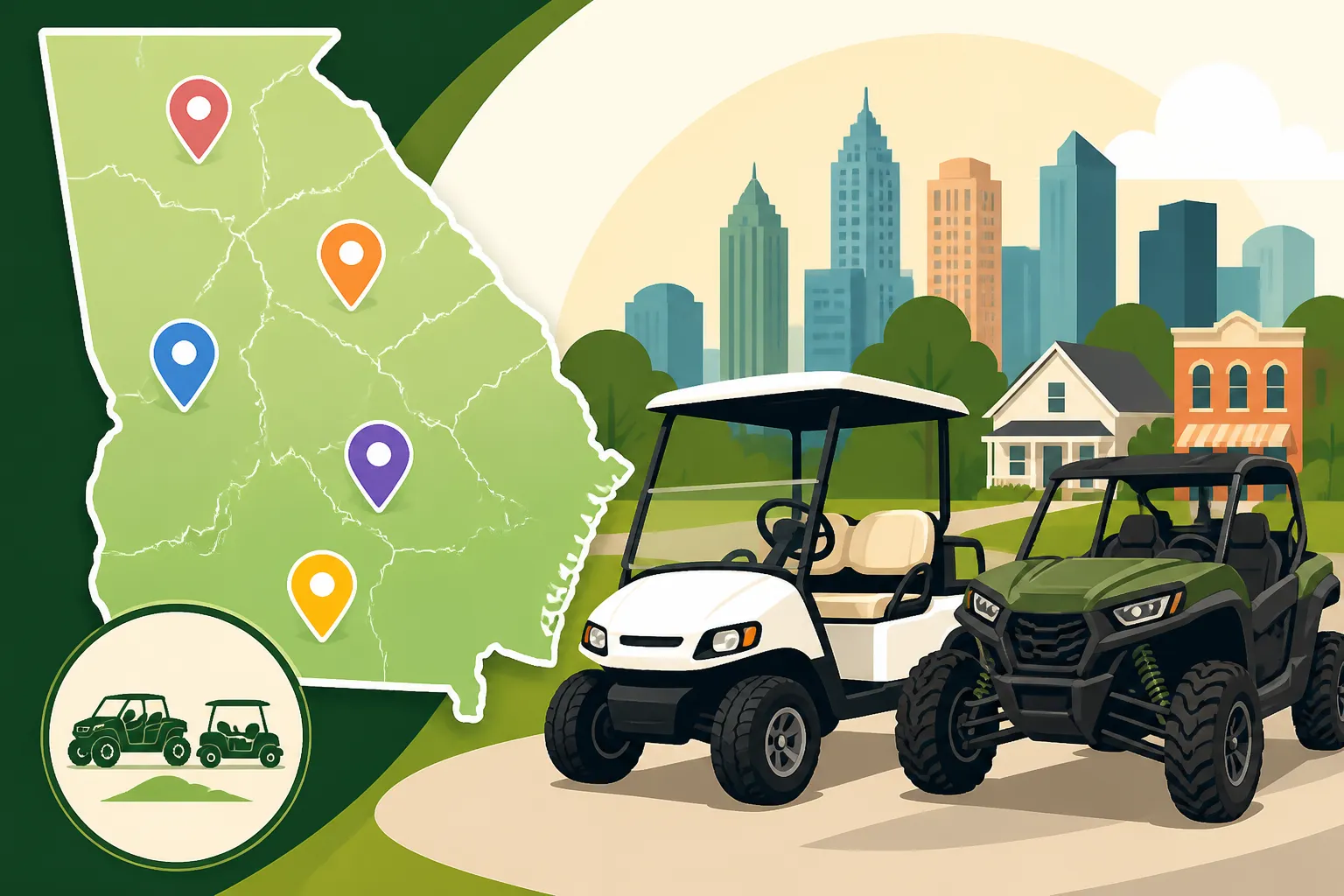
While Peachtree City is perhaps the most famous, many other cities across Georgia have embraced golf cart-friendly ordinances, each with its own quirks. Communities like Senoia, Tyrone, Braselton, and even some coastal areas like St. Simons Island have enacted rules to integrate golf carts into their local transportation fabric. However, their specific requirements can differ significantly from Peachtree City's or from each other.
For example, a city might allow golf carts on any street with a speed limit of 25 mph or less, but require proof of insurance. Another might mandate that all golf carts operating on public ways have working turn signals and a slow-moving vehicle sign, perhaps even something like [What a 24 by 30 Sign Looks Like], clearly displayed. The key takeaway here is that you cannot assume uniformity. The best way to ascertain the rules for your specific city is to:
- Visit the City's Official Website: Most municipalities will have their ordinances posted online. Look for sections related to "Traffic," "Vehicles," "Golf Carts," or "Personal Transportation Vehicles."
- Contact City Hall or the Local Police Department: If the online information isn't clear, a quick call to the city clerk's office or the local police (non-emergency line, of course) can often provide the specific details you need.
- Check for Posted Signage: In communities with active golf cart use, you might see signs near path entrances or on specific streets indicating rules, speed limits, or restrictions.
Some cities might lump golf carts under broader "neighborhood electric vehicle" (NEV) or "low-speed vehicle" (LSV) ordinances, which often come with stricter rules, including VIN requirements, specific safety standards, and even title processes (though this is rare for traditional golf carts in Georgia).
What to Look For in a City's Golf Cart Ordinance
When you're sifting through your local city's ordinances, it can feel like reading legal jargon. To make it easier, here’s a checklist of key points you should be actively looking for. This will help you quickly identify what’s required for legal operation in your area:
| Category | Key Information to Find |
|---|---|
| Registration | Is registration with the city required? What are the fees (initial and renewal)? What is the renewal period (annual, biennial, etc.)? Are there different rates for residents vs. non-residents? What documentation do you need (proof of ownership, VIN, insurance)? |
| Permitted Areas | Which roads, streets, or paths are golf carts allowed on? Are there any streets where they are explicitly prohibited (e.g., state routes, streets with higher speed limits)? Can you cross major roads, and if so, how? Are [Georgia Golf Cart Path Access] clearly defined? |
| Equipment | What mandatory safety equipment must your golf cart have? Common requirements include: Headlights, Taillights, Brake Lights, Turn Signals, Horn, Rearview Mirror(s), Seat Belts, Reflectors, Slow-Moving Vehicle (SMV) sign, Windshield. |
| Driver Requirements | What is the minimum age to operate a golf cart on public ways? Is a valid driver's license required? Are there rules for supervised minors (e.g., [Georgia Golf Cart Age Rules] often specify who can drive at what age, sometimes with parental accompaniment)? |
| Insurance | Is liability insurance mandatory for operating on public property? If so, what are the minimum coverage limits? |
| Operating Rules | Are there specific hours of operation (e.g., daylight hours only, or is night riding permitted with proper lighting)? What are the speed limits on designated paths or streets? Are passengers allowed, and if so, must they be seated? Are there rules about open containers? |
| Enforcement/Penalties | What are the consequences for violating the ordinance (fines, impoundment)? Who enforces the rules (local police, code enforcement)? |
This table provides a comprehensive overview of what to search for. Once you have this information, you can ensure your golf cart is fully compliant with your city's specific rules.
Common Challenges and Considerations for City Golf Cart Use
Even once you've delved into the specific city ordinances, there are practical challenges and important considerations that every golf cart owner needs to be aware of. It's not just about having the right paperwork; it's about making sure your machine is up to snuff and that you understand the full implications of operating it on public ways.
Equipment Requirements: What Your Cart Needs to Be Legal (City by City)
This is a big one. As mentioned, many cities don't just wave you through with a basic golf course cart. To be considered a legitimate PTV or allowed on public roads, your golf cart often needs a suite of safety features. Common requirements include:
- Headlights and Taillights: Essential for visibility, especially if riding near dusk or dawn, or if the city permits night riding.
- Brake Lights: Crucial for signaling stops to other vehicles and pedestrians.
- Turn Signals: Non-negotiable for safe maneuvering in traffic, even low-speed traffic.
- Horn: For alerting others to your presence.
- Rearview Mirrors: At least one, but often two (one on each side) are required for full situational awareness.
- Seat Belts: If your cart has multiple seats, especially if it's been modified to carry more passengers, seat belts can be a requirement.
- Windshield: While not always mandatory, many ordinances will specify that if a windshield is present, it must be safety glass or an equivalent.
- Speed Capability: Some ordinances specify a minimum speed (e.g., at least 20 mph) to keep up with low-speed traffic, while others enforce a maximum (e.g., not exceeding 25 mph).
If your golf cart didn't come with these features from the factory, don't despair! The aftermarket industry offers a ton of solutions. Companies like SuperATV provide kits and individual components – from light bars and turn signal kits to mirrors and safety harnesses – that can help you bring your golf cart up to code. It's much safer, and often much more affordable, to upgrade your existing cart with these components than to buy a whole new machine. Always check with your local ordinance first, though, to ensure any modifications meet their specific standards.
Insurance, Licensing, and Age Rules
These three elements often cause the most confusion because they touch upon personal liability and individual responsibility.
First, driver's licenses. While you might not need a driver's license to operate a golf cart on private land in Georgia, the moment you take it onto public streets or city-maintained paths, the rules change. Many cities do require a valid driver's license for anyone operating a golf cart on their public ways. This isn't just about knowing how to drive; it's about accountability. If you're pulled over by [Georgia Sheriff Enforcement on County Roads] (or city police), they'll want to see that you're a licensed driver.
Second, age rules. This is especially important for families with younger drivers. While some state provisions allow younger drivers to operate ATVs or UTVs under certain conditions on private land, cities often impose stricter age limits for golf carts on public property. For instance, a city might specify that only licensed drivers 16 or older can operate a golf cart, or perhaps a 12-year-old can drive if accompanied by a licensed adult in the front passenger seat. Again, it’s all about local safety. Always refer to your city's specific [Georgia Golf Cart Age Rules] before letting a minor take the wheel on a public path or street.
Third, insurance. This is a critical consideration. If your city requires registration for your golf cart, it's highly likely they will also require proof of liability insurance. Even if it's not explicitly mandated, having liability insurance is just plain smart. If you're involved in an accident on a public street or path, and you're at fault, that insurance can cover damages to property or injuries to others. Without it, you could be facing significant out-of-pocket expenses. Just like with cars, an insurance agent can help you find coverage tailored to your golf cart, factoring in its usage and where you plan to operate it. Don't assume your homeowner's policy will cover it if you're on a public road; often, it won't.
Why Cities Have These Rules (and Why It Matters)
It's easy to view all these rules and regulations as burdensome red tape, another layer of bureaucracy designed to make life harder. However, from a city's perspective, these ordinances serve vital purposes. Understanding the "why" behind the rules can help golf cart owners appreciate their importance and, hopefully, foster greater compliance. After all, nobody wants to get a ticket or, worse, be involved in an accident.
Safety and Integration into Traffic Flow
The primary reason cities develop comprehensive golf cart ordinances is public safety. As golf carts become more prevalent, they inevitably share space with pedestrians, cyclists, and traditional motor vehicles. This mixed traffic environment presents unique challenges:
- Pedestrian Safety: On shared paths, golf carts can pose a hazard to walkers and runners if not operated carefully, especially with children or pets present. Speed limits and right-of-way rules are crucial here.
- Vehicle Integration: When golf carts operate on public streets, even low-speed ones, they become part of the traffic flow. Requiring lights, signals, and mirrors helps them be seen and communicate intentions to other drivers, reducing the risk of collisions. This is similar to how rules for [Georgia UTV Road Rules by County] prioritize safety on county roads.
- Emergency Access: Unregulated golf cart traffic can sometimes impede emergency vehicles or create congestion in critical areas. Rules help manage this flow.
Moreover, these rules help cities integrate golf carts into their existing infrastructure. Designated golf cart paths, like those in Peachtree City, are expensive to build and maintain. Registration fees often contribute directly to funding these assets, ensuring that residents have safe, dedicated spaces to ride. [Georgia Neighborhood Cart Ordinances] are designed to create a harmonious environment for all residents, allowing for alternative transportation while minimizing disruption and ensuring safety.
Enforcement and Penalties
So, what happens if you decide to ignore your city's golf cart rules? Well, local law enforcement agencies – usually the city police department – are tasked with enforcing these ordinances. Just like with any other traffic violation, being caught operating a golf cart unlawfully can lead to various penalties, and this is where ignorance of the law is definitely not an excuse.
Typical penalties can include:
- Fines: This is the most common consequence. Fines can range from relatively minor sums for a first offense to substantial amounts for repeat violations.
- Impoundment: In more serious cases, especially if the golf cart is being operated recklessly, by an underage driver, or is significantly non-compliant, law enforcement might impound the vehicle. Getting it back will involve impound fees, storage fees, and often proof of correction for the violation.
- Court Appearances: Some violations might require a court appearance, which means time off work and potentially additional court costs.
- Driver's License Points: If a licensed driver commits a moving violation in a golf cart on a public road, it's possible that points could be assessed against their state driver's license, impacting their driving record and potentially insurance rates.
The enforcement aims to encourage compliance and maintain safety. Cities are not trying to punish citizens; they are trying to ensure that everyone can share public spaces safely. Therefore, taking the time to understand your city's specific golf cart registration and usage rules is not just about avoiding a ticket; it's about being a responsible member of your community and contributing to a safer environment for everyone.
Disclaimer
This article is for general informational purposes only and does not constitute professional advice. Laws, prices and regulations vary by location and change over time. Consult a qualified professional for guidance on your specific situation.