Georgia Golf Cart Path Access
It can be incredibly frustrating trying to figure out where you can and cannot legally drive your golf cart in Georgia. You see neighbors zipping around, hear stories of extensive path networks, and then get hit with conflicting information that leaves you wondering if your beloved cart is destined to only see the fairway or your own driveway. This guide is here to cut through the confusion and provide a clear, empathetic look at golf cart path access across the state, helping you understand the rules, avoid penalties, and confidently navigate the beautiful roads and designated paths Georgia has to offer.
Understanding Georgia's Golf Cart Landscape: More Than Just the Green
When most people think of a golf cart, they picture a small, electric vehicle used exclusively on a golf course. But in Georgia, these machines, and their more robust cousins, often play a much larger role in community life. The desire to use them for quick trips to the store, visiting neighbors, or simply enjoying the outdoors has driven many municipalities to create specific rules, but the patchwork of regulations can be a real headache.
What Exactly is a Golf Cart in Georgia's Eyes?
The term "golf cart" can be a bit of a catch-all, but legally, Georgia distinguishes between a standard golf cart, a Personal Transportation Vehicle (PTV), and a Low-Speed Vehicle (LSV). A traditional golf cart is typically designed for golf courses and has a top speed of less than 20 miles per hour. A PTV, however, is a golf car that has been modified or manufactured to meet specific safety and equipment standards, allowing it to be operated on certain public roads and paths where authorized by local ordinance. Think of it as a golf cart that's been given a little upgrade and permission slip for community use. Finally, an LSV is a bit different, typically capped at 20-25 mph, often appearing more like a miniature car, and subject to different state and federal safety standards.
The distinction matters because what one town calls a "golf cart path" might actually be intended for PTVs or even LSVs, and the rules about speed, equipment, and driver age can shift dramatically depending on the classification. It's not just semantics; it’s about safety and legality. You might have a perfectly capable cart, but if it doesn't meet the local PTV definition or isn't on a designated path, you could find yourself facing a fine.
The Appeal of Path Access: Why Riders Want It
The draw of using a golf cart or PTV for local transportation is undeniable. Imagine leaving your car at home for those short, annoying errands – a quick run to the post office, grabbing a gallon of milk, or taking the kids to the neighborhood pool. It’s convenient, often more enjoyable, and in many cases, more environmentally friendly than firing up a gas-guzzling car for a two-mile round trip. For many, especially in master-planned communities or those with large retirement populations, these paths offer a sense of freedom and connection to their local area that traditional cars just can't provide.
The frustration often comes when you move into a community, or a new ordinance is passed, and you’re left guessing. Is that sidewalk fair game? What about that paved trail that looks perfect for a cart ride? The allure of open-air cruising and easy access to local amenities is strong, making it crucial to understand exactly where you’re permitted to ride and what responsibilities come with that privilege. For many, a golf cart isn’t just a recreational vehicle; it’s an extension of their lifestyle, and having access to designated paths truly unlocks its full potential.
Navigating the Legal Framework for Golf Cart Paths in Georgia
Unlike many other states where ATV and UTV rules are mostly set at the state level, golf cart and PTV regulations, especially concerning path access, are often a complex blend of state law and local ordinance in Georgia. This means what's perfectly legal in one city might be strictly forbidden just a few miles down the road, creating a challenging environment for riders.
State Laws vs. Local Ordinances: A Jigsaw Puzzle of Rules
Georgia’s state law sets the foundational definitions and gives municipalities the power to create their own specific ordinances regarding golf cart and PTV use on public roads and designated paths. This decentralized approach means there isn't a single, statewide rulebook for path access. Instead, each city or county has the autonomy to decide if and where these vehicles can operate. For example, a municipality can designate [Georgia Cities That Skipped the License Rule Before 2012], or they can restrict use entirely.
This can be incredibly confusing for residents and visitors alike. You might hear about a fantastic cart path system in one town, only to find that your own community has no such provisions, or has entirely different rules for [Georgia Golf Cart Age Rules] or equipment. It's like trying to put together a puzzle with pieces from different boxes. This is why it's absolutely vital to check with your specific city or county government for their local ordinances before assuming anything about golf cart path access. Simply seeing other carts on what looks like a public path isn't enough; you need to verify the local rules. The Georgia Department of Driver Services (DDS) or your local tag office can often point you in the right direction, but ultimately, the city or county clerk's office is your best resource for local ordinances.
What Makes a Path "Legal" for Carts? Designated Systems
A key element in Georgia's approach to golf cart path access is the concept of "designated" paths. This isn't about simply choosing to ride on a wide sidewalk or an unpaved trail. For golf carts and PTVs to legally operate on public paths, those paths must be explicitly designated for such use by a local ordinance. These are often purpose-built or clearly marked pathways, separate from pedestrian sidewalks or bicycle lanes, or integrated into community planning with specific signage.
These designated systems are usually identified by clear road signs, often depicting a golf cart icon, and are part of a municipal plan to integrate golf cart transportation into daily life. Without such official designation, a "path" is just a sidewalk, a walking trail, or a private road, and operating a golf cart on it would likely be illegal. The emphasis is on planning and clear communication from the local government. Where these systems exist, they are often a point of pride for the community, providing a safe and efficient way for residents to get around. It's not enough for a path to look like it could accommodate a cart; it must be legally authorized and marked for that purpose. This is where [Path Signs at 24 by 30 Inches] become crucial, clearly indicating where cart use is permitted.
Spotlight on Peachtree City: Georgia's Premier Golf Cart Community
When discussing golf cart path access in Georgia, it’s impossible not to highlight Peachtree City. This Fayette County gem stands as a shining example of how a community can successfully integrate golf carts and PTVs into the very fabric of its daily life, offering a blueprint for other towns.
The Peachtree City Model: A Network of Possibilities
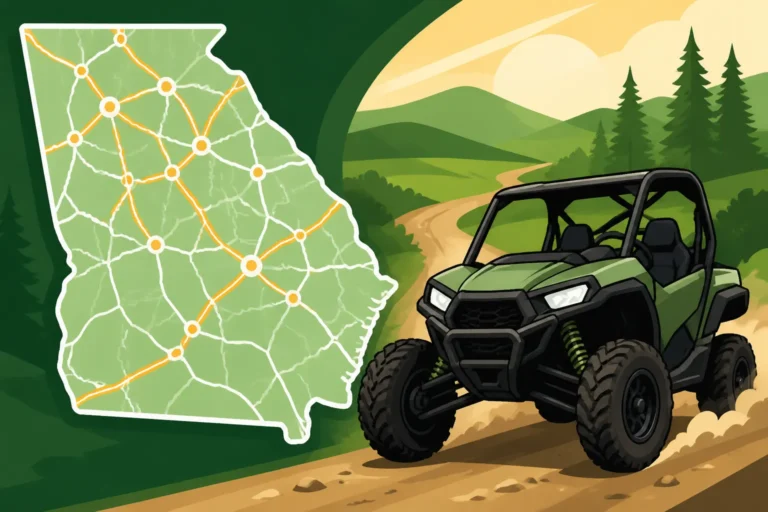
Peachtree City isn't just a place with golf cart paths; it's a place built around them. With an incredible network of over [Peachtree City's 100 Miles of Georgia Cart Paths], it boasts one of the most extensive and well-maintained systems in the country. Here, golf carts aren't just for recreation; they are a primary mode of transportation for residents of all ages. People use them to commute to work, drop kids off at school, go shopping, visit restaurants, and access virtually every amenity the city has to offer.
This extensive network includes tunnels under major roads, bridges over creeks, and clearly marked routes that safely connect residential areas with commercial districts, recreational facilities, and schools. It’s a vision of community planning where the golf cart is elevated from a recreational toy to a legitimate, everyday vehicle. The success of Peachtree City demonstrates that with proper planning, infrastructure, and clear regulations, golf cart path access can truly transform a community, enhancing livability and fostering a unique local culture.
Rules and Requirements for Peachtree City Path Users
While Peachtree City offers unparalleled access, it also has specific rules to ensure safety and order on its busy paths. Residents are required to register their golf carts and PTVs with the city, and while the initial [Peachtree City Resident Registration at $15] might seem like an extra step, it helps fund the maintenance and expansion of the path system. For visitors or [Georgia Cart Rules for Visiting Families] who wish to use the paths, there's a [Peachtree City Non-Resident Cart Cost in Georgia] and specific regulations they must follow, making sure everyone is aware of the local rules.
Age restrictions are also in place to ensure responsible operation. For instance, drivers must typically be at least [Registering a Cart Only at 18 or Older] to operate a cart independently on the paths, though exceptions can be made for younger drivers (such as [Ages 12 to 14 With a Guardian Riding] or [Learner's Permits at 15 on a Path]) under specific circumstances and supervision. Furthermore, vehicles must meet certain equipment standards, including working headlights, taillights, brake lights, and a rearview mirror to ensure visibility and safety, especially during evening hours. These stringent, yet understandable, rules help maintain the safety and efficiency of Peachtree City's beloved cart paths, ensuring that residents and visitors alike can enjoy this unique mode of transportation responsibly.
General Guidelines for Responsible Golf Cart Path Use Across Georgia
Even when a community has designated golf cart paths, the privilege of using them comes with responsibilities. Safety should always be your top priority, not just for yourself and your passengers, but for all other users who share these vital community resources. Ignoring basic safety guidelines can quickly turn a pleasant ride into a dangerous situation or lead to legal trouble.
Essential Safety Practices on Any Designated Path
Operating a golf cart or PTV on a designated path is not the same as driving a car on a road, nor is it like riding through a private field. These paths are often shared spaces, meaning you'll encounter pedestrians, bicyclists, and other cart users. Always adhere to posted speed limits, which are typically much lower than road limits, often around 15-20 mph. These limits are there for a reason, especially around curves, intersections, and busy pedestrian areas. Remember, golf carts have a much lower center of gravity and different braking characteristics than a car, making sudden stops or maneuvers trickier.
Yield to pedestrians and bicyclists, as they generally have the right of way. Use hand signals or turn signals if your cart is equipped, to indicate your intentions, especially when turning or slowing down. If you're riding after sunset, ensure your headlights and taillights are fully operational and visible. Many paths are not as brightly lit as public streets. Maintain a safe following distance from other vehicles, and never overload your cart with too many passengers or excessive cargo. Your cart's stability and braking capabilities are designed for a specific load. Lastly, never operate a golf cart or PTV under the influence of alcohol or drugs. [Georgia DUI Law and Off-Road Machines] applies to these vehicles just as it would to a car, and the penalties can be severe.
Equipment Considerations for Path Riding
While a basic golf cart might suffice for the course, if you plan on using it on designated public paths, especially after dark, you'll need to ensure it meets certain equipment standards. Most local ordinances that permit path access will require, at a minimum, working [Headlights, Brake Lights and Mirrors on the Checklist]. These are not optional; they are critical safety features for visibility and awareness, much like on a regular car.
Many riders choose to upgrade their carts with additional safety features or accessories that enhance their path-riding experience. For example, a quality windshield can offer protection from wind and debris. Upgraded tires from a company like SuperATV can provide better grip and durability, especially if the paths include varied surfaces or small sections of dirt. Additional lighting, such as turn signals or even a light bar for better visibility on unlit paths, is another popular enhancement. A horn is also a good idea for alerting pedestrians or other riders. It's important to remember that while some accessories are for convenience, others, like functional lights and mirrors, are often legal requirements for path use. Always check your local city's ordinance for the exact equipment specifications your golf cart or PTV must meet to be legally operated on their designated path system. Adding these thoughtful upgrades can significantly improve both your safety and enjoyment of the paths.
| Feature | Standard Golf Cart (Course Use) | PTV (Path/Road Use by Ordinance) | LSV (Road Legal) |
|---|---|---|---|
| Top Speed | < 20 mph | < 20 mph | 20-25 mph |
| Lights | Often optional/basic | Required (head, tail, brake) | Required (head, tail, brake, turn signal) |
| Mirrors | Often optional | Required (rearview, sometimes side) | Required (rearview, side) |
| Seatbelts | Not required | Not typically required | Required |
| Windshield | Often optional | Recommended/often required | Required (automotive grade) |
| Registration | Not required | Often required by local ordinance | Required (state vehicle registration) |
| License Plate | No | No | Yes |
| Driver's License | Not required on private property | Varies by local ordinance (often required) | Required |
| Insurance | Optional (liability for property) | Recommended/often required by local ordinance | Required (minimum liability) |
Disclaimer
This article is for general informational purposes only and does not constitute professional advice. Laws, prices and regulations vary by location and change over time. Consult a qualified professional for guidance on your specific situation.