Georgia Golf Cart Age Rules
Navigating the rules and regulations for golf carts in Georgia can feel like trying to hit a moving target, especially when you're trying to figure out who can legally drive one, and where. It’s a common frustration for families and communities alike, as state guidelines often leave room for individual cities and counties to set their own ordinances. This guide aims to clear up that confusion, diving deep into the age requirements and operational rules for golf carts and similar low-speed vehicles across the Peach State.
Unraveling Georgia's Core Golf Cart and PTV Regulations
When it comes to smaller, slower vehicles on Georgia's roads and paths, it’s easy to lump everything together. However, Georgia law makes some pretty specific distinctions that are crucial to understand, particularly when we talk about who can operate them. This isn't just bureaucratic red tape; it's about defining the legal framework that then impacts age restrictions and usage.
The Difference Between a Golf Cart and a Personal Transportation Vehicle (PTV)
First things first, let's talk definitions. In Georgia, not all "golf carts" are created equal in the eyes of the law. A traditional golf cart is what you'd typically see on a golf course – designed primarily for recreational use on a golf course, usually traveling at speeds under 20 miles per hour. They often don't have many of the safety features you'd expect on a road-going vehicle.
Then there are Personal Transportation Vehicles, or PTVs. These are golf carts that have been modified or manufactured to meet specific safety standards that allow them to be operated on certain public roads. Think of it like a golf cart that has gone to finishing school: it has proper headlights, tail lights, brake lights, turn signals, seat belts, a horn, and often a rearview mirror. The law generally defines PTVs as vehicles that can travel at least 20 miles per hour but not more than 35 miles per hour. This distinction is vital because the rules governing where and by whom a PTV can be operated are often different, and sometimes more stringent, than for a standard golf cart. Many communities that embrace these vehicles on their public roads specifically refer to them as PTVs, indicating they meet those enhanced safety requirements. [Georgia Golf Cart Laws and PTV Ordinances] delves deeper into these definitions.
State Law's Stance on Local Control for Golf Carts
Here's where things get interesting, and often, a little perplexing. Georgia state law provides a general framework for golf cart and PTV use, but it largely empowers local governments – meaning individual cities and counties – to establish their own specific ordinances. This means there isn't one universal "Georgia Golf Cart Law" that applies identically across all 159 counties and countless municipalities. What's legal in Peachtree City might be against the rules in Statesboro, and entirely different in a rural county.
The state allows cities and counties to pass ordinances permitting golf carts and PTVs on certain public roads within their jurisdiction. These roads typically have speed limits of 25 MPH or less. Crucially, the state also grants these local authorities the power to define the age requirements for operators. This decentralized approach is why it's absolutely essential to check the specific rules of the city or county where you plan to drive your golf cart. Relying on what a friend told you about their town a few counties over could easily land you in hot water.
Age Requirements for Operating Golf Carts on Georgia's Public Ways
So, you're wondering, "How old do you have to be to drive a golf cart on a public road in Georgia?" The answer, as you might expect by now, isn't a simple, single number. It depends heavily on whether the driver is supervised, if they have a learner's permit, or a full driver's license, and, as always, the specific local ordinances.
Unaccompanied Driving: When a License Becomes Essential
For any individual to operate a golf cart or PTV on public roads or designated paths without supervision, they generally must possess a valid Georgia driver's license. This means they are at least 16 years old and have passed the state's driving tests. This requirement ensures that anyone driving a vehicle on public thoroughfares has demonstrated a basic understanding of traffic laws and safe driving practices.
If your child is 16 or older and holds a valid driver's license, they can typically drive a golf cart or PTV on designated public streets or paths, as long as they adhere to all local ordinances regarding golf cart use. This includes things like observing speed limits, using proper hand signals (if turn signals aren't equipped), and following all other traffic laws. This principle is similar to [Georgia Rules for a 16-Year-Old Driver] for other vehicles. The idea is that if you're going to be out there on your own, you need to be a fully qualified driver.
Supervised Operation: What Ages Can Ride with an Adult?
Many local ordinances in Georgia allow for younger individuals to operate golf carts or PTVs on public roads or paths, provided they are under the direct supervision of a licensed adult. The most common age for this type of supervised operation is 12 years old. This means a 12-year-old could be behind the wheel, but a licensed driver, usually 18 or older, must be in the passenger seat and fully capable of taking control if necessary.
This rule acknowledges that golf carts are often used for family recreation and that younger individuals can gain valuable experience under watchful eyes. It's not a free-for-all, though. The supervising adult is ultimately responsible for the safe operation of the vehicle and for ensuring all traffic laws and local ordinances are followed. It’s also crucial that the cart itself is suitable for the operator, meaning they can comfortably reach the pedals and steering wheel and have a clear view of their surroundings.
Learners Permits and Golf Cart Use at Fifteen
The age of 15 often brings a new level of driving privilege in Georgia: the learner's permit. For golf cart and PTV operation on public ways, many municipalities extend the same principle that applies to cars. If a 15-year-old holds a valid Georgia learner's permit, they can typically operate a golf cart or PTV on public roads or paths under the same supervision rules as if they were driving a car.
This means a licensed driver (usually 21 or older, depending on the specific learner's permit restrictions) must be in the passenger seat. This bridges the gap between supervised driving for younger children and fully independent driving for licensed adults. It's a way for teens to build experience in a lower-speed environment before potentially transitioning to a full driver's license and more complex vehicles. Just like with [Georgia Rules for a 15-Year-Old on a Quad], the emphasis is on supervised practice. Always check the specific city or county rules, as some might have stricter requirements even for permit holders on golf carts.
Hyper-Local Ordinances: The Real Game-Changer for Age Rules
As we've discussed, Georgia's state law sets the stage, but local ordinances write the script when it comes to golf cart operations, especially concerning age. Nowhere is this more evident than in communities that have fully embraced golf cart culture. These cities and counties often have robust and detailed rules that everyone, from residents to visitors, needs to understand.
Peachtree City's Comprehensive Golf Cart Network and Its Rules
Peachtree City, Georgia, is perhaps the most famous example of a city built around golf cart use. With over 100 miles of multi-use paths, golf carts are a primary mode of transportation for many residents. Because of this extensive infrastructure, Peachtree City has developed very specific and well-defined ordinances regarding golf cart operation, including age rules. [Peachtree City Golf Cart Rules in Georgia] outlines these in detail.
In Peachtree City, children as young as 12 can typically operate a golf cart on the paths if accompanied by a licensed adult (18 years or older) in the front seat. At 15, if they hold a valid Georgia learner's permit, they can drive with a licensed adult (21 years or older) in the front seat. And, of course, anyone 16 or older with a valid Georgia driver's license can operate a golf cart independently on the paths. These rules are rigorously enforced because the paths are integral to the city's transportation system, and safety is paramount. The city even has rules for [Peachtree City Non-Resident Path User Fees at Peachtree City] demonstrating how integrated golf carts are into its fabric.
What Happens When City Rules Differ
The challenge arises when you live in one town with one set of rules, but you want to visit another town where the rules are different. For instance, a nearby county might allow 14-year-olds to drive golf carts with supervision on certain roads, while your home city requires them to be 12. Or, perhaps, a city has stricter rules about passengers, or limits night riding for younger operators. [Georgia Cart Driver Ages by Ordinance] highlights how varied these can be.
This is why it's absolutely crucial to do your homework. Before you or a younger family member hops into a golf cart on public property in a new location, take a few minutes to check that city's or county's official website for their specific golf cart ordinances. Ignorance of local law is rarely a valid excuse, and you could face fines or other penalties. This applies not just to age, but to equipment requirements too, like mirrors, lights, or even the maximum speed of the cart. You might find a great deal on accessories from a brand like SuperATV to ensure your cart is up to par with various local requirements, but the rules themselves are non-negotiable.
Important Considerations and Exclusions for Georgia Golf Cart Operators
Beyond the specific age requirements, there are other vital aspects of golf cart operation in Georgia that you need to keep in mind. These cover everything from where you can ride to safety practices, ensuring a well-rounded understanding of responsible golf cart use.
Riding on Private Land vs. Public Roads
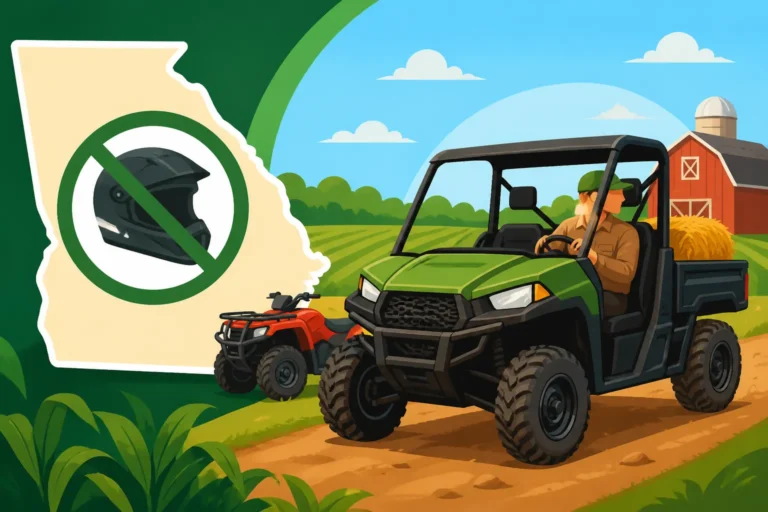
A significant distinction that often causes confusion is the difference between operating a golf cart on private property versus public roads or designated paths. On your own private land, or on land where you have explicit permission from the landowner, the state's and local government's age restrictions generally do not apply. This means if you have a large property, a child under 12 could drive a golf cart in your backyard or fields without violating public road laws.
However, this doesn't mean safety goes out the window. Even on private land, you as the parent or guardian are responsible for the safety of the operator and others. Accidents can happen anywhere. Always ensure the child is capable of safely operating the vehicle, understands basic safety rules, and is adequately supervised. The legal rules about [Georgia ATV Helmet Law for Riders Under 18] might not apply to golf carts on private land, but common sense dictates appropriate safety gear for anyone operating a vehicle, especially younger children. The moment those tires touch a public road, even briefly, the rules change entirely. This includes paths, sidewalks, or even crossing a street.
Safety Gear and Best Practices for Young Drivers
While golf carts are generally slower than cars, they are not immune to accidents. Rollovers, collisions with other vehicles, or hitting pedestrians are all real risks. When younger drivers are operating golf carts, even under supervision, safety must be the top priority.
Here are some best practices:
- Helmets: While not universally mandated for golf cart operators, especially on private land, a helmet is always a good idea for young riders. Their heads are more vulnerable, and a helmet can prevent serious injury. Remember, [Georgia Under-18 Helmet Rule on Private Land] might apply to ATVs, and the principle of head protection is sound for any moving vehicle.
- Seat Belts: If your golf cart is equipped with seat belts (which PTVs typically are), ensure everyone, especially children, is properly buckled in. If your cart doesn't have them, consider adding them. Many aftermarket providers, like SuperATV, offer universal seat belt kits or other safety enhancements.
- Lights and Reflectors: If you foresee any possibility of driving near dusk or dawn, ensure your cart has working headlights, taillights, and plenty of reflectors. This is not just a legal requirement for PTVs but a critical safety feature for visibility. [Georgia Rules for Riding After Dark] are stringent for any vehicle.
- No Stunt Driving: Golf carts are not designed for sharp turns at high speeds, donuts, or other risky maneuvers. These can easily lead to rollovers, especially on uneven terrain or with multiple passengers.
- Passenger Limits: Adhere strictly to the manufacturer's recommended passenger capacity. Overloading a golf cart affects its stability and braking capabilities.
- Driver Awareness: Teach young drivers to be constantly aware of their surroundings, including pedestrians, other vehicles, and potential hazards like potholes or uneven surfaces.
- Avoid Distractions: Just like in a car, distracted driving (from cell phones, loud music, or rowdy passengers) can lead to accidents.
By instilling these safety habits early, you can help ensure that golf cart use remains a fun and safe activity for your family, whether on your property or on designated community paths.
Here's a quick reference table summarizing typical age requirements for golf cart operation on public ways in Georgia, keeping in mind that local ordinances are the final authority:
| Driver Age & Status | Type of Operation | General Public Way Rule (Check Local Ordinances!)
This guide will explore the rules for operating these machines on public roads in Georgia, focusing on who can legally drive them.
Georgia's General Approach to Off-Highway Vehicle Road Use
Before we dive into the specifics of age, it's crucial to understand the overarching philosophy in Georgia regarding off-highway vehicles (OHVs) like ATVs and UTVs on public roads. Historically, these machines were strictly for off-road use, and that largely remains the case for many common types. The state recognizes the distinct differences between these vehicles and traditional cars or trucks.
The Strict Distinction: ATVs Are Not Street Legal by Default
For years, the clear and often frustrating truth for ATV owners in Georgia was that their machines were simply not considered street legal. An ATV, by its very design with a straddle seat and handlebars, is built for aggressive off-road terrain, not the asphalt of public highways. This isn't just a matter of opinion; it's embedded in the state's vehicle code. The very characteristics that make an ATV so effective off-road – its narrow profile, high ground clearance, and specific seating/steering configuration – make it unsuitable and unsafe for mixing with regular traffic.
This strict stance meant that unless you were on private property or within a specifically designated off-road park, your ATV stayed off the pavement. There was no pathway to get a traditional ATV registered and legally driven on a county road, let alone a state highway. This caused considerable frustration for riders who just wanted to cross a short stretch of road to access another trail or get to a gas station. Understanding [Why a Four-Wheeler Cannot Be Registered in Georgia] is key to appreciating the recent shifts in law for other vehicle types.
The Game-Changer: The MPOHV Registration and Limited Road Access
Enter the "Multi-Purpose Off-Highway Vehicle" (MPOHV) registration. This relatively new development in Georgia law provides a specific pathway for certain types of OHVs – primarily side-by-sides (UTVs) – to gain limited road access. It's a voluntary registration, meaning you don't have to register your eligible UTV, but if you want to legally use it on certain public roads, you absolutely must. [Georgia MPOHV Registration Explained] covers the full details of this process.
This MPOHV designation is not a blanket "street legal" stamp. It comes with very particular criteria and significant limitations on where and how these registered machines can be operated. The most important distinction is that this registration does not make a side-by-side legal on state highways or interstates. Its access is restricted to county roads where the speed limit is 35 MPH or less. This is a critical point that many new registrants might misunderstand. The intent is to provide access for local travel in rural areas, not to turn UTVs into everyday commuter vehicles.
Age Requirements for Operating an MPOHV on Georgia County Roads
With the advent of MPOHV registration, the question of age requirements for driving these machines on county roads becomes paramount. The state has outlined specific rules to ensure that those operating these vehicles on public ways possess the necessary maturity and qualifications.
Drivers Must Hold a Valid Georgia Driver's License
The most straightforward and critical rule is this: any person operating a registered MPOHV on a public county road in Georgia must possess a valid Georgia driver's license. There are no exceptions for learner's permits, supervised driving for minors, or any other conditional licenses when it comes to MPOHV road use. If you want to drive a side-by-side with an MPOHV plate on a county road, you need to be a fully licensed driver, typically meaning you are 16 years of age or older and have passed all required tests.
This requirement reflects the state's recognition that while MPOHVs are off-highway vehicles, when they enter the public road system, they must be operated by someone with demonstrated driving competency. They share the road with cars, trucks, and other vehicles, and operators need to understand traffic laws, road etiquette, and defensive driving. This aligns with the principles found in [Georgia Driver's License Rules for MPOHV Operators] and [Georgia Minimum Age on a Public Road].
The Under-18 Helmet Rule: A Specific Safety Requirement
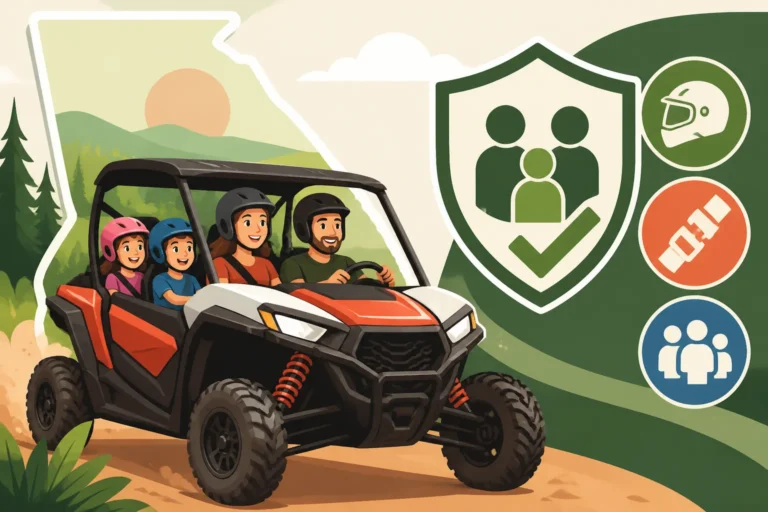
Even for licensed drivers operating an MPOHV on a public road, if that driver or any passenger is under the age of 18, they must wear a protective helmet. This is a crucial safety measure that goes beyond the typical car occupant rules and underscores the unique risks associated with these vehicles. While side-by-sides offer more protection than ATVs (which typically require helmets for all riders under 18 regardless of location), they still do not provide the same enclosed cabin safety as a traditional car or truck.
This helmet rule applies to all occupants under 18, whether they are the driver or a passenger. It's not just about the driver's license; it's about protecting vulnerable occupants in a vehicle that, despite its registration, is still fundamentally an off-highway machine. Failing to comply with this rule can result in significant penalties, including fines. This specific requirement is part of [Georgia ATV Helmet Law for Riders Under 18], which extends its principles to MPOHV road use for minors.
Why No Learner's Permits or Provisional Licenses?
The exclusion of learner's permit holders and those with provisional licenses from operating MPOHVs on county roads is a deliberate safety decision. While a 15-year-old with a learner's permit can drive a car with a licensed adult, the state has chosen not to extend this privilege to MPOHVs on public roads.
The rationale likely stems from the unique characteristics of MPOHVs. They handle differently than cars, have a higher center of gravity, and are often less visible to other traffic. Introducing an inexperienced driver, even a supervised one, into this mix on public roads could be seen as an undue risk. The state prioritizes that anyone operating these machines on public property has achieved full licensure and the accompanying experience and judgment. This contrasts with some of the more lenient rules for Georgia Golf Cart Age Rules which can allow younger supervised drivers.
Enforcement, Penalties, and Road Restrictions for MPOHVs
Understanding the age requirements is just one piece of the puzzle. It's equally important to know where you can legally ride, what consequences you face for non-compliance, and how law enforcement views these machines.
Restricted Roads: County Roads Only, No State Highways or Interstates
Even with MPOHV registration, your side-by-side is not granted free rein on all public roads. Its use is strictly limited to county roads where the posted speed limit is 35 miles per hour or less. This means you cannot legally drive a registered MPOHV on:
- State Highways: Any road designated with a "GA" or "US" route number, regardless of its speed limit, is off-limits.
- Interstates: Absolutely forbidden.
- Municipal (City) Streets: Unless the specific city has passed its own ordinance allowing MPOHVs on its streets, even if they are within a county that permits MPOHVs. Some cities are very specific about this, and [Georgia PTV Ordinances Cities Can Pass] often address these nuances.
This distinction is enforced. Law enforcement, including county sheriffs and Georgia State Patrol, are aware of these restrictions. Operating a registered MPOHV on a restricted road can lead to citations and penalties. [Georgia UTV Road Rules by County] outlines how these regulations can vary.
Penalties for Unlicensed Operation or Operating on Restricted Roads
The consequences for operating an MPOHV on a public road without a valid driver's license, or operating it on a prohibited road, can be significant. These include:
- Fines: You will likely receive a traffic citation with an associated fine. The amount can vary based on the specific violation and the jurisdiction.
- Court Costs: Beyond the fine, you will typically be responsible for court costs.
- Misdemeanor Charges: In some cases, operating a vehicle without a proper license or illegally on public roads can escalate to a misdemeanor charge, which carries more serious legal implications.
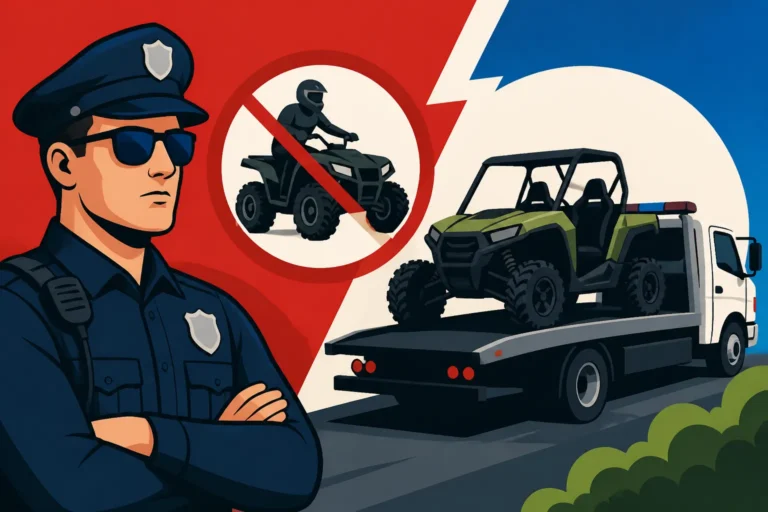
- Impoundment: Law enforcement has the authority to impound your MPOHV if it's being operated illegally. This means your machine will be towed and stored at your expense, adding substantial impound and storage fees on top of any fines. [Georgia Impound Rules After a Violation] can be quite costly.
- Insurance Implications: Operating illegally can void your insurance coverage, leaving you personally liable for any damages or injuries if an accident occurs. [Georgia UTV Insurance Minimums] are tied to legal operation.
It's critical for MPOHV owners and operators to thoroughly understand and adhere to these regulations. The MPOHV registration is a privilege, not an inherent right, and that privilege comes with strict responsibilities.
The Sunset Clause: A Future Consideration
It's also important to be aware that the state law allowing MPOHV road access on county roads currently includes a "sunset clause." This means the law, as it currently stands, is set to expire on July 1, 2027. While legislative bodies can certainly extend, modify, or repeal such clauses before their effective date, it's a future consideration that current and prospective MPOHV owners should keep in mind. [Georgia's ATV Road Access Law Sunsets in July 2027] provides more context on this upcoming deadline and how it might impact MPOHV use. This uncertainty highlights the importance of staying informed about Georgia's evolving OHV laws.
Disclaimer
This article is for general informational purposes only and does not constitute professional advice. Laws, prices and regulations vary by location and change over time. Consult a qualified professional for guidance on your specific situation.