Georgia Impound Rules After a Violation
There's nothing quite like the sinking feeling in your stomach when you realize your beloved ATV or UTV is being loaded onto a tow truck. One moment you're out enjoying the trails or a quick jaunt on a permissible county road, and the next, your machine is on its way to an impound lot, leaving you stranded and facing a heap of unknowns. This guide is here to walk you through the frustrating reality of ATV and UTV impoundment in Georgia, from understanding why it might happen to the practical steps you'll need to take to get your machine back, and how to avoid this headache in the future.
Why Your ATV or UTV Might Be Impounded in Georgia
Let's be honest, nobody wants their off-road machine impounded. It's a huge hassle, costly, and can put a real damper on your riding plans. But the truth is, law enforcement has specific reasons they'll take this step, and often, it boils down to violations of Georgia's laws regarding off-highway vehicle operation. Understanding these common triggers is the first step in avoiding the tow truck.
Operating on Prohibited Roads or Private Property
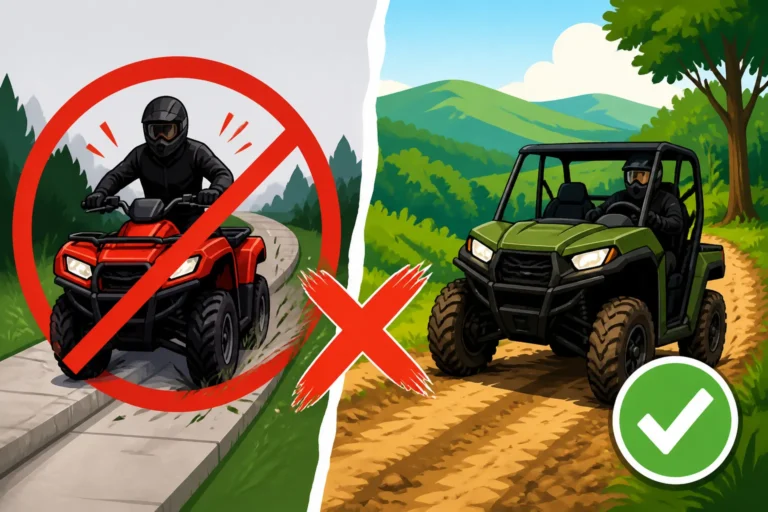
This is probably one of the most common reasons folks find themselves in a bind. Georgia has very specific rules about where you can and cannot ride your ATV or UTV. If you're caught operating your machine on roads or property where it's not allowed, you're not just looking at a ticket – you could be looking at an impoundment.
Think about it: Georgia state highways and interstates are absolutely off-limits for ATVs and UTVs. Period. There are no gray areas here. Even crossing them is typically restricted to designated points. If a deputy spots you cruising down a state route, especially if you're holding up traffic or creating a hazard, they have every right to stop you and impound your machine. It's not just about safety; it's about adhering to the law.
Similarly, riding on private property without express permission from the landowner is a big no-no. We often hear stories of riders venturing onto timber company land, utility easements, or even someone's backyard without realizing they're trespassing. While some landowners might just issue a warning, others might press charges, and local law enforcement might deem it necessary to impound your machine as evidence or to prevent further trespassing. Even if it's "just a dirt path" that looks like a public trail, it's always best to be sure you have the legal right to be there. For a deep dive into the specific rules, check out [Georgia ATV Road Law Explained].
Violations Related to Registration, Insurance, or Operator Age
Georgia has made some significant changes regarding the registration of certain off-highway vehicles, specifically multi-purpose off-highway vehicles (MPOHVs) like side-by-sides. If you plan to operate your UTV on the limited public roads where it's allowed, such as certain county roads, you absolutely need to have it registered. For a detailed breakdown, see [Georgia MPOHV Registration Explained]. If your UTV is found on a public road without this crucial registration, it's a clear violation, and impoundment becomes a real possibility.
Beyond registration, having valid liability insurance is often tied to legal road operation in Georgia. If you're required to register your MPOHV to use certain roads, you're also likely required to carry insurance. Without it, you're not only risking personal financial ruin in case of an accident but also inviting law enforcement to take your machine. The tag office expects to see proof of [Georgia Liability Insurance Tied to Registration] before they'll even issue your plate.
Then there's the age factor. Operating an ATV or UTV requires certain age restrictions, especially on public roads or even some private trails. For instance, there are rules about minors operating these machines on public roads, and typically, you need a valid driver's license. If an underage operator is caught without proper supervision or the necessary licensing for the given riding area, the machine could be impounded, and the responsible adult could face charges. It’s crucial to understand [Georgia Minimum Age on a Public Road] to keep everyone safe and legal.
DUI and Other Serious Offenses
This category takes things to a much more serious level. Operating an ATV or UTV under the influence of alcohol or drugs is not only incredibly dangerous but also a grave legal offense. Just like with a car, a DUI on an off-road vehicle can lead to severe penalties, including fines, license suspension, and yes, immediate impoundment of your machine. The state takes [Georgia DUI Law and Off-Road Machines] very seriously, and for good reason—your impaired judgment puts everyone at risk.
Beyond DUI, other serious offenses can also result in impoundment. This might include reckless endangerment, using the machine in the commission of a crime, or attempting to elude law enforcement. These aren't minor infractions; they are serious legal matters that will almost certainly lead to your machine being taken into custody by the authorities.
The Immediate Aftermath: What Happens When Your Machine Is Impounded
So, the worst has happened. Your ATV or UTV is being impounded. This moment can be incredibly stressful and confusing, but knowing what to expect can help you navigate the initial stages with a clearer head.
The Initial Stop and Law Enforcement Procedures
When law enforcement stops you, whether it's a county deputy, state patrol, or DNR officer, they'll first assess the situation. They'll ask for your identification, any registration paperwork you have, and inquire about the circumstances of your riding. If they determine that a serious violation has occurred that warrants impoundment—such as riding on prohibited roads, a DUI, or lack of proper registration where required—they will inform you of their decision.
At this point, they'll issue you a citation or multiple citations for the offenses. They might conduct a brief inspection of your machine, noting its VIN, make, model, and any visible damage. It's during this phase that you'll likely see [What Georgia Deputies Check on a County Road] if you're pulled over. They're looking for compliance with MPOHV rules if you're on a public road, or simply documenting the illegal activity if you're trespassing or riding somewhere entirely prohibited. It’s important to remember that they are doing their job, and maintaining a respectful demeanor, even when frustrated, is always the best approach.
The Tow and Storage Process
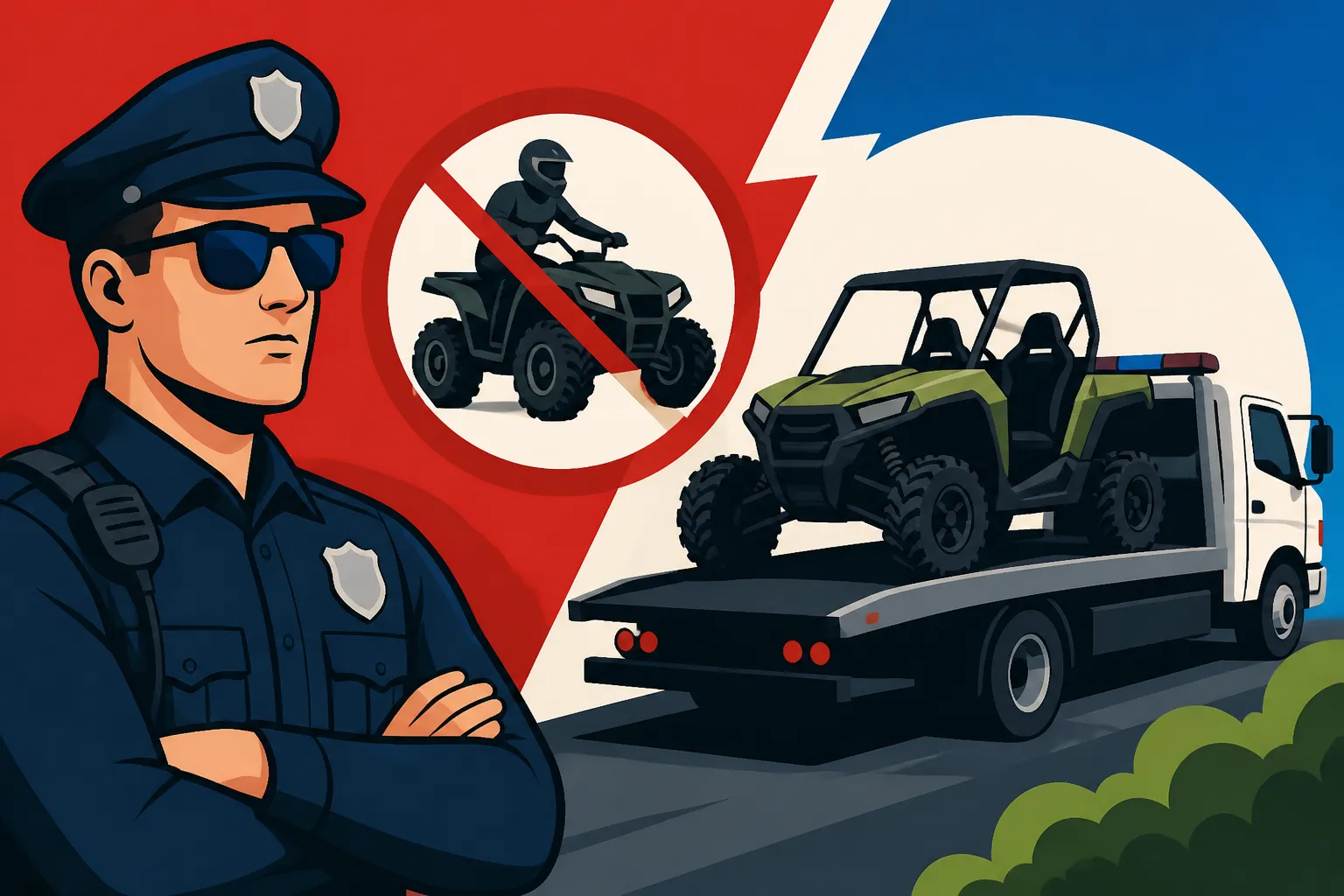
Once the decision to impound is made, the officer will call for a tow truck. Most law enforcement agencies have contracts with local towing companies. Your ATV or UTV will be loaded up, often with specialized equipment if it's a larger side-by-side, and transported to a designated impound lot or a specific towing company's storage facility.
At the scene, the officer should provide you with some documentation. This usually includes a copy of your citation(s) and potentially a tow slip or impound notice. This notice will have crucial information like the name and contact number of the towing company, the impound lot's address, and perhaps an initial fee estimate. Make sure you get this information! Without it, retrieving your machine will be significantly harder. Remember, the clock starts ticking the moment your machine arrives at the impound lot, with daily storage fees quickly accumulating.
Your Rights and Responsibilities at the Scene
It's natural to feel frustrated or even angry when your machine is being taken. However, it's paramount to remain calm and cooperative with the officers. Arguing, resisting, or becoming belligerent will only make the situation worse and could lead to additional charges. You have the right to ask why your vehicle is being impounded and to receive copies of any citations issued. You also have the right to remain silent regarding self-incriminating questions.
Your responsibilities at the scene include providing your identification, any requested documentation for the machine, and following the officer's lawful instructions. Do not attempt to retrieve items from your machine once it's been designated for impoundment unless specifically permitted by the officer. Any aftermarket accessories, especially valuable ones from brands like SuperATV, might be safer if you can remove them before the tow, but only if an officer gives you the explicit go-ahead. Otherwise, wait until you are legally retrieving the vehicle from the lot. Documenting the condition of your machine (photos, notes) before it's towed can also be helpful for your records, should any damage occur during transit or storage.
Getting Your Impounded ATV or UTV Back in Georgia
The impound lot is not where you want your machine to live forever. Retrieving it can be a multi-step process that requires patience, paperwork, and certainly, money.
Addressing the Underlying Violations
Before you can even think about getting your machine out of impound, you absolutely must address the reason it was taken in the first place. This is non-negotiable.
If you received citations for operating on prohibited roads, trespassing, or lack of proper registration or insurance, you'll need to resolve those. This might mean paying fines, appearing in court, or completing necessary steps like acquiring the proper [Georgia MPOHV Registration Explained] and securing [Georgia Liability Insurance Tied to Registration]. For serious offenses like DUI, you'll definitely have court appearances and legal processes to navigate, and the impoundment might extend until your case is resolved or specific conditions are met by the court. Don't underestimate the potential costs associated with these legal battles; [Georgia Court Costs for a UTV Citation] can add up quickly.
Let's say your machine was impounded because you didn't have current registration. You'll need to go to your county tag office, get all your paperwork in order, pay any fees, and obtain your MPOHV plate and decal. If it was an insurance issue, you'll need to secure an active policy. You might even have to show proof to the impound lot that these issues have been rectified before they'll release your machine.
The Impound Lot Process and Associated Costs
Once you've addressed the legal violations, it's time to tackle the impound lot itself. Be prepared for a shock, as costs can accumulate rapidly. You'll typically be on the hook for:
- Towing Fees: This is the initial charge for getting your machine from the point of seizure to the impound lot. These can vary based on distance and the size of your machine.
- Daily Storage Fees: This is where things really start to hurt. Impound lots charge a daily rate for storing your vehicle, and these rates can be substantial. The longer your machine sits there, the more expensive it becomes.
- Administrative Fees: Some lots charge additional fees for processing paperwork, maintaining records, or other overheads.
Before you head to the impound lot, call them. Confirm their operating hours, what forms of payment they accept (many are cash-only or require specific payment methods), and exactly what documentation you'll need to bring.
Steps to Reclaim Your Machine
When you're ready to pick up your ATV or UTV, here's a general checklist of what you'll need:
- Proof of Ownership: This is critical. You'll need documents proving the machine belongs to you, such as a bill of sale, a previous registration, or a manufacturer's certificate of origin. For machines without titles, [Proving You Own an ATV in Georgia Without a Title] often involves a notarized bill of sale and perhaps even an affidavit.
- Valid Photo ID: Your driver's license or another government-issued ID.
- Proof of Resolved Violations: If your impoundment was due to an expired registration, bring your new registration card and plate. If it was an insurance issue, bring your current insurance policy. For more serious offenses, you might need court orders or other official documentation.
- Payment for All Fees: Have the total amount ready, usually in cash or certified funds, as specified by the impound lot.
When you arrive at the impound lot, present your documentation and make your payment. Before you drive your machine away, do a thorough inspection. Look for any new damage that might have occurred during towing or storage. Check for missing items, especially if you have valuable aftermarket accessories like a winch from SuperATV or specialized lighting. If you notice any damage or missing items, point it out to the impound lot staff immediately and document it with photos. Once you drive it off the lot, it can be very difficult to claim subsequent damage.
Avoiding Future Impoundments and Staying Legal
Nobody wants to go through the impoundment process twice. The best defense is a good offense: understanding the rules and proactively ensuring your machine and riding habits are always within legal bounds.
Understanding Georgia's Road Access Laws
This is foundational. You absolutely must know where you can legally ride your ATV or UTV in Georgia. As a general rule, ATVs (quads) are not considered street legal and should only be operated on private property or designated off-road trails. UTVs (side-by-sides) have slightly more leniency but are still heavily restricted. In Georgia, some counties allow registered MPOHVs to be driven on county roads only, and even then, often with specific speed limits and other requirements. State routes and interstates are universally forbidden.
It’s not enough to assume; you need to verify the specific ordinances for the county you plan to ride in. Some cities also have their own rules or even dedicated pathways for personal transportation vehicles (PTVs) like golf carts, but these rarely extend to ATVs or even larger UTVs. The article [Are Side-by-Sides Street Legal in Georgia?] offers a detailed look at these nuances. Ignorance of the law is never a valid defense, and it's your responsibility as a rider to know the local rules.
Maintaining Proper Documentation and Machine Readiness
Just like you would with your car, keep all your necessary documentation for your ATV or UTV in order and readily accessible.
- Registration and Insurance: If your machine is registered as an MPOHV for road use, always carry proof of [Georgia MPOHV Registration Explained] and [Georgia Liability Insurance Tied to Registration]. Many riders keep these in a waterproof pouch in a glove box or under the seat.
- Proof of Ownership: Even if you're only riding on private land, having a bill of sale or other proof of ownership is a good idea in case of theft or any questions about your possession.
- Machine Equipment: For machines registered for road use, ensure they meet all the required equipment standards. This includes working [Headlights, Brake Lights and Mirrors on the Checklist], and factory-installed seatbelts. Don't skip these checks, as a deputy will be looking for them.
- Trail Permits: If you're heading to a Georgia National Forest OHV system, don't forget your [Georgia OHV Permits: What You Need Before You Ride]. While not a road-use document, forgetting it can still lead to fines and potentially being turned away from the trail.
Keeping your machine in good working order also prevents breakdowns that could leave you stranded in an illegal area, increasing your risk of an impoundment. Regular maintenance is key.
Smart Riding Practices and Education
Ultimately, responsible riding is your best safeguard against impoundment.
- Never Ride Impaired: This cannot be stressed enough. Alcohol and drugs severely impair judgment and reaction time, making every ride dangerous and illegal. Just say no.
- Educate Minors: If you have younger riders, ensure they understand and adhere to all age restrictions and safety rules. Always ensure they are properly supervised, especially given [Georgia Under-18 Helmet Rule on Private Land]. An impoundment involving a minor is a nightmare you want to avoid.
- Be Visible: If you're on roads where permitted, enhance your machine's visibility, especially around dawn or dusk. Aftermarket lighting from a reputable brand like SuperATV can make a huge difference in ensuring other drivers see you.
- Respect Property Rights: Always obtain permission before riding on private land. "Asking for forgiveness" isn't a strategy that works well with property owners or law enforcement.
By staying informed, prepared, and riding responsibly, you can significantly reduce your chances of ever seeing your beloved ATV or UTV loaded onto a tow truck again. Enjoy the ride, and stay safe out there!
Disclaimer
This article is for general informational purposes only and does not constitute professional advice. Laws, prices and regulations vary by location and change over time. Consult a qualified professional for guidance on your specific situation.