Georgia Night Riding on a County Road
There's a special kind of freedom that comes with cruising a side-by-side or UTV as the sun dips below the Georgia pines, the air cooling, and the sounds of the day giving way to the quiet hum of the engine. Many of us dream of extending our riding adventures into the twilight hours, especially on those familiar county roads. But the reality is, taking your off-highway vehicle onto public roads, especially after dark, comes with a specific set of rules and potential pitfalls that can be confusing and frankly, a bit daunting to navigate. This guide aims to unravel the complexities of Georgia's regulations for night riding on county roads, ensuring you're informed and equipped to ride safely and legally under the stars.
The Allure of Night Riding and Its Legal Framework
There's no denying the appeal of night riding. Whether you're heading back from a late hunt, traveling between properties, or simply enjoying the serenity of a quiet evening ride, the experience is unique. However, this desire to extend your ride into the dark hours runs directly into Georgia's legal requirements for operating what the state calls a Multipurpose Off-Highway Vehicle, or MPOHV, on public roads. It's not as simple as just adding a flashlight; there's a whole framework of eligibility and equipment you need to understand.
Why Night Riding on County Roads is Different
During the day, you might feel a bit more leeway on private land or even unpaved paths. But as soon as you consider a county road, especially at night, the stakes immediately go up. Visibility drastically decreases, and your machine becomes less conspicuous to other drivers. This is precisely why Georgia law steps in with specific requirements, not just for safety, but for the very legality of your presence. Without the right setup, you're not only risking an accident but also potential citations for operating an improperly equipped or unregistered vehicle. It's not enough to simply have lights; they must meet certain standards.
Many riders, myself included, have felt that frustration of knowing their machine is capable, but unsure if it's legally allowed to do what they want. The key here is understanding that Georgia distinguishes between off-road recreational use and limited on-road use. This distinction carries significant weight, especially when operating after sunset.
Understanding Georgia's MPOHV Road Rules
For your side-by-side or UTV to even consider touching a county road in Georgia, it first needs to be registered as an MPOHV. This is a voluntary registration process that opened up in December 2023, and it's specifically designed for machines that meet a strict set of criteria to be deemed suitable for limited public road use. This isn't about turning your UTV into a car; it's about providing a pathway for utility and recreational machines to access county roads for specific purposes. Without this registration, the discussion of night riding on public roads is largely moot.
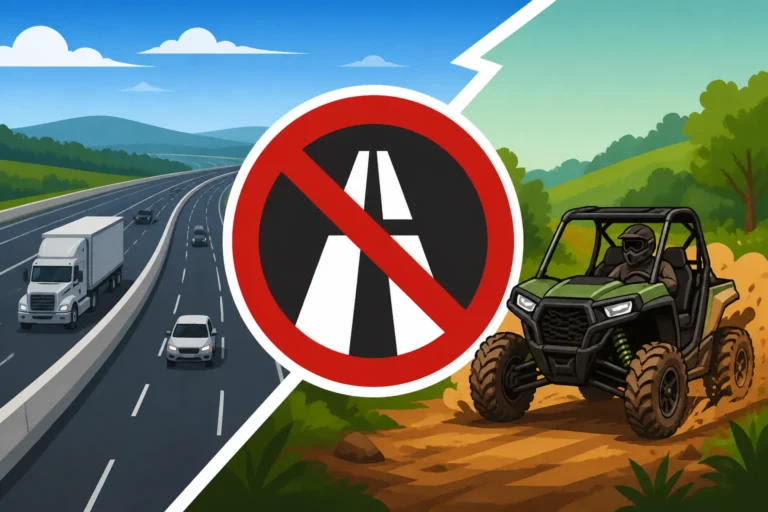
The state explicitly states that registered MPOHVs are generally limited to [Georgia MPOHV Road Rules: County Roads Only] and are strictly prohibited from state highways and interstates, except for crossing at designated points. This is a critical point that cannot be overstated. Even if your machine is fully equipped with dazzling lights, if it's on the wrong type of road, you're still in violation. This registration process also ties into requirements like insurance and proof of ownership, all of which become even more important when you're interacting with other traffic, especially in low-light conditions.
Essential Equipment for Legal Night Riding
When it comes to night riding on Georgia's county roads, your machine isn't just about power and suspension; it's about being seen and seeing where you're going. The state has specific requirements for what an MPOHV must carry, and these become absolutely critical once the sun goes down. Skimping on these items isn't just a risk; it's a guaranteed way to land yourself in trouble.
Headlights, Brake Lights, and Reflectors
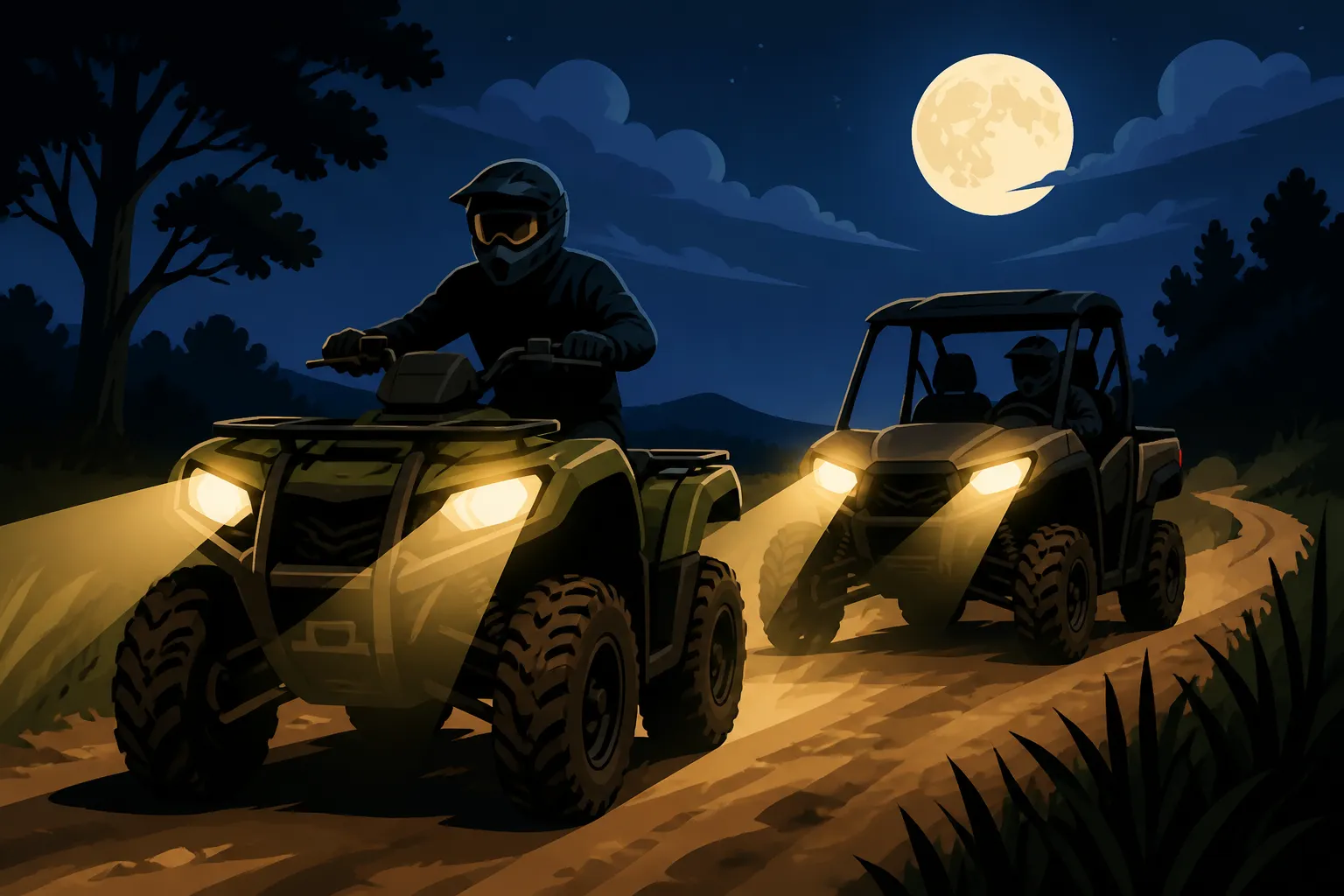
Georgia law is clear that an MPOHV registered for road use must be equipped with proper lighting. This isn't optional; it's fundamental. You need a functioning headlight system that can illuminate the road ahead, making hazards visible and signaling your approach to oncoming traffic. Think about the winding, unlit county roads you might encounter – a single dim headlight isn't going to cut it. Beyond the legal mandate, robust headlights are a huge safety factor, letting you spot deer, potholes, or fallen branches long before they become an immediate threat.
Just as important are your brake lights. These are the primary way vehicles behind you know you're slowing down or stopping, especially crucial in the dark when visual cues are scarce. A malfunctioning brake light at night is an accident waiting to happen. In addition to active lighting, your MPOHV needs to have reflectors – typically red on the rear and amber on the sides – to ensure you're visible even if your electrical system fails or your lights are off. These passive reflectors give a critical backup layer of visibility. Many riders turn to aftermarket options from brands like SuperATV to enhance their factory lighting, adding light bars or auxiliary lights for better trail illumination, which can also improve visibility on county roads.
Mirrors and Turn Signals
While turn signals aren't specifically called out in the same way for MPOHVs as they are for cars, having proper signaling capability is a wise move for night riding on county roads. Many MPOHVs don't come factory-equipped with turn signals, but adding an aftermarket kit can greatly improve your communication with other drivers, especially when making turns in the dark. Imagine trying to signal a left turn at night on a dark country road using only hand signals – it's incredibly difficult for other drivers to see.
Mirrors, on the other hand, are a definite requirement for MPOHV registration. You need at least one rearview mirror, providing a clear view of the road behind you. While many riders appreciate having side mirrors for a wider field of vision, the law specifies a minimum of one. This is vital for situational awareness, allowing you to monitor traffic approaching from the rear, especially when you might be traveling at a slower speed than other vehicles. Ensuring your mirrors are clean and properly adjusted is paramount for effective night vision, as dirt or misalignment can create dangerous blind spots.
Other Crucial Safety Gear
Beyond the mandated lighting and mirrors, there are other pieces of safety gear that become exponentially more important when you're night riding. While not all are specific legal requirements for MPOHV registration, they are absolutely critical for safe operation. For instance, a working horn is indispensable for alerting wildlife or other unexpected hazards that might appear on a dark road. Having a spare tire, a small tool kit, and even a first-aid kit can turn a minor inconvenience into a manageable situation rather than a full-blown emergency in the middle of nowhere after dark.
Think about the conditions: unlit roads, potentially dense tree cover, and the possibility of encountering wildlife like deer or even larger animals. Having a winch, perhaps one from a brand like SuperATV, can be a literal lifesaver if you find yourself stuck off the shoulder or need to move a fallen tree that blocks the road. And of course, personal protective equipment like helmets (especially for riders under 18), gloves, and appropriate clothing are always a good idea, providing an extra layer of protection should the unexpected occur.
| Item | Legal Requirement (for MPOHV registration) | Highly Recommended for Night Riding |
|---|---|---|
| Headlights (low & high beam) | Yes | Yes, high-performance for visibility |
| Brake Lights (working) | Yes | Yes, clearly visible |
| Taillights (visible from rear) | Yes | Yes |
| Reflectors (red rear, amber side) | Yes | Yes |
| Rearview Mirror (at least one) | Yes | Yes, and side mirrors too |
| Turn Signals | Not explicitly mandated, but wise | Strongly Recommended |
| Horn | Yes | Yes |
| Windshield (clear, unobstructed) | Yes (if equipped) | Yes, keeps bugs/debris out of eyes |
| Seat Belts (factory installed) | Yes | Absolutely, always wear them |
| Helmet (for under 18) | Yes, on public roads | Recommended for all riders |
| High-Visibility Clothing | No | Strongly Recommended |
| Auxiliary Lighting (light bars) | No (but can supplement) | Yes, for better off-road visibility |
| Winch | No | Yes, for recovery/clearing obstacles |
| Spare Tire & Repair Kit | No | Yes |
| First-Aid Kit | No | Yes |
Safety Considerations for Night Riding on County Roads
Even with all the right legal equipment, night riding introduces a whole new set of safety considerations that daytime adventures simply don't have. Reduced visibility, altered perceptions, and the increased presence of nocturnal hazards mean you need to adapt your riding style and preparation. It's about more than just following the law; it's about being smart and proactive to ensure everyone's safety.
Reduced Visibility and Depth Perception
One of the most significant challenges of night riding is the drastic reduction in visibility. Your eyes, and more importantly, your brain, process visual information differently in low light. Depth perception can be skewed, making it harder to accurately judge distances, assess terrain changes, or identify obstacles on the road. A small pothole that's obvious during the day can become a jarring surprise at night. This necessitates a slower, more deliberate riding speed. You simply can't react as quickly to unforeseen hazards in the dark.
It’s also crucial to consider how quickly your eyes can adjust from bright lights (like oncoming headlights) back to the darkness of the road. This momentary blindness can be dangerous. Keeping your windshield clean is paramount, and wearing clear eye protection (if not using a full-face helmet visor) helps prevent bugs or dust from further impairing your vision. Some riders also opt for yellow-tinted glasses or visors, which can enhance contrast in low-light conditions, although their effectiveness can vary.
Wildlife Encounters and Unexpected Obstacles
Georgia's county roads, particularly in rural areas, are often frequented by wildlife. Deer, coyotes, raccoons, and even larger animals are much more active at night, and their dark coats make them incredibly difficult to spot against the backdrop of an unlit road. A sudden appearance can lead to a dangerous collision if you're not prepared. Riding at a reduced speed gives you more time to react, and continuously scanning the shoulders of the road for any movement or reflective eyes can make a huge difference.
Beyond wildlife, dark roads can hide all sorts of unexpected obstacles. Fallen branches, rocks that have washed onto the pavement, or even discarded debris are far harder to see. Many county roads also lack clear shoulder markings, making it easy to drift off the pavement if you're not paying close attention. It's not just about what's in front of you; it's also about what's to the sides. Using your high beams when appropriate and being ready to slow down or stop are your best defenses against these nocturnal surprises.
Weather Conditions and Road Surfaces
While any weather condition can be challenging on a UTV, night riding magnifies those difficulties. Rain significantly reduces visibility, especially when mixed with the glare of headlights. Fog can be incredibly disorienting, practically eliminating your ability to see the road ahead or any vehicles around you. Even a heavy dew can make dirt and gravel roads slippery. If the forecast calls for adverse weather, it's often best to reconsider your night riding plans.
Road surfaces themselves can also pose greater risks at night. Unpaved county roads can have unpredictable ruts, loose gravel, or muddy sections that are much harder to judge in the dark. Paved roads might have unexpected patches of sand, oil, or wet leaves. Always assume the worst and adjust your speed and driving style accordingly. Your tires, especially if they are aggressive off-road treads, might handle dirt well, but can be unpredictable on wet pavement, further emphasizing the need for caution.
Distinguishing Legal Riding from Illegal
One of the biggest sources of confusion for Georgia ATV and UTV owners is understanding where they can legally ride. This is especially pertinent when discussing night riding, as the temptation to take a shortcut on a prohibited road can be strong, but the consequences are severe. Remember, just because your machine can go somewhere doesn't mean it should or can legally.
County Roads Versus State Highways and Interstates
Georgia law is very clear on this: MPOHVs registered for road use are primarily allowed on [What a County Road System Includes]. This means local roads maintained by the county. They are generally not permitted on state routes, federal highways, or interstates. The only exception is crossing these larger roads at a designated crossing point, but even then, it's typically a direct crossing, not riding alongside traffic for any distance.
The difference isn't always obvious to the casual rider. State routes often have a "GA" shield (e.g., GA-120), while county roads might just have a street name or a smaller, less official sign. If you're unsure, it's best to err on the side of caution or consult a local county road map. Riding on a state highway, especially at night, puts you at extreme risk from faster-moving traffic and guarantees a citation from law enforcement. Their patrols are more frequent on these major arteries, and an MPOHV certainly stands out. This distinction is one of the most important aspects of [Georgia UTV Road Rules by County].
Private Land and Designated Trails
Of course, your UTV or side-by-side is perfectly legal for night riding on private property with the landowner's permission. This is where most off-highway vehicles spend the majority of their time, and it's generally free from the stringent requirements of public road use (though personal safety gear and common sense still apply!). Similarly, designated [Georgia ATV Trails: Where You Can Legally Ride] and private off-road parks in Georgia are specifically designed for adventurous riding, day or night, and often have their own specific rules and permit requirements, but they are distinct from public road laws.
The key distinction is ownership and maintenance. Private land and dedicated trail systems are regulated by their owners or operators. County roads, however, are public thoroughfares, and that's where the state's MPOHV registration and associated rules kick in. It's important not to confuse the two. Just because you can ride your machine on a remote timber road during the day doesn't mean that same road is a legal county road for night use, especially if it doesn't meet the definition of a public-maintained thoroughfare.
Law Enforcement and Penalties for Non-Compliance
Let's be frank: law enforcement in Georgia takes road safety seriously, and operating any vehicle, including an MPOHV, improperly, especially at night, can lead to significant consequences. Understanding what deputies and state patrol officers are looking for can help you avoid trouble and stay safe.
What Georgia Law Enforcement Looks For
When a Georgia deputy or state patrol officer sees an MPOHV on a county road, especially after dark, their radar immediately goes up. They are trained to look for several key indicators. First and foremost, they'll be checking for proper MPOHV registration, which means a visible license plate and current decal. Without this, your machine technically isn't allowed on the road at all, day or night. [Georgia Sheriff Enforcement on County Roads] means they'll be checking for this.
Next, they'll visually inspect your machine for the mandatory equipment: working [Headlights, Brake Lights and Mirrors on the Checklist], and the general safety features. If your lights are dim, one is out, or you lack a mirror, that's grounds for a stop. They'll also check if the driver meets the [Georgia Driver's License Rules for MPOHV Operators] and has valid [Georgia Insurance Minimums for Road Use]. Finally, they'll assess the "where." Are you on a legitimate county road, or have you strayed onto a state highway? If they pull you over, expect a thorough check of these items.
Potential Fines, Citations, and Impoundment
Operating an MPOHV on a public road in Georgia without proper registration or equipment, especially at night when risks are higher, can lead to a range of penalties. These aren't just minor inconveniences; they can hit your wallet hard and disrupt your plans significantly. Depending on the specific violation, you could face hefty fines. These fines vary, but they are designed to be a deterrent, making it far more expensive to violate the rules than to comply with them.
Beyond fines, you could receive a formal citation that goes on your driving record. In more serious cases, or if you're a repeat offender, your MPOHV could even be impounded. Imagine being stranded on a dark county road with a confiscated machine – it's a nightmare scenario. Furthermore, if you're involved in an accident while operating illegally, your insurance company might deny coverage, leaving you personally liable for damages and injuries. This is why understanding [Georgia Penalties for an Unregistered Road Machine] is so crucial.
The Importance of Continuous Insurance
For any registered MPOHV in Georgia, continuous liability insurance is a non-negotiable requirement. This is not just for your protection, but for the protection of others on the road. If you're involved in an accident, your insurance is there to cover damages and injuries you might cause. [Georgia Insurance Minimums for Road Use] ensure that every registered MPOHV has at least a basic level of financial responsibility.
If you let your MPOHV insurance lapse, even for a short period, you could face penalties, including the suspension of your registration. Law enforcement may check for proof of insurance during a stop, and if you can't provide it, that's another ticket on top of any other violations. Always carry your proof of insurance with you when riding on public roads. It's a simple step that can save you a lot of hassle and financial risk.
Conclusion: Balancing Adventure with Responsibility
Night riding on Georgia's county roads offers a unique sense of adventure and utility for MPOHV owners. The quiet hum of your engine, the cool night air, and the starry sky can make for an unforgettable experience. However, this freedom comes with significant responsibilities. Georgia has laid out a clear path for limited on-road access for qualified machines through the MPOHV registration, but it's a path paved with specific rules and requirements, especially when the sun goes down.
From ensuring your machine is properly registered and equipped with the right lights and mirrors, to understanding the distinct difference between county roads and prohibited state highways, every detail matters. Prioritizing safety through cautious riding, being aware of nocturnal hazards, and always maintaining continuous insurance are not just good ideas—they are critical components of legal and responsible night riding. By respecting these regulations and exercising good judgment, you can enjoy the thrill of Georgia's county roads, even after dark, without unnecessary risks or legal woes. So, light 'em up safely, stick to the rules, and enjoy those Georgia nights.
Disclaimer
This article is for general informational purposes only and does not constitute professional advice. Laws, prices and regulations vary by location and change over time. Consult a qualified professional for guidance on your specific situation.