Georgia County Road Systems and Where They Run
One of the biggest head-scratchers for Georgia ATV and UTV owners is figuring out exactly where they can legally take their machines on public roads. It's not always clear-cut, and the rules aren't the same for every type of road, which can lead to a lot of frustration and even expensive tickets. This guide aims to clear up that confusion, diving deep into Georgia's Multi-purpose Off-Highway Vehicle (MPOHV) laws to explain what defines a county road system and where your registered side-by-side or utility vehicle is permitted to roam.
Understanding Georgia's MPOHV Law and County Road Access
For years, Georgia was known as a state where ATVs and UTVs were pretty much confined to private land or designated trail systems. The idea of riding your side-by-side down a public road to get to a hunting spot or a neighbor's house was largely a pipe dream for most. That all changed with the introduction of Georgia's MPOHV registration, which finally opened up limited road access for certain types of machines. However, "limited" is the key word here, and it’s crucial to understand precisely what kind of public roads are fair game. The state didn't suddenly declare all roads open to off-highway vehicles, which is where much of the confusion arises.
The Legal Framework for Off-Highway Vehicles
The Georgia MPOHV law, enacted to provide a pathway for legal road use for qualifying machines, created a new category of vehicle. Before this, many off-highway vehicles fell into a gray area or were explicitly banned from public roads. The law defines specific criteria that a machine must meet to even be eligible for this registration, differentiating it from traditional ATVs or even golf carts. It's not simply about owning a UTV; it's about owning a UTV that fits the state's narrow definition of a Multi-purpose Off-Highway Vehicle. Things like engine size, top speed, width, and even the type of seat play a huge role. If your machine doesn't tick all the boxes, it simply won't qualify, regardless of how much you wish it would. For many, this process has been a learning curve, requiring a careful review of their machine's specifications against the state's requirements.
What "Street Legal" Really Means in Georgia
When people talk about making their UTV "street legal" in Georgia, they're almost always referring to obtaining the MPOHV registration. But it's vital to grasp that this isn't the same as making a car or truck "street legal." An MPOHV registration only grants permission to operate on certain county roads and to cross certain state routes at designated points. It does not mean your side-by-side can cruise down a busy state highway, drive through the middle of Atlanta, or even access every paved road in your county. The term "street legal" can be a bit misleading because it implies full road access, which is definitely not the case here. It’s more accurate to think of it as "county road legal" with very specific limitations. This distinction is critical for avoiding fines and understanding the true scope of your machine's allowed operation. Knowing [Are Side-by-Sides Street Legal in Georgia?] will help clarify this nuance.
The Voluntary Nature of MPOHV Registration
It's also important to remember that MPOHV registration in Georgia is entirely voluntary. No one is forced to register their off-highway vehicle. If you only ever plan to ride on your private property, on dedicated trails like those at Iron Mountain Resort, or on land where you have explicit permission, then going through the registration process isn't necessary. However, if you have any intention of operating your qualifying machine on public county roads, even just to get to a local store or to connect pieces of private land, then you absolutely must register it. This voluntary nature can sometimes lead to confusion, as some owners might assume that because it's not mandatory for all, it's not mandatory for any public road use. This is a dangerous misconception that can lead to legal trouble. For a full breakdown, check out [Georgia MPOHV Registration Is Voluntary].
Defining Georgia's County Road Systems
Understanding where you can ride your registered MPOHV begins with a clear grasp of what constitutes a "county road" in Georgia. It’s not just any paved or unpaved road outside a major city. There are specific legal definitions and jurisdictions that determine which roads fall under county authority, and these are the roads that MPOHV operators need to focus on. Without this knowledge, you might inadvertently stray onto a prohibited road, even with a valid MPOHV plate.
How a Road Becomes a "County Road"
In Georgia, a road is designated as a county road through a formal process, typically involving the county commission. These roads are maintained by the county government and are part of the county's official road inventory. They generally serve local traffic, connecting communities within the county, accessing rural areas, and linking to state highways. Their designation comes with responsibilities for the county, including maintenance, signage, and traffic control. This means that if a road falls into disrepair, or needs a new stop sign, it's the county's job to address it, not the state's or a city's. The legal designation is key, as it dictates the rules that apply to that specific roadway, including those governing off-highway vehicles. You can often find maps or lists of county-maintained roads through your local county government website or public works department.
Distinguishing County Roads from State Routes and City Streets
This is perhaps the most critical distinction for MPOHV owners. While registered MPOHVs can operate on county roads, they are strictly prohibited from state routes and interstates, except for specific, limited crossings. State routes (like SR 1, SR 140, etc.) are maintained by the Georgia Department of Transportation (GDOT) and are designed for higher-speed, inter-county, and inter-city travel. City streets, on the other hand, are maintained by individual municipalities and fall under their specific ordinances. So, even if a road looks like a small, rural thoroughfare, it might actually be a state route, making it off-limits for continuous MPOHV travel. Many of Georgia's cities, for example, have very specific [Georgia Golf Cart Laws and PTV Ordinances] that might allow carts on certain streets but explicitly ban ATVs and UTVs. The signage for state routes usually includes "SR" or "GA" followed by a number, while city streets might have different speed limits and traffic patterns. It's imperative to know the difference before you put tires on the asphalt. To understand the restrictions, it helps to know [Why Georgia State Highways Stay Off Limits].
Mapping Your Local County Road System
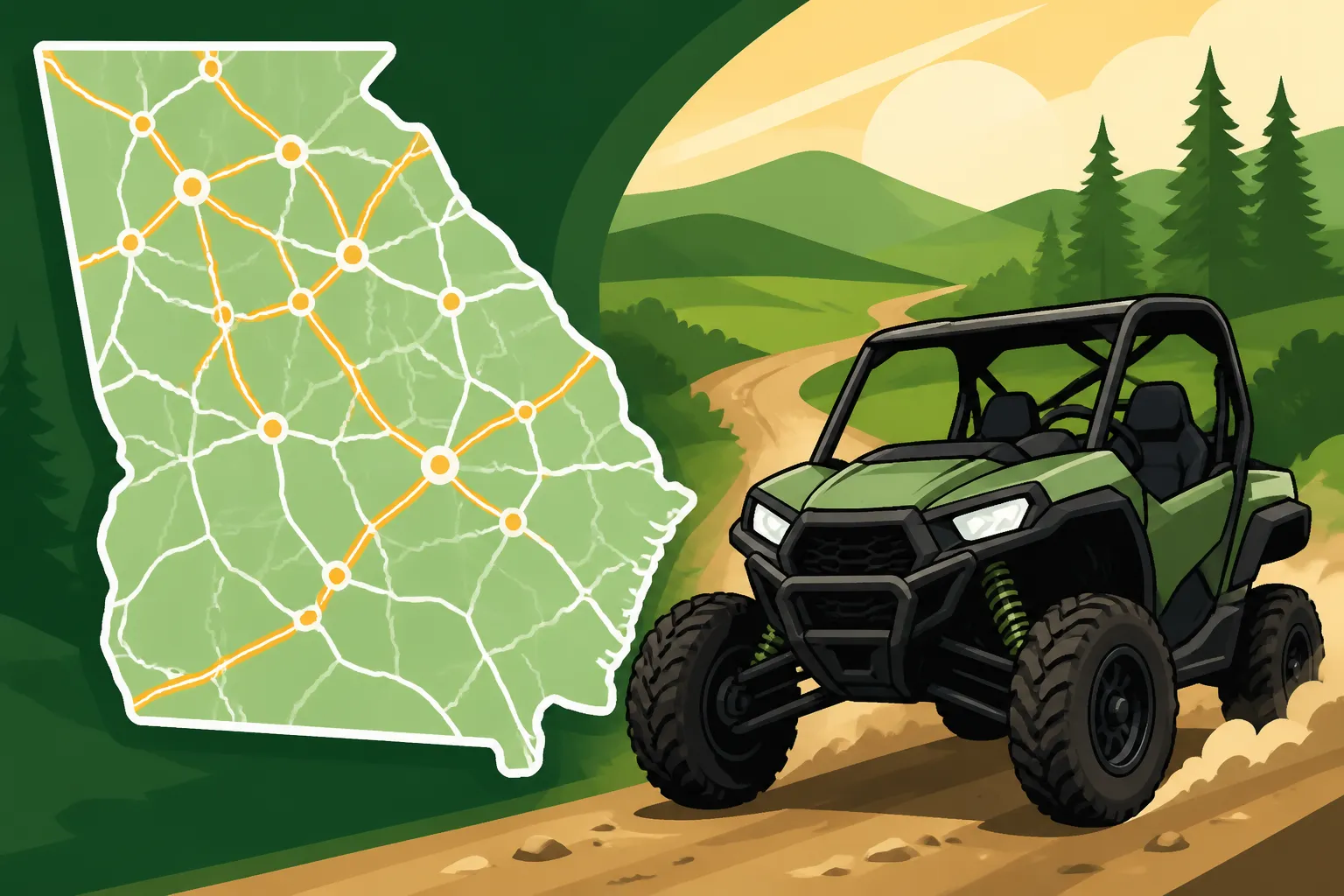
The best way to ensure you're sticking to county roads is to consult local resources. Your county's public works department or GIS (Geographic Information System) office often has detailed maps of their road network, clearly indicating which roads are county-maintained. Many counties also have online interactive maps that allow you to zoom in and see the designations. Don't rely solely on general navigation apps, as they might not differentiate between county roads and state routes in a way that is immediately obvious for MPOHV legality. Taking the time to study these maps, especially for areas where you frequently ride, is an essential step for responsible MPOHV ownership. It's often helpful to keep a printed map or a screenshot on your phone as a reference when you're out exploring. This proactive approach can save you a lot of trouble and ensure you’re always on the right side of the law. This practice ties into understanding [What a County Road System Includes].
Navigating County Roads: Rules and Restrictions
Even when you're on a legitimately designated county road, simply having a registration plate doesn't mean it's a free-for-all. There are still crucial rules and restrictions that MPOHV operators must adhere to. These are in place for safety, to manage traffic flow, and to ensure that off-highway vehicles don't interfere with the primary function of these public roadways. Ignoring these rules can not only lead to citations but also compromise your safety and the safety of others sharing the road.
Permitted Riding Zones and Excluded Areas
As we've established, registered MPOHVs are permitted on county roads. This means that if a road is officially part of your county's road system, you can generally ride your qualifying machine on it, assuming it meets all the MPOHV criteria. However, there are significant exclusions:
- State Routes (SRs/GA Hwys): Off-limits for continuous travel. You can only cross a state route at a designated intersection, and you must do so as directly and safely as possible. You cannot travel alongside a state route for any distance.
- Interstates: Absolutely no MPOHV access, not even for crossing.
- Municipal Streets: These are typically off-limits unless the city has passed a specific ordinance allowing MPOHV use on certain streets, which is rare for ATVs/UTVs, though more common for golf carts in places like Peachtree City.
- Federal Lands/Highways: Roads within national forests, parks, or military bases often have their own regulations, and generally, the MPOHV registration does not grant blanket access there. Designated OHV trails within national forests are a separate matter requiring specific permits, but the main roads often remain off-limits to MPOHVs.
This means you need to be constantly aware of road signs and the type of road you're on. A seamless drive can quickly become illegal if you mistakenly turn onto a state route. The core message is clear: [Georgia MPOHV Road Rules: County Roads Only] with very specific exceptions for crossings.
Operational Requirements for County Road Use
Beyond simply being on the right kind of road, operating an MPOHV on a Georgia county road comes with a list of requirements for the vehicle itself and the operator. These aren't suggestions; they are legal necessities that a law enforcement officer will expect to see if you're pulled over.
- Machine Eligibility: Your vehicle must meet all the MPOHV registration criteria, including width (no more than [Georgia's 80-Inch Width Limit for Registration]), payload, gross weight, steering type, seat type, and speed capabilities. Aftermarket modifications, perhaps from a brand like SuperATV, can help meet some of these, such as adding mirrors or turn signals, but they won't change fundamental disqualifiers like handlebars or a straddle seat.
- Safety Equipment: The machine must have functioning headlights, brake lights, taillights, turn signals, and a rearview mirror. These are not optional for road use.
- Registration and Plate: You must have a current [Georgia Plates for Off-Highway Vehicles] displayed on your machine.
- Insurance: Proof of minimum liability insurance is mandatory for any registered MPOHV operating on public roads. [Georgia Liability Insurance Tied to Registration] is a non-negotiable requirement.
- Driver's License: The operator must possess a valid driver's license. There's no special MPOHV license, so a standard Class C license is required. For more details, see [Georgia Driver's License Rules for MPOHV Operators].
- Helmet Law for Minors: While adults are not typically required to wear helmets on an MPOHV on county roads, anyone under 18 operating or riding as a passenger on an MPOHV on a public road must wear a helmet. This rule also extends to private property, as highlighted in [Georgia ATV Helmet Law for Riders Under 18].
Meeting these operational requirements is just as important as being on the correct road. A deputy checking your vehicle will verify these points rigorously.
Understanding the Sunset Provision
Perhaps one of the most significant, and often overlooked, aspects of Georgia's MPOHV law is its "sunset provision." This means the law, as it currently stands allowing MPOHVs on county roads, is not permanent. It has a built-in expiration date. Specifically, [Georgia's July 2027 Sunset on Road Access] is the date when this specific allowance is set to expire. Unless the Georgia General Assembly takes action to extend, amend, or make the law permanent before that date, the legal right to operate registered MPOHVs on county roads will cease. This is a critical piece of information for all MPOHV owners who rely on county road access. It means that while you can currently enjoy your registered machine on these roads, the future of that access is conditional and temporary. It's a good idea to stay informed about legislative discussions as that date approaches, as it could dramatically change how and where you can ride your machine.
Essential Gear and Safety Considerations for County Road Riding
Operating an MPOHV on a county road isn't just about legality; it's also about safety. These machines, while versatile, are fundamentally different from cars and trucks. They often have a higher center of gravity, different braking characteristics, and are generally less visible to other motorists. Therefore, ensuring your machine is properly equipped and that you, as the operator, are prepared, is paramount for a safe experience on Georgia's county road systems.
Mandatory Equipment for Registered MPOHVs
Beyond the registration requirements, certain equipment is not just recommended but legally mandated for MPOHVs operating on Georgia county roads. These items are designed to increase your visibility and ability to signal your intentions to other drivers, thereby reducing the risk of accidents.
- Headlights and Taillights: These must be fully functional and used during periods of low light or poor visibility. Your MPOHV should illuminate the road ahead and be clearly visible from the rear.
- Brake Lights: Essential for signaling when you are slowing or stopping. These must activate when the brakes are applied.
- Turn Signals: Required to indicate turns or lane changes. These need to be visible from both the front and rear. Many off-the-shelf UTVs may not come with factory turn signals, so aftermarket kits, like those available from SuperATV, are often necessary to meet this requirement for road use.
- Rearview Mirrors: At least one mirror is required to give the operator a clear view of traffic approaching from the rear.
- Seat Belts: If your MPOHV is equipped with seats, it must have seat belts for all occupants, and they must be worn. This is a key distinguishing factor from traditional ATVs, which typically have straddle seats.
Ensuring all this equipment is in perfect working order before every ride is non-negotiable. It's not just about avoiding a ticket; it's about making yourself and your machine predictable and noticeable to other vehicles on the road.
Insurance and Driver's License Requirements
As briefly touched on earlier, two critical pieces of documentation are absolutely required to operate a registered MPOHV on Georgia's county roads:
- Liability Insurance: Just like with any other registered motor vehicle, you must carry minimum liability insurance. This protects you financially in case you cause an accident resulting in injury or property damage to others. The county tag office will require proof of this insurance before they will issue your MPOHV registration and plate. It's not optional, and riding without it can lead to severe penalties, including fines and suspension of your driving privileges. Understanding [Georgia UTV Insurance Minimums] is vital for compliance.
- Valid Driver's License: Every person operating an MPOHV on a county road must possess a valid Georgia driver's license. This means a learner's permit is not sufficient for independent operation, and minors without a full license are generally restricted, even if they meet the helmet requirements. The state views operation on a public road as requiring the same level of driving competency as a car. This helps ensure that operators have a basic understanding of road rules and traffic laws.
These requirements emphasize that driving an MPOHV on public roads is a serious responsibility, mirroring the expectations for driving any other vehicle. Don't leave home without these documents, as law enforcement will almost certainly ask for them during a stop.
Staying Visible and Safe on Shared Roads
County roads, especially in rural areas, can be narrow, winding, and often lack shoulders. They are shared with all types of traffic, from passenger cars and pickup trucks to large farm equipment and logging trucks. Therefore, maximizing your visibility and practicing defensive driving are paramount.
- Enhance Visibility: Consider adding reflective tape to your machine, especially if you ride near dawn or dusk. Brightly colored flags or an amber strobe light can also significantly improve how easily other drivers see you, particularly if you're kicking up dust on a gravel road or traveling through wooded areas. Some aftermarket solutions from companies like SuperATV specialize in making your machine more road-ready and visible.
- Drive Defensively: Assume other drivers may not see you. Maintain a safe following distance, especially behind larger vehicles. Be extra cautious around blind curves and hillcrests. Avoid distractions, such as using your phone, and always pay full attention to the road and surrounding environment.
- Signal Clearly: Use your turn signals well in advance of a turn or lane change to give other drivers ample time to react. Hand signals can also be used as an additional communication method if your turn signals aren't immediately obvious.
- Respect Speed Limits: Adhere to posted speed limits. While MPOHVs can often reach higher speeds, county roads might have lower limits, and it's always safer to drive at a speed appropriate for conditions, especially on unpaved or poorly maintained roads.
Operating an MPOHV on Georgia county roads is a privilege that comes with significant responsibilities. By understanding the road classifications, adhering to all legal and equipment requirements, and practicing safe, defensive driving, you can enjoy your machine while staying safe and compliant with state law.
| Road Type | MPOHV Access (Registered) | Maintained By | Typical Characteristics |
|---|---|---|---|
| County Roads | YES (Continuous Travel) | County Government | Local traffic, varying surfaces (paved/gravel), rural |
| State Routes | NO (Continuous Travel) | GA Dept. of Transportation (GDOT) | Higher speed limits, inter-county travel, marked SR/GA |
| Interstates | ABSOLUTELY NO | GA Dept. of Transportation (GDOT) | High speed, multi-lane, limited access, I-X signage |
| City Streets | NO (Unless City Ordinance) | Municipal Government | Within city limits, varying speed limits, local rules |
Disclaimer
This article is for general informational purposes only and does not constitute professional advice. Laws, prices and regulations vary by location and change over time. Consult a qualified professional for guidance on your specific situation.