Georgia Rules for a Restamped ATV Serial Number
Finding yourself with an ATV or UTV that has a restamped serial number can feel like hitting a major roadblock, whether you're looking to buy or already own one. It immediately raises questions of legality, ownership, and whether you'll ever be able to properly prove it belongs to you or register it for road use in Georgia. This guide will walk you through the complexities of dealing with a restamped serial number, what Georgia law considers, and how to navigate this tricky situation as best as you can.
Understanding the Problem: Why a Restamped Serial Number is a Red Flag in Georgia
Imagine you're out looking for a great deal on a used side-by-side, maybe a Polaris Ranger or a Kawasaki Mule, and you find a machine that seems perfect. The price is right, it looks good, but then you go to check the VIN (Vehicle Identification Number) or serial number, and something just doesn't sit right. It looks like it's been ground off and re-stamped, or perhaps a new plate has been crudely affixed. This isn't just a minor cosmetic issue; it's a huge red flag that can lead to significant headaches down the road, especially in Georgia where proving ownership and the legitimate history of a machine is crucial.
The Legal Implications of Altered VINs
From a legal standpoint, intentionally altering, defacing, or removing a VIN is a serious offense in most places, including Georgia. The VIN is essentially your machine's unique fingerprint, its birth certificate, and its entire history rolled into one alphanumeric code. It allows law enforcement, insurance companies, and even county tag offices to identify the machine, verify its legitimate ownership, and check if it's been reported stolen. When that number is tampered with, it creates an immediate cloud of suspicion.
If you purchase a machine with an altered VIN, even unknowingly, you could find yourself in possession of stolen property. That's a scary thought, and it can happen to anyone trying to save a buck on a private sale. Law enforcement, when they encounter such a machine, will often seize it for investigation. You could lose your investment entirely, and potentially face questions about how you came to own it. It's a risk that no enthusiast or casual rider wants to take, and Georgia's rules are designed to prevent the proliferation of such questionable machines on its county roads.
Furthermore, without a clear, verifiable VIN, establishing a [Chain of Ownership Gaps] becomes virtually impossible. This gap means you can't definitively link the machine back to its original manufacturer and subsequent owners. This is a critical component for proving legitimate ownership, especially since Georgia does not title ATVs. Instead, you rely on bills of sale and affidavits to establish your claim. A restamped VIN undermines this entire process, leaving you in a very vulnerable position.
Common Scenarios Leading to Restamped Numbers
While some might immediately jump to the conclusion of theft, not every restamped serial number necessarily means the machine was stolen. However, these "innocent" scenarios are still problematic and can be just as difficult to resolve. Sometimes, during a significant repair or customization, a frame section containing the VIN might be replaced, and the number poorly transferred or re-stamped. Other times, perhaps in a homemade machine or a highly modified one, an owner might attempt to create a serial number where none was clear, or combine parts from multiple machines, leading to confusion.
Another scenario could involve a machine that was originally purchased with no clear paperwork, perhaps salvaged or bought in a very informal private sale many years ago. The owner, needing a number for some purpose, might have improvised. While their intent might not have been malicious, the result is the same: a serial number that doesn't conform to factory standards and raises red flags. Regardless of the reason, the burden of proof will always fall on the current owner to demonstrate the machine's legitimate history, and a restamped number makes that an uphill battle.
What's more, some very old machines might have had serial numbers that were less robustly applied and could have worn off over time due to weather exposure, rust, or aggressive cleaning. In an attempt to preserve some form of identification, a previous owner might have tried to re-stamp it themselves. While understandable from a preservation standpoint, this unofficial alteration still won't be recognized as legitimate by authorities. The official method involves specific inspection processes and potentially a new, state-issued VIN, not a DIY solution.
What Georgia Law Enforcement Looks For
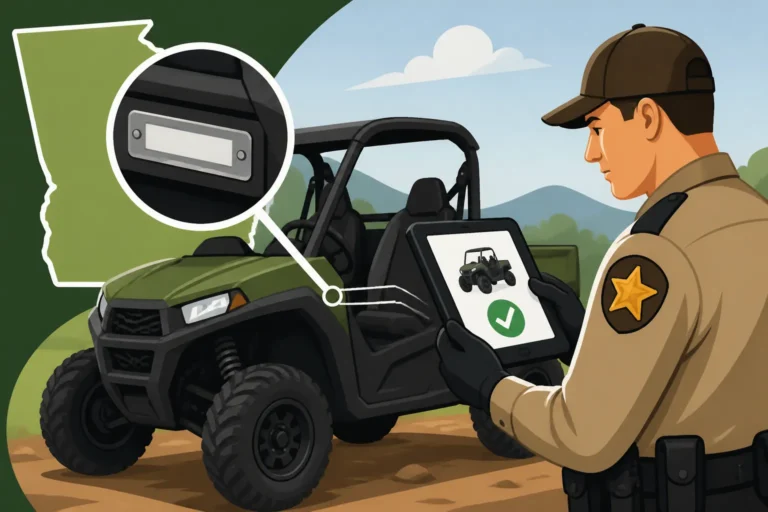
When a Georgia deputy or police officer encounters a machine, especially one being operated on a county road under the new MPOHV rules, one of the first things they'll likely check is the serial number. They are trained to spot inconsistencies, alterations, and numbers that just don't look right. [How a Georgia Deputy Verifies Your Machine's Serial Number] involves comparing the visible number to records, but also looking at the quality of the stamping, the font, the spacing, and the location. Factory VINs are precisely applied, often etched or stamped in specific, hard-to-alter locations.
An officer might use a special kit to reveal underlying numbers if they suspect grinding or tampering. They know what to look for: uneven stamping, incorrect fonts, numbers that appear to be hand-engraved, or a VIN plate that looks out of place or loosely attached. If they determine the serial number has been altered, the machine will likely be impounded, and a thorough investigation will begin. This investigation isn't just about whether the machine is stolen; it's about the act of altering the VIN itself, which is a separate legal issue.
It's not just the visible number, either. Many modern machines have multiple identifying numbers, sometimes on the engine, transmission, or other components, to help deter theft and verify authenticity. If the primary frame VIN is altered, but these other numbers are inconsistent or also appear tampered with, it further compounds the problem. Law enforcement will often perform a [Georgia Stolen Vehicle Check Before Registration] and during routine stops, and an altered VIN immediately complicates this process, triggering deeper scrutiny.
Navigating the Purchase or Ownership of a Machine with a Restamped VIN in Georgia
So, what do you do if you come across a machine with a restamped VIN? Or worse, what if you already own one? This is where extreme caution and a lot of legwork come into play. Georgia's approach to ATVs and UTVs, particularly the new MPOHV registration, emphasizes clear, undisputed ownership. A restamped serial number throws a wrench into that entire system, making it incredibly difficult to satisfy the requirements for registration or even just peace of mind.
Due Diligence Before Buying a Used Machine
If you're in the market for a used off-road machine in Georgia, checking the VIN or serial number should be as routine as checking the tires. If you notice any signs of tampering – grinding, re-stamping, unusual font, or an improperly attached plate – walk away immediately. It's simply not worth the risk. Even if the seller has a compelling story, the legal and financial ramifications if that story doesn't hold up are too severe. You could lose your money, the machine, and find yourself in legal trouble.
Beyond the VIN itself, always ask for complete paperwork. This includes a clear bill of sale from the seller, and ideally, previous bills of sale that establish a continuous [Chain of Ownership Gaps]. If the seller has no paperwork, or provides documents that look suspicious, that’s another major warning sign. When buying privately, consider drafting a robust bill of sale. Resources like LawDepot can provide templates for these kinds of documents, ensuring all necessary details are included and the transaction is as transparent as possible.
If the machine is old and was never formally registered, verifying its history is even harder. For newer machines, if it somehow was titled in another state (which is rare for ATVs but possible for some UTVs), check that title carefully. For Georgia, where most ATVs are untitled, the bill of sale is paramount. Don't be afraid to ask for photo ID from the seller and ensure it matches the name on any paperwork. A legitimate seller will have nothing to hide and will understand your need for thoroughness.
Steps if You Already Own a Machine with a Restamped Number
This is a much tougher spot to be in. If you already own a machine and discover the serial number is restamped, your options are limited, and none of them are easy. The first and most crucial step is to gather every single piece of documentation you have related to the purchase: bills of sale, receipts, previous owner information, and any communication you had. The more you can establish your innocent intent and the history of your purchase, the better. You need to build a case that you acquired the machine legitimately, even if the serial number is compromised.
Next, you might consider reaching out to a qualified professional, such as a legal counsel specializing in vehicle law, especially if you have significant investment in the machine. They can advise you on the specific nuances of Georgia law and what avenues, if any, might be available to you. Attempting to hide or ignore the issue is not a viable long-term solution, particularly if you ever plan to sell the machine or operate it on public roads.
In some rare cases, if you can absolutely prove legitimate ownership and that the re-stamping was due to an honest mistake (like a frame repair with documentation), Georgia might have a process for assigning a new, state-issued VIN. This usually involves a rigorous inspection, submission of all your ownership documents, and potentially a law enforcement verification. However, this is not a guarantee and is typically reserved for extreme cases where no malfeasance is suspected. Be prepared for a lengthy and possibly frustrating process.
The Importance of a Clear Chain of Ownership
For ATVs and UTVs in Georgia, where titles are not issued for most off-highway vehicles, the [Proving You Own an ATV in Georgia Without a Title] relies heavily on a clear, unbroken chain of ownership documents. This chain typically consists of original sales receipts from the dealer, followed by subsequent bills of sale for every private sale thereafter. Each document should clearly identify the machine by its serial number (or VIN), the buyer, the seller, the date, and the price. A restamped serial number instantly breaks this chain.
Without a solid chain, any attempt to register the machine as an MPOHV for county road use or even just to assert ownership if it's stolen, becomes incredibly difficult. Imagine trying to get insurance for a machine that cannot be definitively identified. Most insurance companies will balk at insuring a vehicle with an altered VIN because of the inherent risks. This is why when you are [Buying a Used Side-by-Side in Georgia], securing proper paperwork is just as important as inspecting the machine itself.
Even if you have an [Georgia Ownership Affidavit for an MPOHV], if it references a serial number that appears altered, its credibility will be severely questioned. The entire purpose of these documents is to establish beyond doubt who owns the machine. A restamped serial number undermines that fundamental principle, making it almost impossible to satisfy the requirements that the Georgia Department of Revenue and county tag offices look for when processing registrations.
Attempting to Register a Machine with an Altered VIN in Georgia
The new MPOHV registration system in Georgia aims to bring some order and legitimacy to off-highway vehicles operating on county roads. However, this increased scrutiny means that machines with compromised serial numbers face an almost insurmountable barrier to registration. The system is designed to prevent stolen or otherwise questionable vehicles from receiving official state recognition.
Why the Georgia MPOHV Registration System Is Strict
The Georgia MPOHV registration system, which allows qualifying side-by-sides and similar machines to operate on county roads, includes stringent requirements. One of the foundational requirements is a verifiable VIN or serial number. Without a clear, unaltered serial number that can be checked against stolen vehicle databases, a machine simply cannot meet the basic criteria. The county tag office staff are not equipped to investigate suspicious VINs; their role is to process legitimate registrations based on clear documentation.
When you present your paperwork to the tag office, they will perform a [Georgia MPOHV Registration and VIN Checks] to ensure the number exists, is valid, and hasn't been reported stolen. An altered serial number will immediately trigger a red flag in their system, or at the very least, raise enough suspicion for them to refuse the registration. Their hands are tied; they must adhere to the rules designed to protect both the state and the public from fraudulent or stolen property.
Moreover, the entire framework for registering an MPOHV in Georgia is built on establishing proof of ownership and the machine's eligibility. If the primary identifier of the machine—the serial number—is questionable, then the foundation of your claim to ownership is also questionable. This makes it impossible for the tag office to move forward with issuing a valid registration or plate. They are protecting the integrity of the state's vehicle identification system.
When a Law Enforcement Inspection Might Be Required
In specific situations, especially if there's any doubt about a machine's identification or if it's been rebuilt, Georgia law might require a [Georgia Law Enforcement Inspection for a Branded Plate] or a T-22B form. However, this process is generally for verifying the existence and accuracy of an original VIN, not for legitimizing a tampered one. If a machine's serial number is clearly restamped or altered, a law enforcement officer conducting such an inspection would likely flag it as suspicious.
During an inspection, a deputy will physically examine the machine, looking for the serial number in its factory location. They will look for signs of grinding, welding, or re-stamping. If they find evidence of alteration, they will not be able to certify the machine's identity, which means you won't be able to proceed with registration. Their role is to ensure the numbers match, are authentic, and haven't been tampered with. A restamped number goes directly against these criteria.
It's important to understand that law enforcement's priority is to uphold the law and prevent stolen property from entering the legal stream. If a machine has an altered VIN, it immediately suggests potential criminal activity. Even if your intentions are honest, the visual evidence of tampering creates a legal barrier that is extremely difficult to overcome through an inspection process meant for verification of legitimate, original numbers.
Potential Outcomes and What to Expect at the Tag Office
If you attempt to register a machine with a restamped serial number at a Georgia county tag office, be prepared for refusal. The staff will likely inform you that they cannot process the registration due to the altered VIN. They may advise you to contact law enforcement or provide you with information on how to potentially apply for a state-assigned VIN if your case qualifies as an innocent alteration with verifiable documentation. However, getting such an assignment for a machine that clearly had its number tampered with by a previous owner is an extremely rare and difficult path.
In the worst-case scenario, if you're operating the machine on a county road and law enforcement discovers the altered VIN, it could lead to the machine being impounded. This is not just a registration issue; it becomes a question of whether the machine is stolen or if the VIN was illegally altered. You could face legal charges, and proving your innocence would be a considerable challenge. This is why the advice is always to avoid machines with suspicious VINs entirely.
Ultimately, the most likely outcome is that the machine will remain unregistered and legally unidentifiable. This severely limits its utility; you won't be able to operate it on any public roads, legally sell it, or perhaps even insure it. The financial loss could be significant, and the machine might only be usable on private land where absolute legal identification isn't as critical for day-to-day operation, though still important for ownership disputes. It's a tough lesson that underscores the importance of proper due diligence before buying.
Proving Legitimate Ownership Despite the Restamped Number
Even with a restamped serial number, if you genuinely believe you purchased the machine legitimately and can trace its history, you'll need to compile an ironclad case. This isn't about legitimizing the restamped number itself, but proving your lawful possession of the physical machine, which is a nuanced but crucial distinction. The goal is to establish that you are the rightful owner, even if the machine's primary identifier is compromised.
Gathering Evidence: Bills of Sale, Receipts, and Affidavits
To prove ownership of a machine with a restamped serial number in Georgia, you need every scrap of evidence you can find. Start with the most recent bill of sale, ensuring it clearly states the terms of the transaction, the description of the machine, and any serial numbers (even the restamped one) that were visible at the time of sale. If you have any communication with the seller, save it. Bank statements or payment records showing the transfer of funds are also crucial.
Beyond your immediate purchase, try to trace the machine's history further back. Did the seller provide any paperwork from their purchase? Any old maintenance records, insurance policies, or even photos that show the machine in prior ownership can help. If the machine was inherited or received as a gift, secure an [Gift Letters Between Family Members] or an affidavit from the giver clearly stating the circumstances and prior ownership details.
Sometimes, an [Georgia Ownership Affidavit for an MPOHV] can be a useful tool, but its effectiveness is severely diminished if the serial number it refers to is compromised. It would need to be meticulously detailed, explaining the known history of the machine, how the serial number was found to be restamped, and affirming your good faith in the purchase. Every piece of paper you can gather to establish a legitimate history for the machine will be important if you ever need to assert your claim.
Legal Documentation to Bolster Your Claim
For machines with complicated histories, especially those with altered VINs, simply having a basic bill of sale might not be enough. You might need to create more robust legal documents. This is where services like LawDepot can be helpful. They offer customizable legal forms, such as bills of sale or affidavits, which can be tailored to include specific clauses detailing the condition of the serial number and the seller's assurances. While these documents can't magically legitimize an altered VIN, they can provide a stronger foundation for your claim of lawful acquisition.
For instance, a comprehensive bill of sale could include a section where the seller explicitly warrants that they have the right to sell the machine, that it is free of liens, and acknowledges the condition of the serial number (if it was known at the time of sale). Such a document would be legally stronger than a hastily scribbled note. Similarly, an affidavit from a prior owner detailing the circumstances of the restamping (e.g., a frame replacement after an accident) could be vital, provided it is truthful and verifiable.
Remember, the goal is to build a paper trail that demonstrates your good faith and legitimate ownership history, despite the machine's physical identifier being compromised. While LawDepot can help you create professional-looking documents, the content must be accurate and supported by facts. These documents serve as evidence of your efforts to act legally and transparently.
When to Seek Professional Legal Advice
Given the severe legal ramifications of altered VINs, if you find yourself in possession of a machine with a restamped serial number in Georgia, consulting a legal professional is highly recommended. An attorney experienced in vehicle and property law can assess your specific situation, review your documentation, and advise you on the best course of action. They can help you understand the risks involved, whether you can pursue a state-assigned VIN, or if your best option is to only use the machine on private land.
They can also help you understand your rights and potential liabilities, especially if you unknowingly purchased a stolen machine. They might advise you on whether to attempt to contact the previous seller, report the issue to law enforcement yourself, or how to navigate a potential impoundment and investigation. Trying to handle such a complex legal issue on your own can be risky and may lead to unintended consequences.
Ultimately, a lawyer can provide a realistic assessment of your chances of ever registering the machine for road use in Georgia or legally selling it. They can help you weigh the costs and benefits of pursuing various avenues, including potential legal action against a seller who misrepresented the machine. In cases involving restamped serial numbers, an ounce of prevention (walking away from the deal) is worth a pound of cure (trying to fix the problem later), but if you're already in this situation, professional guidance is your strongest asset.
| Action Item | Recommended Approach | Potential Outcome |
|---|---|---|
| Buying a machine with restamped VIN | AVOID PURCHASE ENTIRELY. | Avoids legal liability, financial loss, and ownership disputes. |
| Already own, discover restamped VIN | Gather ALL purchase documents, receipts, communication. | May help prove innocent intent, but legal issues remain. |
| Attempting Georgia MPOHV Registration | Prepare for refusal at tag office. | Registration highly unlikely; machine deemed ineligible. |
| Seeking state-assigned VIN | Research Georgia's specific process; likely requires law enforcement inspection and extensive proof of ownership. | Extremely difficult; typically requires clear proof of innocent alteration (e.g., documented frame repair). |
| Legal Documentation (e.g., Bill of Sale, Affidavits) | Use detailed forms (e.g., LawDepot templates) to clearly document known history and condition. | Bolsters claim of lawful acquisition; does not legitimize altered VIN. |
| Operating on public roads | DO NOT OPERATE. | Risk of impoundment, fines, and criminal charges. |
| Selling the machine | Disclose altered VIN to buyer; likely impacts value and marketability. | Difficult to sell legally; may be limited to parts or private-land-only sales. |
| Seeking legal advice | Consult an attorney specializing in vehicle/property law. | Provides clarity on legal standing, options, and risks. |
Disclaimer
This article is for general informational purposes only and does not constitute professional advice. Laws, prices and regulations vary by location and change over time. Consult a qualified professional for guidance on your specific situation.