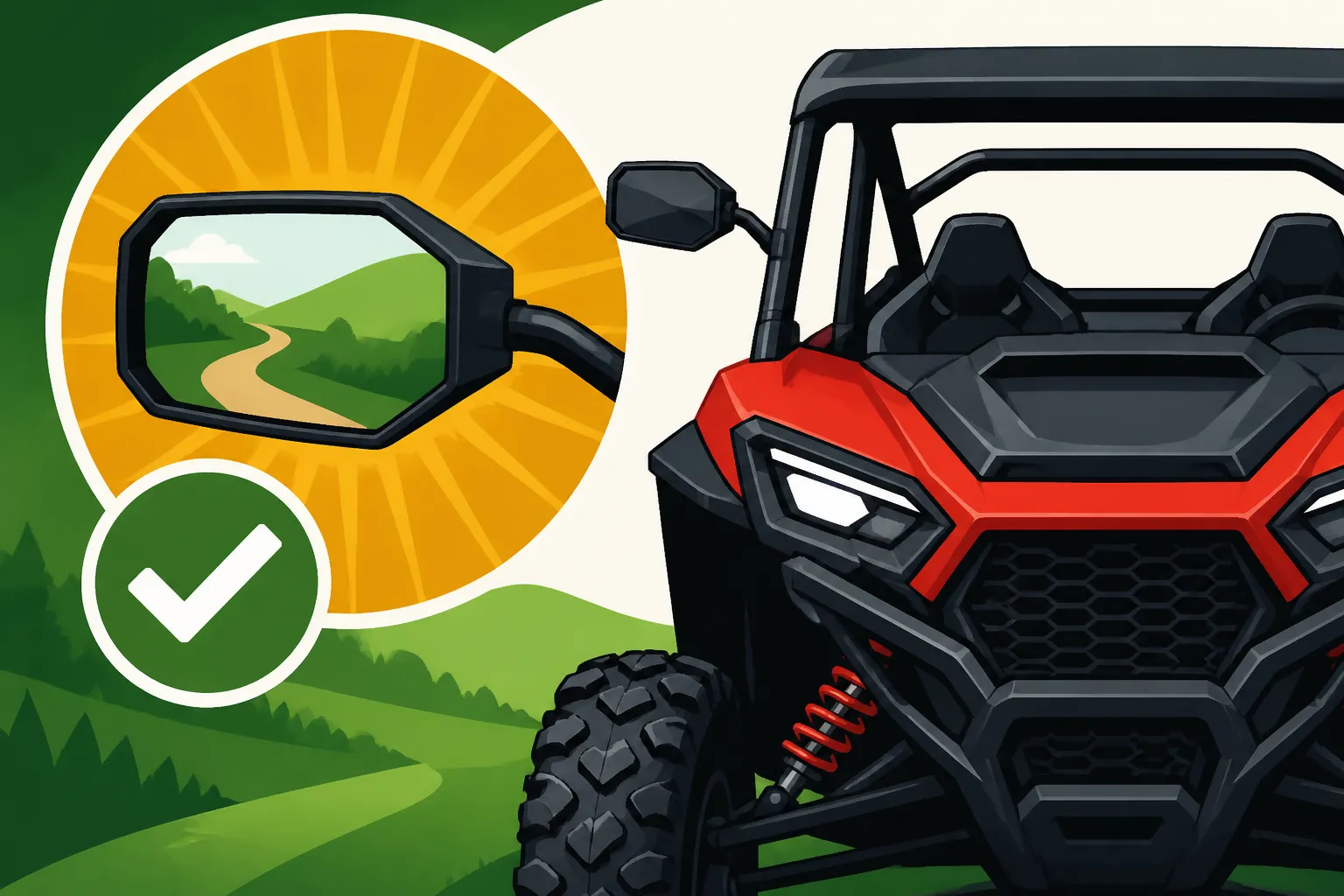
Rearview Mirrors on the Required List
It can be incredibly frustrating to navigate all the specific requirements for getting your off-highway vehicle registered for limited road use here in Georgia. Many folks get hung up on what seems like small details, only to find out they're crucial for passing inspection at the county tag office. One of those often-overlooked but absolutely essential components is your rearview mirror situation. This guide will walk you through exactly why and how rearview mirrors play a vital role in getting your machine legally registered for county road access in Georgia.
Why Rearview Mirrors Matter for Georgia MPOHV Registration
When you're trying to get your side-by-side or qualifying ATV registered as a Motorized Play Vehicle or Off-Highway Vehicle (MPOHV) in Georgia, you're essentially telling the state that your machine is ready for a new purpose: limited public road use. This shift from purely off-road to occasional road use brings with it a whole new set of safety expectations, and rearview mirrors are right at the top of that list. It's not just a suggestion; it's a fundamental part of the eligibility criteria.
Safety and Situational Awareness on County Roads
Think about driving your regular car or truck. You constantly use your mirrors to check your surroundings, change lanes, and back up. On a county road in Georgia, even if it's a quiet backroad, you're sharing that space with other vehicles, mail carriers, farm equipment, and sometimes even pedestrians or cyclists. Without proper rearview mirrors, your situational awareness is severely compromised. It creates dangerous blind spots that simply aren't acceptable for a vehicle operating on public ways.
Imagine you're driving your side-by-side down a gravel county road, and you need to slow down or pull over. If you don't have a clear view of what's behind you, you might not see the pickup truck approaching quickly or the car waiting to pass. This isn't the same as just riding trails on private land where you're focused purely forward. Public roads demand vigilance in all directions, and mirrors are your primary tool for achieving that. This is a key reason why the state made them a specific requirement for MPOHV registration, understanding the unique risks that come with mixing off-road vehicles and public infrastructure.
The Legal Mandate for MPOHV Road Use
The State of Georgia has a very specific checklist for what constitutes an eligible MPOHV, and these requirements are laid out clearly in the law. Your machine isn't just getting a license plate; it's being evaluated against a set of safety standards designed to protect you and others when you venture onto county roads. Missing even one item on that checklist, like adequate rearview mirrors, can result in your application being denied at the tag office. This is precisely why it's so important to review every single point.
The Department of Driver Services (DDS) and your local county tag office will be looking for proof that your machine meets all the necessary equipment stipulations. They aren't trying to make things difficult; they're ensuring that every vehicle granted road access adheres to a baseline of safety. When you visit the tag office, the staff might not perform a full-blown mechanical inspection, but they will verify that essential safety equipment, including rearview mirrors, is present and functional as part of the [Georgia MPOHV Eligibility: The Eight-Point Test]. Failing to meet this specific requirement means a frustrating trip home without your registration, so it's best to be prepared.
What Georgia Requires for Rearview Mirrors
So, what exactly does Georgia consider "adequate" when it comes to rearview mirrors for your MPOHV? It's not overly complicated, but understanding the minimum standard is key to ensuring you're compliant. You don't want to show up at the tag office only to be told your single, tiny mirror isn't enough, or that it's mounted incorrectly.
Single vs. Multiple Mirrors
For most vehicles, including MPOHVs, the general requirement is at least one mirror that allows the driver to see at least 200 feet to the rear. Often, this is interpreted as a driver-side mirror. While having a single, properly positioned driver-side mirror might meet the bare minimum legal requirement, many MPOHV owners wisely choose to install additional mirrors for enhanced safety. Side-by-sides, with their wider frames and potential for cargo or passengers to obstruct the rear view, particularly benefit from more comprehensive mirror setups.
Some owners opt for a second side mirror on the passenger side, creating a more car-like experience and greatly reducing blind spots. Others find a centrally mounted rearview mirror, similar to what you'd find in a car, incredibly useful for seeing directly behind the machine. While the law might specify a minimum, there's nothing stopping you from going above and beyond to ensure you have the best possible visibility, especially given the various types of [Georgia Plates for Off-Highway Vehicles] that will be available. It's about combining legal compliance with practical, real-world safety on those Georgia county roads.
Mirror Placement and Condition
The placement of your rearview mirror(s) is just as important as having them. A mirror that's obstructed by a roll cage bar, a passenger's head, or gear strapped in the bed isn't serving its purpose. The mirror must be securely mounted and positioned so that the driver has an unobstructed view of the area directly behind and to the side of the machine, extending at least 200 feet to the rear. This typically means mounting it on the roll cage or frame, ensuring it can withstand the bumps and vibrations of off-road use while remaining stable for road driving.
Furthermore, the mirror itself must be in good, usable condition. A cracked, broken, or missing mirror certainly won't pass muster. The reflective surface needs to be clear and intact, providing an accurate image without distortion. If your machine has seen a lot of trail action, it's a good idea to inspect your mirrors for damage before you head to the tag office. Replacing a damaged mirror is a small investment compared to the frustration of a denied registration. Ensuring everything is shipshape before your visit can save you a lot of time and hassle when trying to get your [Georgia MPOHV Registration Explained].
Practical Considerations for Installing or Upgrading Mirrors
Once you understand the "what" and "why" of rearview mirrors for Georgia MPOHV registration, the next step is to address the "how." Many off-highway vehicles, particularly older models or those designed purely for recreation, might not come equipped with road-legal mirrors straight from the factory. This means you'll likely need to consider aftermarket solutions or ensure your existing setup meets the specific requirements.
Aftermarket Options and Installation Tips
The good news is that the aftermarket industry offers a vast array of rearview mirror options specifically designed for UTVs and ATVs. You'll find side mirrors that clamp directly onto your roll cage, center mirrors that attach to the top bar of your cage, and even integrated dash-mounted mirrors for some models. When selecting mirrors, consider their durability – they need to withstand the elements and potential impacts that come with off-road adventures, while still providing clear vision on the road. Look for options with robust housings and shatter-resistant glass.
Installation is generally straightforward for most aftermarket kits. They often involve simple clamp-on designs that require basic hand tools. However, always refer to the manufacturer's instructions for your specific mirrors and machine. Ensure the mirrors are tightened securely so they don't shift during operation, but don't over-tighten and risk damaging your roll cage. The goal is a stable, clear view that won't vibrate out of adjustment every time you hit a bump. Taking a little extra time during installation will ensure your mirrors are compliant and will serve you well for many miles on and off the county roads. You might even find that adding these mirrors enhances your safety during regular trail riding, not just on public roads.
Ensuring Compliance During Inspection
Before you even think about heading to your local county tag office to complete your [Georgia MPOHV Registration], it's absolutely crucial to perform a thorough self-inspection of your rearview mirror setup. Don't assume everything is good to go. Sit in the driver's seat and check your field of vision. Can you clearly see at least 200 feet behind you through your mirror(s)? Is the mirror securely mounted and free from cracks or damage? Does it hold its position when you drive over rough terrain?
Imagine a tag office employee or law enforcement officer performing a quick visual check – would your mirrors pass? It's better to address any deficiencies at home than to be turned away from the counter, which could happen if your machine doesn't meet the [Georgia MPOHV Registration Requirements]. This preparation is part of being a responsible MPOHV owner. It demonstrates that you've taken the steps necessary to operate your machine safely on public roads, which is the entire premise behind the voluntary MPOHV registration program in Georgia.
Beyond the Basic Requirement: Enhanced Visibility and Peace of Mind
While meeting the minimum legal requirement for rearview mirrors is essential for MPOHV registration, many experienced riders and safety-conscious owners choose to go beyond the bare minimum. Adding extra mirrors or investing in higher-quality options isn't just about compliance; it's about maximizing your safety and comfort on those Georgia county roads and even on the trails.
Adding a Center Rearview Mirror
For side-by-sides, especially those with multiple passengers or a cargo bed, adding a centrally mounted rearview mirror can be a game-changer. Unlike an open-air ATV where you might be able to glance over your shoulder more easily, the cabin structure of a UTV can create significant blind spots directly behind you. A center mirror effectively mimics the rearview mirror in your car, providing a direct line of sight to what's coming up behind your machine.
This is particularly beneficial when you're backing up, navigating tight spaces, or simply trying to keep an eye on your convoy if you're riding with friends. While a side mirror is crucial for lateral awareness, a center mirror fills in the gap, offering a more complete picture of your immediate rear surroundings. It's an extra layer of visibility that significantly contributes to overall safety, making your MPOHV feel more predictable and secure when operating on roads and even on busy trails. Many manufacturers like Polaris, Can-Am, and Yamaha offer specific accessories for their popular models like the [Georgia Registration for a Polaris Ranger] or [Can-Am Defender Owners at a Georgia Tag Office].
The Role of Mirrors in Safe Driving Habits
Ultimately, having the right equipment is only one part of the equation; using it properly is the other. Incorporating your rearview mirrors into your regular driving habits is crucial for safe operation of your MPOHV on Georgia's county roads. This means constantly checking your mirrors, just as you would in any other road-legal vehicle. Before you slow down, before you make a turn, and especially before you merge or pull out, a quick glance in your mirrors can prevent an accident.
Developing these habits ensures you're always aware of traffic approaching from behind, allowing you to react preemptively rather than defensively. The mirrors are there to extend your field of vision, and making them a regular part of your scanning routine will dramatically improve your safety. Remember, while your MPOHV offers incredible versatility, when you're on a public road, you're expected to operate it with the same level of caution and awareness as any other driver.
| Mirror Type | Description | Pros | Cons |
|---|---|---|---|
| Side Mirrors | Mounted on roll cage or doors, one on each side. | Excellent peripheral vision; reduces side blind spots. | Can be prone to damage from trail obstacles; only show sides. |
| Center Mirror | Mounted centrally above the dash or on the roll cage. | Direct rear view, similar to a car; great for backing up. | Can be obstructed by passengers/cargo; less peripheral vision. |
| Convex Mirrors | Wide-angle lens, often used for side or center. | Wider field of view, shows more area. | Objects appear further away than they are; can be distorted. |
| Breakaway Mirrors | Designed to fold in on impact to prevent damage. | Durable for off-road use; less likely to break. | May require adjustment after impacts; potentially higher cost. |
Disclaimer
This article is for general informational purposes only and does not constitute professional advice. Laws, prices and regulations vary by location and change over time. Consult a qualified professional for guidance on your specific situation.