A Machine That Exceeds 65 mph
It's incredibly frustrating when you invest in a powerful side-by-side or UTV, dreaming of hitting those designated county roads in Georgia, only to discover that its impressive top speed might actually be a barrier. Many owners find themselves asking: "Can my high-performance machine actually get a Georgia MPOHV plate?" This guide will clear up the confusion surrounding Georgia's speed limits for Modified Off-Road Vehicles (MPOHV) and what it means if your machine exceeds 65 miles per hour.
Understanding Georgia's Speed Limit for MPOHV Registration
When Georgia introduced the MPOHV registration program, the intent was never to transform off-road machines into full-fledged highway-legal vehicles. Instead, it was designed to provide limited, controlled access to certain public roads, primarily in rural areas. This foundational principle heavily influenced the eligibility criteria, including the specific speed limitations.
The "Why" Behind the 65 mph Ceiling
Think about the context: MPOHVs are distinct from standard cars, trucks, or even motorcycles. They're designed for rugged terrain, not necessarily for sustained high-speed travel on paved roads shared with much heavier and faster traffic. The 65 mph ceiling is a deliberate safety measure. It acknowledges that while these machines can be modified for road-appropriate features like turn signals and mirrors, their fundamental design, center of gravity, and handling characteristics are different. Allowing them to regularly operate at highway speeds could introduce significant risks, both to the MPOHV operator and other motorists. It's a legislative attempt to balance the desire for road access with the paramount need for public safety. The state clearly wants these machines to stick to specific types of roads, and highway-level speeds are generally beyond that scope.
What the 65 mph Limit Means for Your Machine
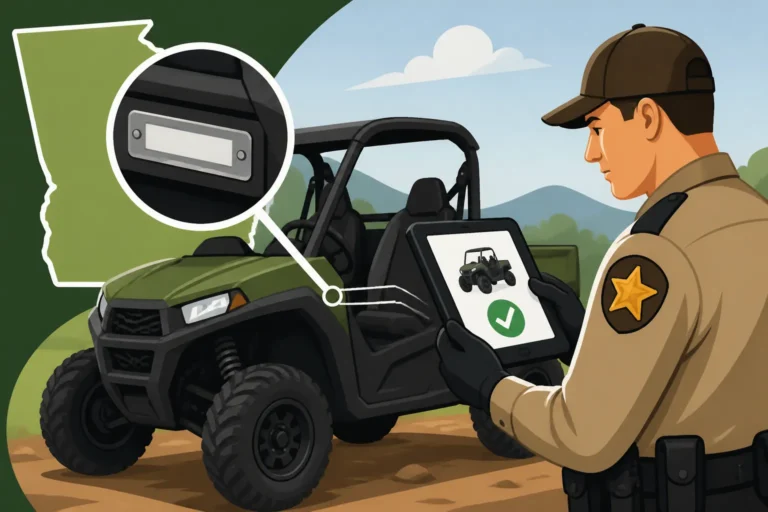
The key here isn't how fast you personally drive your machine, or even how fast it could theoretically go downhill with a tailwind. The Georgia Department of Revenue (DOR) and your county tag office will be looking at the manufacturer's design speed or maximum rated speed. This is the speed the manufacturer certified the vehicle for, typically found in the owner's manual, on a specification sheet, or sometimes even a sticker on the machine itself.
If your UTV, for instance, comes from the factory with a stated top speed of 70 mph, 75 mph, or even higher, it will likely be immediately disqualified from MPOHV registration in Georgia. This can be a real disappointment for owners of many modern, high-performance side-by-sides. Machines like some of the sportier Polaris RZRs, Can-Am Mavericks, or certain Yamaha YXZ models, which are engineered for thrilling speeds on trails, often exceed this 65 mph threshold. This means that despite having all the other required safety features—like headlights, brake lights, and seat belts—they simply won't make the cut for a Georgia MPOHV plate. It's an important distinction to understand when considering if your particular pride and joy can hit the county roads.
How Georgia Determines Your Machine's Top Speed
When you head to the county tag office, they're not going to hook your machine up to a dynamometer or ask you to take it for a test drive. The process for verifying your machine's top speed is much more straightforward, relying heavily on official documentation.
Manufacturer Specifications as the Primary Proof
The county tag office will primarily consult the manufacturer's official specifications to determine if your machine meets the 25 mph minimum and 65 mph maximum speed requirements. This usually means checking the owner's manual, a manufacturer's certificate of origin (MCO), or readily available online databases for the specific make, model, and year of your vehicle.
It's critical that the information presented clearly shows your machine's design speed falls within this window. If your manual states a top speed of 68 mph, even if every other criterion is met, your application will likely be denied. Attempting to argue that you've "governed" the speed down or that you "never drive it that fast" won't sway the decision. The state is interested in the machine's inherent capability as designed by its maker. This means that for some high-performance models, even if you rarely push them to their limits, their factory rating can be an automatic disqualifier. When proving you own an ATV in Georgia without a title, accurate documentation is always essential, and the same goes for proving its specifications.
The Real-World Implications of Exceeding the Limit
The stark reality is that if your off-road machine has a manufacturer-rated top speed exceeding 65 mph, it simply won't be eligible for the [Georgia MPOHV Registration Explained]. This means you cannot obtain an MPOHV plate, and consequently, you cannot legally operate it on Georgia's designated county roads.
This can be a significant letdown for owners who purchased powerful machines with the expectation of some road access. It means that your high-speed UTV will be confined to private property, designated off-road parks, and any legal Wildlife Management Area (WMA) trails, where rules permit. For many, this limits the machine's utility, especially if you had hoped to use it for tasks like crossing a county road to access another section of your property or simply enjoying a leisurely cruise on rural routes. It also underscores the importance of fully understanding all the [Georgia ATV Registration Requirements] before making a purchase or applying for registration. It’s a bitter pill to swallow when you realize your dream machine is too good (or rather, too fast) for what you wanted to do with it on public land.
Your Options When Your Machine is Too Fast for Registration
Discovering your machine is too fast for Georgia's MPOHV registration can feel like a setback, but it doesn't mean your off-road adventures are over. It simply means understanding the designated places your high-performance vehicle can operate legally and safely.
Private Land Use Remains Your Primary Option
The good news is that the MPOHV speed limitation only pertains to public road access through the registration program. If your machine exceeds 65 mph, it can still be enjoyed extensively on private property with the owner's permission. This includes your own land, land owned by friends or family, or property leased for recreational purposes.
Beyond private land, Georgia boasts a fantastic network of dedicated off-road parks and trails. Places like Iron Mountain Resort, Highland Park, or the various National Forest OHV systems (like Houston Valley, though be mindful of their specific width restrictions) are perfect for letting your machine stretch its legs. These parks are designed for off-road machines of all speeds and capabilities, offering diverse terrain, from mild trails to challenging obstacles. Always check park-specific rules and permit requirements before you go. Remember, even on private land, you should still operate responsibly and safely. Many riders find that these dedicated trails offer a far more exciting and appropriate experience for their high-performance machines than a paved county road ever could. For a comprehensive list of places to ride, check out [Georgia ATV Trails: Where You Can Legally Ride].
Exploring Other Georgia Laws (and Why They Don't Apply Here)
It's natural to wonder if your fast machine might fit under a different category, like a golf cart or a Low-Speed Vehicle (LSV), especially if you see those types of vehicles on some public roads. However, it's crucial to understand the distinctions.
Golf carts and Personal Transportation Vehicles (PTVs) operate under entirely different regulations, often governed by local municipal ordinances rather than statewide MPOHV rules. These vehicles are typically much slower (often capped at 20-25 mph) and have specific design limitations. Your high-performance UTV, with its powerful engine and top speed exceeding 65 mph, simply does not fit the definition of a golf cart or PTV. Similarly, Low-Speed Vehicles (LSVs) have a maximum speed of 20-25 mph and are built to federal safety standards, making them distinct from off-road machines.
Attempting to register a machine that exceeds 65 mph as an MPOHV is futile, and trying to pass it off as another type of vehicle won't work either. The state has distinct definitions for each, and your fast UTV falls squarely into the "off-road machine" category, which, when it comes to road use, is specifically constrained by the MPOHV criteria. Understanding [Georgia Golf Cart Laws and PTV Ordinances] can help you see just how different these categories are from your powerful side-by-side.
What Else Disqualifies a Georgia MPOHV?
While the speed limit is a significant hurdle for many performance-oriented machines, it's just one piece of the puzzle. Georgia's MPOHV registration comes with a comprehensive set of criteria, and missing any one of them can prevent you from getting that coveted plate.
Other Key Eligibility Criteria Beyond Speed
To qualify for MPOHV registration in Georgia, your machine must satisfy several specific requirements. It's essentially an "eight-point test" that goes beyond just speed. For example, your machine must have a non-straddle seat, meaning you sit in it like a car, not on it like a motorcycle or traditional ATV. This immediately disqualifies all traditional quads and dirt bikes. [Why a Straddle Seat Disqualifies a Machine] is a common point of confusion.
It also needs to have a steering wheel, not handlebars. Then there are weight and width restrictions: it must weigh less than 4,000 pounds and be no wider than 80 inches. A minimum payload capacity of 350 pounds is also required. Crucially, your machine must have been manufactured on or after January 1, 2000, which means older machines are out of luck. Finally, it must be equipped with factory seat belts, headlights, brake lights, and rearview mirrors.
If your machine exceeds 65 mph, it's already disqualified. But even if it just barely makes the speed cut, it could still be ineligible if it doesn't meet the other requirements. It's a comprehensive checklist, and every item matters. The [Georgia MPOHV Eligibility: The Eight-Point Test] is something every owner considering registration should review carefully.
Planning Your Purchase with Registration in Mind
For anyone considering buying a new or used side-by-side in Georgia with the intention of registering it for county road use, careful research before the purchase is paramount. Don't assume that because it's a UTV, it automatically qualifies. The number of high-performance models that exceed the 65 mph limit, or fall short on other criteria like the manufacture date or width, is significant.
Before you hand over any money, always check the manufacturer's specifications for the specific model and year you're interested in. Look up its top speed, curb weight, dimensions, and standard features. If you're buying a used machine, ask the seller for the owner's manual or any documentation they have. If in doubt, a quick online search for the make and model's specifications will usually reveal the necessary details. Verifying these points upfront can save you a lot of heartache and money down the road.
Even if your speed demon won't qualify for a plate, strong ownership documentation is crucial, especially if you ever need to prove you own it or sell it. Resources like LawDepot can assist with creating professional bills of sale or affidavits of ownership, ensuring your investment is protected, regardless of its road-legal status. For more tips on what to look for, take a peek at [Buying a Used Side-by-Side in Georgia]. By doing your homework, you can ensure your purchase aligns with your riding intentions and Georgia's regulations.
Disclaimer
This article is for general informational purposes only and does not constitute professional advice. Laws, prices and regulations vary by location and change over time. Consult a qualified professional for guidance on your specific situation.