Can-Am Defender Owners at a Georgia Tag Office
It can be incredibly frustrating to own a versatile machine like a Can-Am Defender in Georgia and feel unsure about how to legally use it beyond private land. Many owners dream of taking their side-by-sides on rural county roads for hunting, farm work, or simply enjoying the outdoors, only to be met with confusing regulations. This guide is here to cut through that confusion, explaining exactly what Can-Am Defender owners need to know to navigate the Georgia tag office and potentially register their machine as a Motorized Play Vehicle (MPOHV).
Understanding Georgia's Unique Approach to Off-Road Vehicle Registration
Georgia has always had a bit of a different take when it comes to off-road vehicles (ORVs) compared to standard cars and trucks. For years, if your Can-Am Defender, Polaris Ranger, or any other utility terrain vehicle (UTV) didn't have a traditional title, it was pretty much relegated to private property. This left many owners in a lurch, especially those who lived in rural areas where county roads often connected their property to local stores, hunting leases, or neighbor's land.
Why Georgia Doesn't Title Most ATVs or UTVs
One of the biggest sources of confusion for off-road vehicle owners in Georgia is the absence of a traditional title for most ATVs and UTVs. Unlike your truck or car, which receives a certificate of title upon purchase, most off-road machines have historically been considered "off-road only" and therefore didn't fit into the state's titling framework. This meant there was no formal state record of ownership that could be transferred, leading to complications when buying or selling, or proving ownership for other purposes. The state simply didn't see a need to title a vehicle that wasn't designed for public roads. This lack of titling directly impacted how these machines were viewed by county tag offices. For a long time, if it didn't have a title, you couldn't get a tag. However, this began to change with the introduction of the Motorized Play Vehicle (MPOHV) registration, offering a pathway for certain machines, like many Can-Am Defenders, to gain limited road access. This new system still doesn't issue a title, but rather a "certificate of registration" that's distinctly different from a car title. You might want to read more about [Why Georgia Does Not Title an ATV] to understand the historical context better.
What is a Motorized Play Vehicle and How Does it Relate to a Can-Am Defender?
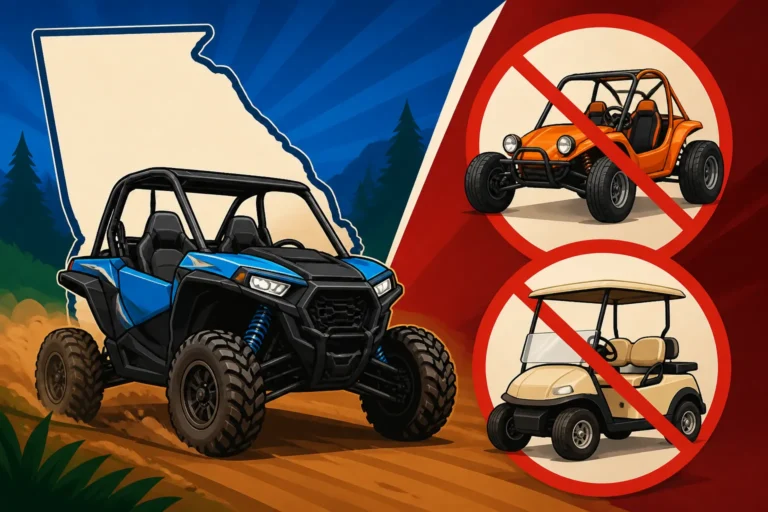
The term "Motorized Play Vehicle" or MPOHV, might sound a bit informal, but it's the specific legal designation Georgia created to allow certain off-road machines limited access to county roads. It’s essentially a new category that bridges the gap between purely off-road vehicles and street-legal automobiles. For your Can-Am Defender, this is the golden ticket to getting a tag. The MPOHV definition is very specific, outlining a series of criteria that a machine must meet to be eligible for this voluntary registration. Crucially, the law was specifically designed with side-by-sides (UTVs) in mind, meaning many common models like the Can-Am Defender, Polaris Ranger, and John Deere Gator are strong candidates for registration. Traditional ATVs, like an ordinary quad with a straddle seat, are generally excluded from this category, as the law explicitly requires a non-straddle seat and a steering wheel. This is why [Why a Georgia Sportsman Cannot Be Registered] is a common question. Understanding the MPOHV category is the first and most critical step for any Can-Am Defender owner hoping to get a plate in Georgia.
The Can-Am Defender and Georgia's MPOHV Eligibility Checklist
So, you've got your eye on registering your Can-Am Defender. The good news is that many Defender models are designed in a way that aligns well with Georgia's MPOHV criteria. However, it's not a blanket approval. You'll need to meticulously check your specific model against a detailed list of requirements. Skipping any of these steps could mean a wasted trip to the tag office.
Key Physical Requirements for Your Defender
Georgia's MPOHV law is very particular about the physical attributes of the machine. These are not arbitrary rules; they are designed to ensure a basic level of safety and compatibility with other vehicles on county roads. First and foremost, your Can-Am Defender must have a non-straddle seat, meaning you sit in it like a car, not on it like a motorcycle or ATV. This is usually not an issue for side-by-sides, which are built with bench or bucket seats. Similarly, the requirement for a steering wheel instead of handlebars is a standard feature on all Can-Am Defender models. This immediately differentiates UTVs from most ATVs, which Georgia explicitly states cannot be registered. You can read more about [Why Handlebars Disqualify a Machine] if you have questions about other vehicles.
Next, let's talk dimensions. Your Defender needs to be no more than 80 inches wide. Most Can-Am Defenders fall well within this limit, but it's always wise to measure, especially if you've added aftermarket accessories like wide tires or fender flares. You can learn more about [Measuring Width Against the 80-Inch Limit]. The machine's gross vehicle weight rating (GVWR) cannot exceed 4,000 pounds, and its payload capacity must be at least 350 pounds. A typical Can-Am Defender, especially the utility-focused models, is designed to carry significant loads, so meeting the payload requirement is usually straightforward. However, checking your owner's manual for precise GVWR is crucial, especially for heavily accessorized or larger Defender models. [Weighing a Machine Against the 4,000-Pound Limit] and [Measuring Payload Capacity Against 350 Pounds] are important topics to understand.
Speed is another critical factor. Your Defender must be capable of reaching a minimum speed of 25 miles per hour but not exceed 65 miles per hour. Can-Am Defenders are certainly capable of exceeding 25 mph, and most are electronically limited or geared to stay under 65 mph in stock form. This prevents both extremely slow, traffic-impeding machines and those designed for high-speed highway travel from being registered. Finally, your machine must be equipped with headlights, brake lights, and rearview mirrors, along with factory-installed seat belts for all designated seating positions. These are fundamental safety features that ensure visibility and occupant protection on public roads. Most modern Defenders come with these as standard equipment, but a quick check will confirm it. For detailed insights into these specific requirements, you might want to explore [Factory Seat Belts and the Eligibility Check] or [Rearview Mirrors on the Required List].
Age and Origin: Important Considerations for Registration
Beyond the physical characteristics, the age and origin of your Can-Am Defender also play a role in its eligibility for MPOHV registration. Georgia law specifies that the machine must have been manufactured on or after January 1, 2000. If you have an older Defender model, say from 1999 or earlier, it unfortunately won't qualify for MPOHV registration, regardless of how perfectly it meets the other physical criteria. This particular cutoff was implemented to ensure a certain baseline of manufacturing standards and safety features, as well as to simplify the process by focusing on newer machines. It's a hard and fast rule, so checking your manufacturing date is essential. You can find more information about [Machines Built Before 2000 and Georgia Registration].
Proving ownership is another hurdle, especially since Defenders, like most UTVs, don't typically come with a traditional title. When you head to the tag office, you'll need to present solid proof that you are the rightful owner. This usually comes in the form of a bill of sale if you bought it from a private party or a dealer invoice if it was a new purchase. If you've owned the machine for a while and perhaps don't have perfect paperwork, Georgia does allow for an ownership affidavit (Form MV-OHV) to be used. This form effectively allows you to swear under oath that you own the machine and provides details about its acquisition. It's a critical document for those situations where a traditional title isn't available. When preparing these documents, especially if you're creating a bill of sale for a private transaction or need an ownership affidavit, resources like LawDepot can be incredibly helpful for generating legally sound templates. They provide structured forms that can help ensure you're providing all the necessary information to the tag office.
Navigating the Georgia Tag Office with Your Can-Am Defender
The thought of dealing with government paperwork can be daunting, but with the right preparation, registering your Can-Am Defender at the Georgia tag office can be a smooth process. It's all about having your ducks in a row before you walk through the door.
Essential Documents You'll Need to Bring
Success at the tag office hinges on having all your paperwork in order. For your Can-Am Defender, there are several key documents you absolutely must bring with you. First, you'll need the Georgia MPOHV Registration Application (Form MV-OHV). This is a crucial document where you'll attest that your machine meets all the MPOHV eligibility requirements. It requires detailed information about your Defender, including its Vehicle Identification Number (VIN), make, model, and proof that it satisfies the criteria like seat type, steering mechanism, and weight limits. Remember, this form acts as your sworn statement, so fill it out truthfully and completely. You can get a head start by researching [Georgia Form MV-OHV and What It Asks].
Next, you'll need proof of ownership. As discussed, since most Defenders don't have a title, this will typically be a signed bill of sale from the seller. If you purchased your Defender new from a dealer, your dealer invoice or purchase agreement will serve this purpose. For those who acquired their machine years ago or through less formal means, the ownership affidavit section of the MV-OHV form itself will be your primary proof. Again, utilizing services like LawDepot can provide you with reliable templates for a bill of sale, ensuring all the necessary details are captured accurately to satisfy the tag office's requirements.
You'll also need proof of Georgia residency, such as a Georgia driver's license or state ID, and potentially a utility bill. The county tag office you visit will generally be the one where you reside, so ensure your address matches. Speaking of residency, it’s always a good idea to confirm you are [Registering in the County Where You Live].
Proof of insurance is another non-negotiable item. Just like any other vehicle on a public road, your registered MPOHV must have at least the state-mandated minimum liability insurance coverage. Your insurance provider can furnish you with an insurance card or declaration page that verifies your coverage. This insurance must be tied directly to your Defender and its VIN. Learn more about [Georgia Liability Insurance Tied to Registration].
Finally, be prepared to demonstrate proof of sales tax payment. Georgia requires that sales tax be paid on the purchase of the machine before it can be registered. If you bought your Defender from a licensed Georgia dealer, they would have collected this at the time of sale, and you'll have documentation of it. If you purchased it privately, you might need to pay the sales tax directly at the tag office or demonstrate prior payment. This is a common point of confusion, so be prepared with your purchase documentation. [Georgia Sales Tax Paid Before Registration] delves into this. It's important to remember that because MPOHVs are not titled in Georgia, they are generally exempt from the Title Ad Valorem Tax (TAVT) that applies to titled vehicles. This is a significant distinction and can be explored further in [Why No Title Means No TAVT].
The Registration Process: Step-by-Step
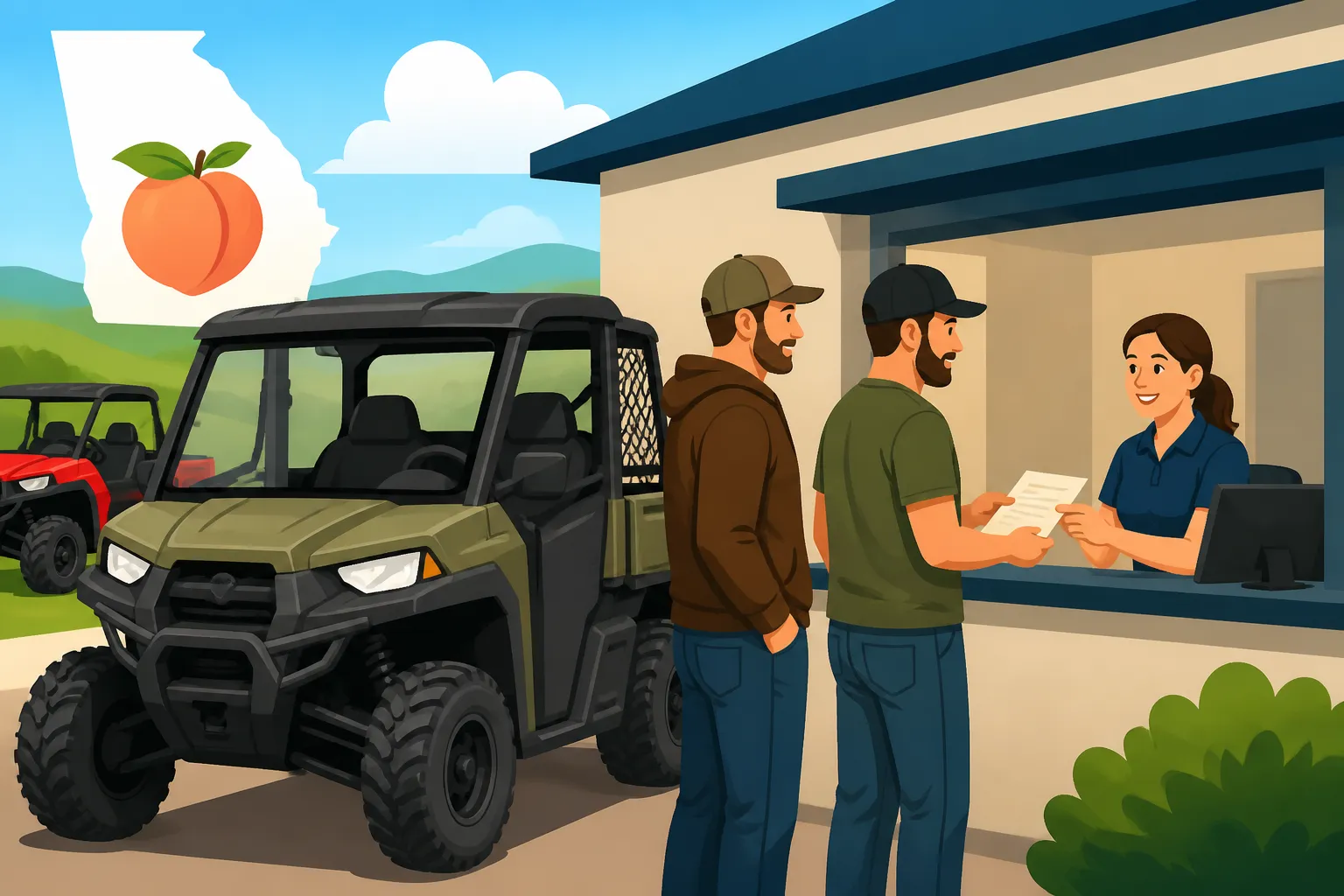
Once you've gathered all your documents, the actual registration process at the Georgia county tag office typically involves a few key steps. First, you'll present all your paperwork to a clerk. They will review your application and supporting documents to ensure everything is complete and accurate. This is where the thoroughness of your preparation pays off. The clerk will verify your proof of ownership, residency, and insurance, and ensure the MV-OHV affidavit is correctly filled out, confirming your Defender meets all the eligibility criteria.
In some cases, especially if there's any doubt about the machine's origin or if it requires a branded certificate of registration, your Defender might need a physical inspection. This isn't always required, but it's good to be aware it could happen. This inspection is usually to verify the VIN and that the machine matches the description on the forms. If your machine's history is a bit murky, or if you're dealing with a rebuilt or homemade machine, a [Georgia T-22B Inspection Certification] might be required.
After your documents are reviewed and approved, you'll pay any applicable registration fees. Remember, Georgia's MPOHV registration is an annual process, so you'll pay a fee for the current year. Once the payment is processed, you'll be issued a Georgia MPOHV license plate and a registration decal to affix to it. This plate must then be displayed prominently on the rear of your Can-Am Defender. The whole process, assuming you have all your documents ready, usually doesn't take an excessive amount of time, but it's wise to go during off-peak hours if possible. Keep in mind that [Georgia MPOHV Registration Is Voluntary], so while it opens up road access, it's not strictly mandated if you only plan to ride on private land.
Beyond Registration: Understanding Your Defender's Road Use in Georgia
Getting your Can-Am Defender registered as an MPOHV is a huge step, but it doesn't mean the open road is entirely yours. Georgia's MPOHV rules come with very specific limitations on where and how you can operate your registered machine on public roads. Understanding these boundaries is critical to avoid fines and ensure safe operation.
Where You Can and Cannot Ride a Registered MPOHV
The most important rule for any registered MPOHV in Georgia is this: you are generally permitted to operate your Can-Am Defender only on county roads. This is a significant distinction. County roads are typically the local, often unpaved or less-traveled roads maintained by the county government, usually outside of city limits. These are the roads that connect farms, hunting leases, and rural residences. The law was specifically designed to provide utility and recreational access in these areas. You can delve into the specific definitions by looking up [Georgia County Road Systems and Where They Run].
What you absolutely cannot do is ride your registered Defender on state highways, interstates, or most municipal (city) streets. These are generally off-limits. While you might be able to cross a state highway at a designated intersection, riding alongside traffic on a busy state route is prohibited. This is why many people ask [Are Side-by-Sides Street Legal in Georgia?] and the answer is nuanced: yes, on some roads, but not all. The intent of the MPOHV registration is not to create a true street-legal vehicle like a car, but rather a machine with limited road access for specific purposes. Violating these rules can lead to significant penalties, including fines and potential impoundment of your vehicle. Be sure to review [Georgia MPOHV Road Rules: County Roads Only] for a comprehensive understanding.
It's also worth noting that specific counties and cities may have additional ordinances or restrictions regarding MPOHV use on their local roads, even if they are designated as county roads. Always check with your local county government or sheriff's office if you're unsure about specific areas. For example, some areas have specific rules about [Georgia Night Riding on a County Road], which may require additional lighting or reflective gear.
The Future of Road Access for Can-Am Defenders
One critical aspect of Georgia's MPOHV law that every Can-Am Defender owner needs to be aware of is its sunset clause. The current legislation that permits MPOHV registration and road access has a defined expiration date: July 1, 2027. This means that, as the law currently stands, the ability to legally operate your registered Can-Am Defender on county roads will cease on that date. This is a point of concern and discussion for many in the off-road community.
What exactly will happen after July 1, 2027, remains to be seen. It's possible the legislature could extend the law, modify it, or let it expire entirely. For now, it means that while you can enjoy the limited road access with your registered Defender, you should be mindful that this privilege is not permanent. This sunset provision was likely included to allow lawmakers to assess the impact of MPOHVs on public roads, traffic safety, and enforcement before making the law permanent. It's a good idea for Defender owners to stay informed about any legislative discussions or proposed changes as that date approaches. Understanding [Georgia's ATV Road Access Law Sunsets in July 2027] is crucial for long-term planning regarding your machine's use.
Can-Am Defender MPOHV Eligibility Checklist
Here's a quick reference checklist for your Can-Am Defender to see if it qualifies for Georgia MPOHV registration:
| Feature | Requirement | Can-Am Defender (Typical) |
|---|---|---|
| Seat Type | Non-straddle seat | Yes (Bench/Bucket seats) |
| Steering Mechanism | Steering wheel | Yes |
| Width | No more than 80 inches | Yes (Most models) |
| Gross Weight | No more than 4,000 pounds (GVWR) | Check Owner's Manual |
| Payload Capacity | At least 350 pounds | Yes (Most models) |
| Minimum Speed | Capable of 25 mph | Yes |
| Maximum Speed | Cannot exceed 65 mph | Yes (Most stock models) |
| Lights | Headlights and Brake lights | Yes |
| Mirrors | Rearview mirrors | Yes (Often standard) |
| Seat Belts | Factory-installed seat belts for all seating positions | Yes |
| Manufacture Date | On or after January 1, 2000 | Check VIN Plate |
| Proof of Ownership | Bill of sale / Dealer invoice / Ownership affidavit | Required |
| Insurance | Georgia minimum liability insurance | Required |
| Sales Tax Paid | Yes | Required |
| Georgia Residency | Yes | Required |
Disclaimer
This article is for general informational purposes only and does not constitute professional advice. Laws, prices and regulations vary by location and change over time. Consult a qualified professional for guidance on your specific situation.