Georgia Plates for Off-Highway Vehicles
It can be incredibly frustrating trying to figure out if you can even get a license plate for your beloved side-by-side or UTV here in Georgia. For years, it felt like there was no clear path, leaving many riders confused about road legality. This guide aims to cut through that confusion, explaining Georgia's specific rules for plating Multipurpose Off-Highway Vehicles (MPOHVs) so you can hit those county roads legally and confidently.
Understanding Georgia's MPOHV Classification
Before you can even dream of a shiny new Georgia plate for your off-road machine, you need to understand one crucial thing: not all ATVs and UTVs are created equal in the eyes of the law. Georgia has a very specific classification called a "Multipurpose Off-Highway Vehicle," or MPOHV, and your machine must fit this mold perfectly to qualify for registration and a plate. It’s not just a matter of having four wheels and an engine; there's a detailed checklist your machine needs to pass.
The "Multipurpose Off-Highway Vehicle" Distinction
So, what exactly is an MPOHV in Georgia? Think of it as a specific subset of off-highway vehicles that are designed with certain features that make them more like a car or small truck than a traditional ATV. The key here is "multipurpose," implying a capability beyond just pure off-road recreation. These are the machines that Georgia has decided, under specific circumstances, can be registered and permitted on designated public roads. This designation is a big deal because it opens up access to county roads that would otherwise be off-limits to your typical quad or dirt bike. Without meeting the MPOHV definition, your machine simply won't qualify for a plate. If you've been wondering [What MPOHV Actually Stands For], it's really about that versatility.
The state isn't just handing out plates to any machine with an engine. The MPOHV classification is designed to include vehicles that offer a bit more safety and control, resembling a smaller, rugged utility vehicle. This means things like an actual steering wheel, proper seats, and safety belts are all part of the equation. It's a pragmatic approach to allow certain types of utility and recreational vehicles onto less-trafficked public roads, while still keeping faster, less protected machines strictly off-road.
Key Eligibility Requirements for a Georgia Plate
Now, let's get down to the nitty-gritty: the specific criteria your machine must meet to be deemed an MPOHV in Georgia and get that plate. This isn't a suggestion list; it's a strict, eight-point test. Missing even one of these points means your application will be denied at the tag office. For a deep dive, you'll want to review [Georgia MPOHV Eligibility: The Eight-Point Test].
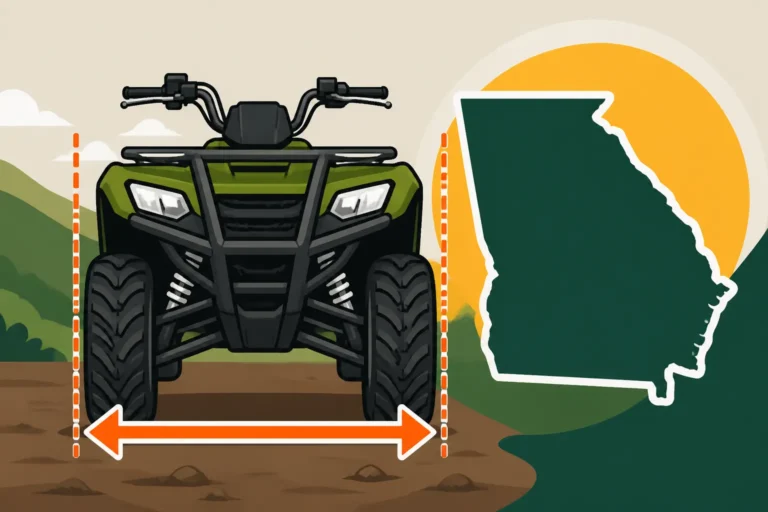
First and foremost, your vehicle cannot be designed to be straddled by the operator. This immediately rules out traditional ATVs and dirt bikes. It also needs to have a steering wheel, not handlebars. These two requirements alone disqualify a huge number of off-road machines. Next, it must have a non-straddle seat for the operator and, if designed to carry passengers, non-straddle seating for them too. Think bucket seats or a bench seat, not a motorcycle-style saddle. Your MPOHV also needs a minimum width of 48 inches but no more than 80 inches. This ensures it's not too narrow to be stable on a road, but not so wide it takes up an entire lane.
Beyond those physical dimensions, there are performance and safety requirements. The machine must be capable of traveling at least 25 miles per hour but not more than 65 miles per hour. This speed range is critical for blending with county road traffic without being a hazard due to being too slow or too fast. It also needs a gross vehicle weight rating (GVWR) of 4,000 pounds or less, and a minimum payload capacity of 350 pounds. Finally, it must be equipped with seat belts for all designated seating positions. These requirements underscore the "multipurpose" aspect, demonstrating a balance of utility, safety, and road-appropriate features.
Here's a quick comparison of what makes an MPOHV eligible versus a typical ATV that won't qualify:
| Feature | Georgia MPOHV Requirement | Typical ATV Characteristic (Disqualified) |
|---|---|---|
| Operator Seating | Non-straddle seat (e.g., bucket, bench) | Straddle seat |
| Steering Control | Steering wheel | Handlebars |
| Minimum Width | 48 inches | Often narrower |
| Maximum Width | 80 inches | Can be narrower or wider for specialty racing ATVs |
| Minimum Speed | 25 mph | Often slower, especially utility quads |
| Maximum Speed | 65 mph | Can exceed 65 mph (sport quads) |
| Gross Weight Rating | 4,000 lbs or less | Often less, but not always specific for road use |
| Payload Capacity | 350 lbs or more | Varies, often less for sport models |
| Safety Belts | Required for all seating positions | Not typically equipped with seat belts |
| Road Legality (w/plate) | Yes, on designated county roads | No, generally illegal on public roads |
The Process of Obtaining Your Georgia MPOHV Plate
Alright, so you've checked your machine, and it clearly meets all the MPOHV eligibility requirements. Fantastic! Now comes the actual process of getting it registered and plated. This involves gathering specific documents, visiting your local tag office, and understanding what to expect. It's not always a quick in-and-out visit, so being prepared is key to a smooth experience. Many folks find this step intimidating, but with the right info, you can navigate it successfully. If you're looking to get your side-by-side plated, this is exactly what you need to know.
Gathering Essential Documentation
Preparation is paramount when dealing with the county tag office. You wouldn't show up to buy a house without your paperwork, and getting an MPOHV plate is no different. You'll need several key documents to prove ownership, ensure your machine meets safety standards, and comply with tax laws. Without these, you'll likely be sent home to gather more information, which can be incredibly frustrating after waiting in line.
First, you'll need proof of ownership. This is typically a Manufacturer's Certificate of Origin (MCO) if your machine is new, or a bill of sale if you purchased it used. For private sales, it's crucial that your [Bills of Sale That Hold Up at a Tag Office] are properly completed, signed, and include all necessary information like the vehicle identification number (VIN), purchase price, and contact information for both buyer and seller. If you're in a situation where you don't have a traditional bill of sale or MCO, you might need to use a specialized form like the [Georgia Ownership Affidavit for an MPOHV] to declare your ownership under oath. This can be common for older machines or those purchased informally.
Beyond ownership, you'll need proof of Georgia liability insurance. Just like a car, your MPOHV must be insured to be on public roads. The tag office will verify this, so make sure your policy is active and meets Georgia's minimum requirements. You'll also need to complete the [Georgia Form MV-OHV and What It Asks], which is the application specifically for MPOHV registration. Take your time filling this out; accuracy is important to avoid delays. Remember, even if you paid sales tax at a dealer, you might still need proof of that payment. Many people find generating official documents like a bill of sale or affidavit easier with platforms like LawDepot, which provides templates that guide you through the necessary fields and legal language. Having these forms pre-filled and correctly formatted can save you a lot of hassle at the counter.
Navigating Your Local County Tag Office
Once your paperwork is in order, your next stop is the county tag office in the county where you reside. While the state sets the rules, the actual processing happens at the local level. It's often best to call ahead or check their website for specific hours, required appointments, or any unique local procedures. Patience is often a virtue when visiting the tag office, so go prepared for a wait, especially during peak times. You'll be glad to know that the process for [Georgia County Tag Office Steps for an MPOHV] is fairly standardized across the state.
When you arrive, you'll present your completed MV-OHV form, proof of ownership (MCO, bill of sale, or affidavit), and your insurance information. The tag office clerk will review everything to ensure it's complete and accurate. They'll verify your VIN and ensure your machine meets the basic MPOHV criteria as outlined on the application. They will also collect any applicable registration fees. It's important to understand that the registration process is essentially [Georgia MPOHV Registration Explained] right there at the counter.
Upon successful review and payment, they will issue you a Georgia MPOHV registration certificate and your physical license plate. This plate is specifically designed for off-highway vehicles and will distinguish your machine from a regular car or truck. Remember to ask any questions you have during this process; the staff are there to help clarify anything you're unsure about. Understanding [Where the County Tag Office Fits In] the broader registration scheme helps appreciate their role as the front-line for these new regulations.
What Your Georgia MPOHV Plate Allows and Restricts
Congratulations, you've got your Georgia MPOHV plate! This is a significant step, but it doesn't mean you can now treat your side-by-side like a regular street-legal vehicle everywhere. There are specific rules of the road that apply to MPOHVs, designed to integrate them safely into the existing transportation network without causing undue hazards. Understanding these allowances and, more importantly, the restrictions, is crucial to avoiding fines and ensuring safe operation.
Where You Can Legally Ride with a Georgia MPOHV Plate
The primary benefit of a Georgia MPOHV plate is gaining legal access to county roads. This is a game-changer for many riders, especially those who use their machines for hunting, farming, or just enjoying the rural landscape. However, this access is strictly limited to county roads, which are typically less trafficked and have lower speed limits than state highways. You cannot, under any circumstances, take your MPOHV on Georgia state highways, interstate highways, or any roads within municipal limits unless that specific municipality has passed an ordinance allowing it. Always double-check local ordinances if you plan to ride within city boundaries.
This distinction is incredibly important. A common mistake riders make is assuming "road legal" means all roads. In Georgia, for MPOHVs, it emphatically does not. The law specifically carves out an exemption for county roads, recognizing their often rural nature and the utility of these machines in those settings. Your plate signifies that your machine meets the basic safety and design standards to operate on these specific roads. For more details on the specific allowances, refer to [Georgia MPOHV Road Rules: County Roads Only]. This access can be invaluable for connecting trails, reaching hunting leases, or simply getting from one part of your property to another without trailering.
Important Road Rules and Safety Considerations
Just because you have a plate doesn't mean you can throw caution to the wind. When operating your MPOHV on a county road, you are subject to the same traffic laws as any other vehicle. This includes obeying speed limits, traffic signs, and signals. Furthermore, there are specific requirements tied to the MPOHV law itself that you must adhere to.
For instance, the operator of a registered MPOHV on a public road must possess a valid driver's license. This means [Georgia Driver's License Rules for MPOHV Operators] apply just as they would for a car or truck. You can't let an unlicensed teenager drive your plated side-by-side on a county road, even if they're experienced off-road. Additionally, while helmets aren't universally mandated for all MPOHV operators on county roads, the state does have an [Georgia ATV Helmet Law for Riders Under 18], which means any driver or passenger under the age of 18 must wear an approved helmet. This rule is designed to protect younger riders, regardless of whether they're on a traditional ATV or a registered MPOHV.
Furthermore, your MPOHV must be equipped with essential safety features for road use. This includes working headlights, brake lights, taillights, and at least one rearview mirror. While these might seem obvious, ensure they are all in good working order before you venture onto any public road. Remember, [Georgia Liability Insurance Tied to Registration] is also a non-negotiable requirement. Law enforcement can, and will, pull you over to verify these things, and a violation could result in fines or even the impoundment of your machine. Always operate defensively, anticipating that other drivers may not expect to see an MPOHV on the road.
Beyond the Initial Registration: Maintenance and Renewal
Getting your Georgia MPOHV plate is a fantastic first step, but it's not a "set it and forget it" situation. Like any other registered vehicle, your MPOHV requires ongoing attention to remain street legal. This includes annual renewals and understanding what certain designations on your registration might mean for future sales or transfers. Staying compliant ensures uninterrupted access to those county roads and avoids any unwanted surprises down the line.
Annual Renewal Process for Your Georgia MPOHV Plate
Once you've successfully registered your MPOHV, the registration isn't permanent. Just like your car or truck tag, your MPOHV plate requires annual renewal. This process is designed to ensure that all registered vehicles on Georgia's roads continue to meet the necessary legal and safety requirements, including current insurance. It's a fairly straightforward process, but missing the deadline can lead to penalties or even the revocation of your road privileges.
You'll typically receive a renewal notice from your county tag office in the mail or via email, reminding you when your registration is due. This notice will include instructions on how to renew, which usually involves paying a [Georgia MPOHV Renewal Fee]. You can often renew online, by mail, or in person at your local tag office. When renewing, you'll need to confirm that your liability insurance is still active. The system is designed to check for continuous coverage, so a lapse in your policy can complicate the renewal process. For a smooth experience, make sure your insurance is always up-to-date and that your contact information with the tag office is current to ensure you receive renewal notices. Staying on top of [Georgia MPOHV Renewal Each Year] is key to enjoying continuous, legal road access.
Understanding Branded Certificates and Their Implications
Sometimes, when you apply for an MPOHV plate, you might receive what's called a "branded certificate of registration." This isn't necessarily a bad thing, but it's important to understand what it means. A branded certificate is often issued when there isn't a clear, unbroken chain of ownership documentation, or if the machine has a history that prevents a standard "clean" registration. For instance, if you're registering a machine that was previously salvaged, rebuilt, or if its ownership history is murky, you might get a branded plate. The tag office uses this system as a way to flag potential issues or provide notice to future buyers.
The most common reasons for a branded certificate include machines where the original Manufacturer's Certificate of Origin (MCO) is lost and cannot be easily replaced, or if the vehicle was previously deemed a total loss by an insurance company. [Georgia Branded Certificates of Registration] act as a public notice, warning potential future owners about the machine's history. While this branding doesn't prevent you from operating your MPOHV on county roads, it can significantly impact the resale value and make it more challenging to sell the machine in the future. Anyone buying a machine with a branded certificate should be fully aware of its implications.
It's crucial to understand [What a Branded Registration Warns You About]. If you're buying a used MPOHV, always ask about its registration history. If the seller presents a branded certificate, do your due diligence and understand why it's branded. You might also need additional documentation, such as a bill of sale or ownership affidavit, to register a branded vehicle in your name. While platforms like LawDepot can help you generate robust bills of sale to formalize these transactions, be aware that a branded certificate indicates a need for extra scrutiny in the transfer process.
Common Pitfalls and Solutions in Georgia MPOHV Plating
Even with all the information at your fingertips, the MPOHV registration process can throw some curveballs. Many riders encounter common issues that can delay or even prevent them from getting that coveted Georgia plate. Knowing these potential pitfalls beforehand can help you prepare, find solutions, and ultimately ensure a smoother path to legal road access for your off-highway vehicle.
Addressing Missing Ownership Documentation
One of the most frequent hurdles people face when trying to register an MPOHV is a lack of proper ownership documentation. This is especially common with older machines, those purchased through private sales without formal paperwork, or machines that have been passed down through family. Without a clear chain of ownership, the tag office simply can't issue you a registration, as it opens the door to potential fraud or stolen vehicle issues. If you're in a situation where you need [Proving You Own an ATV in Georgia Without a Title], it can feel like a bureaucratic nightmare.
If you don't have an MCO or a traditional bill of sale, all hope is not lost. Georgia provides alternative pathways, such as using an official Georgia Ownership Affidavit (Form T-22B, if applicable, or a similar sworn statement) where you attest to being the rightful owner. This form requires detailed information about how you acquired the machine, who you acquired it from, and why traditional documentation isn't available. It's often helpful to include any supporting evidence you might have, such as old registration cards (if applicable), maintenance records, or even sworn statements from previous owners or witnesses. For guidance on drafting such an affidavit or a robust bill of sale for any subsequent private sales, resources like LawDepot can be incredibly valuable, offering legally sound templates that prompt you for all necessary information. Being diligent and thorough here is essential, as the tag office will scrutinize these alternative forms of proof. Sometimes, a law enforcement inspection might even be required to verify the VIN and ensure the machine isn't stolen, especially if there's no paper trail.
Overcoming Eligibility Disqualifiers
Another significant pitfall is discovering that your cherished machine simply doesn't meet Georgia's strict MPOHV eligibility criteria. This can be a tough pill to swallow, especially if you had high hopes of getting it plated. For example, if your machine has handlebars instead of a steering wheel, or if it requires you to straddle the seat like a motorcycle, it automatically fails the MPOHV test. No amount of paperwork or pleading will change these fundamental design requirements. If you're asking [Why a Four-Wheeler Cannot Be Registered in Georgia], these are often the core reasons.
Common disqualifiers include machines that are too wide (over 80 inches) or too narrow (under 48 inches), those that are too slow (under 25 mph) or too fast (over 65 mph), or machines that lack factory-installed seat belts for all designated seating positions. [Why Handlebars Disqualify a Machine] is a specific design choice that Georgia's MPOHV law is built around, favoring a more car-like control system for road use. It's important to remember that these rules are in place for safety and to differentiate MPOHVs from traditional ATVs, which are generally not designed for public road environments.
If your machine doesn't meet the criteria, the honest truth is that you won't be able to get a Georgia MPOHV plate for it. This means its use will remain restricted to private property or designated off-road trails. There are no waivers or exceptions to these core eligibility requirements. Before you even start gathering paperwork, it's wise to double-check every single point of the MPOHV eligibility list against your machine's specifications. Being realistic about your machine's capabilities and design will save you a lot of time and frustration in the long run.
Disclaimer
This article is for general informational purposes only and does not constitute professional advice. Laws, prices and regulations vary by location and change over time. Consult a qualified professional for guidance on your specific situation.