Georgia Law Enforcement Inspection for a Branded Plate
Trying to register your side-by-side or UTV in Georgia, only to find out it has a "branded" certificate of registration, can feel like hitting a brick wall. It immediately throws a wrench into what you thought would be a straightforward process, leaving you wondering why your machine is being singled out and what extra hoops you have to jump through. This guide will walk you through the specifics of the mandatory Georgia law enforcement inspection required for any MPOHV with a branded certificate, explaining what it means, what to expect, and how to successfully navigate this crucial step towards getting your plate.
Understanding "Branded" Certificates in Georgia MPOHV Registration
When you're trying to get your multipurpose off-highway vehicle (MPOHV) registered for those designated county roads in Georgia, encountering a "branded" certificate can be quite startling. It's not just a minor detail; it's a specific designation that tells you, and the state, that this machine has a significant history that needs extra attention. This isn't about shaming your UTV; it's about transparency and consumer protection, especially given that these machines don't get traditional titles in Georgia.
What a Branded Certificate of Registration Means
A branded certificate of registration for your Georgia MPOHV essentially acts as a permanent red flag in its ownership history. Unlike a "clean" certificate, which implies an unblemished record, a branded one carries a specific notation or "brand" that alerts everyone to a past event or condition that affects the machine's status. Think of it as a warning label, prominently displayed, that informs potential buyers and regulatory bodies that this vehicle has been in a serious accident, declared salvage, was recovered after being stolen, or has some other significant impairment to its structural integrity or legal status. The purpose of this branding is to prevent fraud and ensure that future owners are fully aware of the machine's past. Without a traditional title, this certificate becomes the primary document for tracking such crucial information, and the state takes it very seriously. You might want to read more about [What a Branded Registration Warns You About] to get the full picture.
Common Reasons for a Branded Status
There's a whole host of reasons why a machine might end up with a branded certificate, and understanding these can help you anticipate what a law enforcement officer will be looking for during an inspection. The most common reasons include situations where the machine has been:
- Salvage: This is often the case after a major accident where the cost of repairs exceeds a certain percentage of the machine's value, and an insurance company has declared it a total loss.
- Rebuilt: If a salvage machine has been repaired and is now deemed roadworthy (or, in this case, trail-worthy for county roads), it will receive a "rebuilt" brand. This signifies that it was once salvage but has undergone significant repairs.
- Flood Damage: Machines that have been submerged in water, especially saltwater, can suffer extensive and often hidden damage to electronics, engine components, and chassis, leading to a flood brand.
- Recovered Theft: If a machine was stolen and later recovered, even if it sustained no damage, it might still carry a brand to reflect its past legal status. This helps protect future buyers from inadvertently purchasing a stolen vehicle that was later "cleaned."
- Other Significant Damage: Sometimes, specific types of damage, even if not leading to a total loss, might warrant a brand if they significantly impact the machine's safety or structural integrity.
Each of these brands serves as a critical piece of information, guiding both the current owner and any prospective buyers on the machine's journey.
Why Georgia Requires Special Scrutiny for Branded Machines
Georgia's decision to require a special law enforcement inspection for branded MPOHVs isn't just about bureaucracy; it's deeply rooted in consumer protection and public safety. Since these machines don't receive traditional titles, the certificate of registration, particularly a branded one, carries immense weight. The state wants to ensure that a machine that was once deemed salvage, flood-damaged, or rebuilt has been genuinely and safely restored. This scrutiny aims to:
- Prevent Fraud: It reduces the likelihood of unscrupulous sellers attempting to pass off a damaged or questionable machine as one with a clean history. The inspection provides an independent verification.
- Ensure Safety: A machine that has been severely damaged and rebuilt needs to be thoroughly checked to confirm that repairs were done correctly and safely, minimizing the risk of mechanical failure on public roads.
- Protect Buyers: By having law enforcement verify the machine's identity and condition, Georgia helps protect individuals who might purchase a used MPOHV. It adds a layer of assurance beyond a simple bill of sale, especially important when considering buying a used side-by-side in Georgia. This extra step helps prevent someone from buying a machine that looks good on the surface but has hidden, dangerous flaws.
The state's approach here underscores the importance of the [Georgia Branded Certificates of Registration] in the overall MPOHV registration framework.
The Role of Law Enforcement in Branded Plate Inspections
So, you've got a branded machine, and you know why it's a big deal. The next logical step, and indeed a mandatory one, is getting it inspected by law enforcement. This isn't just any mechanic or an arbitrary check; it's a specific process performed by authorized personnel to ensure your machine meets Georgia's standards for re-entry into the public domain via registration.
Who Performs the Inspection
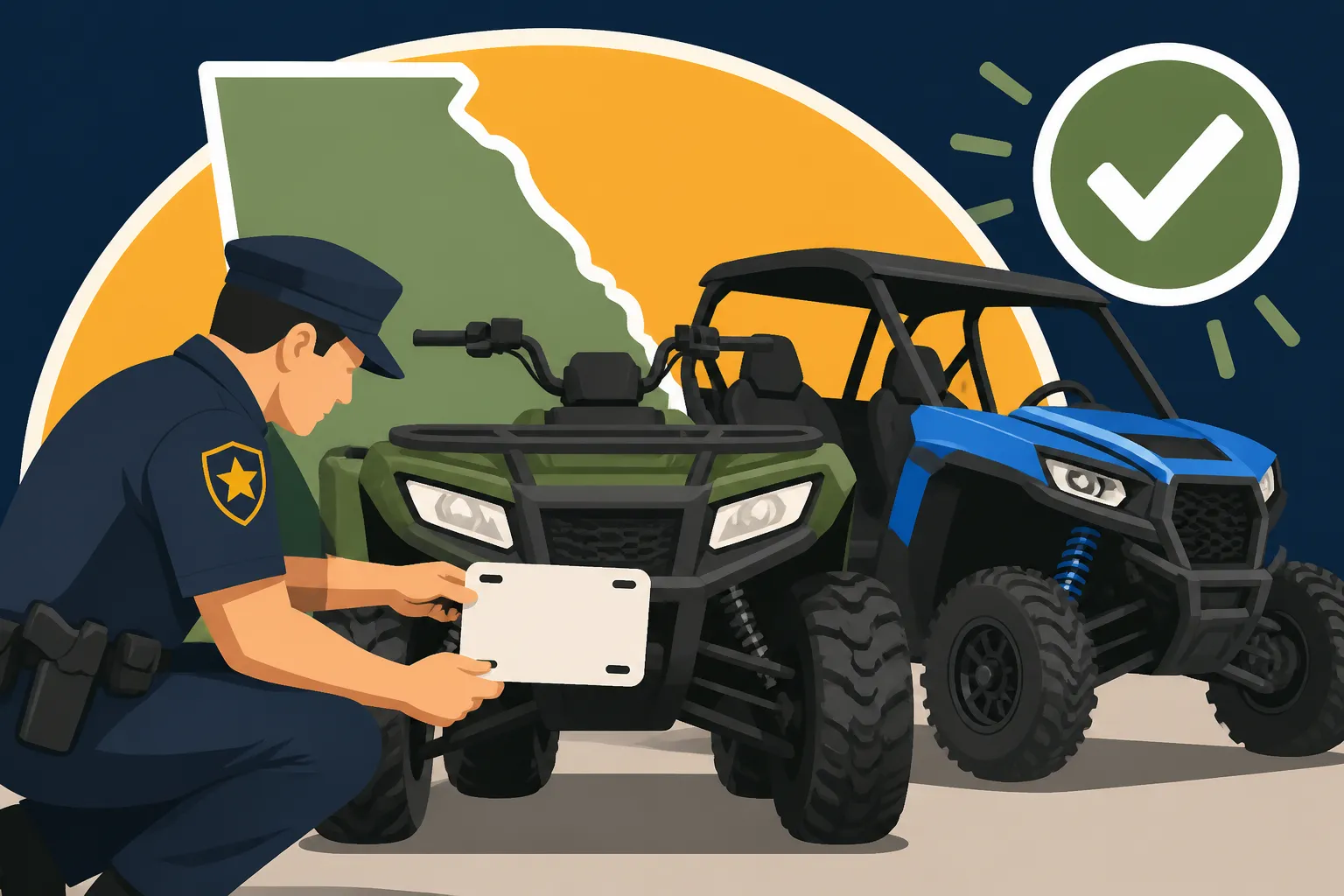
When it comes to the official inspection for a branded MPOHV, you'll typically be looking to engage with local law enforcement. This could mean a deputy from your county's Sheriff's office or an officer from the Georgia State Patrol. They are the authorized eyes and ears for the state in this process. It’s not something you can just walk into your local tag office for; the inspection requires someone with law enforcement authority and training to verify specific aspects of your machine. These officers are trained to look beyond the surface, verifying serial numbers against databases and assessing structural integrity, which is why their involvement is so crucial. They are essentially providing the official [Law Enforcement Certification Before a Brand] can be issued or updated.
What the Inspection Entails
The law enforcement inspection for a branded MPOHV is a thorough process, far more detailed than simply checking a VIN. The officer will be performing a comprehensive examination that typically includes:
- Physical Verification: The officer will physically inspect your machine, locating and verifying the Vehicle Identification Number (VIN) or serial number. They will compare this number against the documentation you provide and run it through state and national databases to check for stolen vehicle records or other discrepancies. This is often described as [How a Georgia Deputy Verifies Your Machine's Serial Number].
- Component Check: For a rebuilt or salvage branded machine, the officer may visually inspect key components to ensure they appear to be in good, safe working order. This isn't a mechanical deep dive but a general assessment of major structural and safety components.
- Documentation Review: The officer will review all your supporting paperwork, including bills of sale, previous registration documents, and any repair receipts or affidavits you have for the machine. They want to see a clear chain of ownership and evidence that any necessary repairs for a branded machine were undertaken. This is where a well-prepared document like an ownership affidavit from a service like LawDepot could be beneficial, ensuring all your paperwork is in order.
The goal is to ensure the machine is what you say it is, that its history aligns with its current condition, and that it's safe enough for registration.
Scheduling and Preparing for Your Inspection
Preparing for this inspection is paramount to a smooth process. You can't just show up unannounced. Here’s how to approach it:
- Contact Your Local Law Enforcement: Reach out to your county Sheriff's office or local Georgia State Patrol post. Explain that you need a law enforcement inspection for a branded MPOHV registration. They will inform you of their procedures, which might involve scheduling an appointment, bringing the machine to a specific location, or in some cases, an officer coming to you.
- Gather All Your Documents: This is not the time for missing paperwork. You'll need your bill of sale, any previous registration documents (especially the one showing the brand), proof of ownership, and any receipts for parts or repairs, particularly if your machine was rebuilt. If you're missing a formal bill of sale, a general bill of sale template from a resource like LawDepot could help you draft one with the seller. Make sure everything is organized and easily accessible for the officer. You'll also want to have your [Georgia Form MV-OHV and What It Asks] ready, as the officer may need to sign it.
- Clean Your Machine: While not a technical requirement, presenting a clean machine shows respect for the officer's time and allows for easier identification of VINs and structural components.
- Ensure Accessibility: Make sure the VIN or serial number is easily accessible and clean for the officer to read. If it's in a hard-to-reach spot, be prepared to point it out.
Being prepared will not only speed up the process but also leave a positive impression that you're taking the requirements seriously.
Key Elements of the Law Enforcement Inspection Process
The actual inspection day can feel a bit nerve-wracking, but understanding what the law enforcement officer is specifically looking for can help alleviate some of that anxiety. It's a methodical process designed to cover all the bases that a branded machine requires. They are essentially looking for any inconsistencies or safety concerns that would make the machine ineligible for registration.
Verifying the Machine's Identity
At the core of the law enforcement inspection is establishing beyond a doubt the true identity of your MPOHV. This is particularly crucial for branded machines, as there's a higher risk of identity theft or fraudulent misrepresentation.
- VIN Verification: The officer will meticulously locate and verify the VIN or serial number on your machine. This number is unique to your vehicle and tells its story, from manufacturer to model year. They'll ensure it hasn't been tampered with, restamped, or altered in any way. Any signs of alteration will immediately raise a red flag and could lead to a failed inspection.
- Database Cross-Reference: This verified VIN is then run through various databases, including those for stolen vehicles. This step is vital for consumer protection, ensuring that the machine isn't reported as stolen and has a legitimate history. The deputy is trained to check [Stolen Machine Databases and the Check] to prevent illegal machines from being registered.
- Matching Documentation: The officer will compare the physical VIN on your machine to the VIN listed on your bill of sale, previous registration, and any other ownership documents. Consistency across all these records is essential for a successful verification. If there are discrepancies, you'll need to explain them with additional supporting evidence. If you've pieced together ownership with various informal documents, you may want to consult legal document services like LawDepot for proper affidavits.
This identity verification protects not only the state but also you, ensuring you're registering a legitimately owned machine.
Assessing Structural Integrity and Safety
While not a full mechanic's inspection, the law enforcement officer will perform a visual assessment of your MPOHV's structural integrity, especially if it carries a "salvage" or "rebuilt" brand. This isn't about minor dents; it's about major issues that could compromise safety on the road.
- Major Damage Check: The officer will look for any obvious signs of severe unrepaired damage to the frame, suspension, or steering components. For example, if the machine was salvaged due to a rollover, they'll be looking to see if the roll cage or frame has been properly repaired or replaced, not just cosmetically covered up.
- Proper Repairs: If your machine has a "rebuilt" brand, the officer is specifically checking to see if visible repairs appear to be done correctly and safely. They're not looking for perfection, but for professional workmanship that ensures the machine is structurally sound. Weld quality, alignment, and the absence of obvious jury-rigged fixes are all things they might note. They want to be sure that the machine is capable of safely navigating county roads as allowed under Georgia law.
- Roadworthiness Fundamentals: They may also quickly check for basic operational safety features, like whether the wheels are securely attached or if there are any major fluid leaks. The overall impression should be one of a machine that has been properly put back together and is safe to operate.
This part of the inspection is critical for ensuring that a previously damaged machine doesn't pose a safety hazard once it's out on public roads.
Documentation Review
Beyond verifying the machine itself, the officer will also scrutinize your pile of paperwork. This is where your preparedness truly pays off.
- Chain of Ownership: The officer needs to see a clear and unbroken chain of ownership from the previous owner to you. This means having a valid bill of sale, and if there were multiple owners since the branding occurred, having documentation for each transfer. If you're missing a critical link in the chain, it can halt the registration process.
- Previous Branding Records: You should have the previous certificate of registration that shows the brand. This helps the officer understand the machine's history and what type of inspection is most relevant.
- Repair Receipts and Affidavits: If your machine was rebuilt, having receipts for major parts or repairs, or even an affidavit from the person who performed the work (perhaps using a template from a service like LawDepot), can greatly assist in proving the machine's restoration. This substantiates that the machine has genuinely been repaired from its branded state.
The officer's review of your documents ensures that the history you present matches the records and that all legal requirements for ownership transfer have been met. It's about combining the physical inspection with the paper trail to get the full story.
Navigating the Branded Registration Application After Inspection
Successfully passing the law enforcement inspection is a huge hurdle overcome, but it's not the final step. Now, you have to take that certified paperwork and properly submit it to the Georgia Department of Revenue via your local county tag office. This phase requires attention to detail to ensure all the i's are dotted and t's are crossed so your branded MPOHV can finally receive its Georgia plate.
Receiving Law Enforcement Certification
Once the law enforcement officer completes their inspection and is satisfied with the machine's identity and apparent structural integrity, they will provide you with the necessary certification. This typically involves them signing and completing a specific section of the [Georgia Form MV-OHV and What It Asks] or a separate certification form.
- What the Certification Confirms: This signature isn't just a formality; it officially confirms several key things. It verifies that the VIN matches your documentation, that the machine isn't reported stolen, and that, from their visual assessment, it appears to be a legitimately reconstructed or recovered machine. This certification is the state's green light for you to proceed with the registration of a branded vehicle.
- Keep It Safe: This document is irreplaceable for your application. Treat it like gold. Make copies for your records, but keep the original pristine for submission to the tag office. Without this official stamp of approval from law enforcement, your application for a branded plate simply won't move forward.
This piece of paper is the tangible proof of your successful inspection and a vital component of your registration package.
Submitting to the County Tag Office
With your law enforcement certification in hand, you're ready for the final submission to your local county tag office. This is where all your hard work comes together.
- The Complete Package: You'll need to submit the law enforcement certification, your completed [Georgia Form MV-OHV and What It Asks], proof of ownership (bill of sale, previous registration), proof of Georgia residency, and any other documents the tag office requires for MPOHV registration. Remember that all applicable [Georgia Sales Tax Paid Before Registration] must also be documented. Each county may have slight variations, so it's always wise to check their specific requirements beforehand.
- What to Expect Next: The tag office will review your entire submission package. They'll verify that all forms are correctly filled out, all required signatures are present, and the law enforcement certification is valid. Once everything is deemed in order and any applicable fees are paid, your application will be processed. You can find more details on general steps at [Georgia County Tag Office Steps for an MPOHV]. This can sometimes take a bit of time, especially with branded applications requiring extra scrutiny, so patience is key.
Successfully navigating this submission means you're just a short wait away from receiving your actual Georgia MPOHV plate.
Potential Hurdles and How to Address Them
Even with careful preparation, you might encounter some bumps along the way.
- Failed Inspection: If the law enforcement inspection reveals significant issues (e.g., altered VIN, severe unrepaired damage), your machine might not pass. In this case, the officer will typically explain why. You'll need to address those issues—either by making the necessary repairs (if possible and legal) or by providing additional documentation to clear up any misunderstandings—and then reschedule the inspection. Don't give up; understand the specific reason for the failure and formulate a plan to rectify it.
- Missing or Incomplete Documents: The tag office is very particular about paperwork. If you arrive with missing signatures, an incomplete form, or insufficient proof of ownership, your application will be rejected, and you'll be sent back to gather what's needed. This is why thorough preparation, potentially using templates for forms like a bill of sale or ownership affidavit from a service like LawDepot, is so important. Make sure you have a clear [Georgia Ownership Affidavit for an MPOHV] if needed.
- Discrepancies: Sometimes, there might be a discrepancy between your paperwork and state records, or questions about the chain of ownership, especially if the machine has been bought and sold many times or lacks a clear historical record. Be prepared to provide additional proof or sworn statements if requested. The tag office's goal is to ensure legitimacy, so cooperation and thoroughness on your part are crucial.
Overcoming these hurdles requires persistence, meticulous record-keeping, and a willingness to follow up on any requests from law enforcement or the tag office.
| Aspect | Standard MPOHV Registration (Clean Certificate) | Branded MPOHV Registration (Branded Certificate) |
|---|---|---|
| Ownership Proof | Bill of Sale / Previous Registration | Bill of Sale / Previous Branded Registration |
| Law Enforcement Inspection | Generally Not Required | MANDATORY |
| Primary Focus of Inspection | VIN Verification (if needed) | VIN Verification + Structural Integrity + Safety |
| Required Forms | MV-OHV, Proof of Residency, Insurance | MV-OHV (with LE Certification), Proof of Residency, Insurance, Repair Receipts (if rebuilt) |
| Purpose of Extra Step | N/A | Consumer Protection, Fraud Prevention, Safety Assurance |
| Certificate Issued | Clean Certificate of Registration | Branded Certificate of Registration (reflects history) |
| Timeframe | Typically Faster | May take longer due to inspection and review |
Implications of a Branded Georgia MPOHV Plate
Once you've navigated the inspections and paperwork and finally have your Georgia MPOHV plate, complete with a branded certificate, it's important to understand that this "brand" carries ongoing implications. It's not just a hurdle you've cleared; it's a permanent part of your machine's identity that affects various aspects of ownership.
Understanding Its Impact on Resale Value
The most immediate and often significant impact of a branded certificate is on the machine's resale value. Just as a branded title affects a car's value, a branded MPOHV certificate will typically reduce its market worth.
- Buyer Perception: Potential buyers are often wary of branded machines. They may associate the brand with hidden problems, costly future repairs, or safety concerns. This perception, whether entirely justified or not, leads to a smaller pool of interested buyers and typically a lower selling price.
- Transparency is Key: When you eventually go to sell your machine, full transparency about its branded status is not just ethical; it's legally prudent. You must inform potential buyers of the brand, and a prudent buyer will likely ask to see the certificate. You should know [What a Georgia Buyer Should Ask to See].
- Value Reduction: While it's hard to put an exact percentage on it, a branded certificate can reduce the resale value by a notable margin compared to an identical machine with a clean history. This is just the reality of the market for vehicles with significant past events.
Therefore, when buying a machine with a branded certificate, you should factor this future depreciation into your purchase decision.
Insurance Considerations for Branded Machines
Another area where a branded certificate can have an impact is with insurance. While Georgia requires liability insurance for registered MPOHVs, getting comprehensive or collision coverage for a branded machine might be different.
- Insurer Scrutiny: Insurance companies assess risk carefully. A branded machine, particularly one with a "salvage" or "rebuilt" history, might be viewed as a higher risk due to its past damage.
- Potential Rate Adjustments: Some insurers might offer coverage but at a higher premium. Others might have specific conditions or limitations on coverage for branded machines.
- Valuation in Case of Loss: In the event of a total loss, the insurance company's payout will likely be based on the machine's post-brand market value, which, as discussed, is typically lower than a clean machine's value. Make sure you understand how your insurer values a branded MPOHV when you purchase your policy.
It's crucial to discuss the branded status of your MPOHV with your insurance provider when you're obtaining quotes to ensure you have adequate coverage and understand any specific policy clauses related to branded vehicles. [Georgia Liability Insurance Tied to Registration] is mandatory, but what about full coverage?
The "Branded" Warning for Future Buyers
The enduring purpose of the branded certificate is to serve as a permanent warning for all future owners. This isn't just about the immediate sale but about the long-term history of the machine.
- Informed Decisions: The brand ensures that anyone purchasing the MPOHV in the future is immediately aware of its significant history. This allows them to make an informed decision, knowing whether it was a salvage, rebuilt, or flood-damaged machine. This knowledge empowers them to conduct more thorough inspections or negotiate a price that reflects its history. You can learn more about [What a Branded Registration Warns You About].
- Limiting Seller Liability: From a seller's perspective, the branded certificate provides a degree of protection. By transferring a machine with a clearly branded certificate, the seller has fulfilled their obligation to disclose its history, reducing potential liability claims from future buyers who might later discover the past damage.
- Permanent Record: This brand isn't something that can simply be removed or "cleared" later, with very rare exceptions that involve very specific legal processes. It's a permanent part of the machine's official registration record in Georgia, ensuring its history remains transparent throughout its lifespan.
Understanding these implications is key to being a responsible owner of a branded Georgia MPOHV, whether you're buying, maintaining, or eventually selling it.
Disclaimer
This article is for general informational purposes only and does not constitute professional advice. Laws, prices and regulations vary by location and change over time. Consult a qualified professional for guidance on your specific situation.