Georgia Liability Insurance Tied to Registration
One of the biggest head-scratchers for Georgia ATV and UTV owners since the new MPOHV registration became available is figuring out the insurance puzzle. You've heard whispers, maybe even seen some official-looking documents, that link getting that coveted MPOHV plate to having proper insurance. It's not just a suggestion; it's a critical part of being able to legally use your machine on designated county roads. This guide will walk you through exactly why liability insurance is tied to your MPOHV registration, what it covers, and how to make sure you're legally compliant and protected.
Understanding Georgia's MPOHV Registration and Road Access
For years, the idea of legally riding your side-by-side or qualifying ATV on a Georgia county road felt like a pipe dream for many enthusiasts and landowners. We all knew the rules for golf carts and other Personal Transportation Vehicles (PTVs) were different, but our powerful machines were largely confined to private land or dedicated off-road parks. That all changed with the introduction of the MPOHV (Multipurpose Off-Highway Vehicle) registration, opening up new possibilities for how we use our machines.
The Big Change: Voluntary Registration for Off-Highway Vehicles
The landscape for off-highway vehicle owners in Georgia shifted significantly when the MPOHV registration program became available. It wasn't just a minor tweak to existing laws; it was a brand-new pathway that allowed certain qualifying machines to be registered and, crucially, to legally operate on county roads. This wasn't about making every quad or dirt bike street legal; it was a carefully crafted set of rules designed for specific types of machines that meet strict criteria. If you've ever wondered how this all started, the [Georgia MPOHV Registration Started December 2023] is the foundational piece. It created a voluntary system, meaning you don't have to register your machine if you only ride it on private property, but if you want to venture onto public roads, it's a non-negotiable step.
This voluntary registration system brought with it a host of new requirements, moving our machines closer to other road-going vehicles in terms of compliance. No longer could we simply assume that if a machine didn't have a title, it fell into a legal gray area for road use. The state essentially created a new category that bridges the gap between purely off-road recreation and limited public road access. It's a testament to the growing popularity and utility of these machines, particularly for farmers, hunters, and those who use them for property maintenance, who often need to cross or travel short distances on county roads.
Where Registration Matters: County Roads and Public Access
So, what exactly does this MPOHV registration buy you? It's pretty straightforward: the ability to operate your registered machine on specific county roads across Georgia. This is a game-changer for many, allowing them to travel between properties, access hunting land, or simply enjoy a scenic drive down a rural road without fear of legal repercussions. Without this registration, taking your ATV or UTV onto any public road, even briefly, could land you in hot water with law enforcement. The registration essentially gives your machine a legal identity for public road use, granting you access that was previously reserved for titled vehicles.
It's important to understand the scope of this access, though. We're talking about county roads, not state highways, interstates, or city streets unless explicitly permitted by local ordinance. The idea is to facilitate travel in rural and less-trafficked areas, not to turn our side-by-sides into daily commuters on busy thoroughfares. The specific benefits and limitations are clearly outlined, and understanding [What Registration Buys You on a County Road] is key to enjoying your machine responsibly and legally. This new access also means that your machine, while still an off-highway vehicle at heart, now shares some of the responsibilities that come with operating any vehicle on public roadways.
Distinguishing Off-Road Use from Public Road Use
This is a crucial distinction that often trips up new MPOHV registrants. When you're tearing up trails in an off-road park, or cruising through your back forty, the rules are generally different. You might not need specific insurance coverage beyond what your homeowner's policy offers for liability (and even that's often limited for motorized vehicles), and registration certainly isn't a factor. However, the moment your wheels touch a public county road, the entire regulatory framework shifts. Your machine transitions, in the eyes of the law, from a recreational toy or utility tool to a vehicle operating on public infrastructure.
This transition brings with it the expectation of responsible operation, which includes, among other things, having appropriate insurance. The type of insurance required for a registered MPOHV is specifically geared towards protecting others when you're on public roads. It's not about covering damage to your machine if you flip it on a trail; it's about covering the medical bills or property damage of another person if you're involved in an accident on a county road. Keeping these two distinct use cases separate in your mind will help you understand why certain requirements, like liability insurance, become absolutely essential when you decide to register your machine for road access.
The Mandate: Why Insurance is Required for a Registered MPOHV
The idea that you need insurance for your off-highway vehicle might feel new or even a bit frustrating, especially if you've always just ridden on private land. But once you decide to register your MPOHV for use on Georgia's county roads, the requirement for liability insurance isn't just a suggestion—it's a legal mandate. This isn't unique to MPOHVs; it's a fundamental principle of operating any motor vehicle on public roads in Georgia.
The Link: Registration and Financial Responsibility
At its core, the requirement for liability insurance is about ensuring financial responsibility. If you're operating a vehicle on a public road, and you're involved in an accident that causes injury to another person or damage to their property, the state wants assurance that there's a way for those damages to be covered. Without insurance, the burden would fall entirely on the at-fault operator, potentially leaving victims with no recourse or creating massive personal financial hardship. This is precisely why Georgia Liability Insurance Tied to Registration is a non-negotiable component of the MPOHV program.
When you apply for your MPOHV registration, you're essentially telling the state, "Yes, I plan to operate this machine on public roads." With that declaration comes the responsibility to prove you can cover potential damages if an incident occurs. It's a protective measure for everyone involved: for innocent third parties who might be affected by an accident, and even for the MPOHV operator, who is shielded from potentially catastrophic out-of-pocket expenses. This financial responsibility is paramount, and the registration process serves as the checkpoint to ensure it's in place before you get your plate.
Georgia's Stance on Roadway Use
Georgia law is quite clear: if a motorized vehicle is going to be driven on public roads, it must meet certain minimum financial responsibility requirements. This isn't a special rule just for MPOHVs; it applies to cars, trucks, motorcycles, and now, registered MPOHVs. The moment your machine gains the legal right to travel on a public county road, it enters the same legal framework that governs all other vehicles on those roads. This is a critical point that sometimes gets overlooked by owners transitioning from purely off-road use.
The state doesn't differentiate between the type of vehicle when it comes to this fundamental rule; rather, it focuses on the location of operation. Public roads carry inherent risks, and the state's responsibility is to mitigate those risks for its citizens. Therefore, by allowing MPOHVs on county roads, the state necessarily extends its financial responsibility laws to cover them. It's a logical extension of existing statutes designed to protect everyone who uses public thoroughfares, making your registered MPOHV part of the broader system of road-legal vehicles.
Proof of Insurance: What the Tag Office Expects
When you head down to your local county tag office to complete the MPOHV registration process, you'll need more than just your ownership documents and your completed MV-OHV form. You'll also need to provide concrete proof that you've secured the necessary liability insurance. This isn't a step you can skip; the tag office won't issue your MPOHV registration and plate without it. They're acting as the gatekeepers, ensuring that every registered machine meets the financial responsibility mandate before it hits the road.
Typically, this proof comes in the form of an insurance card, a copy of your policy, or a declaration page from your insurance provider. What the county tag office expects to see is outlined in the MPOHV guidelines, and understanding [Georgia Insurance a Tag Office Expects to See] can save you a lot of time and frustration. It's not enough to simply say you have insurance; you need to demonstrate it with official documentation. This step underscores just how seriously Georgia takes the link between road access and financial protection, making it a critical part of getting your MPOHV legally ready for county roads.
What Liability Insurance Actually Covers (and Doesn't)
Once you understand why you need liability insurance for your registered MPOHV, the next logical question is: what does it actually do? It's easy to get confused by different types of coverage, but liability insurance has a very specific purpose. It's designed to protect you financially if you're found at fault for an accident while operating your registered MPOHV on a public road.
Defining Liability: Protecting Others, Not Your Machine
This is the most crucial aspect to grasp about liability insurance: it's all about protecting other people and their property, not your own. If you're involved in an accident on a county road with your registered MPOHV and it's determined that you were at fault, your liability insurance will step in to cover the costs associated with the other party's bodily injuries and property damage. This could include medical bills, lost wages, pain and suffering for the injured party, and repairs or replacement of their vehicle or other property.
What it doesn't cover is damage to your MPOHV, or your own medical expenses, if you're at fault. That's a common misconception, and it's important to differentiate. Think of liability coverage as your safety net for the harm you might unintentionally cause to others while you're operating your machine on a public road. It fulfills that core financial responsibility we talked about earlier, ensuring that if something goes wrong, the innocent party isn't left holding the bag for your mistake.
Minimum Coverage Requirements in Georgia
Just like with cars and trucks, Georgia law mandates certain minimum amounts of liability coverage that you must carry. While I can't provide specific dollar figures (as these can change), it's generally expressed as a three-part number: a certain amount for bodily injury per person, another for total bodily injury per accident, and a third for property damage per accident. These minimums are designed to provide a baseline level of protection.
It's absolutely vital to know what these current minimums are, as your policy must meet or exceed them to be valid for MPOHV registration. Many insurance professionals will tell you that while minimum coverage meets the legal requirement, it might not be enough to fully cover the costs of a serious accident. For example, a minor fender bender with a car could quickly exceed property damage minimums, and significant injuries could far outstrip bodily injury limits. This is where personal financial planning comes into play, as many choose to carry higher limits than the bare minimums for greater peace of mind. For registered UTVs, specifically, you'll want to be familiar with [Georgia UTV Insurance Minimums].
Beyond Liability: Considering Additional Coverage Options
While liability insurance is the only coverage mandated for MPOHV registration, it's certainly not the only type of insurance you can get for your machine. Depending on your financial situation, the value of your MPOHV, and how you use it, you might want to explore additional coverage options to protect your investment.
Here are a few common types you might consider:
- Collision Coverage: This pays for damages to your MPOHV if it collides with another vehicle or object, regardless of who is at fault. If you've invested a lot in your machine, this can be invaluable.
- Comprehensive Coverage: This protects your MPOHV from non-collision incidents like theft, vandalism, fire, natural disasters, or hitting an animal. If you store your machine outside or in an unsecured area, this is worth considering.
- Uninsured/Underinsured Motorist Coverage: This protects you if you're hit by another driver who either has no insurance or not enough insurance to cover your damages. While MPOHVs have liability insurance, other drivers might not, or their limits might be too low.
- Medical Payments (MedPay) or Personal Injury Protection (PIP): These cover medical expenses for you and your passengers, regardless of who caused the accident. This can be a lifesaver if you don't have robust health insurance or if you want to avoid high deductibles.
Deciding on these additional coverages means weighing the cost of the premium against the potential financial risk of an incident. It's a personal decision, but it's important to know your options beyond the basic liability requirement.
Finding the Right Coverage for Your Georgia Machine
Securing the right liability insurance for your registered MPOHV doesn't have to be a complicated ordeal, but it does require a bit of savvy shopping. Just like with car insurance, not all policies or providers are created equal, and taking the time to compare your options can save you money and ensure you have the coverage you need.
Shopping for MPOHV Insurance: What to Look For
When you're ready to get quotes, it's a good idea to approach several different insurance providers. Many of the major insurance carriers that offer auto or home insurance also have specific policies for ATVs, UTVs, and other off-highway vehicles. You might find that some specialize in powersports insurance and can offer more tailored policies or better rates. Don't be afraid to reach out to local independent insurance agents; they often work with multiple carriers and can help you compare different quotes side-by-side.
When you're talking to agents, be very clear that you need coverage for a registered MPOHV for road use in Georgia. Explain that you need to meet the state's minimum liability requirements for registration. They'll likely ask you for details about your specific machine, such as its make, model, year, VIN, and any modifications you've made. They might also ask about how often you plan to use it on public roads versus private land. Being thorough with this information will help them provide the most accurate quote. If you've just bought your machine, whether from a dealer or a private seller, having your bill of sale handy can be useful, and resources like LawDepot can help ensure you have a professional-looking document for your records.
Factors Influencing Your Insurance Premium
Just like with any other type of vehicle insurance, several factors will play a role in determining how much you pay for your MPOHV coverage. Understanding these can help you anticipate costs and even potentially lower your premiums:
- Your Driving Record: A clean driving record with no accidents or violations (even in your car) typically translates to lower insurance rates. A history of claims or citations can unfortunately push premiums higher.
- Type of Machine: The make, model, year, engine size, and overall value of your MPOHV can significantly affect your premium. High-performance sport UTVs might cost more to insure than a basic utility quad, for example, simply due to their power and potential for higher repair costs.
- Where You Live: Your specific zip code in Georgia can impact rates, as insurers look at factors like local accident rates, theft rates, and even the cost of repairs in your area.
- How You Use It: While you're registering it for road use, if you primarily use your machine for low-risk activities like farm work or light trail riding, it might be viewed differently than if you indicate heavy, high-speed recreational use on public roads.
- Deductible Amount: If you opt for additional coverages like collision or comprehensive, choosing a higher deductible (the amount you pay out of pocket before your insurance kicks in) will typically result in a lower premium.
Bundling Policies and Potential Discounts
One of the best ways to potentially save money on MPOHV insurance is to "bundle" it with other policies you already have. Many insurance companies offer discounts if you combine your MPOHV insurance with your existing auto, homeowner's, or even life insurance policies. It's worth asking your current providers what multi-policy discounts they offer.
Beyond bundling, inquire about other potential discounts:
- Safety Course Discounts: While Georgia doesn't have a mandatory state ATV safety course, if you've taken a voluntary safety course, some insurers might offer a small discount. It shows you're committed to safe operation.
- Multi-Vehicle Discounts: If you're insuring more than one MPOHV or other powersports vehicle with the same company, you might qualify for a discount.
- Anti-Theft Device Discounts: If your MPOHV has certain anti-theft features, some insurers might offer a reduction in your comprehensive premium.
- Good Rider/Driver Discounts: Some companies offer discounts for riders who maintain a clean claims history over several years.
Always ask your insurance agent about all available discounts. A few minutes of conversation could lead to significant savings over the life of your policy.
Maintaining Continuous Coverage and Avoiding Lapses
Getting your MPOHV registered with the proper insurance is a great first step, but the journey doesn't end there. Just like with your car, maintaining continuous insurance coverage is absolutely crucial, not just for legal compliance but for protecting yourself financially. Letting your policy lapse can have serious repercussions for both your registration and your wallet.
The Importance of Uninterrupted Insurance
Imagine you've gone through all the steps: you've met the [Georgia MPOHV Eligibility: The Eight-Point Test], provided proof of ownership, paid your [Georgia Sales Tax Paid Before Registration], and finally secured your MPOHV registration and plate. Now you have the freedom to ride those county roads. The expectation is that your liability insurance remains active for as long as your MPOHV is registered for road use. This is often referred to as [Continuous Insurance and Renewal Time] for a very good reason.
Insurance companies are required to inform the state when a policy is canceled or lapses. If the state receives notification that your insurance is no longer active on a registered MPOHV, it raises a red flag. The entire system is built on the premise that a registered road machine has continuous financial backing. Uninterrupted coverage ensures that the financial safety net is always there, protecting you and others whenever your machine is on a public road, and it keeps your registration in good standing.
What an Insurance Lapse Means for Your Registration
Letting your MPOHV insurance lapse can throw a wrench into your ability to legally operate your machine. If the state determines that your registered MPOHV no longer has active liability insurance, there can be immediate consequences. At a minimum, your registration could be suspended or even canceled. This means that if you're caught operating your MPOHV on a county road, you could be treated as if you never registered it at all, facing fines and penalties for uninsured operation.
Furthermore, getting your registration reinstated after a lapse often involves more than just buying a new policy. You might have to pay reinstatement fees, and you'll definitely need to provide new proof of insurance to the Georgia Department of Revenue or your county tag office. An insurance lapse can be a major headache, adding unnecessary costs and bureaucratic hurdles. It’s crucial to understand [What an Insurance Lapse Does to Your Georgia Plate] to avoid these frustrating situations. This is why setting up automatic payments or renewal reminders is a smart move for any registered MPOHV owner.
Renewal Process and Insurance Verification
Each year, you'll need to renew your MPOHV registration, which involves paying the [Georgia MPOHV Renewal Fee] and, yes, proving you still have valid insurance. The tag office isn't just going to take your word for it. When it's time for [Georgia MPOHV Renewal Each Year], you'll again be asked to provide updated proof of liability insurance, just like you did for your initial registration.
This annual verification process reinforces the state's commitment to continuous financial responsibility. It ensures that MPOHVs operating on county roads remain properly insured year after year. If you've switched insurance providers or your policy has changed, make sure you have the most current documentation ready for your renewal. It’s a recurring step that serves as a vital check-and-balance in the MPOHV registration system, ensuring everyone continues to play by the rules for the safety and financial protection of all road users.
Consequences of Operating Without Proper Insurance
The thought of getting pulled over on a county road is never fun, but it's even worse if you know you're operating an uninsured, registered MPOHV. The penalties for driving any motor vehicle without proper liability insurance in Georgia can be severe, and registered MPOHVs are no exception. It's not just a slap on the wrist; it can hit your wallet hard and impact your legal standing.
Legal Penalties for Uninsured Operation
If you're caught operating your registered MPOHV on a Georgia county road without the required liability insurance, you could face significant legal consequences. The specific [Georgia Penalties for an Unregistered Road Machine] (which would apply if your registration is suspended due to lack of insurance) can include:
- Hefty Fines: These can range into the hundreds or even thousands of dollars, depending on the severity and whether it's a first offense.
- Suspension of Driving Privileges: While MPOHV operation has specific rules for driver's licenses ([Do You Need a License to Drive a a UTV in Georgia?]), any suspension of your general driving privileges (for your car, for example) can be tied to uninsured MPOHV operation.
- Impoundment of Your MPOHV: Law enforcement has the authority to impound your machine, meaning you'll incur towing and storage fees on top of any other fines. Getting it back can be a lengthy and expensive process.
- Jail Time: In some egregious cases, especially for repeat offenders, operating an uninsured vehicle can even lead to jail time.
These penalties are designed to deter uninsured operation and reinforce the importance of financial responsibility. It's a risk simply not worth taking, especially when the cost of liability insurance is a small fraction of what these penalties can amount to.
Financial Risks: Paying Out-of-Pocket for Damages
Beyond the legal penalties, the most devastating consequence of operating an uninsured MPOHV is the financial exposure you face in the event of an accident. If you're involved in a collision on a county road and you're found to be at fault, you would be personally responsible for all damages and injuries to the other party.
Imagine a scenario: you misjudge a turn on a dirt county road and collide with another vehicle, causing significant damage to their car and injuring the driver. Without liability insurance, you would be directly on the hook for their vehicle repairs (which could be tens of thousands of dollars) and all of their medical bills, lost wages, and pain and suffering (which could easily climb into the hundreds of thousands or even millions of dollars). Your personal assets – your savings, your home, future earnings – could all be at risk. This is the ultimate reason why liability insurance is required: to protect innocent victims and prevent financially ruinous situations for at-fault drivers. For some legal documentation needs, like creating a personal asset statement, services like LawDepot can assist.
The Deputy's Check: What Law Enforcement Looks For
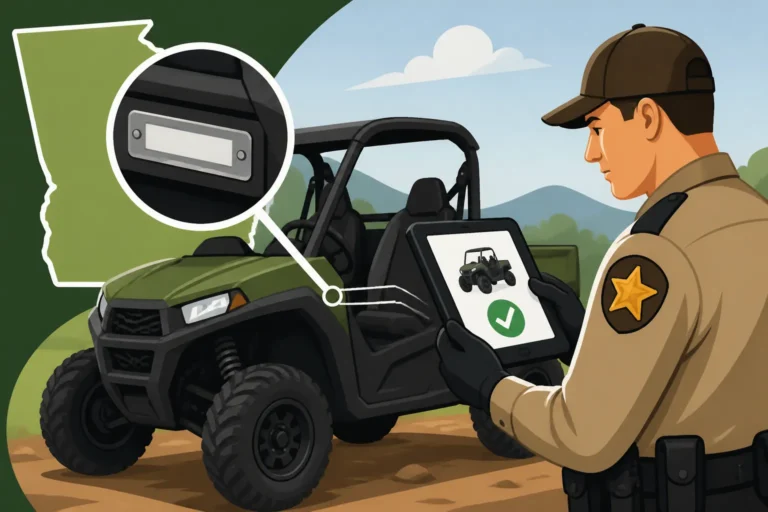
It's natural to wonder how law enforcement verifies insurance. When a Georgia deputy pulls you over on a county road, especially if you're operating a registered MPOHV, they're typically going to ask for your driver's license, your MPOHV registration, and proof of insurance. Thanks to modern technology, officers can often verify insurance electronically in real-time. However, having your physical or digital insurance card readily available is still the best practice.
The officer isn't just checking to see if you have a plate; they're checking to ensure you meet all the legal requirements for operating that machine on a public road. A quick check of your registration and insurance status is standard procedure. Understanding [What Georgia Deputies Check on a County Road] is good practice for any driver. If the electronic verification comes back negative, or you can't produce proof of insurance, that's when you start to face those legal and financial consequences. It's a straightforward system designed to keep everyone accountable and ensure the safety and financial security of all road users in Georgia.
| Feature / Scenario | Registered MPOHV with Valid Insurance | Registered MPOHV without Valid Insurance |
|---|---|---|
| Legal Road Use | Permitted on designated county roads | Illegal on any public road |
| Registration Status | Active and in good standing | At risk of suspension or cancellation |
| Financial Protection | Coverage for third-party bodily injury & property damage | Full personal liability for all damages and injuries |
| Legal Penalties (if caught) | Minimal (e.g., traffic infractions if applicable) | Significant fines, license suspension, impoundment, potential jail |
| Accident Outcome (at-fault) | Insurance handles third-party claims | Personally responsible for all costs, potential lawsuits |
| Renewal Process | Smooth verification, easy renewal | Requires reinstatement, proof of new insurance, likely fees |
| Peace of Mind | High | Very Low |
Disclaimer
This article is for general informational purposes only and does not constitute professional advice. Laws, prices and regulations vary by location and change over time. Consult a qualified professional for guidance on your specific situation.