Guiding Riders for Pay on Forest Land
Paid guiding on Georgia forest land involves more than leading riders onto an open trail. You need to know who manages the land, whether commercial use is authorized, and what rider permits still apply. The key is to treat land-use approval and individual riding requirements as separate checks, and to get written answers before advertising or taking payment.
Start with the land manager, not the trail map
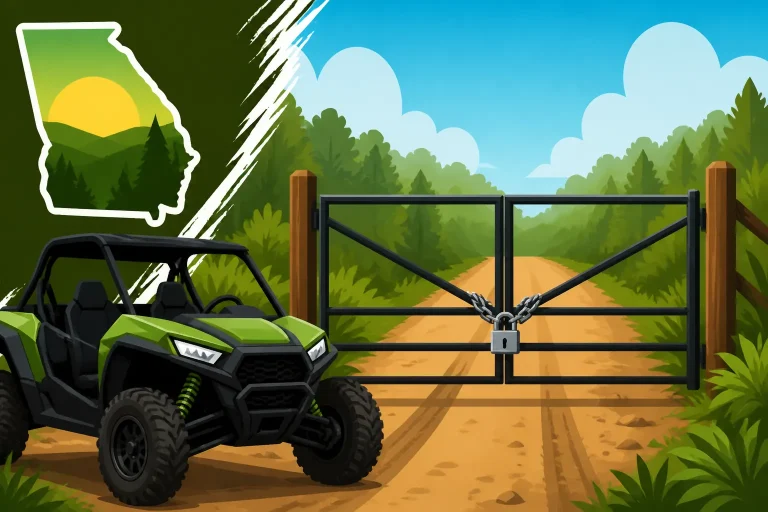
A trail being open to the public does not automatically make it available for a paid guided business. A rider going out on their own and a guide charging customers to lead a trip are different uses of public land. Commercial guiding on National Forest System land generally requires authorization from the Forest Service before the activity takes place. The exact requirements depend on the proposed service, location, group size and operating plan.
First, identify the land manager for the route and every place your group expects to stop. A ride might appear to follow one continuous trail on a map but cross between federal, state, county or private land. Each owner or agency may have its own access rules. Permission from one does not grant permission on the others.
For a proposed ride in a Georgia national forest, contact the appropriate Forest Service office or ranger district and describe the business plainly. Explain that you intend to lead paying customers, not just ride with friends. Provide the planned routes or areas, operating dates, frequency, expected group size, machines involved, and any services you will provide. Ask whether the proposed activity requires a special-use authorization and what application process applies.
Do this before accepting bookings. An open trail, a customer’s riding permit, a business license, or an insurance policy does not by itself authorize commercial operations on federal land. Nor should you assume that an informal conversation or a general statement that the trail is open counts as approval for a paid service. Ask for the applicable requirements and authorization in writing, including any restrictions on where and when you may operate.
The Forest Service may need to review the proposed use before deciding whether it is compatible with the area. That review can involve the route, congestion, resource impacts, public safety, other authorized uses and the number of commercial operators the area can support. A proposed route may be unavailable, or an authorization may come with conditions. Build time for the agency’s response and any review into your business planning rather than promising a trip date first.
| Question | What it helps establish | What it does not establish |
|---|---|---|
| Is the trail open to public riding? | Whether public riding is allowed under current trail rules | Whether a paid guide may operate there |
| Does each rider have the required riding permit? | Whether riders have met applicable permit requirements | Whether the guide’s business is authorized |
| Has the land manager approved the commercial activity? | Whether the paid operation may take place under stated conditions | Whether the route will remain open in every circumstance |
| Does the business have suitable insurance? | Whether certain financial risks may be covered | Permission to use the land |
| Has the guide checked closures and restrictions? | Whether the plan reflects current access conditions | A guarantee that conditions will not change |
If you are considering one of Georgia’s designated forest OHV areas, make clear exactly which system and routes you want to use. The rules and trail conditions are not interchangeable across riding areas. Georgia’s Six National Forest OHV Systems is a useful starting point for understanding that the areas are distinct, but the relevant land manager must confirm whether commercial guiding is permitted at your intended location.
Separate commercial authorization from rider permits
A common planning mistake is treating the permit a customer carries as permission for the guide to run a business. Those are separate questions. A day or annual OHV permit may address an individual’s access to a designated riding system, while a commercial authorization addresses the guide’s paid operation on the land. One does not replace the other.
The details of Georgia forest riding permits are covered in Georgia’s Day and Annual Forest OHV Permits and Georgia National Forest Permits Are Per Operator. Before a trip, confirm what each operator must carry, how the permit must be displayed or shown, and whether a passenger needs a permit under the current rules. Do not assume that a group booking, one machine, or one lead guide combines several people’s permit obligations into a single permit.
A useful way to explain the distinction to customers is:
- The land manager authorizes the business. This is approval for the guiding activity, subject to the authorization’s terms.
- The rider meets individual access requirements. Each participant checks the permits and rules that apply to their role and riding area.
- The group follows current site rules. Trail closures, machine restrictions and operating conditions can apply even when both the business and riders have completed their paperwork.
An operator permit also does not necessarily grant access to every road, trail or area in the forest. A rider must stay within the places open to the relevant kind of use. A guide should not treat a forest boundary, an old roadbed or a line shown on a commercial map as proof that a route is legal for OHV travel. Check the official trail map and current notices, and ask the land manager about any uncertain segment.
There may be additional rules if a route passes through a wildlife management area or another specially managed parcel. Rules for roads, permitted riding times and qualifying access can differ from general forest OHV rules. A group’s forest permit is not a substitute for checking those restrictions. See Georgia WMA Rules for ATV Riders for the separate considerations that may apply on a wildlife management area.
If your plan includes a rally, organized event, filming, instruction or another activity beyond leading a small guided ride, describe that too. Do not assume that approval for one kind of commercial use covers every activity your business might add later. Organized Events on Forest Land addresses the separate planning question for events. For commercial filming, ask the land manager whether a distinct authorization is needed; Filming Permits on Forest Land covers that issue.
Prepare a clear operating plan and verify conditions
A well-prepared inquiry helps the land manager assess the proposal and helps you discover conflicts before customers arrive. Keep the plan specific enough to review, but avoid promising a route or schedule until the agency confirms what can be authorized.
Include the following details when you contact the responsible office:
- Business activity: Describe what customers pay for, such as a guided ride, instruction, machine rental, transportation or a combination of services.
- Proposed location: Identify the riding system, trail segments, staging area and any planned stops as precisely as possible.
- Schedule and frequency: State whether trips are occasional or recurring, and provide a realistic operating season and typical duration.
- Group size: Give the number of customers, guides and machines you expect to bring.
- Equipment: Describe the types and sizes of machines, including whether the group will use ATVs, side-by-sides or mixed equipment.
- Safety arrangements: Explain how you will brief riders, manage the group, handle a breakdown, and respond to an injury or separation.
- Business documentation: Ask what business, insurance, operating or other documents the agency requires for the application.
- Impacts and logistics: Explain how customers will reach the site, where vehicles and trailers will be parked, and how you will manage waste and avoid damaging the trail.
The agency can tell you which details are relevant to the application and whether changes are needed. Do not guess that a standard commercial policy, waiver or permit form will satisfy every requirement. Ask what evidence of insurance or other documentation is required for this particular authorization, and ask your insurer whether the policy covers paid guiding on the proposed land. Insurance an Event Organizer Needs discusses insurance as a planning issue for organized rides; it should not be treated as a substitute for advice specific to your guiding operation.
Build a repeatable pre-trip check into your business. Before each outing, confirm that the authorization is still valid for the planned activity, that the route is open, and that any restrictions are compatible with the group and machines. Forest conditions can change. Weather, maintenance, resource protection or other management needs may affect access. If a route is closed, do not lead customers around a gate or onto a nearby road that has not been approved for the same use. Contact the land manager and adjust or cancel the trip.
Give customers accurate instructions before they travel. Tell them what permits they must obtain themselves, what documents or equipment to bring, where to meet, and what machine requirements apply. If a customer lacks a required permit, do not treat the guide’s authorization as covering that person. For additional background on individual permits and what they cover, see What an Operator Permit Does Not Cover.
Keep records of the authorization, correspondence with the land manager, customer briefings, route checks and any required insurance documents. Records make it easier to answer questions, demonstrate that your procedures match the authorization, and train another guide to follow the same process. They are also useful if the business changes its route, adds a vehicle type or expands its services; those changes may require advance approval.
Avoid the most common authorization mistakes
The first mistake is assuming that “public land” means “open to commercial use.” Public access and commercial operations are not the same. A trail may be open for individual recreation while a paid guiding business needs a separate authorization or may not be allowed in the proposed form.
The second is booking first and asking later. If the agency cannot authorize the location, timing or type of service, you may have to change plans after customers have paid or made travel arrangements. Obtain the relevant answers before taking bookings that depend on a particular forest route.
The third is treating the customer’s permit as a business permit. Keep the two obligations clear in your marketing and pre-trip messages. If customers are responsible for obtaining their own permits, say so directly, and verify the current process rather than circulating old instructions.
The fourth is assuming approval for one activity covers another. A guided ride may differ from a competitive event, a large group outing, instruction, filming or machine rental. Describe every service you plan to offer and ask whether each one is included. If the business expands, confirm whether the existing authorization needs to be amended.
The fifth is relying on unofficial route information. A map app, online post or old printed map may not reflect closures or current restrictions. Use information from the land manager and confirm uncertain routes with the responsible office. Share only routes that fit both the authorization and the current public-use rules.
If the agency says the proposed operation is not eligible or the desired area cannot support it, ask whether another location, schedule or operating model could be considered. A private riding park may be an alternative, but its own rules, insurance conditions and commercial permissions must be checked separately. Do not move a business onto a different parcel just because it appears nearby on a map.
Finally, distinguish between a permit application and an issued authorization. Submitting paperwork does not mean the activity has been approved. Wait for written authorization, review its conditions, and make sure guides and customers understand the parts that affect them. If a condition is unclear, ask the issuing office before interpreting it in the most convenient way.
Paid guiding on Georgia forest land can be workable when the land manager approves the use and the guide keeps business authorization, rider permits and trail access distinct. Start with the agency responsible for the exact location, disclose the full operation, and verify requirements before selling trips. That approach reduces last-minute cancellations and helps protect access for riders and other forest users.
Disclaimer
This article is for general informational purposes only and does not constitute professional advice. Laws, prices and regulations vary by location and change over time. Consult a qualified professional for guidance on your specific situation.