Generator Hours at a Campground
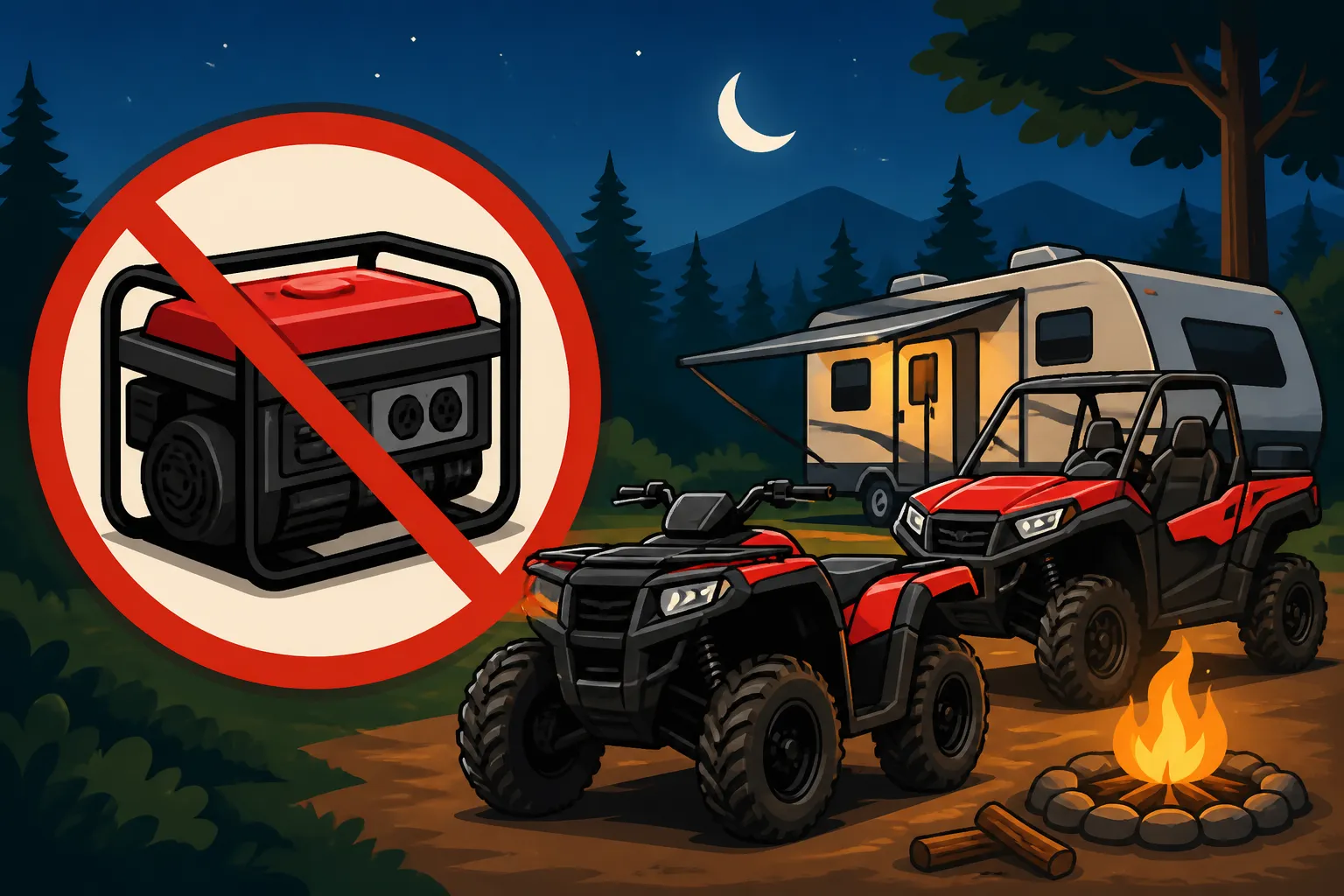
Generator hours can make or break a camping stop on a Georgia ATV or UTV trip. The tricky part is that there is no single schedule for every campground: rules depend on the site, and a trail permit does not set campground noise hours. Here’s how to check the right rules, plan around quiet time, and avoid arriving with a generator you cannot use.
Generator hours depend on the campground
A campground may set generator hours, include generator use in its quiet-hours policy, limit generators to particular loops or sites, or prohibit them altogether. The details can differ between a public campground, a private off-road park and a privately operated campground near a trail system. Even nearby sites may have different rules.
That means advice from another rider may not apply to your reservation. Before you tow in, check the rules for the specific campground and site you booked. Look for posted regulations, reservation details and arrival instructions. If the rule is unclear, contact the campground operator and ask directly.
| What to check | Why it matters |
|---|---|
| Allowed operating hours | The campground may restrict generator use to set periods or quiet hours |
| Generator type and noise | A campground may limit loud equipment, even during permitted hours |
| Site or loop restrictions | Some areas may have different rules from the rest of the campground |
| Fuel and placement rules | Operators may restrict where equipment can run or how it is stored |
| Quiet-hours definition | The posted schedule may apply to all noise, not just generators |
| Backup power options | Some sites offer electrical hookups, while others do not |
If the campground uses a general quiet-hours rule rather than a separate generator schedule, do not assume that a generator is allowed whenever quiet hours are not in effect. Ask whether there are additional restrictions. The reverse is also possible: a campground might have specific generator hours that are distinct from its quiet hours.
A useful question is: “Can I run my generator at this site, and what exact hours and equipment restrictions apply?” That is more reliable than asking only whether generators are allowed. A yes may mean permitted only during limited hours, subject to noise limits or in designated areas.
For a trip that combines riding and camping, Georgia ATV Camping With Trail Access can help you consider the camping side of the plan. If you are staying at an off-road park, check that park’s own rules as well; Georgia Private Park Camping Rules covers the kinds of site-specific policies riders should confirm.
Do not confuse riding permits with campground rules
Georgia OHV permits and campground rules address different things. A permit may be relevant to riding on a designated riding area, but it does not automatically give you permission to camp, use a generator, or stay in a particular campground. Likewise, a campground reservation does not necessarily cover riding access.
If your trip includes a Georgia Forest Service OHV system, check the applicable riding requirements separately. Georgia OHV Permits: What You Need Before You Ride explains why riders should confirm permit details before heading to an OHV area. Then verify the campground’s rules with the campground operator or the agency responsible for that site.
This distinction matters when a campground is near a trailhead or inside a broader recreation area. A reservation page might cover the campsite, while trail access and generator use are handled under separate rules. Do not infer one permission from another.
Before leaving home, confirm:
- Where you may camp. Make sure your reservation or other permission covers the exact campsite, dates and number of people in your group.
- Where you may ride. Check that the trails or riding area you plan to use are open and that you meet its current access requirements.
- Whether you may run a generator. Get the hours and any noise, location or fuel restrictions for your particular campground.
- What changes could affect the plan. Weather, closures or operating conditions can affect access, so check current notices close to departure. Georgia Trail Conditions Before You Drive is a useful companion when planning a ride.
For private parks, start with the park’s own published rules and ask staff if a detail is missing. Georgia Private Park Quiet Hours is relevant when you want to understand how a quiet-hours policy may affect generator use and other campsite noise. Rules at one private park should not be treated as rules for every other park.
How to plan generator use without disrupting camp
A practical plan begins with the power you actually need. List the equipment you want to run, when you need it, and whether it can be charged or used before quiet hours. A generator that runs only briefly to recharge essential equipment may be easier to accommodate than one expected to power a campsite throughout the evening. The campground’s policy still controls, so do not assume a short run is automatically allowed.
If you have not chosen a generator yet, compare its stated operating noise, fuel type, output and manufacturer instructions. Do not rely only on labels such as “quiet” or “camping.” Noise can vary with load, placement and how the equipment is maintained. If you shop through Amazon, check the manufacturer’s specifications and verify that the model fits the campground’s rules before buying. A product description is not permission to use it at a particular site.
Ask before packing
Contact the campground before your trip if the policy is missing or vague. Ask whether the limit is based on clock hours, quiet hours, generator noise or a combination. Confirm whether the rule applies to every site and whether a generator must be positioned in a particular place. If you are traveling with a group, ask about the policy for each site rather than assuming one answer covers the whole reservation.
Also ask about power alternatives. A site with an electrical hookup may let you charge equipment without bringing a generator, though you should confirm what the hookup supports and what cords or adapters are permitted. If there is no hookup, a battery pack or other non-generator option may cover smaller needs. Any alternative should be used according to its own safety instructions and campground rules.
Use the quietest practical setup
If generators are allowed, follow the operator’s placement instructions and the equipment manual. Keep the machine in a stable, ventilated location away from tents, vehicles and other enclosed spaces. Never run a fuel-burning generator inside a tent, camper, vehicle or other enclosed area; exhaust can create a deadly carbon-monoxide hazard. Keep children and pets away from hot surfaces and moving parts.
Use the generator only when needed, and shut it down during restricted hours. Do not try to work around a quiet-hours policy by moving the generator farther from your own site if that sends noise toward another camper. A generator may be allowed but still disturb neighbors, especially at night when background noise drops.
Fuel handling deserves attention, too. Store and refuel fuel only as campground rules and the equipment instructions allow. Turn the generator off and let it cool as directed before refueling. Keep fuel in approved containers, away from ignition sources, and never leave a running generator unattended. If the campground prohibits fuel storage or has specific fire precautions, follow those requirements.
Have a no-generator backup
A backup plan prevents a rules problem from turning into a trip problem. Charge phones, lights and other essential devices before arrival. Carry spare batteries or a suitable power bank, and decide which equipment is optional if you cannot run a generator. If you need power for medical equipment or another essential purpose, contact the campground in advance rather than assuming an exception will be available.
If you arrive and discover that your generator is not allowed, do not run it anyway or rely on the fact that other campers are doing so. Ask the operator about permitted alternatives, a different site or another arrangement. Campground staff can explain the policy, but they may not be able to make an exception.
A simple pre-trip checklist
A few minutes of checking can prevent a late-night dispute or an unusable piece of gear. Use this checklist for each campground on a multi-stop Georgia ride, since the rules may differ from one stop to the next.
- Confirm the generator policy for your exact campground and site.
- Write down permitted operating hours and quiet hours separately.
- Ask whether there are restrictions on noise, generator type, placement or fuel.
- Confirm whether the campsite has electrical service and what it can support.
- Check current riding access and permit requirements independently of campsite rules.
- Pack a backup charging option for essential devices.
- Bring the manual and follow its operating and refueling instructions.
- Respect posted rules and nearby campers, even when the generator is technically permitted.
The key is to treat generator use as a campground-specific question, not a standard Georgia ATV or UTV rule. Check the site’s current instructions, get an answer when the wording is unclear, and plan for power needs that can be met without running a generator during restricted hours.
Disclaimer
This article is for general informational purposes only and does not constitute professional advice. Laws, prices and regulations vary by location and change over time. Consult a qualified professional for guidance on your specific situation.