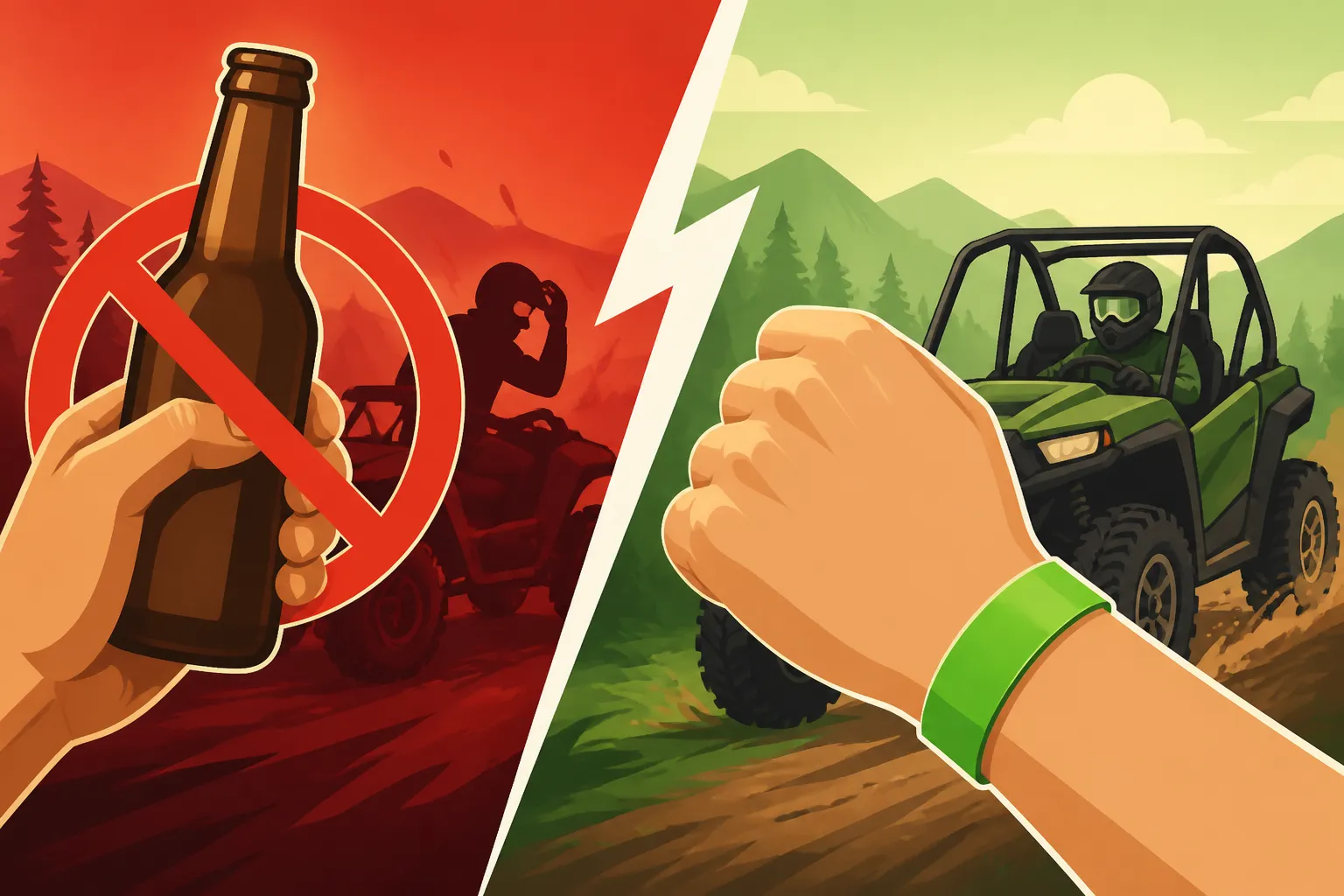
Alcohol and a Riding Wristband
A riding wristband can look like a simple entry pass, but it does not necessarily explain a park’s alcohol rules or give anyone permission to ride after drinking. If you are taking an ATV or UTV to a Georgia riding park, check what the band means, where alcohol is allowed, and who is expected to remain sober before you unload.
What a riding wristband does and does not mean
Private parks use wristbands in different ways. A band may show that someone checked in, completed a waiver, paid an admission fee, or has access to particular areas. A rental operator may use one to identify a customer or group. The band itself does not establish that alcohol is permitted, that a rider has been cleared to operate a machine, or that the park will overlook unsafe behavior.
The park sets its own rules for its property and may have separate policies for riders, passengers, spectators, and people staying at a campground. Those rules can also differ by event, trail area, rental arrangement, or time of day. A wristband used at one park—or on one visit—should not be treated as a universal signal of what is allowed elsewhere.
Before riding, ask staff what the wristband signifies and whether it affects access to any area. Then ask the alcohol questions directly:
- Is alcohol permitted anywhere on the property?
- Are there places where it is allowed, such as a designated camping area, but prohibited at trailheads or on trails?
- Must alcohol remain inside a vehicle, campsite, or other permitted area?
- Does the park prohibit anyone who has been drinking from operating a machine?
- Can a passenger drink, or does the policy prohibit alcohol for anyone riding in a machine?
- What happens if a guest violates the rule?
Do not assume that an open container is allowed just because the park sells food, has campsites, or uses wristbands. Likewise, do not assume alcohol is prohibited everywhere without checking. The practical answer is the park’s current written policy, not a guess based on the band’s color or appearance.
For a broader look at park expectations, read Georgia Private Park Alcohol Rules and Georgia Private Park Waivers and Rules. If a waiver is part of check-in, Georgia Private Park Waiver Forms can help explain why the waiver and the wristband are separate things: signing a form does not replace following the park’s operating rules.
| Situation | What to confirm | Safest approach |
|---|---|---|
| You are checking in | What the wristband identifies and which rules apply | Ask staff before riding or opening alcohol |
| You plan to operate an ATV or UTV | Whether the park has a no-alcohol operating rule | Do not drink before operating |
| You are a passenger | Whether the passenger policy covers drinking | Stay sober enough to follow instructions and respond safely |
| You are camping | Where alcohol is allowed and whether rules change near riding areas | Keep alcohol in permitted areas and leave the machine parked |
| You rented a machine | Whether rental terms add restrictions | Review the rental agreement and ask the staff member handling the rental |
Why alcohol and operating a machine are a poor mix
An ATV or UTV requires attention, balance, judgment, and quick decisions. A rider may need to brake, steer around another machine, react to a changing trail surface, or stop safely on a slope. Alcohol can impair the skills needed for those tasks. The risk is not limited to fast riding: low-speed operation, turning around, loading onto a trailer, and moving around a crowded staging area all require control.
A side-by-side can feel more stable than a quad, but it is still a powered vehicle. Its roll cage, seat belts, and steering wheel do not make it safe to operate after drinking. An ATV can be especially demanding because the rider must shift body position and maintain balance. In either case, a trail can present sudden hazards, including ruts, mud, loose gravel, steep sections, and other riders.
A wristband, waiver, or admission payment does not change those risks. Nor does the fact that a ride is on private property automatically mean there are no legal consequences for impaired operation. Georgia law and the circumstances of a particular incident matter. For context, see Georgia DUI Law and Off-Road Machines, and do not treat a private park as a legal loophole.
The safest and clearest rule is simple: if you will operate an ATV or UTV, do not drink before or during the ride. Do not rely on a subjective test such as “I feel fine,” a certain number of drinks, or a plan to ride only a short distance. There is no dependable way to use a wristband or a park’s informal practice to decide that operating after drinking is safe.
Passengers should take the issue seriously too. A passenger who is impaired may be less able to hold on, follow the driver’s instructions, or respond to a sudden stop. Alcohol can also affect how well a group communicates and makes decisions if a machine gets stuck, someone is injured, or the route changes. A passenger who plans to drink should wait until the machine is parked for the day and transportation back to camp or lodging is arranged.
How to plan a visit when alcohol may be available
If your group wants to have drinks at a campground or gathering area, separate that plan from riding. Decide in advance who will operate each machine and when riding will end. The most reliable arrangement is to keep all operators sober and stop riding before anyone begins drinking. If a person has been drinking, do not let that person drive a machine back to camp, move it between parking areas, or take a “quick” trip along a trail.
A practical plan can prevent arguments later:
- Read the park’s rules before arrival. Look for separate instructions about riders, passengers, spectators, rentals, events, and camping. If the policy is unclear, call or message the park.
- Choose sober operators for the whole riding period. Do not make the decision after drinks have been served. Agree on who is driving and who can take over only if they have remained sober.
- Keep alcohol out of riding areas unless the park explicitly says otherwise. Even where alcohol is permitted in a designated area, that does not mean it belongs on a machine or along a trail.
- Park the machines before drinking. Make the end of riding clear to the whole group. Do not restart the ride later because someone wants to retrieve gear or make a short trip.
- Arrange transportation. Know how everyone will get from the park to lodging or home without an impaired person driving a machine or a road vehicle.
- Follow staff directions. If staff say to stop riding, leave an area, or secure a machine, comply. A wristband does not override a staff instruction or park rule.
Renters should check their paperwork before signing and ask staff to explain any alcohol restrictions. Rental terms may be stricter than the general rules posted for visitors, and violating them could affect access to the rental or the park. See Georgia Rental Requirements at a Park and Georgia Private Park Insurance Requirements for related considerations. Do not assume that a damage deposit or insurance arrangement covers an incident involving alcohol; ask the provider what its terms actually say.
If the group is camping, keep the campsite plan separate from the ride plan. A person who has been drinking should not drive a UTV around a campground, even if the trip is short or the machine is moving slowly. Check the park’s camping rules for alcohol, quiet hours, vehicle movement, and guest conduct. Georgia Private Park Camping Rules covers the kinds of campground policies visitors may need to confirm.
If someone drinks or appears impaired at the park
If a person who intends to ride has been drinking, pause the plan rather than debating how much is “too much.” Ask them not to operate the machine, and arrange a sober driver or another way to get them where they need to go. If the person is already on a machine, approach calmly, ask them to park safely, and get park staff involved if needed. Do not put yourself in danger by trying to physically stop a moving vehicle.
If someone is injured, unconscious, difficult to wake, or showing signs of a medical emergency, call emergency services. Follow park staff instructions and give responders the location and details they need. After a crash, do not leave the scene simply because the group wants to avoid trouble. Follow the park’s incident procedures and cooperate with emergency responders. Georgia Accident Reporting for a UTV Crash offers related guidance about what to consider after a collision.
The park may remove a guest or suspend riding privileges for violating its rules. That is separate from any possible legal consequences, liability issues, or insurance questions that could follow an incident. A signed waiver or wristband should not be treated as protection against those outcomes. If a crash involves alcohol, injuries, damage, or a dispute, document what happened factually and seek appropriate professional advice.
The practical takeaway is to treat the wristband as an access or check-in marker, not as permission to drink and ride. Confirm the park’s policy, keep alcohol out of the operating period, and make transportation plans before the group arrives. If there is any uncertainty about whether a person is safe to operate, do not let them ride.
Disclaimer
This article is for general informational purposes only and does not constitute professional advice. Laws, prices and regulations vary by location and change over time. Consult a qualified professional for guidance on your specific situation.