Georgia WMA Access for a Quad
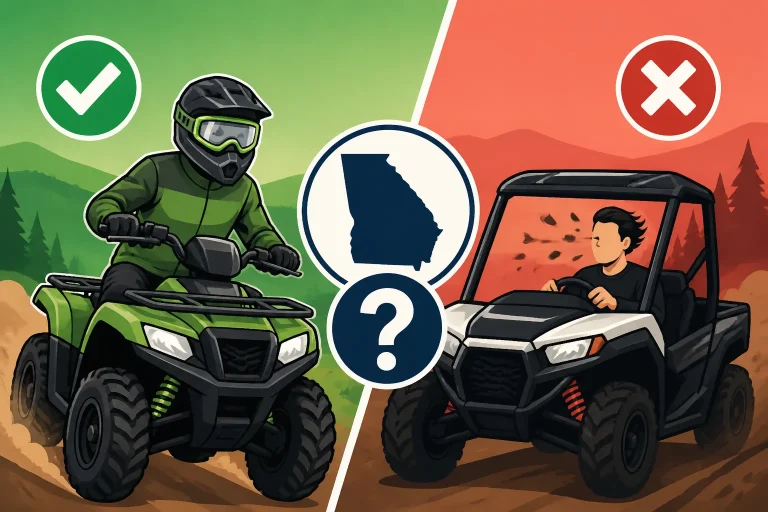
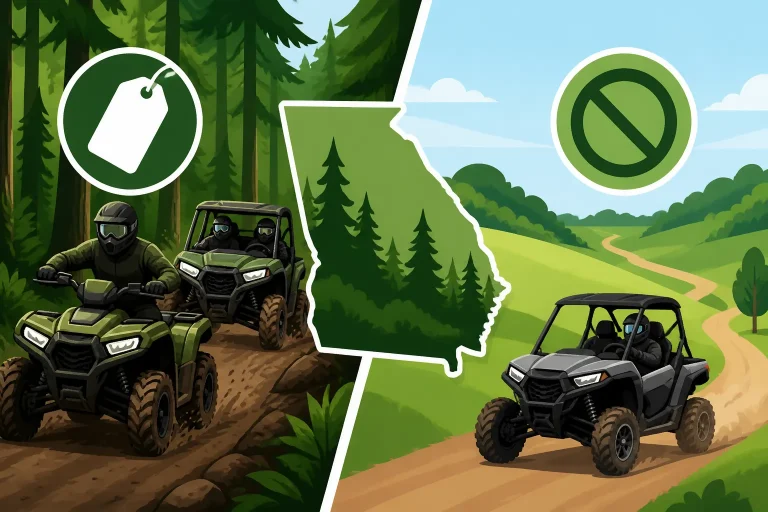
A quad can be useful for reaching a hunting spot on a Georgia Wildlife Management Area, but WMA access is not the same as permission to ride wherever you want. The key questions are whether that property allows ATVs, which roads or trails are open, and when you may use them. Check those details before unloading; rules can vary by area and activity.
When a quad may be allowed on a Georgia WMA
A WMA is managed land with rules that can change by property, season, and activity. A quad is not automatically allowed just because the area is open to hunting or other public use. Access for a vehicle is usually limited to the routes and dates identified in the current rules for that WMA.
The practical starting point is to check the property-specific regulations from the Georgia Department of Natural Resources before your trip. Look for the WMA’s name and read the vehicle or ATV provisions, not just the general hunting dates. A hunt being open does not necessarily mean a quad may be ridden there.
Use these questions to decide whether your planned trip is allowed:
- Is ATV use specifically allowed? If the area’s rules do not authorize it, do not assume that a quad can be used.
- Which routes are open? Permission may cover designated roads or trails only, not every path, firebreak, or visible track.
- What dates apply? Access may be tied to certain hunt dates or seasons.
- What hours apply? WMA vehicle access may have a restricted daily window.
- Are there extra conditions? Some properties have rules about operator age, tags, permits, or designated routes.
A quad used to reach a hunting location is different from a quad used for a recreational trail ride. WMA access rules may permit limited travel for a specific purpose while still prohibiting general riding. Do not treat a hunting-access exception as permission to explore the property.
For an overview of the broader rules, see Georgia WMA Rules for ATV Riders. If you are trying to determine whether a route is open at all, Georgia WMA Riding Only on Roads explains why staying on authorized routes matters.
| What to check | What it means for your trip |
|---|---|
| WMA-specific ATV rule | Confirms whether quad use is allowed on that property |
| Designated route | Shows where riding is permitted; a visible track is not proof of access |
| Open dates or hunt dates | Determines when vehicle use is allowed |
| Daily hours | Limits when you can enter, ride, and leave |
| Age, tag, or permit conditions | May add requirements for the operator or machine |
| Gate or closure notice | Means you must obey the closure, even if the route was open previously |
Routes, dates, and hours matter
Stay on an authorized road or trail
If the rules allow quad use, follow the named or marked route. Do not cut across fields, ride through a closed gate, or take an unmarked spur because it looks like a convenient shortcut. A road that appears on an old map or that other riders have used may no longer be open.
This is especially important on forest land and on WMAs with routes managed under separate rules. A road may be open to some traffic but not to ATVs, or it may be open only during a limited period. For national forest land within a WMA, check the specific designation rather than assuming ordinary WMA road rules apply. Georgia National Forest WMAs Need Designated Trails covers that distinction.
Follow signs at the entrance and along the route. A gate, closure sign, or posted restriction takes priority over assumptions based on past visits. Conditions can change because of hunting schedules, maintenance, weather, or land-management decisions.
Confirm the dates before you go
Some WMA access is connected to particular hunt dates or seasons. That does not mean every WMA uses the same schedule, or that every hunt date allows vehicle use. Read the property’s current rules and any activity-specific restrictions.
A calendar from a previous season is not enough. A property’s access schedule may differ from another WMA’s, and special hunts can have distinct conditions. If riding is allowed only on certain dates, arriving outside that period can leave you without permission to use the quad, even if the WMA itself is open for another purpose.
For more on the connection between riding and hunting schedules, see Georgia WMA Riding Only on Hunt Days. If your plans depend on a sunrise or sunset hunt, check the riding hours separately; Georgia WMA Two-Hour Window Around Sunrise explains the timing issue.
Plan around the daily window
Where a WMA rule limits vehicle use to a window around sunrise and sunset, use the exact times stated in that property’s current regulations. A common restriction is a period beginning two hours before sunrise and ending two hours after sunset, but you should confirm the applicable wording rather than rely on a general rule.
Remember that the allowed window concerns vehicle access, not just the time you want to be on the quad. Plan enough time to park or leave the property before the restriction takes effect. Do not assume that being on a permitted road exempts you from the hours rule.
If your trip requires travel in darkness, check whether the route and activity allow it. Headlights do not make a closed road open, and a vehicle’s lighting equipment does not extend the permitted riding period.
Operator age, tags, and hunting requirements
Check who may operate the quad
WMA vehicle rules may set a minimum age for operators. Do not assume that a minor who can ride on private land may also operate a quad on a WMA. Confirm the age requirement for the specific property and activity before bringing a young rider.
Georgia WMA rules commonly identify age 16 as a minimum for operating an ATV in this context. Verify the current regulation before relying on that age, especially if the WMA has a special provision or the rider is accompanying an adult. The relevant topic is covered in Georgia WMA Minimum Age of 16.
A passenger is not the same as an operator. Do not infer that a child may ride as a passenger simply because an adult is driving. Check the rules for passengers, the machine’s seating capacity, and any restrictions on minors. A quad designed for one rider should not be treated as a two-person machine.
Find out whether a tag or permit is needed
Some WMA rules require a tag or other authorization in particular circumstances. Requirements may depend on the land manager, the kind of access, or whether the area is part of a national forest. Check the instructions for the specific property instead of assuming a tag is required everywhere—or that no tag is needed because the quad is being used for hunting.
Georgia WMA Tags and When They Are Needed explains why tags are not a one-size-fits-all requirement. Keep any required authorization with you, and follow instructions about displaying it. A hunting license, a WMA access authorization, and an off-highway vehicle permit are not interchangeable unless the applicable rules say they are.
If your trip also involves hunting, check the current hunting requirements for the species and area. Vehicle permission alone does not establish that you are authorized to hunt, and a hunting license does not automatically authorize quad use.
Keep the purpose within the rule
If a rule permits a quad for access to a hunting area, use it for that purpose. Do not turn the trip into a recreational loop ride or use the route to explore places beyond the authorized access. When the regulation is unclear about what a permitted trip includes, contact the managing agency before going.
This distinction helps avoid a common mistake: treating access to the property as access to every activity on it. A WMA can allow public entry while limiting motorized travel to specific roads, hours, or dates. The machine, the route, and the reason for the trip may all matter.
A practical pre-trip checklist
Use this checklist before loading the quad. If any answer is unclear, resolve it before leaving rather than trying to interpret a sign or rule at the trailhead.
- Identify the exact WMA. Use the property name, not only the nearest town or forest.
- Read the current property rules. Check the current Georgia DNR regulations and any separate land-manager instructions.
- Confirm that quad use is allowed. Do not assume general public access includes ATV access.
- Locate the permitted route. Use current maps or posted directions, and stay on designated roads or trails.
- Check dates and hours. Confirm whether riding is limited to hunt dates, a season, or a daily window.
- Verify operator and passenger rules. Confirm age limits and whether the machine may carry a passenger.
- Check tag or permit requirements. Find out whether the property requires a specific authorization.
- Look for temporary closures. Check for gates, notices, weather closures, and management updates before arriving.
- Carry the documents you need. Bring required licenses, permits, and proof of authorization.
- Have a route and exit plan. Leave enough time to get off the property before the allowed riding period ends.
A map can help identify roads, but it cannot confirm that a road is open to quads today. Use maps as a planning aid, then verify access against current rules and posted signs. If a gate is closed or an officer directs you to leave, do not go around the closure.
It is also wise to prepare for a problem that delays your return. A stuck machine, flat tire, or blocked route can push a trip beyond the permitted hours. Carry basic recovery and repair gear suited to your quad, but remember that equipment does not create permission to use a closed route. Do not leave an authorized road to avoid a delay unless the rules permit it.
When the rules are ambiguous, ask the office or agency responsible for that WMA. Describe the property, the planned date, the route, and whether the trip is for hunting access or recreation. That specific question is more useful than asking generally whether “ATVs are allowed in Georgia WMAs.”
Disclaimer
This article is for general informational purposes only and does not constitute professional advice. Laws, prices and regulations vary by location and change over time. Consult a qualified professional for guidance on your specific situation.