Where Georgia’s MPOHV Rules Are Written Down
Trying to figure out where Georgia keeps all its rules for MPOHVs (Multi-Purpose Off-Highway Vehicles) can feel like a real scavenger hunt. You hear bits and pieces, but getting to the official source can be genuinely frustrating, leaving you wondering if you're even looking in the right place. This guide is here to cut through the confusion and show you exactly where the official MPOHV laws and regulations are written down, so you can ride with confidence and clarity.
The Georgia Code: Where the Law Lives
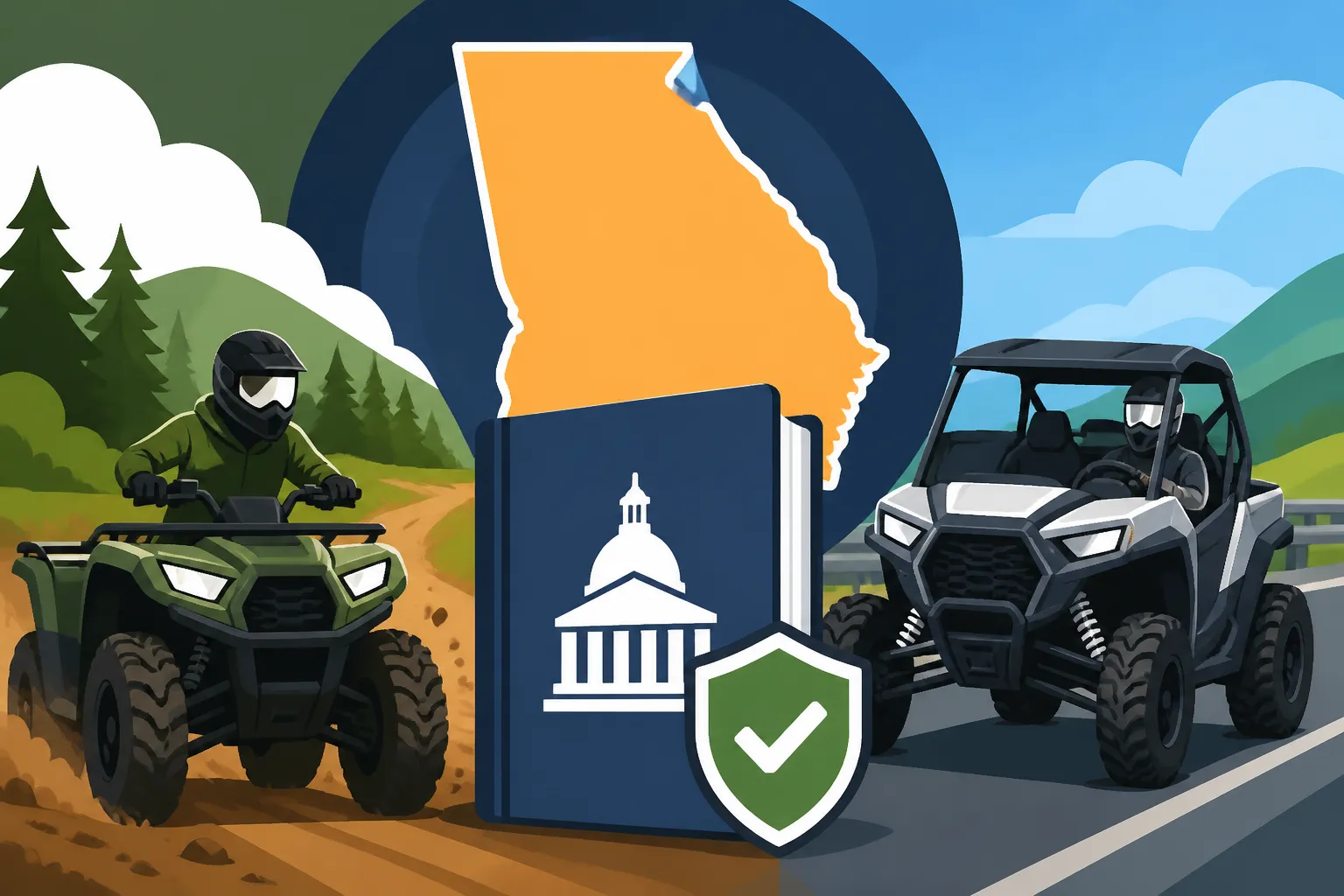
When we talk about the bedrock of MPOHV rules in Georgia, we're talking about the Georgia Code. This is where all the laws passed by the state legislature are officially compiled, organized, and published. Think of it as the ultimate legal library for the state. If you want to know what the law is, this is your first and most important stop. It's not always the easiest read, mind you, as it's written in formal legal language, but it's the authoritative source.
Understanding Title 40, Chapter 7
Within the vast collection of the Georgia Code, specific subjects are organized into "Titles," and within those Titles, into "Chapters." For vehicles and traffic, including our beloved MPOHVs, you'll primarily be looking at Title 40. This Title covers motor vehicles and traffic in general. More specifically, the rules for off-highway vehicles, including the relatively new MPOHV registration program, are found within Chapter 7 of Title 40.
Chapter 7 outlines the definitions of different off-highway vehicles, lays out the framework for their operation, and most importantly for our discussion, establishes the legal basis for the MPOHV registration process that began in December 2023. It's within these legislative texts that you'll find the core requirements, such as why Georgia does not title an ATV in the traditional sense, but has created a unique registration system for certain utility vehicles. The legislature is the body that creates these laws, and they're codified here for everyone to see.
Key Sections for MPOHVs
While reading an entire chapter of the Georgia Code might sound daunting, you'll find that certain sections within Title 40, Chapter 7 are particularly relevant to MPOHVs. These sections delve into the criteria that define an MPOHV, such as the minimum and maximum speed requirements, the width restrictions, and the distinction between a straddle seat and a non-straddle seat machine. This is where the legal definitions are laid out, which then inform all the practical applications by agencies like the Department of Revenue and local tag offices.
Understanding these key sections is crucial for any owner or prospective buyer. For example, the code clearly delineates that a machine must have a steering wheel, not handlebars, to be eligible for MPOHV registration. It also specifies the payload and gross weight limits that distinguish a qualifying MPOHV from other types of off-highway vehicles. These legislative details are the foundation upon which all other administrative rules and local ordinances are built. For a complete understanding, you'd want to consult the specific code sections related to [What MPOHV Actually Stands For] and [Georgia MPOHV Eligibility: The Eight-Point Test].
Diving into the Georgia Department of Revenue Rules
While the Georgia Code provides the overarching laws, the Georgia Department of Revenue (DOR) is the state agency tasked with actually implementing and administering those laws, especially when it comes to vehicle registration, including MPOHVs. Think of the DOR as the interpreter and executor of the legislative will. They take the broad legal framework and develop the specific rules, forms, and procedures that you'll encounter at your local county tag office.
The Role of the DOR and MPOHV Registration
The DOR plays a pivotal role in the MPOHV registration process. They are responsible for creating the official forms, establishing the guidelines for tag offices to follow, and providing clarity on how the law should be applied. When you visit your county tag office to register your side-by-side, the staff there are following directives and using forms developed by the Georgia DOR. This ensures a consistent application of the MPOHV laws across all counties in the state.
The DOR's responsibilities include everything from designing the MPOHV plate itself to detailing the process for [Georgia MPOHV Renewal Each Year]. They also provide guidance on scenarios like proving ownership when a traditional title isn't available, or how to handle sales tax for these specific machines. Their administrative rules are designed to make the legislative intent actionable and understandable for both the public and the tag office employees.
Specific DOR Regulations and Forms
The most direct way the DOR communicates its rules for MPOHVs is through its official forms and published regulations. The Georgia Form MV-OHV, for instance, is a critical document for anyone seeking to register their machine. This affidavit requires specific information and certifications from the applicant, directly reflecting the eligibility criteria found in state law. The instructions accompanying this form, usually found on the DOR's website, are essentially the DOR's interpretation and application of the Georgia Code.
These regulations also cover practical aspects like the inspection process. While the state code might say a machine needs certain safety features, the DOR's regulations often detail how those features are to be verified, such as during a [Georgia Law Enforcement Inspection for a Branded Plate]. They also specify what documentation is required, like a bill of sale or an ownership affidavit. If you're wondering about the nitty-gritty details of how to actually get a plate on your machine, the DOR's website and forms are indispensable resources. This is also where you'd find details on [Georgia's Annual Off-Highway Registration] and its associated fees.
| Source of Rule | Authority | What it Covers | Example for MPOHV |
|---|---|---|---|
| Georgia Code | State Legislature | Fundamental laws, definitions, legal framework, and broad mandates | Defines "MPOHV," sets eligibility criteria (e.g., width, speed). |
| DOR Regulations/Forms | Georgia Department of Revenue (Administrative) | Procedures, specific requirements for implementation, forms for compliance | How to fill out Form MV-OHV, requirements for [Georgia Plates for Off-Highway Vehicles]. |
| Local Ordinances | County/City Governments (Local Legislative) | Local rules for public road access, specific restrictions, PTV regulations | What Georgia MPOHV Road Rules: County Roads Only look like in a specific county. |
| Federal Standards | U.S. Federal Agencies (e.g., CPSC) | Manufacturing safety standards, classification definitions for specific vehicles | ATV/UTV manufacturer safety guidelines, "not for highway use" labels. |
Local Ordinances: The County and City Level
Beyond the state laws and departmental regulations, there's another crucial layer of rules: local ordinances. These are laws passed by county and city governments, and they can significantly impact where and how you can operate your MPOHV on public roads. While state law provides the overarching framework, local governments have the authority to add their own specific regulations within their jurisdictions, especially concerning road access.
How Counties Adopt MPOHV Rules
Georgia state law permits counties to pass ordinances allowing MPOHVs on designated county roads. This means that even with a state-issued MPOHV registration, your ability to ride on public roads can vary significantly from one county to another. Each county has the discretion to determine if and how MPOHVs can be used on their road systems. Some counties might embrace MPOHV road access, while others might choose to severely restrict it or ban it altogether.
This local control is why it's absolutely essential to check with the specific county's government offices or their website before venturing out on public roads. An MPOHV plate from the state of Georgia confirms your machine meets the state's criteria for registration, but it doesn't automatically grant you access to all county roads. You might find a county has specific hours of operation for MPOHVs, or restricts them to certain types of roads, such as unpaved or rural routes. The best way to know is to contact the county sheriff's department or county clerk's office for a copy of their local ordinances. If you're considering road use, researching [Georgia UTV Road Rules by County] is paramount.
City-Specific Regulations and PTVs
Cities add another layer of complexity. While MPOHV registration primarily pertains to side-by-sides and similar machines for county road access, cities often have their own set of rules, particularly concerning Personal Transportation Vehicles (PTVs), which often include golf carts. Some cities, like Peachtree City, have extensive golf cart path networks and detailed ordinances governing their use, including specific registration requirements, age limits for drivers, and even non-resident fees.
It's important to understand that city ordinances regarding PTVs are distinct from the state's MPOHV registration. An MPOHV registered for county road use is generally not considered a PTV by cities, and city-level PTV ordinances may not apply to them, or they might be explicitly excluded. Conversely, a golf cart registered under a city's PTV ordinance typically wouldn't qualify for state MPOHV registration due to different vehicle requirements. Therefore, if you plan to operate a machine within city limits, you must consult that specific city's municipal code. You'll want to differentiate between [Georgia Golf Cart Laws and PTV Ordinances] and the broader MPOHV rules.
Federal Guidelines and Their Influence
While the Georgia Code and DOR regulations handle the state-specific MPOHV rules, and local ordinances manage county and city road access, there's a foundational layer of federal guidelines that influence how these machines are designed, sold, and sometimes, even classified. These federal standards typically don't dictate how you can ride on Georgia's roads directly, but they certainly shape the vehicles themselves and how states approach their regulation.
Manufacturing Standards and Federal Oversight
The federal government, primarily through the Consumer Product Safety Commission (CPSC), sets safety standards for ATVs and certain other off-highway vehicles. These standards govern things like vehicle stability, braking, and general design to minimize hazards. Manufacturers of ATVs and UTVs adhere to these CPSC guidelines, which often include warnings like "not for highway use" directly on the vehicle. This federal oversight ensures a baseline of safety for these machines before they even hit the showroom floor.
These manufacturing standards influence state laws by providing a common understanding of what constitutes an "off-highway vehicle" and its intended use. For instance, the CPSC's long-standing stance that ATVs are not designed for public roads has undoubtedly played a role in why Georgia's MPOHV registration specifically excludes machines with handlebars and straddle seats, effectively preventing most traditional ATVs from being registered for road use. It's a critical, though often indirect, influence on state legislation.
How Federal Definitions Impact State Law
Federal definitions can act as a starting point or a reference for state legislation. While Georgia creates its own specific categories like "MPOHV," these often build upon or are informed by broader federal classifications or industry standards. For example, the distinction between a "utility vehicle" and an "all-terrain vehicle" at the federal or industry level often focuses on seating arrangement, steering mechanism, and cargo capacity. Georgia's MPOHV criteria for a steering wheel and non-straddle seating directly reflect these industry distinctions.
This layered approach means that while you won't find specific Georgia MPOHV road rules written in federal law, the federal context helps explain why Georgia's laws are structured the way they are. The design and safety features mandated by federal agencies inform the eligibility criteria states then adopt for road use. It's a complex interaction where federal guidelines ensure consumer safety, and state laws then determine how those machines, built to those standards, can be operated within their borders.
Navigating the Sea of Information: Practical Tips
With all these different layers of rules—state code, DOR regulations, local ordinances, and federal influences—it's easy to feel overwhelmed. Finding the exact piece of information you need can still be a challenge. But armed with the knowledge of where these rules reside, you can approach your research more strategically and confidently.
Official Websites and Resources
The most reliable places to find this information are the official government websites. For state laws, the website for the Georgia General Assembly is your go-to. Here, you can search the Georgia Code, including Title 40, Chapter 7, for the latest legislative text. For administrative rules and forms, the Georgia Department of Revenue's website is invaluable. They host all the necessary MPOHV registration forms, instructions, and often FAQs that clarify common questions.
When it comes to local ordinances, you'll need to visit the specific county's or city's official government website. Look for sections on "county ordinances," "municipal code," or "public safety." Many local governments publish their full code online, which you can search for terms like "MPOHV," "off-road vehicle," or "golf cart." Remember, a quick call to your local county tag office or sheriff's department can also point you in the right direction for local rules. They're often the ones on the front lines of these regulations.
Legal Tools and Professional Advice
Sometimes, despite your best efforts, the legal language can be dense, or your situation might be particularly unique. In such cases, online legal resources can be a helpful starting point. For instance, platforms like LawDepot offer templates for various legal documents, such as bills of sale or affidavits, which can be useful when you're gathering paperwork for MPOHV registration. While these resources are great for general templates and understanding common legal structures, they are not a substitute for personalized legal advice.
If you're dealing with a complex issue, such as a dispute over ownership or understanding the nuances of a branded certificate of registration, consulting with an attorney who specializes in vehicle or property law in Georgia is always the wisest course of action. They can interpret the specific code sections, advise on your particular circumstances, and ensure you're fully compliant with all state and local regulations. While official sources provide the rules, a professional can offer clarity and guidance when the path forward seems murky. It's important to know the rules on [Georgia Registration When the Seller Has No Paperwork] and [What a Branded Registration Warns You About].
Disclaimer
This article is for general informational purposes only and does not constitute professional advice. Laws, prices and regulations vary by location and change over time. Consult a qualified professional for guidance on your specific situation.