Iron Mountain’s Trading Post
A riding day can go sideways when you arrive at Iron Mountain without a forgotten strap, the right trail information, or a plan for lunch and fuel. The Trading Post can be a useful place to pause and get oriented, but it is best treated as one part of your preparation—not a guarantee that every item or service will be available.
What to expect from Iron Mountain’s Trading Post
A practical stop at the park
At an off-road park, a trading post can serve as a convenient base-area stop before or after you head out on the trails. It may be a place to ask questions, pick up a forgotten necessity, or take a break with your riding group. The exact products, services, and operating arrangements can change, so avoid building your whole day around an assumption about what will be in stock.
Think of the Trading Post as a helpful backup rather than your main supply plan. A family that arrives without drinking water, for example, should not assume it can buy enough for every rider once it gets there. Likewise, if your machine needs a particular belt, tire plug, or tool, bring it from home unless the park has confirmed that item is available.
Before setting out, check Iron Mountain’s current visitor information for details about the Trading Post, park access, and any rules that affect your visit. If you are traveling a long distance, contacting the park directly is a sensible way to ask about the questions that matter most to your group: what is open, what is available, and where you should check in.
What it can and cannot replace
A Trading Post is not a substitute for a trail map, a pre-ride machine check, or emergency supplies. Even a well-prepared base area cannot guarantee that a specific part will be on hand when a machine breaks down. The same goes for food, fuel, riding gear, and personal medication: carry what you need for the day rather than counting on a last-minute purchase.
It is also worth separating the Trading Post from the park’s rules and trail information. A casual conversation can help you get oriented, but confirm route access, closures, machine restrictions, and check-in requirements through the park’s official instructions. Rules may differ by trail system, vehicle type, weather, and operating conditions.
For a broader overview of the area, Iron Mountain Resort: Georgia’s Biggest Private Park and Iron Mountain’s Trading Post can help place the Trading Post in the context of a full visit. If you are deciding between destinations, compare the setting and riding style with Georgia Private Off-Road Parks Compared. The goal is not to arrive with every detail memorized; it is to know where to confirm the details that can change your plans.
Plan your visit before you leave home
Confirm access, check-in, and current conditions
Start with the basics: confirm the park’s current operating information, the route to the entrance, and what you need to do when you arrive. Ask whether any reservation, waiver, permit, or vehicle-specific requirement applies to your visit. If you are bringing a side-by-side, ask whether the trails you hope to ride are suitable for its width and configuration.
Trail conditions deserve special attention in North Georgia, where rain and changing weather can affect traction, water crossings, and access. A route that looked straightforward on a map may feel very different after a wet spell. Check the park’s updates before you set out, and be ready to adjust your plan if a trail is closed or the conditions are beyond your group’s comfort level. Georgia Trail Conditions Before You Drive offers a useful reminder to make conditions part of trip planning, not an afterthought.
Navigation apps such as onX Offroad can help you prepare by showing your planned route and giving you a way to review the area before the ride. Treat any digital map as a planning aid, not permission to use a route. Follow posted signs and park directions, and do not assume that an app’s route line reflects current closures or the park’s latest guidance.
Pack for the ride, not just the stop
A solid packing plan covers basic comfort, machine care, and the possibility of a delay. The right list depends on your machine, the weather, ride length, and who is coming, but a few categories are worth checking before every trip.
| Need | Bring or confirm before leaving | Why it matters |
|---|---|---|
| Hydration and food | Water for each rider and snacks or meals suited to your day | A convenient stop may not have everything your group needs |
| Machine basics | Owner’s manual, suitable tools, tire repair supplies, and any model-specific spares | A small problem can end a ride if the needed item is unavailable |
| Safety gear | Proper helmet, eye protection, gloves, and weather-appropriate clothing | Comfort and protection matter throughout the ride |
| Navigation | Park information, a charged phone, and an offline backup where practical | Cell service and battery life can be unreliable on the trail |
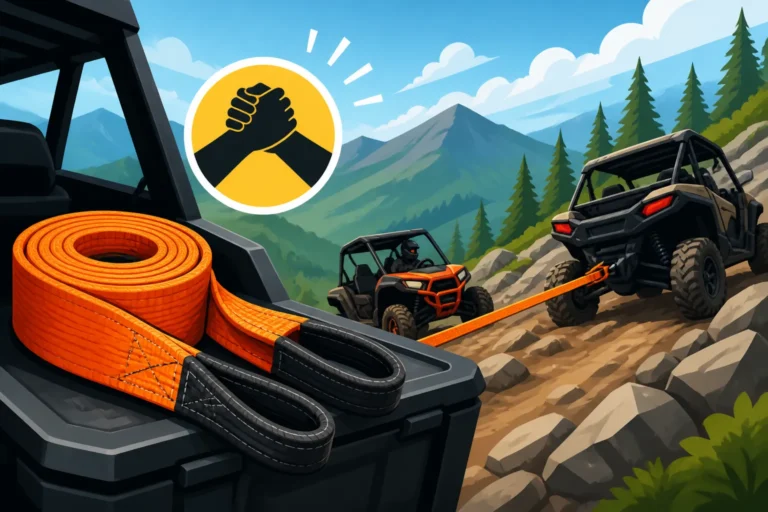
| Recovery and communication | A charged radio or phone, recovery gear suited to your machine, and an agreed meeting plan | Groups can separate, and a machine may become stuck or disabled |
| Documents and check-in items | Any identification, reservation details, waivers, or permits the park requires | Having them ready can make arrival smoother |
Use onX Offroad or another navigation tool to review your planned route before departure, then save essential information in a form you can access without a strong signal. Tell someone at home where you are going and when you expect to be back. That simple step is especially useful if your group changes plans or runs into a delay.
If you are riding with children or less-experienced drivers, build extra time into the day. Pack spare layers, snacks, and any personal items they may need. A rushed start often leads to forgotten essentials, while a short checklist beside the trailer can catch missing helmets, tie-downs, or water before you pull away.
Make the Trading Post part of a smooth riding day
Use it to reset and check your plan
Once you arrive, take a moment to get oriented before unloading or heading out. Confirm any park-specific instructions, ask about conditions that could affect your chosen route, and make sure everyone understands where the group will meet if riders become separated. The first few minutes can prevent avoidable confusion later.
A Trading Post stop can also be a natural time to review the day’s plan. If the weather has changed, a rider is tired, or a machine is acting differently, adjust the route rather than pressing on just because it was the original plan. Keep the group’s ability level in mind. A challenging section that suits experienced riders may be a poor choice for a mixed group with a new driver.
Navigation remains useful, but do not let a screen distract you from signs, trail markings, or instructions from park staff. If you use onX Offroad, review it while stopped and keep the phone secured when riding. A paper or downloaded backup can also help if your device loses power or signal.
Be realistic about supplies and services
The Trading Post may be convenient, but availability should be confirmed rather than assumed. If you need a particular item—such as a specialized part, a specific meal, or an accessory for your machine—ask the park before you travel. For anything essential to safety or getting home, bring your own backup when practical.
Fuel planning is another area where assumptions can cause trouble. Confirm what arrangements are available at the park and plan enough fuel for the riding you intend to do, including a reasonable margin for detours or a change of route. Do not treat a possible stop as a substitute for calculating your machine’s range and carrying out the plan safely.
The same principle applies to repairs. A Trading Post may be able to point you toward help or direct you to the right place to ask, but it should not be treated as a repair shop unless that service has been confirmed. Carry basic tools and know how to handle common issues on your machine. For an overview of trail preparation, see What Every Rider Carries on a Georgia OHV Trail and Georgia Trailhead Restrooms and Water.
Ride responsibly and finish the day prepared
Follow park rules and respect other riders
Private riding parks have their own instructions for check-in, trail use, parking, speed, and rider conduct. Read the rules before unloading, and make sure every person in your group knows the basics. Passengers should understand the machine’s seating and restraint requirements, while drivers should stay within their ability and the conditions they encounter.
Keep noise, dust, and speed in mind around other visitors. Slow down when visibility is limited, yield as directed, and avoid creating a hazard for people who are stopped or working on a machine. If a trail is closed, do not ride around a barrier or assume the closure is optional. Closures can protect riders as well as the trail itself.
Pack out what you bring in, including food wrappers, broken straps, and other small trash. Leave gates, signs, and trail features as you find them. Responsible riding helps preserve access and makes the park more enjoyable for the next group. For more on preparation and shared trail etiquette, read Georgia Trail Etiquette on One-Way Loops and Georgia Trail Closures After a Storm.
Build a simple arrival and departure routine
A short routine makes the day easier, especially when several machines and trailers are involved. Before the ride, check that helmets and eye protection fit, passengers are secure, and each machine is in safe operating condition. Make sure the group has agreed on a turnaround time and a meeting point.
At the end of the ride, inspect the machines before loading. Look for fresh damage, loose parts, leaking fluids, and mud packed into areas that need attention. Secure machines and equipment carefully for the drive home. If something is damaged, document it and decide whether the machine is safe to transport or needs help.
| Moment | Quick check |
|---|---|
| Before leaving home | Confirm park information, weather, supplies, and trailer security |
| On arrival | Check in, review rules, and ask about current conditions |
| Before riding | Inspect machines, confirm the route, and agree on a group plan |
| During the ride | Respect signs, reassess conditions, and keep the group together |
| Before departure | Check for damage, secure the load, and account for everyone |
A little preparation lets the Trading Post be what it is most useful for: a convenient stop within a larger, well-planned day. Check current park information, bring the essentials your group depends on, and stay flexible if conditions or trail access change. For additional planning ideas, Measuring Your Machine Before You Tow and Georgia ATV Trails That Allow Side-by-Sides can help you think through vehicle fit and destination choice before you head out.
Disclaimer
This article is for general informational purposes only and does not constitute professional advice. Laws, prices and regulations vary by location and change over time. Consult a qualified professional for guidance on your specific situation.