Georgia Tick Season and Riding Gear
Georgia riders can come off a trail with red clay on their boots and ticks tucked into cuffs, waistbands, or gear seams. In wooded areas, tall grass, leaf litter, and brush can make a ride feel like a tick-checking challenge. This guide explains how to prepare, what to wear, and how to check yourself and your machine afterward.
When Georgia Riders Should Be Alert for Ticks
Think beyond a single tick season
Ticks can be a concern in Georgia through much of the year. Risk often rises during warmer months, when riders spend more time in vegetation and wear clothing that exposes skin to heat. But a chilly morning does not automatically mean the risk is gone: ticks may still be active when conditions are mild, and they can be present around wooded trail edges, grassy clearings, and overgrown access roads.
The practical approach is to treat tick prevention as part of your regular riding routine rather than something reserved for one particular month. A spring ride through fresh undergrowth, a humid summer outing, and a fall trip over leaf-covered trails all call for some form of prevention and a thorough check afterward. For seasonal trail conditions, see [Georgia Riding in Spring Mud], [Georgia Riding in Summer Humidity], and [Georgia Riding in Fall Leaf Season].
Georgia’s mix of habitats matters, too. North Georgia forest roads and mountain trails can put riders close to brush and leaf litter; in the Piedmont, trail margins and tall grass may be the main concern; and in the Coastal Plain, vegetation can be dense and humid. A machine keeps you off the ground more than hiking does, but riders still step off to open gates, recover a stuck vehicle, take a break, or help a passenger.
Places ticks can reach you on a ride
Ticks are more likely to encounter riders where clothing or skin brushes against vegetation. That can happen while parking at a trailhead, walking around a campsite, standing beside a machine during a repair, or riding a narrow route with overhanging plants. A short stop at a shaded pullout can be enough to pick up plant material—and potentially a tick—on a pant leg or boot.
Think about the whole outing, not only the miles spent moving. At places such as the Chattahoochee-Oconee National Forest trail systems, a rider may encounter different conditions between the parking area, the trail, and a rest stop. Check trail access and conditions before choosing where to ride with [Georgia Trail Conditions Before You Drive]. If you use onX Offroad to plan a route, treat the map as a planning aid, not a substitute for checking current access rules or posted signs.
A useful habit is to notice when you have walked through grass or brush, even if you were away from the machine for only a moment. Once you are back at the parking area, do a quick look over your boots and lower legs before climbing into a truck or camper. That small check can keep ticks from traveling home in clothing or gear.
What to Wear for Tick Protection on an ATV or UTV
Choose coverage that works with the weather
The most protective riding outfit is the one you can comfortably keep on. Long pants, long sleeves, closed footwear, and gloves help reduce exposed skin, but Georgia heat can make heavy layers miserable. Look for breathable riding clothes that cover the skin without restricting movement, and adjust ventilation so you are not tempted to remove layers while traveling through brush.
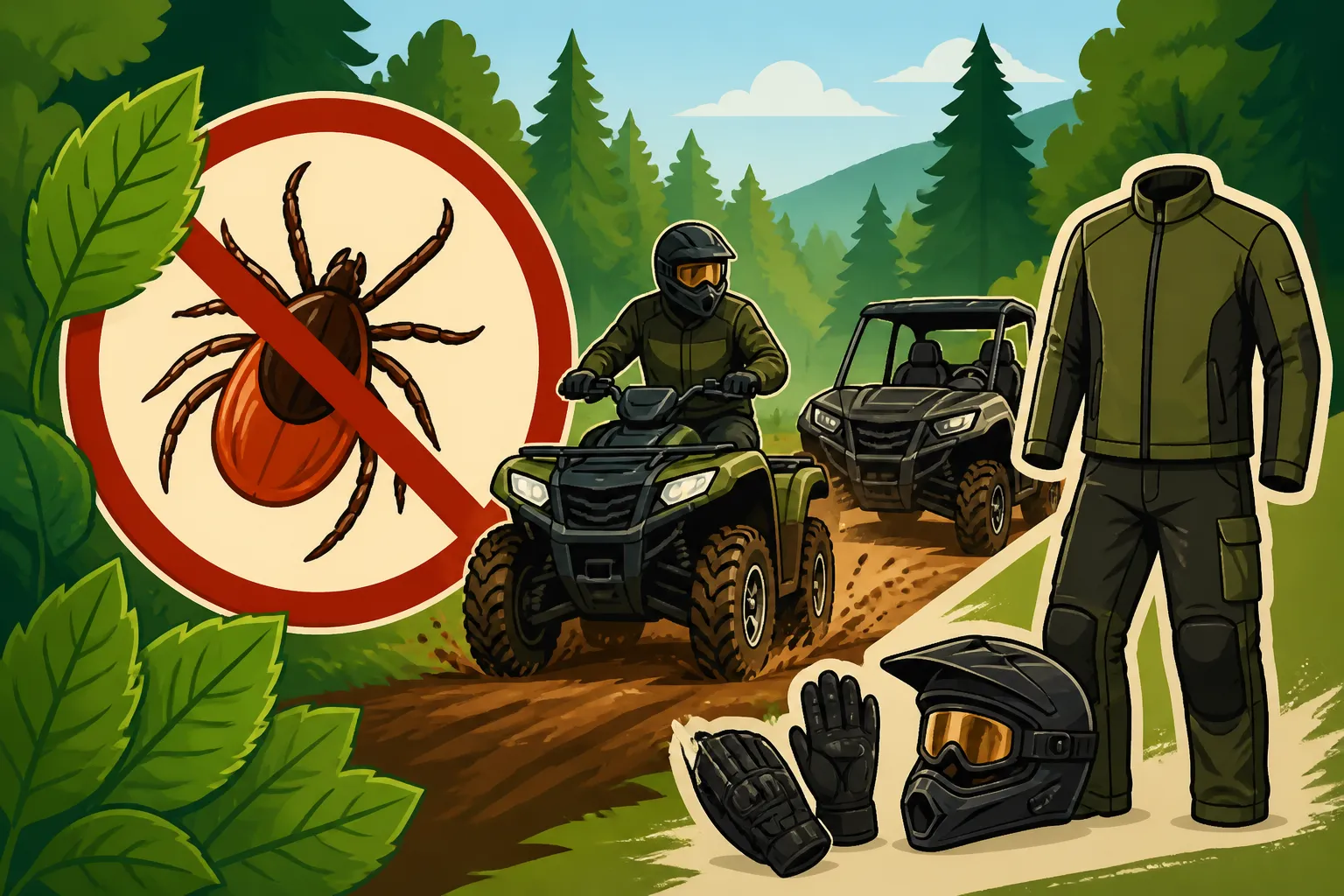
A practical outfit might include lightweight long pants tucked into tall boots or gaiters, a long-sleeved shirt with close-fitting cuffs, and gloves that remain comfortable when handling controls. If you wear a helmet and goggles, remember that the neck, wrists, ankles, and waist still need attention. A shirt that rides up when you lean forward can leave a strip of skin exposed, while loose pant cuffs can brush vegetation and collect debris.
Light-colored clothing can make it easier to spot a tick crawling on fabric. It is not a barrier by itself, but it can help during a quick inspection at a trail stop. Choose gear that lets you see cuffs and seams without sacrificing visibility, grip, or safe control of your machine.
Use repellents and treated clothing carefully
Repellents can be part of a prevention plan, but the label matters. Use skin repellents only as directed, and follow the product’s instructions for where and how to apply them. If children are riding with you, check age-related directions and apply products in the manner specified by the label rather than assuming an adult routine is suitable for them.
Permethrin products intended for clothing or gear are not the same as skin repellents. Use them only on the items and in the way the product label allows; do not apply a clothing treatment directly to skin. Some clothing is sold pretreated, while other products are intended for home application. Follow drying, reapplication, and washing directions, and keep treated items away from children and pets while they are being applied or drying.
Do not let repellent replace clothing coverage or post-ride checks. It is one layer in a routine. Before heading to a trail system, consider what you will wear during the drive, while unloading, and on the ride itself. If you plan a route with onX Offroad, use that preparation time to check the trail area and pack clothing that fits the expected terrain and weather; the app does not determine whether a specific route is tick-free.
| Riding situation | Helpful clothing choice | Extra check to make |
|---|---|---|
| Brushy or narrow trail | Long pants, sleeves, closed boots, fitted cuffs | Look over pant legs and sleeves after passing through vegetation |
| Hot, humid outing | Lightweight, breathable coverage you can keep on | Check for overheating and take breaks in open, clear areas |
| Leaf-covered trail | Light-colored outer layers when practical | Inspect folds, cuffs, and gear seams for hitchhiking ticks |
| Stop for a repair or gate | Gloves and covered lower legs | Check boots and clothing before getting back in the vehicle |
| Riding with children | Comfortable coverage and age-appropriate products used by label directions | Help children check areas they cannot easily see |
Protect the spots riders often overlook
Cuffs and ankles are easy to miss, especially when pants shift during a ride. Make sure your pants stay over or securely inside your footwear in a way that does not interfere with riding. Check the waistline, shirt hem, and glove openings as well. A tick can be carried on a sleeve or pant leg before it reaches skin, so inspect outer clothing even when you feel fully covered.
Gear needs attention, too. Gloves, helmets, goggles, neck gaiters, hydration packs, and seat cushions can collect leaves or brush. Shake out or inspect gear before putting it in a truck cab, tent, or house. If several people share a UTV, avoid tossing used jackets and gloves together in a pile; separate items so each rider can check their own clothing.
A Practical Tick Check Before and After Riding
Do a quick check during the outing
A full check is easiest after the ride, but a short scan during a stop can catch ticks before they have time to move farther. Look at boots, socks, pant legs, and glove cuffs after walking through grass or brush. Ask passengers to do the same, especially children who may have climbed in and out of the machine.
Choose a clear place to stop when possible. A shaded grassy shoulder may feel convenient, but a hard-packed or open area can make it easier to see what is on your clothing. If you need to handle a recovery strap, inspect the straps and gloves afterward rather than putting them straight into a storage compartment with clean gear.
A map can help with route planning, but it cannot tell you that vegetation has been cleared or that ticks are absent. onX Offroad may help you understand where a route runs, while posted signs and land-manager information remain important for access. For legal riding locations and access basics, start with [Georgia ATV Trails: Where You Can Legally Ride] and [Georgia OHV Permits: What You Need Before You Ride].
Check your body, clothing, and equipment at home
After riding, inspect your body carefully, including areas that are easy to overlook: behind the knees, around the waist, under the arms, around the ears, in the hair, and between the legs. Use a mirror or ask someone you trust to check places you cannot see clearly. Children may need an adult’s help with a complete check.
Take off riding clothes and inspect them before putting them in a laundry basket, vehicle, or tent. A shower soon after returning can make it easier to spot ticks and gives you a natural moment to check your skin. Inspect boots, gloves, helmets, packs, straps, and seat areas as well. If you rode in dense brush, give particular attention to seams and folds where plant debris can collect.
Keep clean clothing separate from used gear. A simple routine helps: remove outer layers in one place, check them before storing, and put riding items in a designated bag or container. This is especially useful after a long trip when everyone is tired and eager to unload quickly.
Remove an attached tick promptly and carefully
If you find an attached tick, use fine-tipped tweezers to grasp it as close to the skin as possible and pull upward with steady, even pressure. Avoid twisting or crushing it. Do not try to make it detach with heat, petroleum jelly, nail polish, or other improvised methods. After removal, clean the bite area and your hands.
If mouthparts remain and you cannot remove them easily, avoid digging deeply into the skin. Clean the area and seek guidance from a healthcare professional if you are unsure what to do. Make a note of when and where you noticed the bite, and watch for symptoms such as a new rash, fever, headache, or unusual aches. If symptoms develop after a tick bite, contact a healthcare professional and explain the exposure. A rash does not always look the same from person to person, so do not rely on one appearance as the only warning sign.
Build Tick Prevention Into Your Riding Routine
Prepare before loading the machine
A little preparation at home is easier than trying to improvise at a muddy trailhead. Set out long pants, sleeves, gloves, and footwear before you leave. Pack a small kit with fine-tipped tweezers, a mirror, a sealable bag for used clothing, and any repellent you plan to use. Follow product directions and keep items secured so they do not spill onto gear or into a child’s reach.
Check the route and expected conditions, too. A narrow, overgrown track may call for more coverage than a broad, maintained road. Planning tools such as onX Offroad can help riders review route options, but always verify that a road or trail is open to the type of vehicle you are bringing. If you are unfamiliar with local access, [Georgia Trail Etiquette on One-Way Loops] is a useful companion to route preparation.
Before heading out, agree on a simple routine with passengers: check boots at stops, avoid leaving jackets in a heap, and do a full inspection when the ride ends. When children are along, make the check calm and routine rather than alarming. Explain that ticks can be tiny and that asking an adult to check a hidden spot is normal.
Adjust your routine to the day
After a wet spring ride, muddy pants and boots can hide debris, so inspect them before loading up. In summer humidity, breathable layers and water breaks matter; prevention should not create a heat problem. On a fall ride, leaf litter can cling to clothing and equipment, making a careful gear check especially worthwhile. Seasonal conditions change, but the basics stay the same: cover skin where practical, use products only as directed, and check yourself and your gear.
If the trail is heavily overgrown, you can reduce unnecessary exposure by keeping to the established route, avoiding brushy shortcuts, and limiting time standing in tall vegetation. For group rides, choose a stopping point where everyone can step away from dense grass. Be considerate of other riders when checking gear, and keep loose clothing clear of moving machine parts.
onX Offroad can be useful when you are comparing route options or trying to understand where a trail corridor goes, but it cannot replace good judgment on the ground. A route shown on a screen may pass through vegetation that has changed since a map was made. Follow signs, respect closures, and be ready to adjust the plan if the trail is overgrown or conditions are poor.
Make the check a habit, not a reason to skip the ride
Ticks are a realistic outdoor concern, but prevention does not need to turn a ride into a source of constant worry. A repeatable routine—cover up, use repellents according to their labels, pause for quick checks after brush contact, and inspect everyone and everything afterward—gives riders a practical way to manage the risk.
The biggest missed opportunities are usually ordinary moments: climbing out to open a gate, helping a friend with a winch, sitting on a grassy bank, or tossing dirty clothing into the cab. Once those moments are part of your routine, it becomes easier to remember the small checks that keep a tick from coming along for the ride. Keep the routine flexible for Georgia’s heat, terrain, and season, and seek medical advice if you develop symptoms after a bite.
Disclaimer
This article is for general informational purposes only and does not constitute professional advice. Laws, prices and regulations vary by location and change over time. Consult a qualified professional for guidance on your specific situation.