Georgia Poker Runs and Charity Rides
A poker run can sound simple until you’re trying to figure out where the route goes, whether your machine fits the trails, and what happens if rain turns the ride into a muddy slog. This guide explains how Georgia ATV and UTV poker runs and charity rides work, what to check before registering, and how to prepare for a safer, more enjoyable day.
What to expect at a Georgia poker run or charity ride
How a poker run works
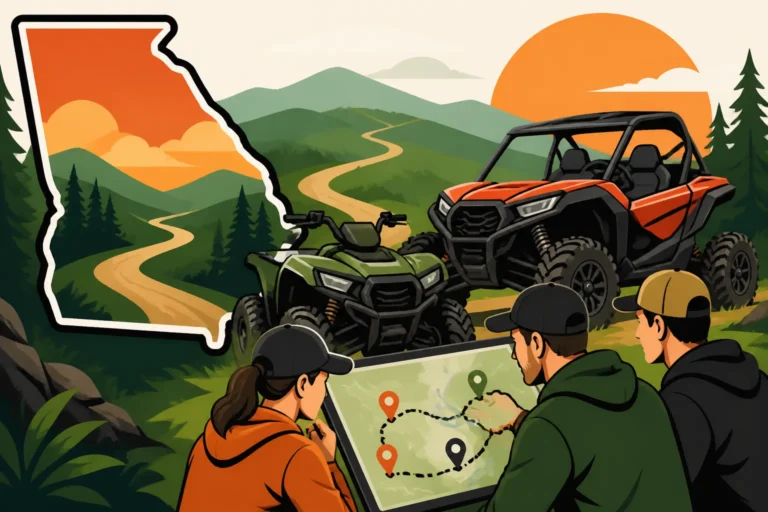
A poker run is usually a group ride with several checkpoints along a route. At each stop, participants receive a playing card or another mark used to build a hand. The person with the strongest hand at the end may win a prize, but the format can vary: some events draw cards, while others use a different scoring method. The ride itself is often the main attraction, with proceeds or donations supporting a cause.
Don’t assume that “poker” means a cash gambling event. Many rides use a simple card-draw format and emphasize fundraising, community, and trail time. Before signing up, read the event details closely: check how scoring works, what the entry fee covers, whether there are additional donations or raffles, and whether awards are based on the hand, participation, or another measure.
The route may include woods roads, trail sections, private property, or a mixture. A route that suits a compact ATV may not be comfortable—or permitted—for a wide side-by-side. Ask the organizer about machine width, passenger limits, skill level, route difficulty, and whether the route is appropriate for children or first-time riders. If you’re new to organized rides, [Georgia Group Ride Planning] can help you think through the practical details of riding with a larger group.
How charity rides raise support
Charity rides can raise money through registration, donations, raffles, merchandise, food sales, or sponsor contributions. The organizer should explain which parts of the event support the stated cause and whether any purchases are optional. If you’re attending with friends, decide ahead of time what you’re comfortable spending; event-day add-ons can make the final total higher than the registration fee alone.
A well-run event should also make clear who is organizing it, where proceeds are directed, and how participants can ask questions. That doesn’t mean every small community ride will have a long formal report, but you should be able to get basic information about the beneficiary and the ride arrangements. If the details are vague, ask before paying or sharing personal information.
Some events are organized by local riding groups, clubs, businesses, or community organizations. Joining a local group can be a useful way to hear about future rides and understand the expectations of the riding community. Browse [Georgia ATV Clubs Worth Joining] for ideas on finding people who can share local knowledge and help you choose events that fit your machine and experience.
Choose a ride that fits your machine and experience
Confirm the route and riding area
Georgia has a mix of public trails, private off-road parks, forest roads, and private land. A ride described as “in the woods” doesn’t tell you enough to judge whether your machine is suitable or whether you’re allowed to use that route. Ask for the riding area, route type, approximate distance, expected pace, and any restrictions on vehicle size or type. If an organizer can’t share the full route in advance for safety reasons, they should still be able to describe the terrain and vehicle requirements.
A side-by-side may be too wide for some trails, while an ATV rider may find a route tiring if it includes long stretches of rough or steep terrain. For a family ride, ask whether the route has easier options, places to stop, and a way to return to the start if someone is uncomfortable. Keep in mind that a route’s difficulty can change with weather: Georgia red clay, standing water, and slick roots can make an otherwise manageable section more demanding.
Before choosing an event, learn what types of riding areas are open to the public and what restrictions apply. [Georgia ATV Trails: Where You Can Legally Ride] is a useful starting point for understanding the difference between designated trails and other places that may look rideable but aren’t open for general ATV use. For navigation, a mapping app such as onX Offroad can help you review available route information and keep track of your position, but it doesn’t replace event instructions or permission from the land manager.
| Before you register | What to ask |
|---|---|
| Machine fit | Are ATVs and UTVs both allowed? Is there a width limit? |
| Route difficulty | Is the ride beginner-friendly, technical, or mixed? |
| Distance and pace | How long is the route, and will the group ride at one pace? |
| Land access | Is the route on public land, private property, or both? |
| Event requirements | Are helmets, permits, insurance, or signed waivers required? |
| Weather plan | What happens if rain makes the route unsafe or impassable? |
| Fundraising details | Which costs are included, and what donations are optional? |
Match the ride to your comfort level
A poker run is not automatically an easy trail ride. Checkpoint stops can make a route feel relaxed, but they don’t remove steep climbs, narrow sections, water crossings, or the pressure of keeping up with other riders. If you’re inexperienced, choose an event that clearly welcomes beginners and ask whether there is a separate route or a sweep rider at the back of the group.
If you’ve recently bought a machine, take it on familiar terrain before joining a long group event. Learn how it brakes, turns, and climbs, and make sure you can manage basic recovery tasks. A rider who has only used a UTV on a flat property may be surprised by the difference between that and a rutted trail with tight turns. Likewise, an experienced ATV rider may need time to adjust to the size and handling of a side-by-side.
Use maps as a planning aid, not as a guarantee that a route is open or appropriate. onX Offroad may help you orient yourself, but organizers’ directions, posted signs, closures, and land-manager rules take priority. If your phone loses service, a downloaded map or a printed route note can be useful backup. Ask the ride leader what navigation method participants are expected to use and whether the group will stay together between checkpoints.
Prepare for permits, rules, and event logistics
Check access and permit requirements
A charity event doesn’t automatically grant permission to ride on land that is otherwise closed or restricted. If the route uses public land, confirm that the activity is allowed there and whether participants need a permit. If it crosses private property, the organizer should have permission from the owner. Riders should not assume that a road, path, or open-looking gate is part of the event route.
Forest OHV access and private park access can have different requirements. Check the event’s instructions and verify applicable rules before you travel. [Georgia's Day and Annual Forest OHV Permits] explains the permit topic for Georgia forest riding, while [Georgia Private Park Waivers and Rules] is relevant when an event takes place at a privately operated park. A group organizer may provide directions about permits, but each rider is responsible for understanding what they need to carry.
For events using public land, organizers may need to address event approvals as well as individual rider requirements. The details depend on the location and the activity, so confirm that the ride is authorized rather than relying on an old social media post or a previous year’s event page. [Georgia Event Permits for a Ride] offers more context on that planning issue. If the event is held on a named trail system, confirm current access and closures directly through the appropriate manager before loading your machine.
Read the rules and plan your arrival
Look for the event’s check-in time, start window, parking instructions, vehicle unloading area, and rules about passengers. If you arrive late, you may miss the start briefing or be asked to follow a different plan. Don’t count on being able to join the route wherever you happen to catch up; checkpoints and safety procedures may depend on participants starting in an organized way.
Read the waiver before event day, especially if a minor will ride or attend. The event may have age restrictions, passenger rules, helmet requirements, or instructions about alcohol and riding. A private park may also have its own rules that apply even when the ride is a fundraiser. If any requirement is unclear, contact the organizer before you arrive rather than trying to negotiate at check-in.
Weather and trail conditions deserve a separate check. A route that was passable when planned may be closed or unsafe after heavy rain. Review [Georgia Trail Conditions Before You Drive] and ask the organizer whether the route has changed. An app such as onX Offroad can support route awareness, but it won’t necessarily show last-minute event changes, temporary closures, or local instructions. Follow the event’s direct updates and posted signs.
Ride safely and make the day go smoothly
Bring the right equipment
Before leaving home, inspect the machine’s tires, brakes, lights, steering, and fuel level. Check the battery and look for leaks or loose parts. Carry any recovery and repair items that make sense for the route, such as a tow strap, basic tools, tire repair supplies, and drinking water. For a group event, a small issue can become a long delay if you’re far from the staging area and unprepared.
Wear a properly fitted helmet and clothing suitable for the conditions. Eye protection, gloves, sturdy footwear, and layers are useful on many rides. Pack rain protection if the forecast suggests showers, but don’t treat clothing as a substitute for making a safe decision about the route. If the organizer specifies particular safety equipment, follow those instructions and ask whether it needs to be worn throughout the ride.
Plan for basic needs as well as machine problems. Bring identification, any required permits or proof of registration, and a charged phone. Save the organizer’s contact information before you reach the trailhead, where signal may be unreliable. If your navigation app supports offline maps, prepare them ahead of time; don’t wait until you’re parked in a crowded staging area to discover the map hasn’t downloaded.
Follow the group and respect the trail
Attend the safety briefing even if you’ve ridden the area before. The organizer may explain one-way sections, checkpoint procedures, hand signals, regrouping locations, or changes made because of conditions. Keep a safe following distance and avoid riding beyond your ability just to keep someone else in sight. If you lose the group, stop somewhere safe and use the event’s stated procedure instead of racing to catch up.
At checkpoints, follow directions and keep the area clear for other riders. Don’t block a trail entrance or turn around in a place where another group may be approaching. Pack out trash, avoid disturbing wildlife, and stay on the route. Leaving the designated trail can damage the land and create problems for the event organizers and the next riders. [Georgia Trail Etiquette on One-Way Loops] offers useful reminders for sharing trail space and avoiding preventable conflicts.
Make room for different riding styles and machines. A UTV may need more space to maneuver than an ATV, and riders may have different experience levels. If you need to stop, signal when practical and move out of the main line. Be patient at obstacles and checkpoints; pushing, crowding, or passing without warning adds risk without making the ride more enjoyable.
A good poker run or charity ride is more than a route and a prize. It works best when the event details are clear, the land access is legitimate, the route suits the group, and participants arrive ready to ride responsibly. Confirm the essentials before you register, follow the organizer’s instructions on event day, and choose a ride that leaves you comfortable—not pressured to tackle terrain beyond your experience.
Disclaimer
This article is for general informational purposes only and does not constitute professional advice. Laws, prices and regulations vary by location and change over time. Consult a qualified professional for guidance on your specific situation.