Georgia Riding in Winter Freeze
A Georgia winter ride can begin with frozen ground at dawn and turn into slick red clay by lunchtime. That freeze-thaw swing affects traction, trail access, visibility, and even how easily a machine can be recovered after a slide. This guide explains how to judge conditions, prepare your ATV or UTV, and choose a safer plan before heading out.
What a Georgia freeze changes on the trail
Frozen ground can hide slick spots
Cold weather does not make every Georgia trail uniformly firm. In North Georgia, shaded hollows, higher elevations, and north-facing slopes may stay icy after exposed ground begins to thaw. A route near Blue Ridge or Dahlonega can feel very different from a sunny, lower-elevation trail farther south, even on the same day.
Treat bridges, creek crossings, packed mud, and wet leaves as potential low-traction areas. A thin layer of ice can be hard to see, especially where tree cover blocks the sun. Even when the trail looks dry, shaded ruts may hold frozen water or slick clay. Slow down before those features rather than braking sharply once you reach them.
The ground can also shift during a ride. Frozen ruts that feel firm early may soften as the temperature rises. Water running across a slope can refreeze in a shaded section, while a sunny stretch becomes muddy. Plan for changing conditions instead of assuming the morning trail surface will last all day.
Thawing red clay can be harder than ice
Georgia’s red clay is particularly challenging when it warms after a freeze. As the surface thaws, the top layer can become slick while the ground beneath remains hard. Tires may skate across the surface or dig into soft edges, and a machine that handled the trail easily on the way in may struggle on the return trip.
This matters most on hills, tight turns, and narrow trails where there is little room to correct a slide. Avoid spinning the tires to force your way through a muddy section. That can deepen ruts, damage the trail, and leave you with less traction. If the machine begins to slide, ease off the throttle, keep your movements smooth, and avoid abrupt steering or braking.
A trail that is wet after a thaw may need time to drain before it is suitable for riding. Don’t assume that a hard overnight freeze has made a muddy route safe or durable. For more on how conditions affect access, see [Georgia Trail Conditions Before You Drive] and [Georgia Trails That Close After Rain].
How to choose a winter riding area
Check closures and access before setting out
A trail being visible on a map does not mean it is open. Forest roads and OHV routes can have seasonal restrictions, weather-related closures, or rules that apply to a particular vehicle type. Before loading up, check the official land manager’s current notices for the specific riding area and confirm that the route allows your machine.
That extra check is especially useful when traveling to public riding areas in the mountains. A long drive toward Dalton or the Cohutta area can be frustrating if a gate is closed or a route is unavailable. Confirm the trailhead location, operating rules, and any permit requirements before leaving home. The overview in [Georgia ATV Trails: Where You Can Legally Ride] can help you distinguish permitted riding areas from places where access is not allowed.
Maps can help you plan, but they should not be treated as proof that a trail is open. onX Offroad can be useful for reviewing mapped routes and organizing a ride plan, but check land-manager information separately for closures and access rules. Download any map information you may need before you lose cell service, and bring a backup plan in case your first choice is closed.
Match the route to the weather and your machine
A short, familiar route is usually a better choice than a remote ride with long stretches between exits when conditions are uncertain. If the forecast suggests a thaw, choose an area where you can turn around early rather than committing to a long loop. Keep in mind that shade and elevation can make conditions vary within a single riding area.
| Winter condition | What it can mean for your ride | A sensible response |
|---|---|---|
| Overnight freeze | Ice may remain in shaded low spots and on wet surfaces | Ride slowly and inspect the first section before committing |
| Sunny, warming afternoon | Clay may soften and become slippery | Avoid steep, muddy routes and reassess before continuing |
| Recent rain followed by freezing temperatures | Ruts and puddles may freeze unevenly | Treat crossings and depressions as hazards |
| High elevation or heavy shade | Surfaces may stay colder than nearby roads | Expect lingering ice even if the trailhead looks clear |
| Strong wind or falling temperatures | Riders can get cold quickly, especially when wet | Shorten the ride and carry dry layers |
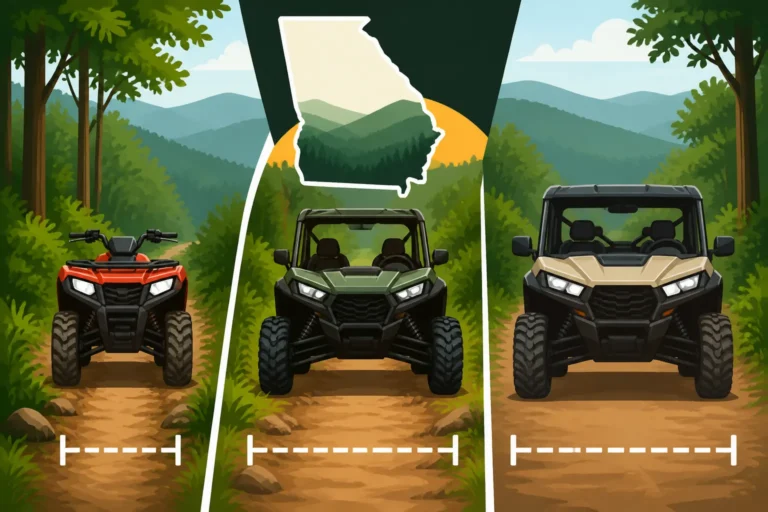
The machine matters, too. A wide side-by-side may not fit on every trail, and a heavy machine can be harder to control in slippery ruts than a smaller ATV. Confirm width and vehicle restrictions before planning around a route. [Georgia Trails That Close After Rain] is also worth reviewing when a freeze is followed by thawing or precipitation.
Prepare your ATV or UTV for cold-weather riding
Inspect the machine before the ride
Cold weather can reveal small problems that are easy to miss in mild conditions. Check tire condition and pressure using the guidance in your owner’s manual, and look for cuts, embedded debris, or damage that could become a problem far from the trailhead. Make sure the battery is secure and that lights, brakes, and controls work properly.
Give the machine a quick visual inspection before loading it, then repeat the basics when you arrive. Look for fluid leaks, loose straps, damaged wiring, and anything that may have shifted during transport. If your machine has a winch, test it before leaving home rather than discovering a fault while stuck in a muddy rut.
Carry recovery gear suited to your machine and experience. A tow strap can help in some situations, but it should be used carefully and attached only to appropriate recovery points. Avoid wrapping a strap around a bumper or another part that could break under tension. For mountain trips, review [Carrying a Tow Strap in the Mountains] and make sure everyone in your group knows how the equipment is meant to be used.
Dress for wind, dampness, and a long stop
Riding generates wind chill even when the air temperature seems manageable at the parking area. Wear layers that let you adjust as you warm up, and bring waterproof outerwear in case of wet clay, spray, or changing weather. Gloves that keep your hands warm while preserving control are more useful than bulky gloves that make it difficult to operate the machine.
Bring more dry clothing than you think you will need. A cold rider who gets wet during a creek crossing or recovery can become uncomfortable fast, especially if the group has to stop. Pack spare socks and gloves in a waterproof bag, and keep them somewhere they will not be soaked by gear or muddy equipment.
Plan for a slower pace than you might use in warmer weather. Frequent stops can be welcome, but they also mean riders cool down quickly. Carry water and food, and tell someone where you plan to ride and when you expect to return. If your group includes new riders or children, keep the route short enough that everyone can stay warm and attentive.
Ride carefully and know when to turn around
Use smooth inputs and leave extra room
On frozen or thawing ground, sudden control changes can make a small loss of traction worse. Accelerate gradually, brake gently, and leave more following distance than usual. Avoid crowding another machine on a hill or entering a narrow section before the rider ahead has cleared it.
If a tire starts to slide, resist the urge to make a sharp correction. Ease off the throttle and make small, deliberate steering adjustments. On a slope, do not stop in a place where another rider may be forced to pass close by. If the route feels beyond your group’s ability, turn around at a safe location rather than treating the next obstacle as something you have to conquer.
Be cautious around standing water and creek crossings. Water can hide the depth and condition of the ground beneath it, while icy edges can make the approach or exit slippery. Never assume a familiar crossing is unchanged after freezing weather, rain, or a thaw.
Respect closures and leave the trail intact
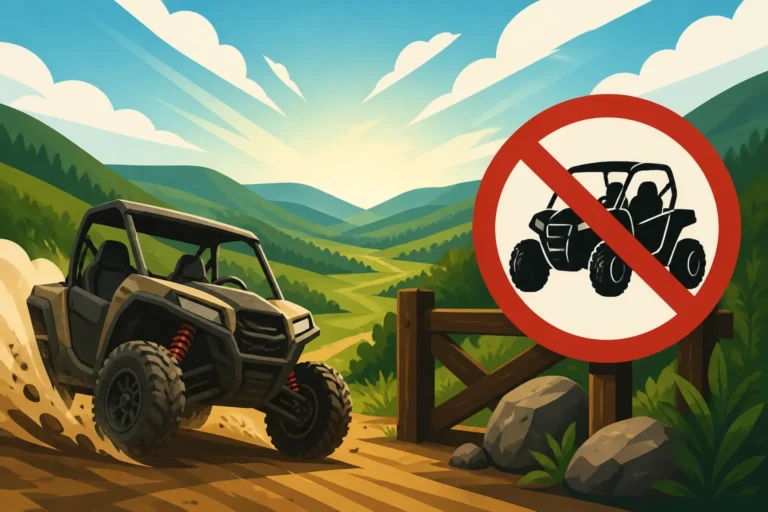
If a road or trail is gated or posted closed, do not ride around the barrier. A closure may be in place because of weather damage, maintenance, or another access restriction. Continuing past it can put riders at risk and make it harder for land managers to reopen the route.
Avoid riding in conditions that leave deep tire ruts or push mud onto surrounding vegetation. If a trail is deteriorating under your machine, stop and turn back when it is safe to do so. Riding through a wet section repeatedly can make it worse for everyone and may contribute to additional closures. For broader guidance on public riding areas, see [Georgia's Six National Forest OHV Systems] and [Georgia Trails Open Sunrise to Sunset].
Before the trip, use a map to understand the general route, but keep the plan flexible. onX Offroad can help you review your intended route and keep relevant map details available when service is limited. Still, follow posted signs and official closure notices on the ground; a digital route line should never override a gate, sign, or land-manager instruction.
If the ride becomes uncomfortable, visibility drops, or conditions deteriorate, call it early. A winter ride does not need to last all day to be worthwhile. A shorter outing with good traction and a warm return to the truck is better than pushing into a remote stretch and hoping the clay stays firm.
Disclaimer
This article is for general informational purposes only and does not constitute professional advice. Laws, prices and regulations vary by location and change over time. Consult a qualified professional for guidance on your specific situation.