Why a Path Network Is Not for ATVs
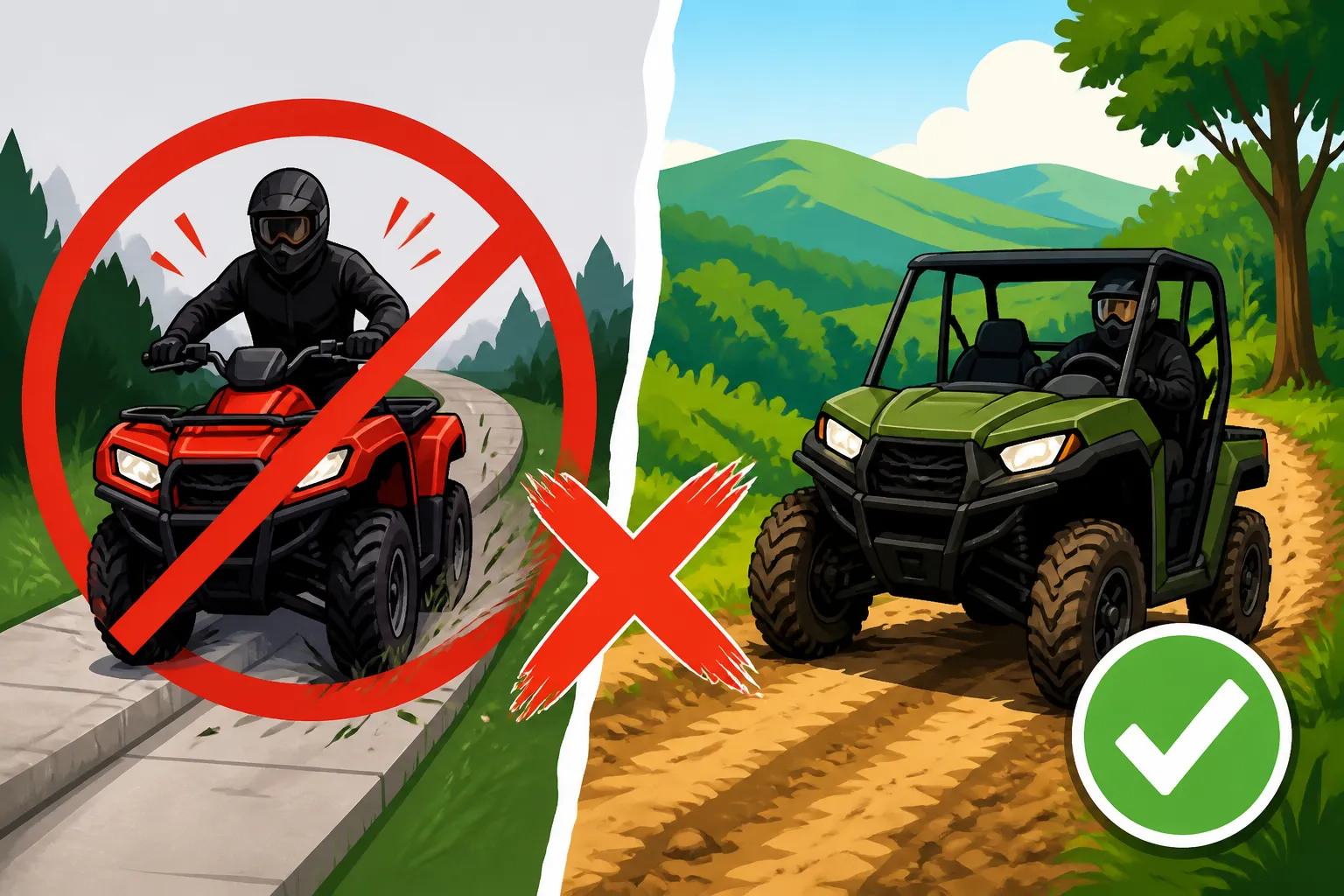
It's incredibly tempting when you see those smooth, convenient path networks crisscrossing towns like Peachtree City or many other communities across Georgia. You’re on your ATV or side-by-side, maybe just trying to get from point A to point B, and a paved path looks like a dream compared to hauling your rig on a trailer. But here's the tough truth: those path networks are absolutely, unequivocally not for ATVs, and trying to use them can lead to a world of trouble. This guide will help you understand exactly why ATVs and UTVs don't belong on these paths and where you can legally and safely enjoy your machine in Georgia.
Understanding Georgia's Path Networks and What They're For
Let's be real for a moment. When you think of an ATV or UTV, you picture mud-slinging, rock-crawling, or hauling equipment across a farm. These machines are built tough, with powerful engines, knobby tires, and suspension designed for uneven, challenging terrain. Path networks, on the other hand, exist in a completely different universe. They are designed for a specific type of light, slow, and often electric vehicle, and confusing the two can lead to some serious headaches.
The Purpose-Built Design of Path Networks
Imagine a quaint suburban street, only instead of cars, you see golf carts gliding by, people walking their dogs, and kids riding bicycles. That's the essence of a path network. These systems, like the extensive network found in Peachtree City, are carefully planned and constructed for a very particular kind of traffic. They are often narrower than traditional roads, with gentler grades, and are usually designed for lower speeds. They prioritize pedestrian and cyclist safety, which means vehicles like ATVs, with their inherent speed and off-road capabilities, are simply not a good fit.
These paths are paved, sometimes concrete, sometimes asphalt, and are not built to withstand the weight, torque, or aggressive tire treads of an ATV. They are an extension of a community's recreational infrastructure, meant to connect neighborhoods, parks, and shopping centers in a relaxed, low-impact way. They are fundamentally different from designated off-road trails you'd find at a place like Iron Mountain Resort, which are specifically engineered for the rigors of true off-road vehicles. If you've ever explored [Peachtree City's 100 Miles of Georgia Cart Paths], you know exactly the vibe: quiet, accessible, and definitely not meant for a roaring quad.
Legal Designations: PTVs vs. Off-Road Vehicles
One of the biggest reasons ATVs are out is legal classification. In Georgia, path networks are primarily designed for what are often called Personal Transportation Vehicles (PTVs), which includes your standard golf carts. These PTVs have specific characteristics: they're typically slower, lighter, and often battery-powered. They are regulated by local ordinances that permit their use on these paths and sometimes on specific designated city streets. The whole idea is to provide an alternative, eco-friendlier mode of transport for short distances within communities.
ATVs, or All-Terrain Vehicles, and UTVs (Utility Terrain Vehicles or side-by-sides), are in a completely different legal category. They are generally classified as off-road vehicles. While Georgia does have a newer registration process for certain "Multipurpose Off-Highway Vehicles" (MPOHVs) to legally operate on county roads, this still does not extend to golf cart path networks. It’s crucial to understand this distinction. You can't just slap a registration plate on your side-by-side and expect to cruise down a path designed for golf carts. The law sees a clear line between [What a Cart a Personal Transportation Vehicle] is and what an ATV or UTV is, and that line is drawn right around these path networks.
Size and Weight Limitations on Paths
Let's talk practicalities. Your average golf cart is relatively compact and lightweight. It's designed to be nimble on narrow paths, and its tires are gentle on paved surfaces. Now, think about your ATV or UTV. Even a smaller ATV can be significantly heavier than a golf cart, and many side-by-sides, especially multi-passenger models, are considerably wider and heavier. A beefed-up side-by-side from a brand like SuperATV, with upgraded suspension and tires, might be perfect for tackling tough trails, but it would completely overwhelm a delicate path network.
The width is a major issue. Many path networks have physical barriers, gates, or design elements that simply aren't wide enough to accommodate the wider stance of most UTVs. Trying to squeeze through could damage your machine or the path itself. Beyond width, the sheer weight of an ATV or UTV, combined with its knobby, aggressive tires, can cause significant wear and tear on paved paths, leading to cracks, potholes, and costly repairs for the community. These paths are not built with the load-bearing capacity for continuous ATV traffic in mind, making them physically unsuitable, quite apart from the legal restrictions.
Why ATVs Are Explicitly Excluded from Georgia's Path Networks
The exclusion isn't arbitrary. It's born out of a combination of legal necessity, safety considerations, and the very practical need to protect public infrastructure. It's not about being exclusive; it's about maintaining a safe and functional environment for everyone.
State and Local Ordinances
The rules are pretty clear, even if they're not always widely known by every ATV owner. State law gives local governments, like cities and counties, the authority to regulate the use of PTVs and off-road vehicles within their jurisdictions. When it comes to path networks, almost universally, those local ordinances specifically permit golf carts and similar PTVs, while expressly prohibiting ATVs and UTVs. These aren't just suggestions; they're enforceable laws.
The purpose of these rules is multifaceted. First, they define the specific types of vehicles that can safely and appropriately use the shared recreational space. Second, they're designed to protect the significant investment communities have made in building and maintaining these path systems. You can dive deeper into the specifics by looking at [Georgia Golf Cart Laws and PTV Ordinances], which outline what's allowed and where. While there are provisions for certain UTVs on designated [Georgia County Road Systems and Where They Run] if they meet specific criteria and are registered as MPOHVs, this rarely, if ever, extends to path networks. It's a completely different set of rules from the [Georgia ATV Road Law Explained] that applies to limited county road access.
Safety Concerns for Riders and Pedestrians
This is perhaps the most critical reason for the exclusion. ATVs and UTVs are designed for rough terrain and open spaces, not shared paths where children, pets, cyclists, and pedestrians are present. Your average ATV, even at low speeds, is still a powerful machine with a higher center of gravity and different handling characteristics than a golf cart. The potential for a serious accident is significantly higher.
Consider the speed differential. A golf cart typically tops out around 15-20 mph. Many ATVs and UTVs can easily exceed 40-50 mph, and some can go much faster. Even if you promise to go slow, the temptation is always there, and the reaction time needed to avoid a collision with a child on a bike is drastically reduced. Furthermore, the noise from an ATV can be startling for pedestrians and local residents, disrupting the peaceful environment these paths are meant to offer. These paths lack the safety infrastructure of roads—no shoulders, no guardrails, no clear lanes for different vehicle types—making them incredibly dangerous for high-power off-road machines.
Damage to Infrastructure and the Environment
We touched on this briefly, but it deserves more attention. Those aggressive, knobby tires on your ATV, while fantastic for traction in dirt and mud, are devastating to paved surfaces. They can tear up asphalt, leave scuff marks on concrete, and chew into the shoulders or grassy verges alongside the path. The weight and suspension systems of ATVs are designed to absorb bumps and distribute force across uneven ground, but on a smooth, flat path, that force can translate into wear and tear that leads to premature cracking and deterioration of the pavement.
Beyond the paved surfaces, many path networks wind through natural areas, often with delicate landscaping, drainage systems, and sensitive ecosystems nearby. ATV use can lead to erosion, soil compaction, and damage to vegetation. The sheer volume of traffic that an ATV could represent, if allowed, would quickly degrade the very paths that are meant to enhance community life. Communities invest considerable funds in creating and maintaining these green spaces and pathways, and allowing vehicles that cause this level of damage would undermine their efforts and lead to increased maintenance costs, ultimately paid for by taxpayers.
Consequences of Illegally Riding an ATV on a Path Network
Ignoring these rules might seem like a small shortcut, but the repercussions can range from inconvenient to downright devastating. It’s not just a slap on the wrist; it can be a serious legal and financial burden.
Penalties and Enforcement
Local law enforcement takes these rules seriously. If a sheriff's deputy or local police officer spots you riding your ATV or UTV on a designated path network, you can expect to be pulled over. The penalties can vary by jurisdiction, but generally, you're looking at fines for illegal operation of an off-road vehicle on prohibited pathways. These fines can add up quickly, especially if you're cited for multiple violations. It's not uncommon for these to be considered misdemeanor offenses, which carry more weight than a simple traffic ticket.
In some cases, law enforcement might even have the authority to impound your machine. Imagine the headache and expense of having your ATV towed and stored, on top of the fines and potential court costs. It's a significant deterrent for a reason. [Georgia Ticket Cost for Illegal Road Riding] can be substantial, and the process to retrieve an impounded vehicle, as detailed in [Georgia Impound Rules After a Violation], is often costly and time-consuming. These enforcement actions are a direct result of local governments working to protect their citizens and infrastructure, with [Georgia Sheriff Enforcement on County Roads] (and similarly, city police on path networks) ensuring compliance.
Insurance and Liability Risks
This is where things can get truly scary. Your ATV or UTV insurance policy is specifically designed for off-road use, or, if you have an MPOHV registration, for legal operation on designated county roads. It is highly unlikely that your policy will cover an incident if you are operating your machine illegally on a golf cart path network. This means if you cause an accident—and given the inherent dangers, the risk is real—you could be personally responsible for all damages and injuries.
Think about the financial implications: medical bills for an injured pedestrian or cyclist, repair costs for a damaged golf cart, or liability for property damage to the path itself. These expenses can quickly spiral into tens or even hundreds of thousands of dollars, completely unprotected by your insurance. What you thought was a quick, harmless ride could lead to financial ruin. Understanding your [Georgia UTV Insurance Minimums] for legal road use is one thing, but operating outside of those authorized uses leaves you completely exposed. It’s a risk simply not worth taking.
Loss of Community Access and Reputation
Beyond the personal legal and financial consequences, there's a broader impact on the entire riding community. When a few individuals disregard rules and ride their ATVs on prohibited paths, it fuels negative stereotypes about off-road enthusiasts. It can lead to stricter regulations across the board, even for responsible riders, and might even result in path networks being shut down or having access further restricted for everyone.
The reputation of ATV and UTV riders already faces challenges, with concerns about noise, environmental impact, and safety. Each time someone rides where they shouldn't, it undermines the efforts of responsible riders and organizations working to create legal, safe riding opportunities. Respecting designated areas is crucial not only for your own well-being but for the future of the sport and the perception of all riders in Georgia.
Where ATVs Can Be Legally Ridden in Georgia
So, if path networks are off-limits, where can you actually enjoy your ATV or UTV in Georgia without breaking the law or endangering others? Thankfully, Georgia offers a wealth of fantastic legal riding opportunities for off-road enthusiasts.
Designated Off-Road Parks and Trails
This is your prime destination for legitimate ATV and UTV fun. Georgia boasts several incredible private parks and national forest trail systems specifically designed for off-road vehicles. Places like Iron Mountain Resort, Highland Park Off-Road Resort, and the various trails within the Chattahoochee-Oconee National Forest (such as Houston Valley and Beasley Knob) offer miles of diverse terrain, from gentle forest roads to challenging climbs. These areas are built to handle the demands of ATVs and UTVs, often featuring technical sections, mud pits, and stunning natural beauty.
Many of these parks also offer amenities like camping, cabins, and even wash stations. They have rules in place for safety, and some require specific permits or passes. For instance, the national forest trails require a [Georgia OHV Permits: What You Need Before You Ride] for each operator. Outfitting your machine with quality parts from companies like SuperATV can enhance your experience on these trails, from improved suspension to winches for those tricky situations. Always check the specific rules of each park or trail system before you go, as width limits and vehicle types can vary. You can discover a lot more about these areas in [Georgia ATV Trails: Where You Can Legally Ride].
Private Property with Permission
Another excellent and legal option is to ride on private land, provided you have explicit permission from the landowner. This could be your own property, a friend's farm, or a hunting club lease. Always ensure you have clear, preferably written, permission before you ride on someone else's land to avoid any accusations of trespassing. This is particularly relevant if you're riding for hunting or agricultural purposes.
Riding on private property allows for a lot of flexibility in terms of terrain and activity. Farmers might use their UTVs for hauling feed or fence repair, while hunters might use ATVs to access remote areas of their lease. Just remember that even on private land, safety precautions like helmets (especially for younger riders) and responsible operation are paramount. If you're using land like a [Georgia Rules for Riding a Pasture], make sure you understand any specific conditions the landowner has, such as avoiding certain fields or gates.
Specific County Roads (with MPOHV Registration)
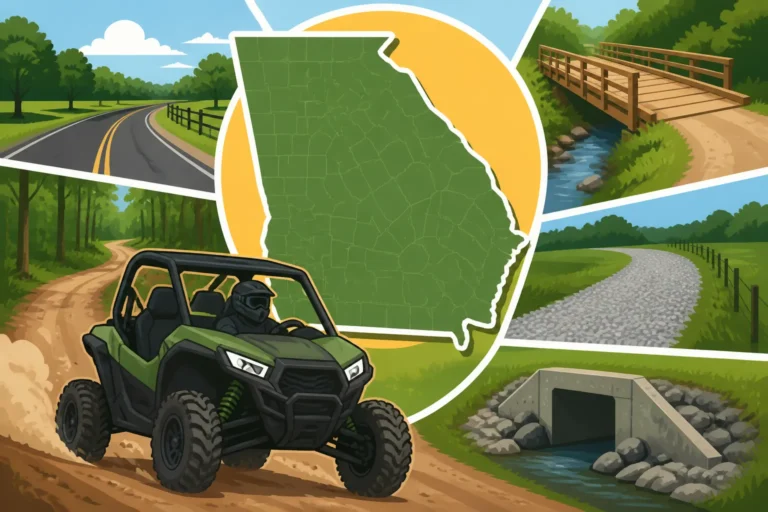
As mentioned earlier, Georgia has a specific registration process for certain UTVs (Multi-Purpose Off-Highway Vehicles, or MPOHVs) that allows them limited access to county roads. This is a relatively new development in Georgia, designed to give landowners and rural residents a legal way to use their side-by-sides for practical purposes on local, low-traffic roads. However, there are very strict eligibility requirements for an MPOHV, including width limits, weight limits, speed requirements (25-65 mph), and mandatory safety equipment like seat belts, headlights, and mirrors.
It's critical to understand that this MPOHV registration only applies to county roads and explicitly excludes state highways, interstates, and, yes, golf cart path networks. It also does not apply to ATVs with handlebars or straddle seats. So, while you might be able to take your eligible UTV on a county road to get to your hunting land or a local store, you cannot then veer off onto a path network. For a full breakdown of the rules, you can learn more about [Can You Drive a UTV on the Road in Georgia?].
To summarize, while the temptation to use those smooth path networks might be strong, it’s a clear no-go for ATVs and UTVs in Georgia. Stick to the designated trails, private property with permission, or eligible county roads (with proper MPOHV registration), and you’ll ensure a safe, legal, and enjoyable riding experience for yourself and everyone else.
| Feature | ATV/UTV (Off-Highway Vehicle) | PTV (Golf Cart/Personal Transport) |
|---|---|---|
| Primary Design | Off-road terrain, power, utility, sport | Short-distance transport, recreation, gentle surfaces |
| Typical Speed | Can easily exceed 25 mph, often 40+ mph | Usually capped at 20-25 mph |
| Tire Type | Aggressive, knobby treads for traction | Smoother, turf-friendly tires |
| Weight/Size | Heavier, wider, built for rough conditions | Lighter, more compact, designed for easy maneuverability |
| Legal Use on Paths | Explicitly Prohibited | Permitted by local ordinances in designated areas |
| Safety on Paths | High risk to pedestrians, cyclists, PTV users; high impact speed | Lower risk, slower speeds, predictable movement, designed for sharing |
| Infrastructure Impact | Significant wear and tear, potential damage to paved surfaces | Minimal impact, designed to preserve path integrity |
| Required Equipment | Varies, but off-road focus; MPOHV has road-specific gear | Varies by ordinance, but generally basic safety features |
Disclaimer
This article is for general informational purposes only and does not constitute professional advice. Laws, prices and regulations vary by location and change over time. Consult a qualified professional for guidance on your specific situation.