Learner’s Permits at 15 on a Path
It's a common source of confusion in Georgia: can a 15-year-old with a learner's permit drive a vehicle on public paths or roads? The answer isn't a simple yes or no, especially when you consider different types of machines like golf carts versus ATVs or UTVs. This guide will clarify the specific rules governing 15-year-olds with learner's permits, focusing on where they can legally operate certain vehicles and why the distinctions matter so much.
The Nuance of Georgia's Learner's Permit for Path Use
Many parents and young drivers in Georgia wonder about the extent of a 15-year-old's driving privileges once they obtain their Class CP learner's permit. While it's the first step towards full driving independence, it doesn't grant unrestricted access to all types of vehicles on all public thoroughfares. The critical distinction lies in the type of vehicle and the specific local ordinances that govern its use. A learner's permit is primarily for operating a standard passenger vehicle, and its applicability to specialized machines like golf carts or off-road vehicles is heavily nuanced by local laws.
Distinguishing Golf Carts from ATVs and UTVs
Before diving into permit specifics, it's absolutely crucial to understand the fundamental differences between golf carts, ATVs (All-Terrain Vehicles), and UTVs (Utility Terrain Vehicles or side-by-sides). This isn't just a matter of semantics; it's about entirely different legal classifications and operating environments.
Golf carts, often categorized as Personal Transportation Vehicles (PTVs) in Georgia, are purpose-built for low-speed travel, typically on golf courses, planned communities, or designated paths. They usually have a top speed of less than 20 mph, multiple seats, and often lack many of the safety features required for full road legality. They are generally not considered motor vehicles in the same way cars or even MPOHVs (Multi-purpose Off-Highway Vehicles) are for registration purposes. You'll find specific local ordinances that permit their use on certain streets and paths.
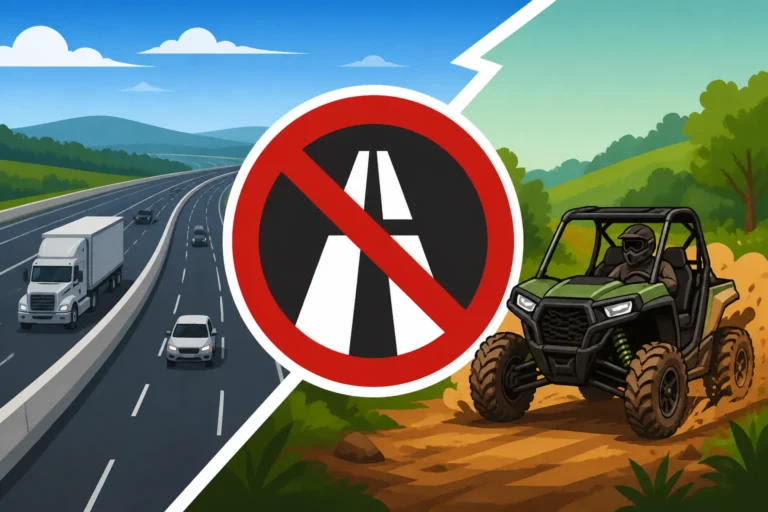
ATVs, on the other hand, are designed for off-road recreation. They are characterized by handlebars, a straddle seat, and are built for navigating rugged terrain. [Georgia ATVs Are Not Road Machines]. UTVs, or side-by-sides, offer a more car-like experience with a steering wheel and bucket seats, and while they are also designed primarily for off-road use, some can qualify for special MPOHV registration in Georgia to be driven on county roads under very specific conditions. The key takeaway here is that neither ATVs nor most UTVs are intended for, or legally permitted on, golf cart paths or general public streets in the same manner as a PTV.
Peachtree City as a Prime Example of Path Rules
When we talk about 15-year-olds with learner's permits operating vehicles on paths in Georgia, Peachtree City immediately comes to mind. This unique community is famous for its extensive network of golf cart paths, spanning over 100 miles, which residents use as a primary mode of transportation for daily errands, school, and leisure. [Peachtree City's 100 Miles of Georgia Cart Paths] are a perfect illustration of how local ordinances can create specific rules for PTVs.
In Peachtree City and similar communities that have adopted specific PTV ordinances, golf carts are regulated as Personal Transportation Vehicles. These local laws dictate everything from registration requirements to who can operate them and where. It's within these specific, localized frameworks that a 15-year-old with a learner's permit might find limited opportunities to drive a golf cart, always under strict supervision. Without such specific local ordinances, the general state laws regarding motor vehicles (which golf carts are usually exempt from as "motor vehicles" in the traditional sense, but still governed by local PTV rules) would prevail, making such operation on public ways much more restrictive, if not outright illegal.
Operating a Golf Cart with a Learner's Permit at 15
For a 15-year-old in Georgia who holds a valid Class CP learner's permit, the primary purpose of that permit is to allow them to learn to drive a standard passenger vehicle while supervised by a licensed adult. However, some cities with established PTV networks have carved out specific exceptions for golf cart operation on designated paths.
Permit Requirements and Adult Supervision
If a 15-year-old with a Georgia learner's permit wishes to operate a golf cart (PTV) on designated paths where permitted by local ordinance, they must meet specific criteria. The most critical requirement is that they must be accompanied by a licensed adult who is at least 21 years old and occupying the front passenger seat. This mirrors the standard requirement for learner's permit holders driving a car. The adult is there to provide immediate supervision and guidance, ensuring the safety of the young driver, passengers, and other path users. The permit itself does not grant independent driving privileges, even for a golf cart.
For instance, [Learner's Permits at 15 on a Cart] specifically addresses this scenario in certain jurisdictions. It's a conditional privilege, entirely dependent on adherence to these supervisory rules. Without a licensed adult physically present and meeting the age requirement, a 15-year-old on a learner's permit cannot legally operate a golf cart on public paths, even if local ordinances permit golf cart use in general. Local jurisdictions may also impose additional requirements, such as requiring the learner's permit holder to be registered with the city for golf cart operation, or specific restrictions on the hours of operation.
Path-Specific Rules and Restrictions
Beyond supervision, 15-year-old permit holders (and all golf cart operators) must adhere to the specific rules of the path system itself. These typically include:
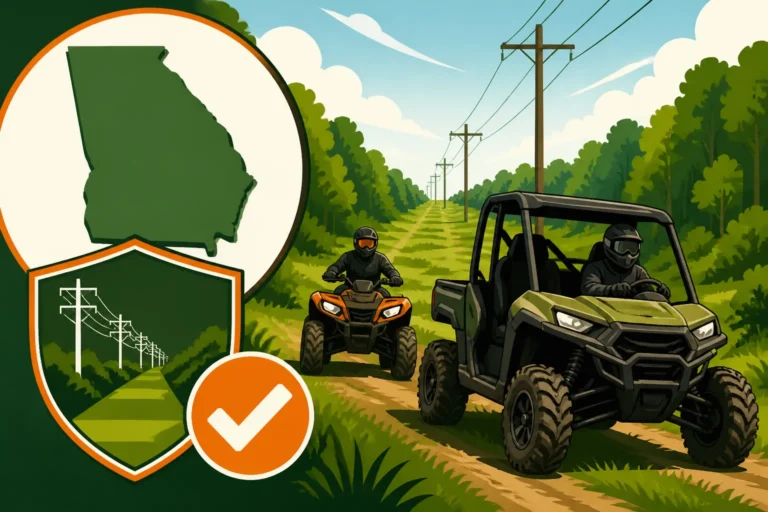
- Designated Paths Only: Golf carts can only be driven on paths specifically designated for their use. This strictly excludes state highways, major arterial roads, and often even smaller city streets unless explicitly marked or permitted by local ordinance. Straying onto unauthorized roadways can lead to citations and penalties. [Georgia Golf Cart Path Access] is a crucial topic to understand.
- Speed Limits: Paths usually have posted speed limits, often much lower than road speeds. Golf carts are not built for high speeds, and operators must respect these limits to ensure safety for pedestrians, cyclists, and other cart users.
- Curfews: Some local ordinances may impose curfews for golf cart operation, especially for younger drivers, or restrict night-time use to those with proper lighting and reflective gear. Always check the specific ordinance of the city you are in.
- Passenger Limits: Adhere to the manufacturer's intended passenger capacity. Overloading a golf cart can make it unstable and difficult to control.
- Road Crossings: Even on extensive path networks, there will be instances where a golf cart must cross a public road. These crossings are typically clearly marked, and drivers must yield to vehicular traffic and cross safely and directly.
Ignoring these path-specific rules not only risks fines but can also create dangerous situations. The intent of these rules is to integrate golf carts safely into the community's transportation fabric while acknowledging their limitations.
Broader Context: Why ATVs/UTVs Are Different for Young Drivers
It's vital to draw a clear line between golf cart path use and the operation of ATVs and UTVs, especially for young drivers. The rules are fundamentally different, and confusing them can lead to serious legal consequences and safety risks.
ATV/UTV Public Road Restrictions for All Ages in Georgia
Unlike golf carts in specific cities, ATVs and most UTVs are generally not street legal in Georgia for general public road use. This isn't just about age; it's about the inherent design and legal classification of these vehicles. [Are Side-by-Sides Street Legal in Georgia?] addresses this directly, explaining that while some UTVs can obtain special Multi-purpose Off-Highway Vehicle (MPOHV) registration for use on county roads only, this is a very narrow exception. These MPOHVs must meet stringent equipment requirements, including specific speed capabilities, width limits, and safety features like seat belts, headlights, and brake lights.
Even for adult, licensed drivers, the use of MPOHVs on Georgia county roads is restricted. They cannot be driven on state highways, interstates, or most municipal streets. For ATVs, which have handlebars and straddle seats, public road access is essentially non-existent, except for very limited agricultural or emergency purposes under strict conditions. Therefore, a 15-year-old with a learner's permit, or even a fully licensed adult, cannot simply take an ATV or an unregistered UTV onto public roads or golf cart paths. [Georgia Driver's License Rules for MPOHV Operators] specify that a valid driver's license is needed, which means a learner's permit alone wouldn't cut it for independent operation.
Helmet Laws and Safety Considerations
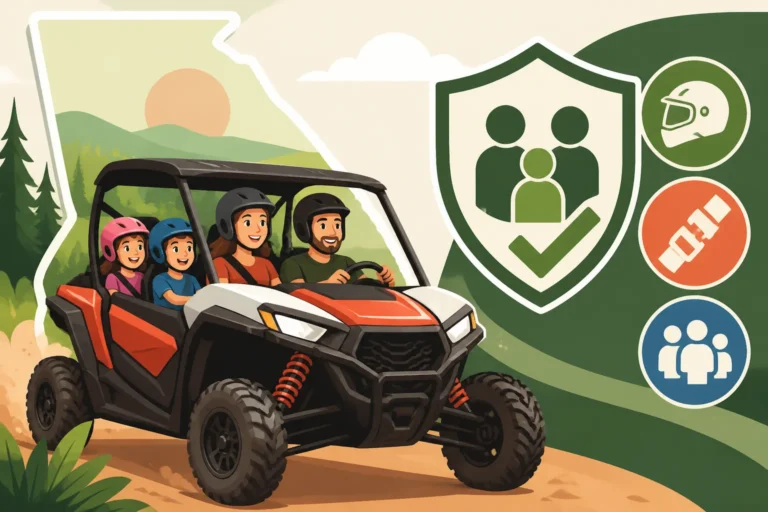
Safety gear is another critical differentiator. While helmets are not typically required for golf cart operators or passengers in Georgia, they are often mandatory for ATV and UTV riders, especially for minors. [Georgia ATV Helmet Law for Riders Under 18] states that anyone under the age of 18 operating or riding as a passenger on an ATV in Georgia must wear an approved helmet. This law applies even on private land, underscoring the higher risk associated with these machines.
ATVs and UTVs are powerful vehicles designed for challenging terrain. They handle differently than cars or golf carts, often requiring specific riding techniques and a higher level of physical and mental maturity. Aftermarket accessories from brands like SuperATV can enhance the off-road capability of UTVs, making them even more robust for trails and challenging conditions, which further separates them from the gentle operation of a golf cart on a paved path. The absence of strict helmet laws for golf carts reflects their lower speed and intended use on relatively flat, controlled environments. Trying to apply golf cart rules to an ATV or UTV is a dangerous misconception that can have severe consequences.
To sum up the differences for 15-year-olds with a learner's permit:
| Feature | Golf Cart (PTV) on Path (in designated cities) | ATV/UTV on Public Road/Path (General GA Rules) |
|---|---|---|
| Legal to Drive at 15 with Permit? | Yes, if accompanied by a licensed adult (21+) in passenger seat AND permitted by local ordinance. | No, not for general public road/path use, even with permit and adult. Limited MPOHV exceptions for UTVs require a full license and specific conditions. |
| Primary Use Environment | Designated paths, specific city streets, golf courses. | Off-road trails, private property, agricultural land. |
| Road Access | Limited to designated paths and specific low-speed city roads by local ordinance. | Generally prohibited on public roads. MPOHVs (UTVs) may use county roads if registered and meet strict criteria. |
| Helmet Required (under 18) | No (generally, check local ordinance) | Yes, always for riders under 18, even on private land. |
| Steering/Controls | Steering wheel, foot pedals (like a car) | Handlebars (ATV), Steering wheel (UTV), foot/hand controls |
| Speed | Low speed (typically < 20-25 mph) | Varies widely, often capable of much higher speeds |
It's clear that the rules for a 15-year-old with a learner's permit are highly specific to the type of vehicle and the location. While a learner's permit might open a very narrow door to golf cart operation on designated paths in certain progressive Georgia communities like Peachtree City, it absolutely does not extend to driving ATVs or UTVs on public roads. Always consult local city ordinances and state motor vehicle laws to understand precisely what is permissible.
Disclaimer
This article is for general informational purposes only and does not constitute professional advice. Laws, prices and regulations vary by location and change over time. Consult a qualified professional for guidance on your specific situation.