What Georgia Deputies Check on a County Road
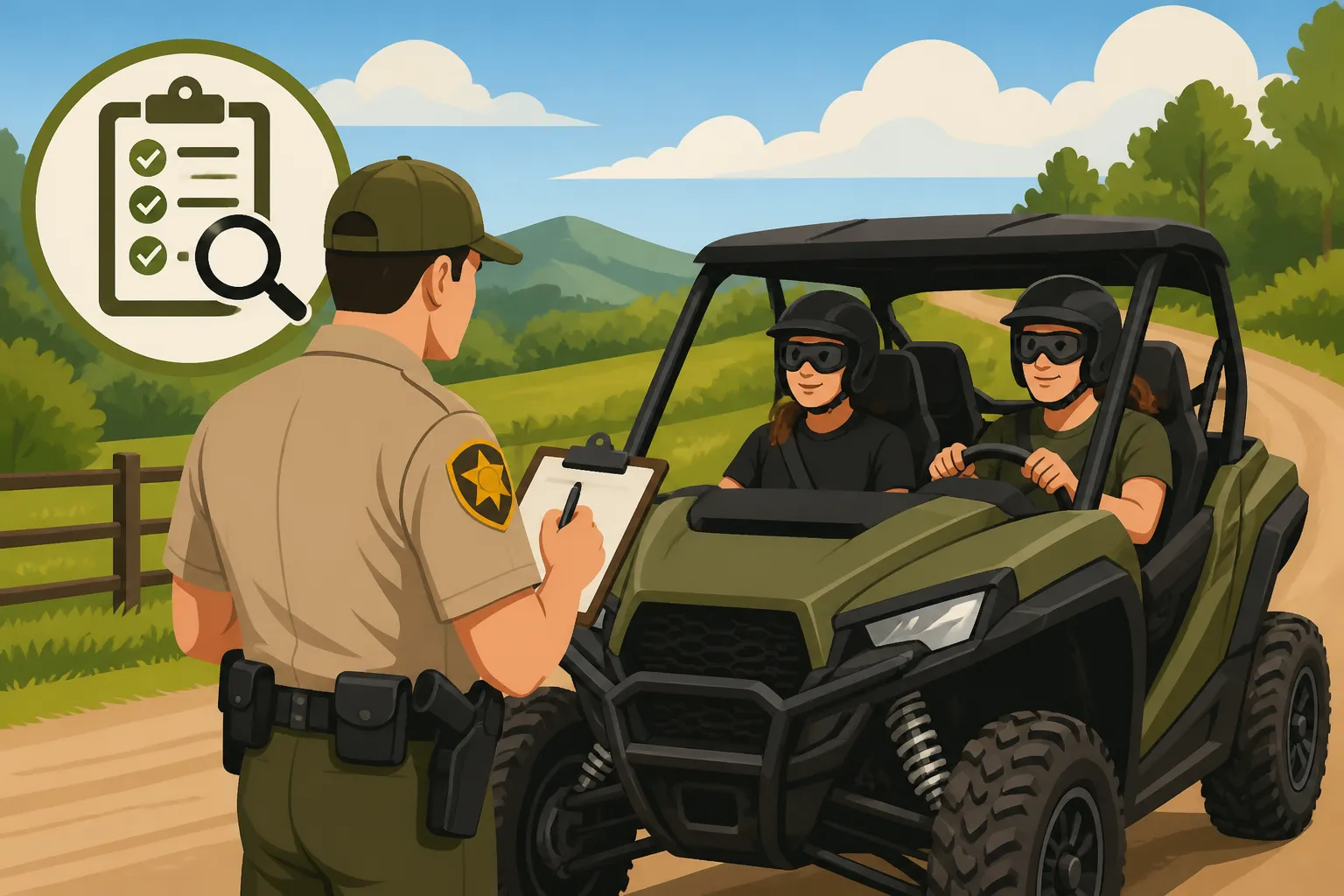
Navigating the rules and regulations for riding your ATV or UTV on Georgia's county roads can feel like trying to untangle a bowl of spaghetti – confusing, frustrating, and easy to get wrong if you're not paying close attention. Many riders want to enjoy the convenience and freedom of using these machines for more than just trails, but the fear of a ticket or an encounter with law enforcement often holds them back. This guide will walk you through exactly what Georgia deputies are looking for when they encounter an off-highway vehicle on a county road, helping you understand the rules and ride with confidence.
Understanding the Legal Landscape: Where and When You Can Ride
Let's get one thing straight from the start: Georgia's rules regarding off-highway vehicles on public roads are quite specific, and they've changed over time. It's not a free-for-all, and deputies are well-versed in these nuances. The first thing a deputy is going to verify isn't just what you're riding, but where you're riding it. There's a common misconception that all county roads are fair game, but that's not always the case, and certainly not indefinitely.
County Road Systems and Their Limits
Georgia law creates a specific category for "Multipurpose Off-Highway Vehicles" (MPOHVs), which generally includes UTVs and some larger side-by-sides, allowing them on county road systems. This is a critical distinction. It means you can't just cruise down any paved road you please; state highways, for instance, are strictly off-limits, with very few exceptions for crossing. A deputy will instantly be on high alert if they see you on a state route, regardless of whether your machine is registered. They're checking if you understand [Georgia MPOHV Road Rules: County Roads Only] and [Why Georgia State Highways Stay Off Limits].
Furthermore, the law has a sunset provision. Currently, the ability to ride MPOHVs on county roads is set to expire on [Georgia's July 2027 Sunset on Road Access]. This means that while these rules are in place for now, they aren't permanent, and deputies are aware of this upcoming change. For now, they're enforcing the current framework, which permits MPOHVs on designated county roads, but only if they meet all other criteria.
Exclusions: What Machines Are Not Allowed
Deputies are also trained to quickly identify machines that simply don't qualify, regardless of any registration. For example, traditional ATVs (quads) with straddle seats and handlebars are generally not considered MPOHVs under Georgia law and cannot be registered for road use. The same goes for dirt bikes and three-wheelers. So, if you're on a county road on a quad, a deputy's first thought will likely be that your machine is ineligible from the get-go.
This is why understanding [Why a Four-Wheeler Cannot Be Registered in Georgia] is so important. These distinctions are not arbitrary; they're based on safety and operational characteristics. Even if you've got an aftermarket lighting kit or other modifications, if your core machine doesn't fit the MPOHV definition, you're going to have a problem.
Your Machine's Eligibility: What Deputies Inspect
Once a deputy has confirmed you're on an appropriate county road and your machine generally looks like an MPOHV (a side-by-side, for example), their next focus shifts to the machine itself. They have a specific checklist derived from the MPOHV registration requirements. Think of it as a rolling inspection. If your machine isn't registered, but it meets these criteria, it could be eligible, but that doesn't mean it's street legal without the paperwork. If it is registered, they'll want to ensure it still complies.
Physical Characteristics and Dimensions
One of the first things a deputy might eye is the size and type of your vehicle. Georgia law specifies several physical characteristics for an MPOHV to be registered. This includes a width limit, a gross vehicle weight ceiling, and a minimum payload capacity. For instance, they'll be looking to see if your machine is over [Georgia's 80-Inch Width Limit for Registration] or if it seems to exceed [Georgia's 4,000-Pound Gross Weight Ceiling]. These aren't just arbitrary numbers; they're about ensuring the machine can safely share the road with other vehicles and fit within typical lane structures.
Furthermore, the steering mechanism and seating arrangement are crucial. MPOHVs require a steering wheel, not handlebars, and a non-straddle seat. This immediately disqualifies most traditional ATVs. If your machine has handlebars or requires you to straddle a seat like a motorcycle, it won't pass muster with a deputy looking at the MPOHV criteria. These requirements are fundamental to the MPOHV definition.
Safety Equipment and Operational Standards
Beyond the basic size and type, deputies will quickly check for essential safety equipment. Your MPOHV must have working headlights, brake lights, and at least one rearview mirror. They'll also verify that your machine has factory-installed seat belts for all seating positions and that they are functional. These are not optional "nice-to-haves" when you're operating on a public road; they are legal requirements designed to protect you and others. [Rearview Mirrors on the Required List] and [Factory Seat Belts and the Eligibility Check] are often among the first items checked.
The deputy will also assess your machine's speed capabilities. An MPOHV must be capable of traveling at least 25 miles per hour but not more than 65 miles per hour. If your machine struggles to reach the minimum or can easily exceed the maximum, it doesn't meet the definition for road use. Some utility models, while excellent for farm work, might fall below the minimum speed, making them ineligible. If you've modified your UTV, ensure that any changes, such as those from a reputable aftermarket provider like SuperATV, still keep you within these legal speed parameters and don't compromise other safety features.
Paperwork and Personal Readiness: What You Need to Present
Once your machine's physical eligibility is established, the deputy will move on to the documentation. This is where most people either shine or run into significant problems. Having your machine meet the physical criteria is only half the battle; proving it's legally allowed on the road is the other.
Registration and Plate Verification
The most obvious thing a deputy will look for is a valid MPOHV registration plate and decal. Georgia's MPOHV registration is what grants you the privilege of riding on county roads. If you're operating an MPOHV on a county road without a current plate, you're asking for a citation. They will check the plate number against their system to ensure it's active and belongs to your machine. This is directly tied to [Georgia MPOHV Registration Explained] and [Georgia Plates for Off-Highway Vehicles].
It's also important to understand that [Georgia MPOHV Registration Is Voluntary]. However, "voluntary" in this context means you don't have to register it if you only ride on private land. But if you venture onto a county road, that voluntary registration suddenly becomes a mandatory requirement. If you've just bought your machine, make sure you've started the process of [Registering a Side-by-Side in Georgia] or risk being pulled over.
Proof of Insurance and Ownership
Just like with a car, liability insurance is non-negotiable for a registered MPOHV operating on public roads. A deputy will ask for proof of current liability insurance. If you cannot provide it, that's another serious violation. [Georgia Liability Insurance Tied to Registration] means that once your MPOHV is registered, it's expected to be continuously insured. They'll also want to confirm you are the rightful owner, so having your registration certificate or a bill of sale handy is always a good idea. This prevents issues of stolen vehicles and confirms you have the right to operate the machine.
Sometimes, especially with private sales, ownership documentation can be a bit murky. While a deputy isn't going to process a full title transfer on the side of the road, they want to ensure you appear to be the legal operator. Keep your [Georgia Ownership Affidavit for an MPOHV] or other proofs of ownership readily accessible.
Driver's License and Age Requirements
Operating any vehicle on a public road, even an MPOHV, requires a valid driver's license. A deputy will definitely ask for yours. You can't just be an experienced rider; you need to be a licensed driver. [Georgia Driver's License Rules for MPOHV Operators] are clear on this point.
Furthermore, if there are passengers or if the operator is a minor, specific age restrictions and helmet laws come into play. For instance, operators under 16 cannot legally drive an MPOHV on a public road. Also, riders under 18 years of age, whether operator or passenger, must wear a helmet on public roads. So, a deputy seeing a younger rider without a helmet, even if they're just a passenger, will likely result in a conversation and potentially a citation regarding [Georgia ATV Helmet Law for Riders Under 18].
Here’s a quick overview of what a Georgia deputy might check:
| Category | What the Deputy Looks For | Why It Matters | Potential Consequence (Informational) |
|---|---|---|---|
| Location | Is the MPOHV on a county road, state route, or private land? | Determines if the machine is legally allowed to be there. | Citation for illegal road use, impoundment. |
| Machine Type | Steering wheel? Non-straddle seat? (UTV vs. ATV) | Ensures the machine meets the MPOHV definition. | Machine deemed ineligible for road use, regardless of other factors. |
| Physical Limits | Width (under 80")? Weight (under 4000 lbs)? Payload (over 350 lbs)? | Ensures safe road sharing and compliance with MPOHV criteria. | Citation, deemed ineligible. |
| Safety Equipment | Headlights, brake lights, rearview mirrors, seat belts | Essential for safe operation on public roads. | Citation for equipment violations. |
| Speed Capabilities | Minimum 25 mph, maximum 65 mph | Ensures machine can keep up with traffic but isn't too fast. | Machine deemed ineligible. |
| Registration | Current MPOHV plate and decal | Proof of legal authorization for road use. | Citation for unregistered vehicle. |
| Insurance | Valid liability insurance card | Financial responsibility in case of an accident. | Citation for no insurance, impoundment. |
| Driver's License | Valid driver's license for the operator | Legal authorization to operate a motor vehicle. | Citation for unlicensed operation. |
| Age & Helmets | Operator age (16+)? Helmet for under-18 riders? | Compliance with youth safety laws. | Citation for helmet violation, minor operating illegally. |
| Branded Certificate | Any "branded" warnings on registration? | Indicates specific conditions or history of the machine. | Deputy may confirm understanding of [What a Branded Registration Warns You About]. |
Operational Rules and Behavior: Riding Responsibly
Beyond the static checks, deputies are also observing how you're operating your MPOHV. Even with all the right paperwork and a perfectly legal machine, irresponsible riding can quickly lead to trouble. This is about being a good citizen on the road and prioritizing safety.
Observing Traffic Laws and Rules of the Road
When you're operating an MPOHV on a Georgia county road, you are expected to follow the same basic traffic laws as any other vehicle. This means obeying speed limits, stopping at stop signs, using turn signals (if equipped and required, and many riders add them for safety, often with kits from companies like SuperATV), and yielding the right of way. A deputy isn't going to give you a pass on a rolling stop just because you're on a side-by-side. You're part of the flow of traffic.
Night riding also comes with specific expectations. Your headlights and taillights must be fully functional and used appropriately. If you're on a county road after dark, your visibility becomes even more critical, and a deputy will be looking for proper lighting to ensure you're not a hazard to other drivers.
Passenger Rules and Carrying Capacity
Deputies will also pay attention to how many people you have in your MPOHV and how they are seated. Your machine should not be overloaded, and all passengers should be in designated seating positions with seatbelts properly fastened. Carrying extra passengers in the bed of a UTV, for example, is generally unsafe and illegal on public roads. The number of passengers is limited to the number of factory-installed seatbelts. This isn't just a legal point; it's a huge safety issue, as rollovers are a real risk.
The same goes for towing. While UTVs are designed to tow, doing so on a public road needs to be done safely, ensuring the towed load is properly secured and does not exceed the machine's towing capacity or obscure lights. Deputies are focused on preventing accidents, and improper loading or towing is a red flag.
Respecting Private Property and Noise Ordinances
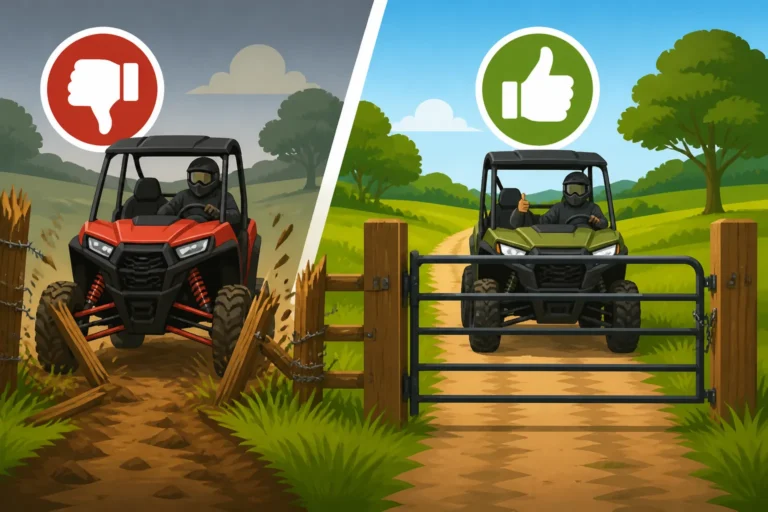
While deputies on county roads are primarily focused on road use, they are also aware of surrounding private property. If your riding behavior suggests you're cutting across private land, trespassing, or creating excessive noise that disturbs residents, they can intervene. Even if your MPOHV is legal on the road, if your actions are causing public nuisance or property damage, law enforcement will address it. This is about being a good neighbor and demonstrating responsible off-road enthusiasm. Many communities have specific ordinances related to noise, especially at night, and MPOHV exhaust can sometimes be quite loud.
Ultimately, a Georgia deputy's goal is to ensure public safety and enforce the law. By understanding the specific requirements for your machine, carrying the correct documentation, and operating responsibly, you can reduce the likelihood of an unpleasant encounter and enjoy your MPOHV on Georgia's beautiful county roads.
Disclaimer
This article is for general informational purposes only and does not constitute professional advice. Laws, prices and regulations vary by location and change over time. Consult a qualified professional for guidance on your specific situation.