Georgia Rules for Riding a Chicken House Road
Riding your ATV or UTV down a winding dirt road in rural Georgia, especially one that leads to or past agricultural operations like chicken houses, can feel like a quintessential part of the off-road lifestyle. However, the seemingly simple act of taking your machine down these unpaved paths often comes with a tangled web of questions regarding legality, property rights, and safety. This guide aims to untangle those rules, helping you understand when and how you can legally and responsibly enjoy riding on what many Georgians colloquially call "chicken house roads."
Understanding What a "Chicken House Road" Is in Georgia's Legal Landscape
The term "chicken house road" itself is informal, but it paints a vivid picture of the unpaved, often dusty, rural roads that crisscross Georgia's agricultural heartland, frequently leading to poultry farms. The key to understanding the rules for riding your ATV or UTV on these roads lies in their legal classification – are they public or private property? This distinction is absolutely critical, and mistaking one for the other can lead to serious legal trouble.
The Reality of Rural Georgia Roads
In Georgia, rural roads exist on a spectrum. You have your fully paved state highways and county roads, then you have gravel county roads, and finally, a vast network of dirt roads. Many of these dirt roads, including those leading to chicken houses, might look public because they're unpaved and perhaps not clearly marked as private. They might even be used by multiple neighbors or service vehicles. However, appearances can be deceiving.
Some of these roads are indeed part of the county road system, meaning they are publicly maintained rights-of-way, even if they're not paved. Others are entirely private access roads, owned by an individual landowner, a farm, or a timber company, and simply serve to connect their property to a public road. The informal nature of these paths often leads to confusion, especially for those unfamiliar with specific local land ownership patterns. What appears to be a public shortcut might actually be someone's private driveway, stretching for miles.
Public vs. Private Property: The Core Distinction
This is where the rubber meets the dirt, so to speak. The single most important factor determining whether you can legally ride your ATV or UTV on a "chicken house road" is whether that road is a public right-of-way or private property.
- Public Roads: If a "chicken house road" is officially recognized and maintained by the county as part of its road system, then it falls under the same rules as any other public county road. This means your machine, if it meets specific criteria, can potentially be operated on it. However, even on public roads, your ATV or UTV isn't automatically "street legal" just because it's unpaved. There are strict registration and equipment requirements to consider, which we'll dive into shortly.
- Private Property: If the road is on private land, regardless of how often it's used or how many people seem to drive on it, you absolutely must have permission from the landowner to ride there. This is non-negotiable. Many rural properties, including those with chicken houses, are clearly marked with "No Trespassing" signs. Even if there are no signs, the land is still private, and riding without permission is trespassing. [Georgia Trespass Law for ATV Riders] is very clear on this, and deputies in rural areas take it seriously. It's not uncommon for landowners to be fed up with unauthorized riders causing damage or disturbing their operations, and they will call law enforcement.
Navigating Public Chicken House Roads with Your ATV or UTV
So, you've confirmed that the "chicken house road" you're eyeing is indeed part of the public county road system. Fantastic! But before you hit the throttle, you need to ensure your machine and your riding practices comply with Georgia law for operating on public roads. This isn't like riding on private land where rules are more relaxed.
County Road System Rules Apply Here
If a dirt or gravel "chicken house road" is maintained by the county, it's considered a county road. This means it's subject to the same legal framework as any paved county road in terms of vehicle operation. The biggest change to Georgia law in recent years has been the introduction of the Multipurpose Off-Highway Vehicle (MPOHV) registration. This allows certain UTVs and side-by-sides to be registered for limited road use on county roads.
To be clear, ordinary ATVs (quads) and dirt bikes do not qualify for MPOHV registration and cannot be legally ridden on any public road in Georgia, including these dirt ones. The rules are specifically designed for machines that are more like small vehicles than traditional ATVs. You'll need to check the specific requirements outlined in [Georgia UTV Road Rules by County]. Understanding [What MPOHV Actually Stands For] is the first step. If your machine doesn't fit the criteria, it cannot be on a public road, even a dirt one. Getting your machine registered is a whole process, explained in detail in [Georgia MPOHV Registration Explained].
Essential Equipment and Operator Requirements
For your UTV to qualify for MPOHV registration and be legally ridden on a public "chicken house road," it must meet several stringent equipment and operational standards. This isn't a suggestion; it's the law, and deputies will be looking for compliance.
Your machine needs to be factory-equipped with, or have properly installed:
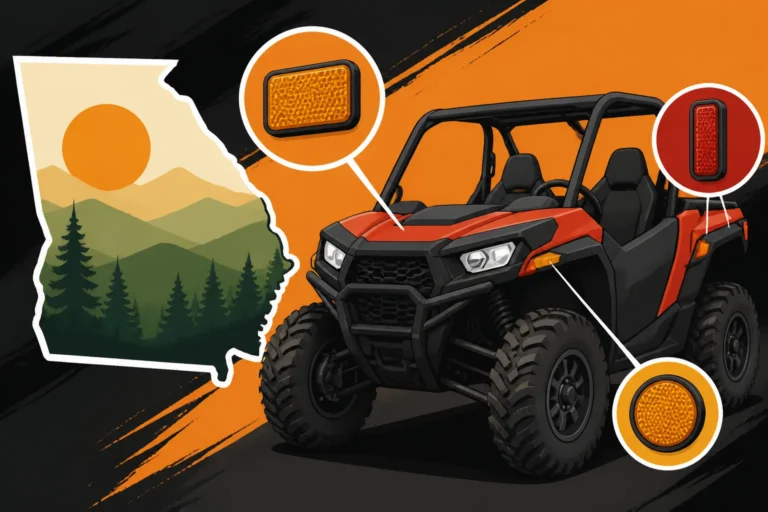
- Headlights and Brake Lights: These must be functional and visible. [Headlights, Brake Lights and Mirrors on the Checklist] dives into the specifics.
- Rearview Mirrors: You need at least one, and preferably two, to see traffic behind you.
- Horn: A working horn is necessary for signaling.
- Seat Belts: For all occupants, and they must be used. This is a critical distinction from traditional ATVs.
- Steering Wheel: The machine must have a steering wheel, not handlebars.
- Non-Straddle Seat: The rider must sit in a seat like a car, not straddle the engine.
Beyond the machine itself, the operator also has responsibilities. You must possess a valid Georgia driver's license to operate an MPOHV on public roads. This isn't a loophole for unlicensed drivers. Furthermore, you are required to carry liability insurance for your registered MPOHV. [Georgia Insurance Minimums for Road Use] outlines what you'll need. Failing to meet any of these requirements means you're operating illegally, even on a quiet dirt road. [Georgia Driver's License Rules for MPOHV Operators] specifies the age and license requirements.
Speed Limits and Safe Practices
Even though these are unpaved roads, often surrounded by fields and forests, speed limits still apply. County roads typically have posted speed limits, and in the absence of a sign, the default rural speed limit may apply. Remember, these roads are not private trails; they are shared with other vehicles, including farm equipment, pickup trucks, and possibly even school buses.
Operating safely on dirt roads also means being mindful of the conditions. Dust can significantly reduce visibility for you and other drivers, especially when it's dry. Slow down, give other vehicles plenty of space, and consider equipping your UTV with additional visibility aids, such as an amber light or a whip flag, especially if you're riding in a group. Products from brands like SuperATV can offer robust mirrors or powerful LED light bars to enhance your visibility and help you see better in dusty conditions. Be aware of blind corners and drive defensively. The objective is to enjoy the ride while being a responsible and considerate road user.
Rules for Riding on Private Chicken House Roads
Okay, let's say the "chicken house road" you want to ride on is definitely private property. This is a very common scenario in Georgia's agricultural areas. The rules here are entirely different from public roads and boil down to one absolute principle: permission.
The Absolute Necessity of Permission
If a road is on private land, you must have explicit permission from the landowner before riding your ATV or UTV on it. There are no exceptions to this. Just because a gate is open, or it looks like people have ridden there before, does not grant you permission. Even if you know the landowner, a casual nod or an old conversation isn't always enough.
- Written vs. Verbal Permission: While verbal permission might seem sufficient, written permission is always, always better. A simple note, text message, or email stating that you have permission to ride on their property for a specific period (or indefinitely, if they allow it) can save you a huge headache if a deputy or other authorized person questions your presence. [Georgia Landowner Permission Forms] can provide a template for how to secure this important documentation. Without it, you are trespassing, and the consequences can include fines, vehicle impoundment, and even criminal charges. Law enforcement takes trespassing very seriously, especially when it involves agricultural operations or potential damage to private property.
Landowner Expectations and Limitations
When a landowner grants you permission to ride on their private "chicken house road," you are not just getting access; you are accepting a responsibility to respect their property and their operations. This means understanding and adhering to any specific rules they might impose.
- Respecting Operations: Chicken houses are active farms, and operations often run 24/7. Be mindful of noise, especially at night or early morning, as it can stress poultry. Dust can be a major issue, especially around feed bins or ventilation systems. Ride slowly and cautiously.
- Designated Areas: The landowner might grant you permission to ride only on certain roads or in specific areas, not across their fields or near their homes. Stick to the agreed-upon routes.
- Time Restrictions: They might specify times when riding is allowed, perhaps avoiding feeding times or early morning deliveries.
- Damage and Litter: Never litter, and be incredibly careful not to cause damage to property, fences, or irrigation systems. If you damage something, report it immediately and offer to fix it. Carrying some basic tools or a cargo box for trash on your UTV, perhaps from SuperATV, can help you be a more responsible guest.
Remember, a landowner can revoke your permission at any time, for any reason. Treat their property with the utmost respect to ensure continued access for yourself and other responsible riders.
Farm Use Exemptions (and Their Limits)
Georgia law provides some specific exemptions for ATVs and UTVs when they are being used for legitimate agricultural purposes. However, these exemptions are often misunderstood and don't grant a free pass for recreational riding.
- Genuine Agricultural Work: If you are actively engaged in planting, harvesting, feeding, maintaining fences, or otherwise directly supporting the chicken house operation or other farm activities, then your ATV or UTV might be considered "farm equipment" in some contexts. This can affect things like helmet laws for minors; for example, [Georgia Farm and Logging Helmet Exemption] states that riders under 18 involved in agricultural operations are exempt from the helmet requirement.
- Recreation is Not Farm Use: Crucially, simply riding for fun on a "chicken house road" that happens to be on a farm does not constitute "farm use." If you're joyriding, even with permission, you're not exempt from general safety rules or age restrictions. If a deputy stops you, they'll want to know if you are genuinely performing agricultural work. Claiming "farm use" when you're just out for a ride is a quick way to get into trouble. The exemption is very specific and applies to the activity, not just the location.
Key Considerations and What Can Go Wrong
Riding on "chicken house roads," whether public or private, comes with its own set of challenges and potential pitfalls. Being aware of these can help you stay safe, legal, and maintain good relationships with the rural communities you're riding through.
Enforcement and Penalties
Rural law enforcement agencies, including county sheriffs and the Georgia Department of Natural Resources (DNR), are well aware of the legal nuances surrounding ATVs and UTVs. They regularly patrol these areas, and they know the difference between a properly registered MPOHV on a county road and an illegal ATV on private property.
- Public Road Violations: If you're on a public "chicken house road" and your machine isn't a properly registered MPOHV, or you don't have a valid driver's license, or your machine lacks the required equipment, you could face citations and fines. [Georgia Penalties for an Unregistered Road Machine] can be substantial, and your machine could even be impounded. Don't assume that just because it's a dirt road, you'll be left alone. Law enforcement is trained to look for these violations. If you have an MPOHV, ensure your [Georgia Plates for Off-Highway Vehicles] are clearly displayed.
- Private Property Violations: Trespassing on private land, even on an unposted road, can result in criminal charges, fines, and the potential impoundment of your vehicle. Landowners are often very protective of their property, especially working farms.
Environmental Impact and Community Relations
As a rider, you have a responsibility to minimize your environmental footprint and maintain positive relationships with the local community, especially farmers.
- Dust and Noise: Riding at high speeds on dry dirt roads creates a lot of dust, which can be a nuisance for nearby residents and harmful to crops or livestock. Excessive engine noise, especially from modified exhausts, can be disruptive to both people and animals.
- Erosion: Aggressive riding on unpaved surfaces, especially after rain, can contribute to soil erosion, damage road surfaces, and wash sediment into local waterways.
- Good Neighbor Policy: Remember that you are a guest in these rural communities. A polite wave, slowing down when passing houses, and keeping noise levels down go a long way in fostering good community relations. If riders gain a reputation for being disruptive, it can lead to more restrictions or increased law enforcement presence.
Safety First on Unpaved Surfaces
"Chicken house roads" are often unmaintained or minimally maintained. They can present significant safety hazards that paved roads typically don't have.
- Hidden Obstacles: Potholes, ruts, loose gravel, eroded sections, fallen branches, and even livestock can appear suddenly.
- Uneven Terrain: Changes in elevation, sharp turns, and blind spots are common. Always ride within your skill level and be aware of your surroundings. Consider investing in a lift kit or more aggressive, heavy-duty tires from SuperATV if you frequently encounter very rough or muddy sections, as these can improve ground clearance and traction, making your ride safer and more controlled.
- Farm Equipment: These roads are often used by large, slow-moving farm vehicles. Always be prepared to encounter tractors, sprayers, and trucks that might take up the entire road.
- Personal Safety: Always wear appropriate safety gear, including a helmet (even if not legally required for adults on MPOHVs, it's always recommended), eye protection, gloves, and sturdy footwear. Ride with a buddy if possible, and always let someone know your planned route and estimated return time. Carry a fully charged cell phone, a basic first-aid kit, and enough water.
Riding your ATV or UTV on Georgia's "chicken house roads" can be a wonderful way to experience the state's rural beauty, but it requires careful consideration of the rules, respect for landowners, and a strong commitment to safety. By understanding the distinction between public and private roads, equipping your machine properly, and riding responsibly, you can enjoy these unique paths without running into trouble.
| Feature | Public "Chicken House Road" (County Maintained) | Private "Chicken House Road" (Farm/Landowner Owned) |
|---|---|---|
| Legality for ATVs | No, generally illegal for ATVs | Yes, with landowner permission |
| Legality for UTVs | Yes, if MPOHV registered and compliant | Yes, with landowner permission |
| Required Permission | Not from private owner, but machine must be legal | Absolutely Essential (written recommended) |
| Driver's License | Yes, for MPOHV operation | Not legally required, but highly recommended |
| Insurance | Yes, for MPOHV operation | Not legally required, but highly recommended |
| Equipment Rules | Strict MPOHV requirements (lights, mirrors, etc.) | Landowner's discretion; safety gear always smart |
| Trespassing Risk | None, if machine and operator are legal | High, if no permission |
| Farm Use Exemption | N/A | Applies only to active agricultural work, not recreation |
| Speed Limits | County road speed limits apply | Landowner's discretion, or default private land rules |
| Shared Use | Other public vehicles, farm equipment | Farm vehicles, workers, landowner's guests |
Disclaimer
This article is for general informational purposes only and does not constitute professional advice. Laws, prices and regulations vary by location and change over time. Consult a qualified professional for guidance on your specific situation.