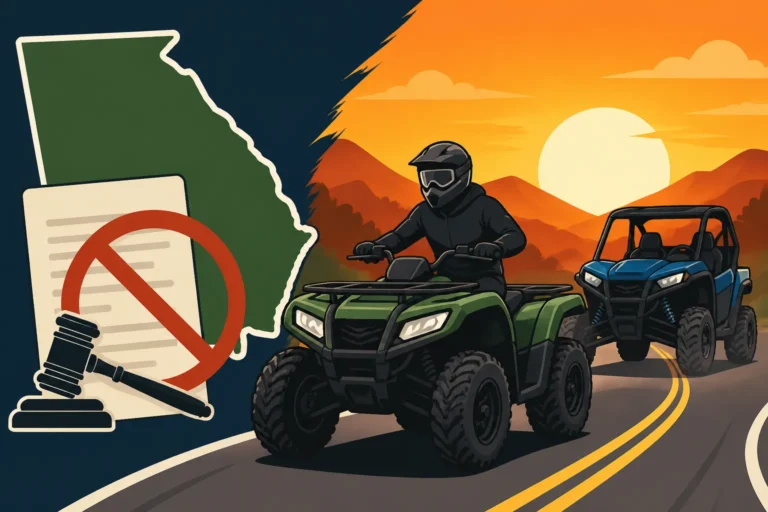
Georgia ATVs Are Not Road Machines
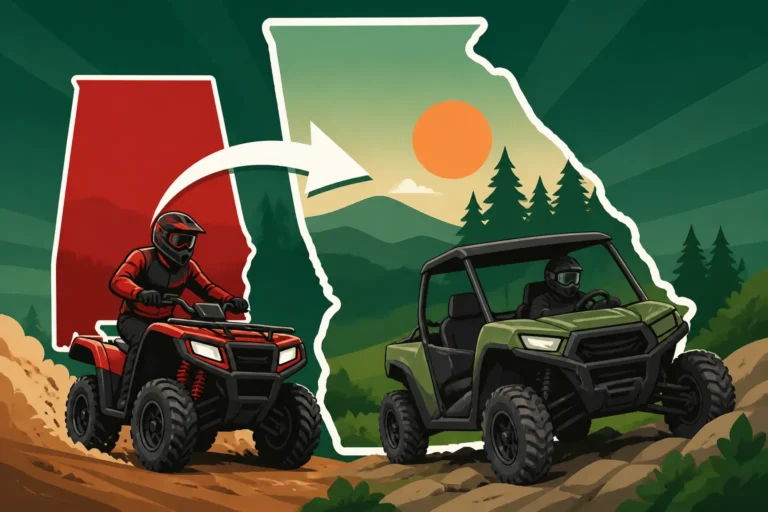
It’s a common sight across Georgia: someone on a trusty ATV or a rugged side-by-side, heading out to the back forty, a hunting lease, or perhaps just enjoying some land. But that moment you consider taking your machine onto a public road, even just to get to the next dirt path, a ton of questions and frustrations likely bubble up. You’re not alone in wondering about the rules, and it can feel like a confusing maze. This guide is here to untangle the complexities of Georgia's laws, explaining why ATVs are generally barred from public roads and outlining the very specific, limited circumstances under which certain UTVs (known as MPOHVs) can gain access.
The Core Difference: Why ATVs Aren't Meant for Georgia Roads
Many Georgians mistakenly believe that if they just get a tag or some blinkers, their ATV can become street legal. Unfortunately, for most traditional ATVs, this simply isn't the case in our state. The law draws a very clear line based on fundamental design and safety features. It's not about what you want your machine to do, but what it was built to do and how the state legally classifies it.
ATV Design vs. Road Safety
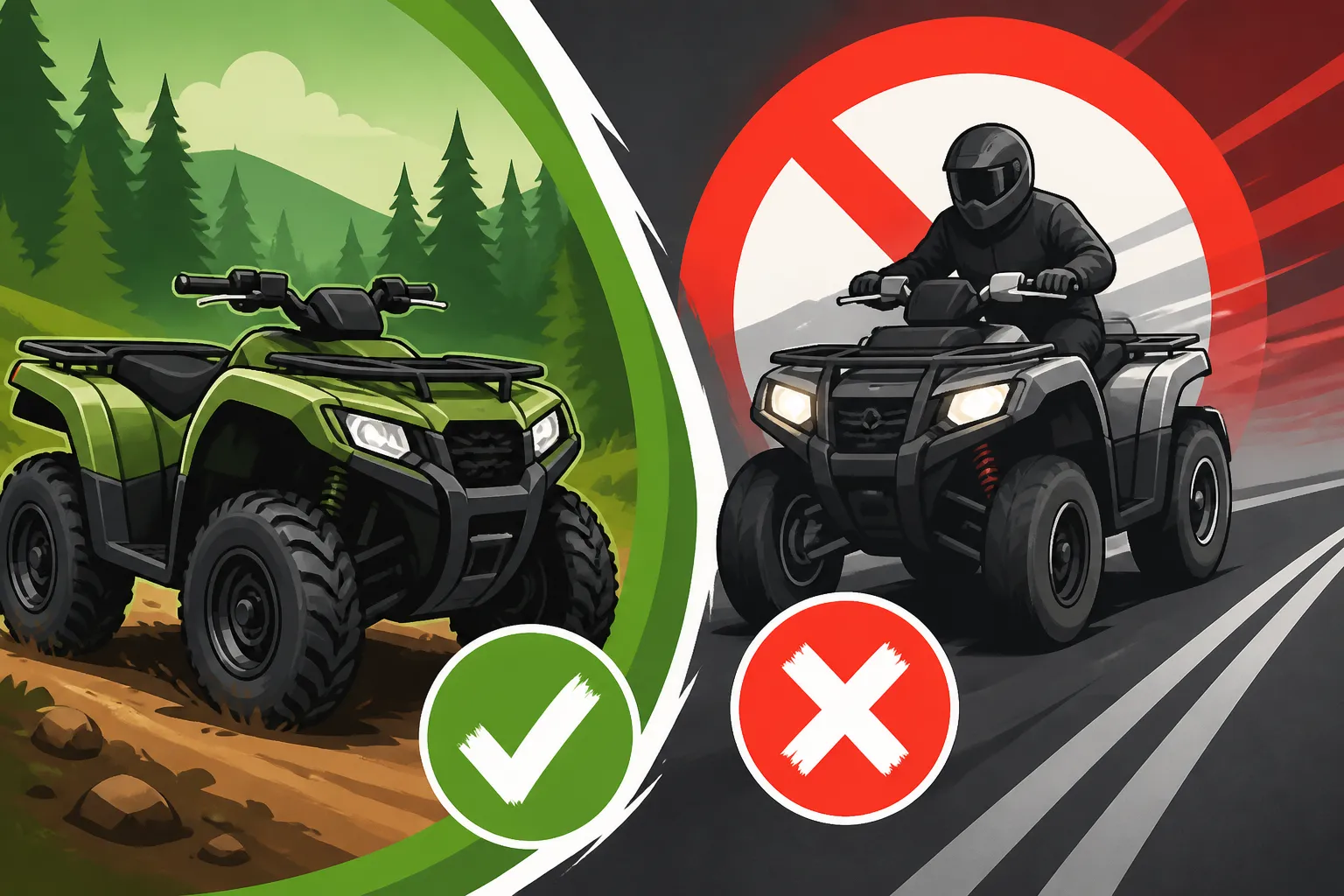
Think about the basic design of a typical all-terrain vehicle. They have handlebars, often a straddle seat, and are built for navigating rough, uneven terrain at lower speeds, not for the asphalt jungle alongside cars and trucks. Their suspension is usually soft and designed for absorbing bumps, not for stable high-speed cornering. Their tires are aggressive, knobby, and designed for traction in mud and dirt, which can make them squirrely and unsafe on paved surfaces. Braking distances can be longer, and the lack of a proper enclosure or robust crumple zones means riders are highly exposed in a collision.
From a regulatory standpoint, these design choices make ATVs inherently unsuitable for public roads where they need to coexist with heavier, faster, and more stable vehicles. The very features that make an ATV so much fun off-road are the same ones that prevent it from being a safe or legal choice on a paved street. This isn't just Georgia being difficult; it's a safety consideration built into vehicle classifications across the country.
The Legal Stance: No Registration, No Road Use for ATVs
In Georgia, the biggest hurdle for an ATV isn't just about adding a horn or some extra lights; it's the inability to obtain legal road registration. The state simply does not provide a mechanism for traditional ATVs to be registered for public road use. This means that if you own a quad, a three-wheeler, or a dirt bike, these machines are explicitly excluded from Georgia’s MPOHV (Multi-Purpose Off-Highway Vehicle) registration system. This is why you'll never find a legitimate street-legal plate for a standard ATV in Georgia. [Why Georgia Does Not Title an ATV] further clarifies this lack of a titling process that would be a prerequisite for road registration in many other vehicle classes.
Without registration, operating an ATV on any public road, even briefly, is generally against the law. This includes county roads, state routes, and certainly interstates. The state considers these machines off-road vehicles, meant for private property or designated off-road trails. Trying to navigate this by simply driving carefully or in low-traffic areas can still lead to fines, impoundment, and other legal headaches. It’s a frustrating reality for many ATV owners who just need to get from one section of their land to another, but the law is quite clear on this point.
MPOHVs: A Glimmer of Road Access (But Not for ATVs)
While traditional ATVs are out of luck, Georgia introduced a specific registration category for a subset of off-highway vehicles, primarily side-by-sides, that allows for limited road access. This category is for "Multi-Purpose Off-Highway Vehicles," or MPOHVs. It's crucial to understand that an MPOHV is not an ATV, and there's a very clear legal distinction that governs which machines qualify.
Understanding the MPOHV Distinction
An MPOHV, in Georgia’s eyes, is a machine designed to carry passengers side-by-side, equipped with a steering wheel, and featuring seat belts. These are typically what most people refer to as UTVs or side-by-sides. Unlike ATVs, which you straddle, an MPOHV has a non-straddle seat. This difference in seating, along with the steering wheel, is a fundamental part of its classification and eligibility for road use. If your machine has handlebars, it's immediately disqualified from MPOHV registration, regardless of how many wheels it has or its payload capacity. [Why Handlebars Disqualify a Machine] explains this in more detail.
The intent behind the MPOHV classification was to provide a legal framework for certain utility-focused and recreational side-by-sides to access specific public roads, primarily county roads, for agricultural, recreational, or transportation purposes. It acknowledges that these machines, while still off-highway vehicles, have design characteristics that bring them closer to traditional automobiles in terms of operator control and passenger safety features, making them more suitable for limited road interaction than a standard quad.
Strict Eligibility Criteria for Road Registration
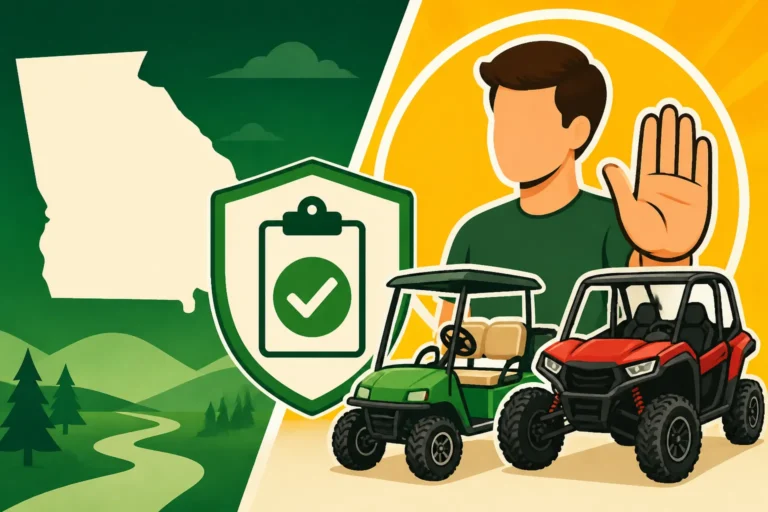
To be registered as an MPOHV and gain that coveted, albeit limited, road access, a side-by-side must pass a stringent "Eight-Point Test" mandated by Georgia law. This isn't just a suggestion; it's a strict checklist that your local county tag office will verify. Failing even one of these points means no MPOHV registration for your machine. This test ensures that only machines meeting specific safety and design standards can be registered.
Here's a breakdown of the key criteria:
- Steering Wheel: No handlebars allowed. [Georgia Requires a Steering Wheel, Not Handlebars]
- Non-Straddle Seat: Designed for an operator and passengers to sit side-by-side, not straddle a saddle. [Why a Straddle Seat Disqualifies a Machine]
- Seat Belts: Factory-installed seat belts for all designated seating positions. [Georgia Requires Seat Belts on a Registered Machine]
- Minimum/Maximum Speed: Capable of speeds between 25 MPH and 65 MPH. This means machines too slow or too fast are out. [A Machine That Tops Out Below 25 mph] and [A Machine That Exceeds 65 mph]
- Width: Not exceeding 80 inches in width. [Measuring Width Against the 80-Inch Limit]
- Gross Vehicle Weight: A maximum gross vehicle weight of 4,000 pounds. [Weighing a Machine Against the 4,000-Pound Limit]
- Payload Capacity: A minimum payload capacity of 350 pounds. [Measuring Payload Capacity Against 350 Pounds]
- Manufacture Date: Manufactured on or after January 1, 2000. [Machines Built Before 2000 and Georgia Registration]
These requirements make it clear that Georgia is looking for specific types of machines, often utility-focused or larger recreational UTVs, to qualify. So, while you might enhance your UTV with accessories like mirrors or enhanced lighting, available from places like SuperATV, remember that these are supplementary to the core factory design requirements. They won't make a disqualified machine eligible, but they are essential for safe operation once you do get registered. [Georgia MPOHV Eligibility: The Eight-Point Test] dives deeper into each of these critical points.
Here’s a quick overview of what makes a machine eligible for MPOHV registration:
| Feature | ATV (Typically Excluded) | MPOHV (Potentially Eligible) |
|---|---|---|
| Steering Control | Handlebars | Steering Wheel |
| Seating | Straddle Seat | Non-Straddle (Side-by-Side) Seat |
| Seat Belts | Generally None (or aftermarket) | Factory-installed for all seats |
| Speed Range | Varies widely, often below 25 mph | 25-65 mph |
| Width Limit | Often below 80 inches, but varies | Max 80 inches |
| Gross Vehicle Weight | Often below 4,000 lbs | Max 4,000 lbs |
| Payload Capacity | Varies, often below 350 lbs | Min 350 lbs |
| Manufacture Date | Any | Jan 1, 2000, or later |
| Road Registration | No | Yes (limited county roads) |
This table clearly illustrates the fundamental differences that separate an ATV from a registrable MPOHV in Georgia.
Where You Can Ride: Permitted Road Access for Registered UTVs
So, you've got an MPOHV that meets all the criteria, and you've successfully registered it with a special plate. Congratulations! But don't go planning a cross-state road trip just yet. The road access granted to MPOHVs in Georgia is extremely limited and comes with very specific rules. It's designed for local travel and agricultural support, not for general street use.
County Roads Only: The Golden Rule
The most important rule to engrave in your mind is this: a registered MPOHV is generally permitted only on county roads. [Georgia MPOHV Road Rules: County Roads Only] explains that this means roads maintained by the county, typically dirt or paved roads in rural or semi-rural areas. These are the roads where you might see farmers, hunters, or residents with large tracts of land needing to move equipment or access parts of their property. State routes (marked with a white shield with a black numeral) and federal highways (like US-129 or US-80) are typically off-limits, even if they pass through a rural county.
The intent here is to allow limited, localized travel without putting these lighter, less protected vehicles onto high-speed, high-traffic thoroughfares. This access is voluntary; no one has to register their MPOHV. But if you want to legally use these county roads, you need to go through the proper [Georgia MPOHV Registration Explained] process. Keep in mind that just because a road looks like a county road doesn't automatically mean it is. It's always a good idea to understand the specific jurisdiction of the roads you plan to use, especially if you're in an unfamiliar area. Getting caught on the wrong type of road can lead to citations and inconvenience.
Crossing State Highways and Interstates (With Extreme Caution)
There are very specific, narrow exceptions for crossing certain types of roads. A registered MPOHV may cross a state highway or a federal highway at a designated crossing point and only if the crossing is made in the most direct manner possible. This is not an invitation to ride along these roads, but purely to traverse them to continue on an approved county road. You definitely cannot operate an MPOHV on any interstate highway, under any circumstances, not even to cross it. [Why Interstates Are Never Crossed] is a critical read on this point.
These crossings require extreme caution. You must obey all traffic laws, yield to oncoming traffic, and ensure you have clear visibility. The idea is to minimize the time spent on these busier roads. It's a quick, straight shot across, like crossing a two-lane road at an intersection to get to another county road. This is not about weaving through traffic or traveling for miles on a state route. Always prioritize safety and consider if there's an alternative route, even if it's longer, to avoid these high-risk crossings. When you are equipping your MPOHV for this kind of use, ensuring you have bright, working headlights, brake lights, and turn signals (if applicable) is paramount, and many riders turn to brands like SuperATV for reliable lighting upgrades to enhance their visibility in these situations.
Crucial Road Rules for MPOHV Operators
Once your MPOHV is properly registered and you understand where you can legally ride, there are still important operational rules you must follow. These rules are in place to ensure the safety of both MPOHV operators and other motorists on Georgia's county roads. Ignoring them can lead to serious consequences, just like any other vehicle on the road.
Driver's License and Age Requirements
One of the most frequently asked questions is about who can actually drive a registered MPOHV on a public road. The answer is straightforward: anyone operating a registered MPOHV on a public road in Georgia must possess a valid driver's license. [Georgia Driver's License Rules for MPOHV Operators] specifies that this means a standard Class C driver's license, just like you would need to drive a car or truck. A learner's permit is generally not sufficient, as MPOHVs are not typically included in the scope of supervised driving for permits.
Furthermore, while the law allows for a range of ages on private land, the public road rule for MPOHVs generally means operators must be at least 16 years old to hold a Class C license. This ensures that anyone behind the wheel on a public road has demonstrated a basic understanding of traffic laws and has experience operating a motor vehicle. It’s a crucial safety measure to prevent inexperienced or underage drivers from mixing with general traffic.
Insurance and Safety Gear Essentials
Just like any other vehicle legally allowed on public roads, a registered MPOHV must carry liability insurance. [Georgia Insurance Minimums for Road Use] outlines the minimum coverage requirements. When you register your MPOHV, you'll need to provide proof of insurance to your county tag office. This insurance is critical, as it protects you financially in case you are found at fault in an accident involving property damage or bodily injury to others. Without it, you could face severe personal liability.
Beyond insurance, there are general safety considerations. While Georgia's MPOHV registration system doesn't explicitly mandate helmets for adult operators, the state's general ATV helmet law applies to riders under 18. [Georgia ATV Helmet Law for Riders Under 18] states that anyone under the age of 18 operating or riding an ATV or off-road vehicle (which would include MPOHVs in some contexts, especially if a sheriff is making a safety judgment) must wear a helmet. Even for adults, wearing a helmet is highly recommended, given the inherent risks of off-road vehicles and the exposed nature of an MPOHV in a collision. Eye protection is also a smart choice. Additionally, your MPOHV needs functional headlights, taillights, and brake lights, and visible mirrors are always a good idea to maintain awareness of traffic around you.
Navigating Georgia's Road Access: Limitations and Future Changes
The current MPOHV registration system and its limited road access have been a significant development for many side-by-side owners in Georgia. However, it's not a permanent fixture. There are important dates and local variations that every MPOHV owner needs to be aware of. The landscape of off-highway vehicle access is always subject to change, and staying informed is key.
The Upcoming Sunset Date: What It Means
A critical piece of information for all MPOHV owners and prospective owners in Georgia is the "sunset date" for the road access provision. The law allowing MPOHVs on county roads is currently set to expire on July 1, 2027. [Georgia's ATV Road Access Law Sunsets in July 2027] This means that unless the Georgia General Assembly takes action to extend or modify the law before that date, the ability to legally operate a registered MPOHV on county roads will cease.
What will happen if the law sunsets? It's hard to say definitively, but it's highly likely that MPOHVs would revert to being considered purely off-road vehicles, with no legal access to public roads, similar to how traditional ATVs are currently treated. This could mean that existing registrations would no longer grant road privileges, and new registrations might not be issued. This uncertainty highlights the importance of keeping an eye on legislative developments and understanding that current road access is not guaranteed indefinitely.
Local Ordinances and Special Cases
While the state law provides a general framework for MPOHV registration and road access, local jurisdictions, particularly cities and counties, can sometimes have their own ordinances that further regulate off-highway vehicles, especially personal transportation vehicles (PTVs) like golf carts. It's crucial not to confuse the MPOHV rules with golf cart laws, as they are distinct categories, even if some smaller UTVs might superficially resemble large golf carts. [Georgia Golf Cart Laws and PTV Ordinances] covers this topic in detail.
Some cities, like Peachtree City, have extensive golf cart path networks and their own registration requirements, but these usually apply specifically to golf carts and not necessarily to the heavier, faster MPOHVs. An MPOHV registered under the state's MPOHV program is generally subject to the state's rules regarding county road access, but it's always wise to check with your local county and city governments for any additional ordinances that might affect operation within their specific boundaries, particularly if you live near city limits. For example, some counties might designate specific roads where MPOHVs are permitted or restricted for safety reasons. Always be aware of your local surroundings and any posted signage.
Disclaimer
This article is for general informational purposes only and does not constitute professional advice. Laws, prices and regulations vary by location and change over time. Consult a qualified professional for guidance on your specific situation.