Storing a Machine Out of County
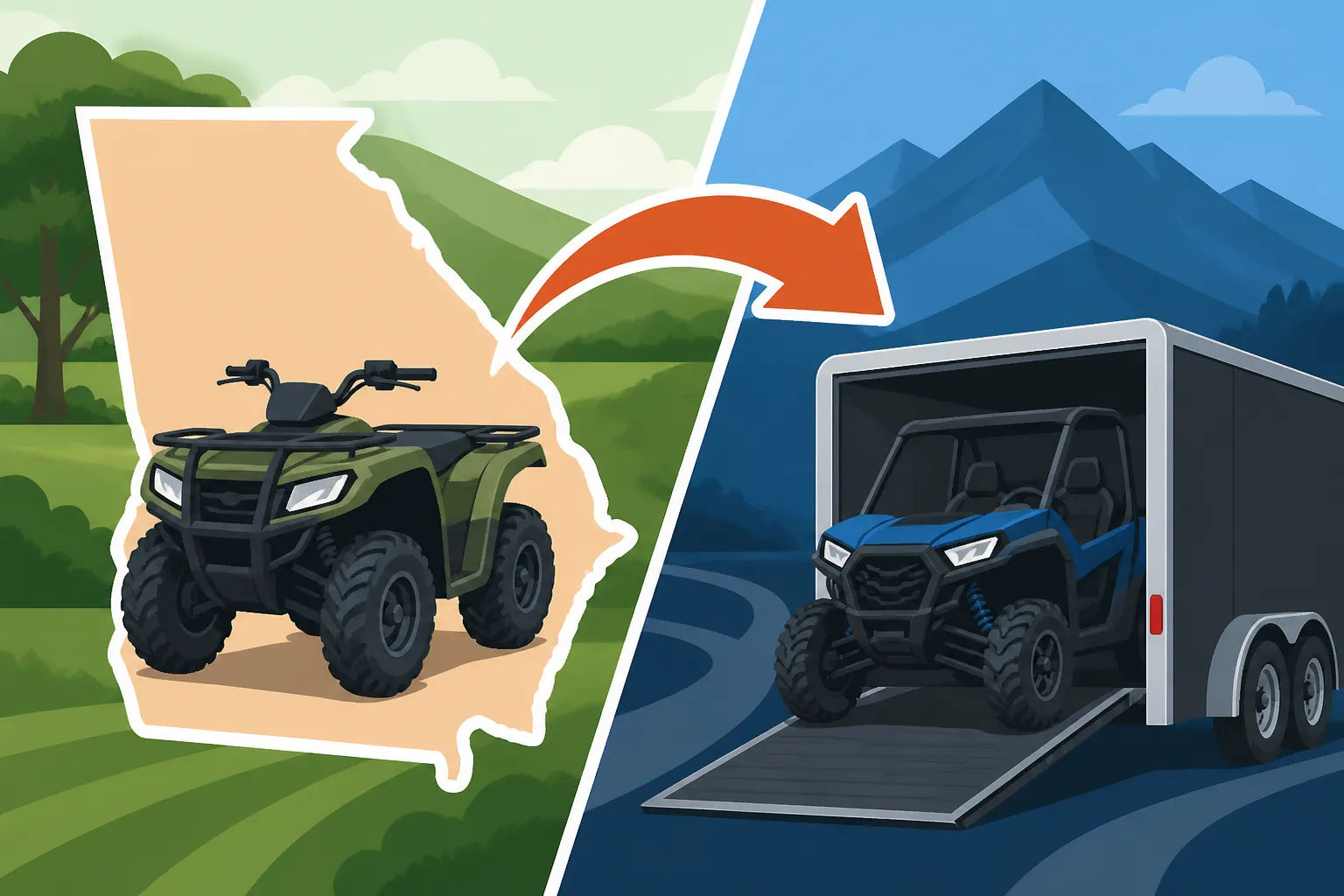
It's a common dilemma for Georgia off-road enthusiasts: you live in one county, but your beloved ATV or UTV might spend most of its time, or even be permanently housed, in another. This situation often sparks questions about how registration works, where your paperwork needs to go, and if the physical location of your machine dictates anything about its legal status. This guide is here to clarify those often-confusing details, helping you navigate the nuances of county-specific requirements for your off-road machine in Georgia.
Why Your Machine's Location Can Matter for Registration
You might think that once your MPOHV (Multi-purpose Off-Highway Vehicle) is registered in Georgia, that's the end of the story, regardless of where it parks its tires. While the state of Georgia issues the MPOHV registration, the process is handled at the county level. This means your interaction point for registration and renewal is your local county tag office, and that office is tied to your primary residence.
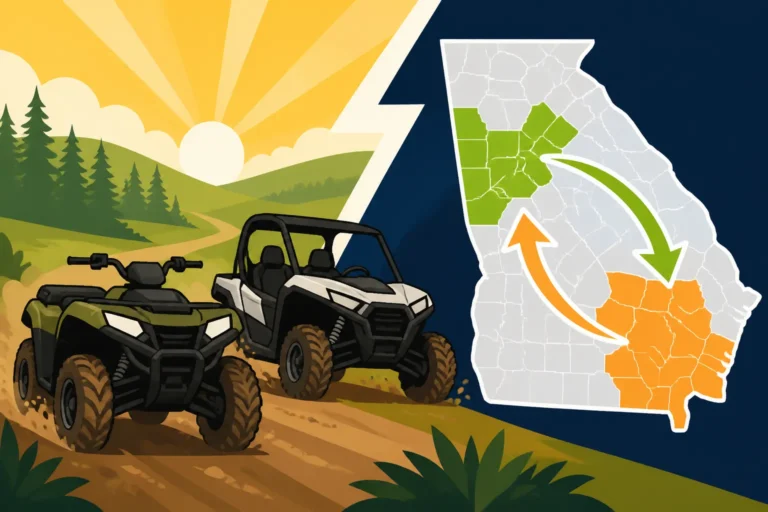
Imagine you live in Fulton County, but you own a sprawling hunting club in Early County where your side-by-side lives year-round. Or perhaps you have a weekend cabin in Rabun County, and you leave your UTV there so it's always ready for the trails. While this is incredibly convenient for your recreational pursuits, it introduces a layer of consideration regarding where your machine should be registered and how that process is managed. The core principle is that your MPOHV should be registered in the county where you, the owner, reside. Your personal county of residence is where the state expects you to conduct your vehicle-related business, including MPOHV registration.
Understanding Georgia's Residency Rules for MPOHV Registration
When you go to register your MPOHV, whether it's for the first time or for an annual renewal, the county tag office will verify your Georgia residency. This isn't just a casual check; it's a fundamental part of the registration process. They need to ensure you are a legitimate resident of that specific county to process your application. Think about it like registering your car or truck – you do it where you live, not where you work or where your vehicle happens to be garaged.
This means that even if your Can-Am Defender is always kept in a barn in south Georgia, if your primary residence (where your mail goes, where you pay your primary utility bills) is in north Georgia, your registration paperwork needs to be processed through your North Georgia county tag office. This can sometimes feel counterintuitive, especially if you rarely visit your "home" county for off-road activities. However, it simplifies the state's system by tying all vehicle registrations to the owner's legal address. It's all about ensuring accurate records and proper revenue distribution to the correct local government. For more on what defines an MPOHV, you might find [What MPOHV Actually Stands For] helpful.
The Role of Your County Tag Office
Your local county tag office is more than just a place to hand over paperwork and fees; they are the front-line administrators of Georgia's MPOHV registration program. They handle everything from initial applications and title transfers (though ATVs and UTVs don't get traditional titles in Georgia, they do get a branded certificate of registration for MPOVHs) to annual renewals and issuing replacement decals. Because they are a county-level entity, their services are specifically for residents of that county.
If you attempt to register your machine in a county where you do not reside, you will likely be turned away. They're simply not equipped, or authorized, to process registrations for non-residents of their specific county. This is why understanding the distinction between your machine's physical location and your legal residence is so critical. Even if you spend more time with your UTV in another county, your official business must always revert to your home county. This is also why they'll often ask for proof of residency, like a utility bill or a Georgia driver's license showing your current address. You can learn more about how to register your machine in [Georgia County Tag Office Steps for an MPOHV].
Navigating Registration When Your Machine Lives Elsewhere
So, your registered MPOHV is sitting pretty in a different county than where you actually live. What does this mean for the practicalities of registration, renewal, and potential interactions with local authorities? The good news is that as long as your MPOHV is properly registered in your county of residence, its physical location in another county generally doesn't create major legal headaches for registration purposes.
However, it does mean you need to be diligent about keeping your registration current through your home county. It also means you need to be aware that while the registration itself is handled based on your address, the rules of the road where your machine is actually stored and operated might have local nuances.
Initial Registration and Renewal Process
When you first register your MPOHV, you'll need to gather all the necessary documents, such as proof of ownership, proof of insurance, and proof of your Georgia residency. These will all be presented to the tag office in the county where you live. Even if the machine is already sitting in a friend's barn two counties over, you'll complete the entire registration process based on your residential address. For a full list of what you'll need, check out the [Georgia MPOHV Registration Paperwork Checklist].
For annual renewals, the process remains the same. Your renewal notice will be mailed to your residential address, and you'll typically renew online, by mail, or in person at your home county's tag office. The fact that your machine is stored in another county has no bearing on this. Many riders find online renewal to be the most convenient option for this very reason, avoiding a trip to the tag office if they're not frequently in their home county. Regardless of where your machine is stored, you'll need to keep up with [Georgia MPOHV Renewal Each Year].
Proof of Ownership and Residency
The documents you'll need to present to the tag office reinforce the point about residency. For example, when you prove you own the ATV or UTV, it could be through a bill of sale. If you're buying a used machine, ensuring you have a solid [Bills of Sale That Hold Up at a Tag Office] is crucial. When you register, you'll need proof of residence, usually a Georgia driver's license or state ID card with your current address, or a utility bill in your name at that address.
Let's say you just bought a used side-by-side from a private seller in Valdosta, and you plan to keep it at your cabin in Blairsville. But your primary home is in Athens. You'll complete the sale paperwork, potentially even using a template from a service like LawDepot for a clear bill of sale, and then take all that documentation to the Athens-Clarke County Tag Office to register the machine. Your Athens address will be on file, even though the machine itself is destined for the North Georgia mountains.
| Scenario | Owner's Residence | Machine's Storage Location | Registration County |
|---|---|---|---|
| Primary Home | Fulton County | Hunting Club (Early County) | Fulton County |
| Weekend Cabin | Cobb County | Family Farm (Polk County) | Cobb County |
| Moving | Gwinnett County | New Home (Hall County) | Hall County (after update) |
| Student | Dorm (Clarke County) | Parents' Home (Bartow County) | Clarke County (if legal resident) |
Updating Your Address if You Move Counties
What if the situation changes and you actually move your primary residence to a new county? This is where things shift. If you move from, say, Gwinnett County to Hall County, you'll need to update your driver's license and then, consequently, your MPOHV registration. The state expects you to register your vehicles, including MPOVHs, in your current county of residence.
When you move, you don't necessarily need to get a whole new registration number or plate for your MPOHV, but you do need to inform the Georgia Department of Revenue (DOR) through your new county tag office. This ensures your records are accurate and that any renewal notices or other official communications go to the correct address. Essentially, the same rule applies: your machine's registration is tied to your home address, and if that address changes counties, your registration record needs to follow suit. You can find more specific guidance on [Moving Counties Mid-Year in Georgia].
Practical Considerations for Out-of-County Storage
Beyond the legalities of registration, there are several practical aspects to consider when your MPOHV is stored in a different county than where you live. These can range from ensuring your machine is safe and secure to understanding how local ordinances might affect its use. Being prepared for these scenarios can save you a lot of hassle down the line.
While Georgia's MPOHV registration system standardizes many things, individual counties or municipalities can have specific local rules, particularly concerning noise, operation hours, or even where you can ride. This is especially true if you plan to operate your machine on county roads near its storage location.
Local Ordinances and Usage Rules
Even if your MPOHV is legally registered to you in your home county, if you store it in another county, you're responsible for understanding the local ordinances of that county. For example, the county where your machine is stored might have different rules about [Georgia UTV Road Rules by County] if you plan to ride on county roads there. Some counties might have more restrictive noise ordinances, or specific hours during which off-road vehicles can be operated on private property if neighbors are close by.
This is less about registration and more about responsible operation. If you keep your side-by-side at a property in a rural county and ride it on designated county roads, you need to ensure you understand that county's specific rules. A law enforcement officer in the county where your machine is being operated will enforce their local rules, not necessarily the rules of your home county, if there's a difference. Always do your homework on the local rules of the area where you'll be riding.
Security and Maintenance for Remote Storage
Storing an expensive piece of equipment like an MPOHV out of your direct sight and supervision in another county requires careful planning for security and maintenance. Theft can be a real concern, and proper storage is essential.
Consider these points:
- Secure Storage: Is the storage location (barn, shed, garage) properly secured? Think about robust locks, security cameras, or even an alarm system. A machine kept in a remote location is often an easier target for thieves. You might also want to consult legal templates from a service like LawDepot if you are storing your machine on someone else's property, creating a clear agreement about access, responsibility, and liability.
- Maintenance Schedule: If you're not seeing your machine frequently, how will you ensure it gets regular maintenance? Will a trusted local friend or family member check on it, or will you plan regular trips specifically for upkeep? Neglecting maintenance can lead to bigger problems when you finally get around to riding.
- Insurance: Ensure your MPOHV insurance covers the machine at its storage location. Most policies will cover a machine wherever it is stored, but it's always wise to confirm with your insurance provider. You might need specific coverage for [Georgia Theft Coverage for Off-Road Machines].
Emergency Contacts and Access
Having your machine stored away from home also means thinking about who has access in case of an emergency, or even just for routine checks. If something happens to the storage facility, or if the machine needs to be moved unexpectedly, who can you rely on?
It's a good idea to:
- Designate a Local Contact: Have a trusted friend, family member, or neighbor in the county where your machine is stored who has a key or access to the storage area. Make sure they know how to contact you quickly.
- Leave Key Information: Provide your local contact with important information like your insurance policy number, emergency contact details, and perhaps even instructions for starting or moving the machine if necessary.
- Consider a Storage Agreement: If you're storing your MPOHV on someone else's private property and not just your own secondary residence, drawing up a simple storage agreement can clarify expectations around access, liability, and payment (if applicable). Again, a service like LawDepot can provide forms for such agreements, ensuring everyone is on the same page.
By considering these practicalities, you can enjoy the convenience of storing your MPOHV in a different county while minimizing potential risks and ensuring a smooth ownership experience.
Disclaimer
This article is for general informational purposes only and does not constitute professional advice. Laws, prices and regulations vary by location and change over time. Consult a qualified professional for guidance on your specific situation.