Measuring Width Against the 80-Inch Limit
Navigating the specific requirements for registering an off-highway vehicle in Georgia can feel like trying to solve a puzzle, especially when you encounter detailed rules like the 80-inch width limit. Many side-by-side owners worry their beloved machine might be too wide to qualify, leaving them unable to ride legally on designated county roads. This guide aims to clear up all the confusion surrounding Georgia's 80-inch width restriction for Modified Off-Highway Vehicles (MPOHVs), helping you understand how to measure your vehicle and what this crucial regulation means for your riding plans.
Understanding Georgia's 80-Inch Width Limit for MPOHV Registration
When Georgia introduced its MPOHV registration system, it wasn't just about getting a plate; it was about defining a specific class of vehicles that could safely and appropriately share certain public roads. The 80-inch width limit is a cornerstone of that definition, and understanding its purpose is the first step to knowing if your machine makes the cut.
Why the 80-Inch Rule Exists
The Georgia legislature put the 80-inch width rule in place for several very practical reasons, primarily centered around safety and the inherent characteristics of the roads MPOHVs are permitted to use. Unlike interstates or even many state highways, county roads in Georgia can vary wildly in their design, maintenance, and actual usable width. You might encounter narrow paved stretches, winding gravel lanes, or even dirt tracks that barely accommodate two passenger vehicles passing each other.
A machine that is excessively wide could create significant hazards on these smaller roads. It could impede the flow of traffic, struggle to stay within its lane, or even venture dangerously close to shoulders that might be soft, uneven, or drop off sharply. The 80-inch limit helps ensure that registered MPOHVs are reasonably sized for these environments, preventing them from becoming an oversized obstacle or a danger to themselves and other motorists. It's about maintaining a balance between recreational access and public safety, distinguishing MPOHVs from larger, heavier equipment not intended for road use. Ultimately, this specific dimension helps define what a "modified off-highway vehicle" truly is in the eyes of Georgia law, separating it from vehicles that might be too cumbersome for the designated county road system.
What Qualifies as "Width" for Measurement
This is where many owners get a little anxious, wondering if every little thing hanging off their side-by-side counts. For the purpose of Georgia's MPOHV registration, the "width" of your machine is measured from the outermost projections. This means you'll measure from the widest point of the vehicle, which almost always includes the tires and fenders. If your machine has factory-installed fender flares, rock sliders, or other structural components that extend beyond the main body or tires, those should generally be included in your measurement.
Think of it as the maximum horizontal footprint your machine occupies on the road. What typically doesn't count are things like rearview mirrors, which are often designed to fold in, or temporary attachments such as hunting racks, luggage, or tools secured to the side. The key is "factory-installed structural components" that define the vehicle's permanent dimensions. It's not about what you temporarily strap on, but what the vehicle itself, as manufactured or with standard options, presents as its widest point. If you have aftermarket wheels and tires that push your stance out wider than the factory setup, then that new, wider measurement is what counts. You need to ensure that the entire machine, from the farthest point on the left to the farthest point on the right, fits within that 80-inch window. This clarity is essential for avoiding disappointment when you try to apply for a plate at the county tag office.
The Practicalities of Measuring Your Machine's Width
Getting an accurate measurement of your MPOHV is crucial before you even think about heading to the county tag office. A miscalculation here could lead to a denied registration and a wasted trip. Taking the time to do it right can save you a lot of frustration.
Step-by-Step Guide to Accurate Measurement
Measuring your machine correctly isn't complicated, but it requires attention to detail. Here’s a simple step-by-step guide to ensure you get an accurate reading:
- Park on a Level Surface: Find a flat, even piece of ground. This helps ensure your suspension isn't compressed unevenly, which could slightly skew your measurement. A garage floor or a paved driveway is ideal.
- Use a Reliable Measuring Tool: A standard retractable tape measure or a long straight edge is perfect. Make sure it's long enough to cover the entire width in one go, if possible, to minimize errors.
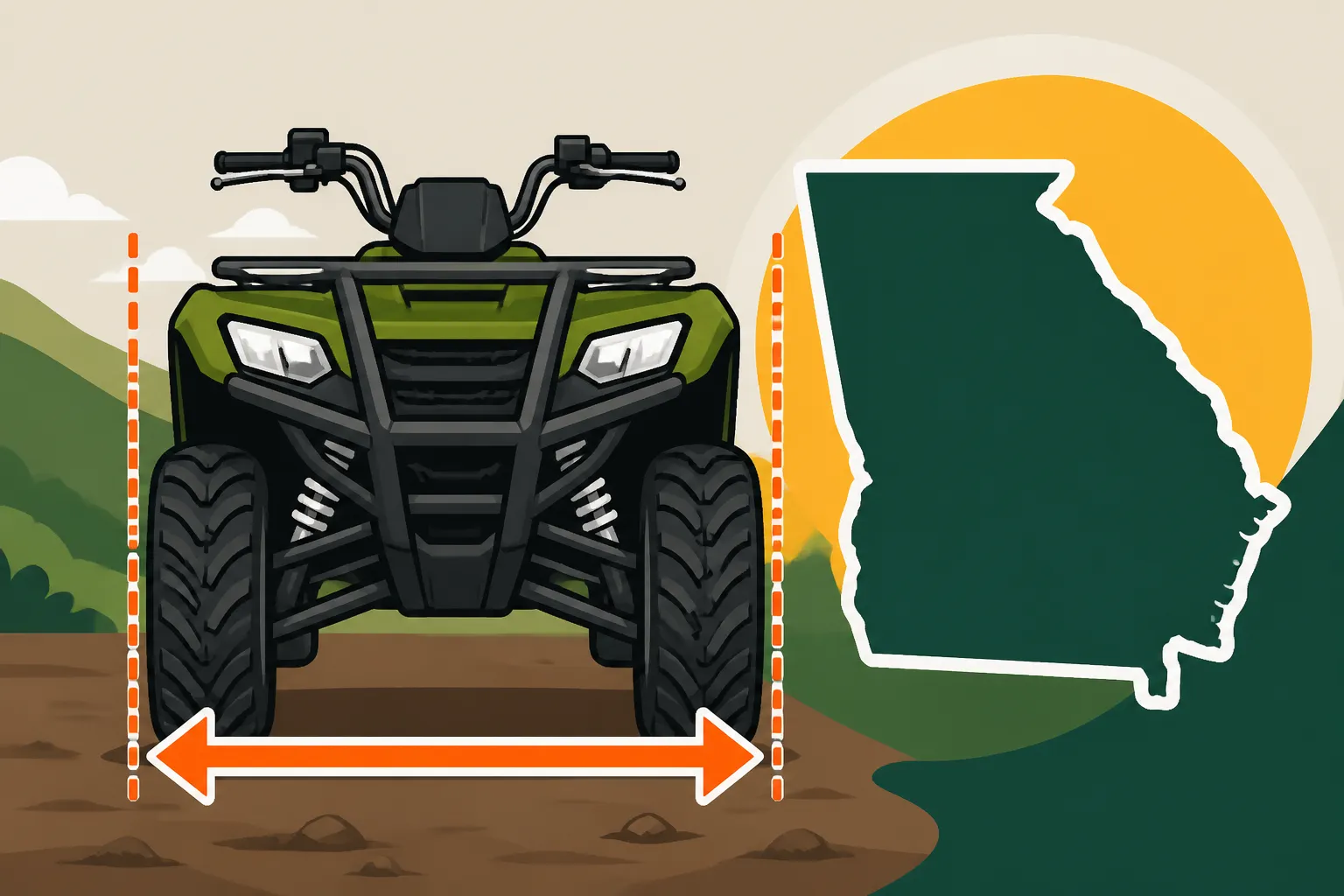
- Identify the Widest Points: Stand in front of or behind your vehicle and visually identify the absolute widest points. For most side-by-sides and larger ATVs, this will be the outer edge of the tires, or perhaps the outermost edge of the fender flares if they protrude significantly more than the tires.
- Measure Horizontally: Hold your tape measure horizontally at the widest point, from the outermost edge of one side of the vehicle to the outermost edge on the other. For example, if your tires are the widest part, measure from the outside edge of the tread on the left front wheel to the outside edge of the tread on the right front wheel.
- Check for Protrusions: While holding the tape measure, double-check along the entire length for any other factory-installed components that might stick out further. This could include things like a side mirror that doesn't fold, certain brush guards, or even specific structural parts of the frame. Remember, if it's a permanent part of the vehicle and extends beyond your initial tire/fender measurement, it needs to be included.
- Take Multiple Measurements: To be absolutely sure, take the measurement a few times. If you get slightly different readings, take the largest one to be safe. It's better to overestimate slightly than to be denied at the tag office. [Georgia MPOHV Eligibility: The Eight-Point Test] includes this measurement as a critical component, so accuracy is paramount.
Common Machines and the 80-Inch Hurdle
Many popular utility and sport side-by-sides are designed with robust stances for stability and performance, which can put them right at or even over the 80-inch mark. For instance, some of the wider sport models from manufacturers like Polaris, Can-Am, or Yamaha, especially those with aggressive suspension setups or aftermarket wheels and tires, might easily exceed this limit. While a standard utility UTV might come in comfortably under 80 inches, many specialized models push the boundaries.
For example, a machine designed for serious rock crawling often has a wider track for stability, making it less likely to qualify. Similarly, if an owner has installed a lift kit and wider offset wheels, the resulting track width can quickly grow beyond the legal limit. This is a common point of frustration for riders who bought a powerful, wide machine for off-road trails, only to discover it doesn't fit Georgia's MPOHV criteria for road use. It's always best to check the manufacturer's specifications for your exact model and then perform your own physical measurement, especially if any modifications have been made. Remember, Georgia is quite specific, and [Why a Georgia Sportsman Cannot Be Registered] often comes down to dimensions like width.
Implications of Exceeding the 80-Inch Width Limit
So, you've measured your machine, and it's wider than 80 inches. What does that mean for you as a Georgia owner? The implications are pretty straightforward, though they can be disappointing if you were hoping for road access.
Disqualification from MPOHV Registration
The most direct and significant consequence of exceeding the 80-inch width limit is that your machine will simply not be eligible for MPOHV registration in Georgia. This isn't a flexible rule; it's a hard cutoff. When you go to the county tag office, the MPOHV eligibility checklist is quite specific. If your vehicle fails to meet any of the eight criteria, including the width requirement, you won't be able to obtain the special MPOHV plate.
This means that your wider machine, while perfectly legitimate for off-road use, will not be considered a street-legal "Modified Off-Highway Vehicle" on Georgia's county roads. You won't be able to legally ride it on public county roads, cross state highways at designated points, or benefit from any of the privileges associated with the MPOHV registration. It's a clear instance of [Why a Four-Wheeler Cannot Be Registered in Georgia] if it doesn't meet all the physical characteristics for the MPOHV class. This limitation is tied directly to the safety and logistical considerations that lawmakers had in mind when crafting the MPOHV rules.
Alternative Uses and Private Land Riding
While a wider machine might not qualify for MPOHV registration, that certainly doesn't mean it becomes a useless paperweight! Your off-highway vehicle still has plenty of places it can be legally and enjoyably used. The primary purpose of these machines is, after all, off-road.
You can continue to ride your wider side-by-side or ATV on private property with the landowner's permission. This includes your own land, friend's farms, or hunting leases. Many owners find their machines indispensable for chores, hunting, or simply exploring their acreage. Furthermore, Georgia is home to a fantastic network of private off-road parks and trail systems, many of which cater to a wide variety of machine sizes and types. Places like [Iron Mountain Resort: Georgia's Biggest Private Park] or Highland Park welcome all sorts of UTVs, regardless of whether they'd meet road-legal width requirements. These dedicated parks provide a safe and controlled environment for you to fully enjoy your machine's capabilities, often with challenging trails, mud pits, and scenic routes. You can also participate in organized events, races, or charity rides at these locations. So, even if the county roads are off-limits, there's a whole world of off-road adventure still open to you.
Comparing Common UTV Widths to Georgia's MPOHV Limit
To help illustrate where many popular machines might stand in relation to Georgia's 80-inch width limit, here's a general comparison table. Keep in mind that these are typical ranges and can vary greatly by specific model, year, and any aftermarket modifications. Always measure your individual machine.
| UTV/Side-by-Side Category | Typical Width Range (Factory) | Meets Georgia's 80-inch Limit? | Common Examples |
|---|---|---|---|
| Compact Utility UTVs | 50-58 inches | Yes, comfortably | Kawasaki Mule SX, Honda Pioneer 500, John Deere Gator XUV590E |
| Mid-Size Utility UTVs | 58-62 inches | Yes, comfortably | Can-Am Defender DPS HD9, Polaris Ranger 570, Yamaha Wolverine X2 |
| Full-Size Utility UTVs | 62-66 inches | Yes, generally | Polaris Ranger XP 1000, Can-Am Defender MAX, Yamaha Viking |
| Sport/Recreation UTVs | 60-72 inches | Yes, but check specific models | Honda Pioneer 1000, Yamaha YXZ1000R, Polaris General |
| Wide Sport UTVs | 64-84+ inches | Often no, likely over 80" | Polaris RZR Turbo R, Can-Am Maverick X3 (some models), Arctic Cat Wildcat XX |
This table clearly shows that while many utility and even some recreational UTVs fit within the 80-inch limit, a significant number of dedicated sport and performance models, especially with wider stances or aftermarket modifications, will exceed it. If your machine falls into that "Wide Sport UTVs" category, you'll definitely want to get out the tape measure.
Understanding these specific dimensions is just one part of the picture. You also need to consider other factors like [Georgia's 350-Pound Payload Requirement] and [Georgia's 4,000-Pound Gross Weight Ceiling] when assessing your machine's overall eligibility. Don't forget, the type of seating also matters; [Why Georgia's MPOHV Rules Demand a Non-Straddle Seat] is another key factor for registration. If you're looking to purchase a used side-by-side, it's vital to know these rules upfront to avoid buying a machine that won't meet your needs for road access. For a complete overview of what's required, review the [Georgia Side-by-Side Registration Checklist].
It’s worth noting that simply possessing a machine that meets these physical requirements isn't the only hurdle. You'll also need to gather the right paperwork. This might include a bill of sale, an ownership affidavit (especially if you don't have a traditional title, as [Proving You Own an ATV in Georgia Without a Title] can be a common issue), and proof that [Georgia Sales Tax Paid Before Registration] has been handled. For those who bought their machine before the rules came into effect, there's a specific consideration for [Georgia Machines Owned Before June 30, 2024]. Finally, understanding [What MPOHV Actually Stands For] gives you a broader context for all these detailed regulations, ensuring you approach the registration process with confidence.
Disclaimer
This article is for general informational purposes only and does not constitute professional advice. Laws, prices and regulations vary by location and change over time. Consult a qualified professional for guidance on your specific situation.