Georgia MPOHV Registration for a Hunting Club
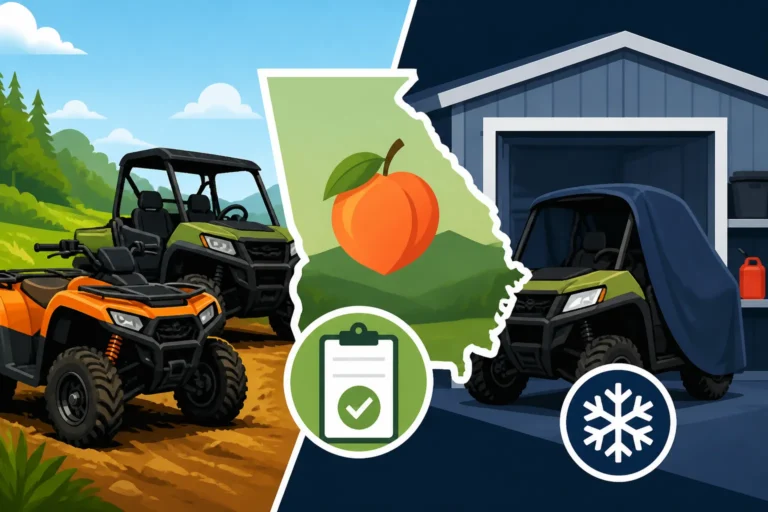
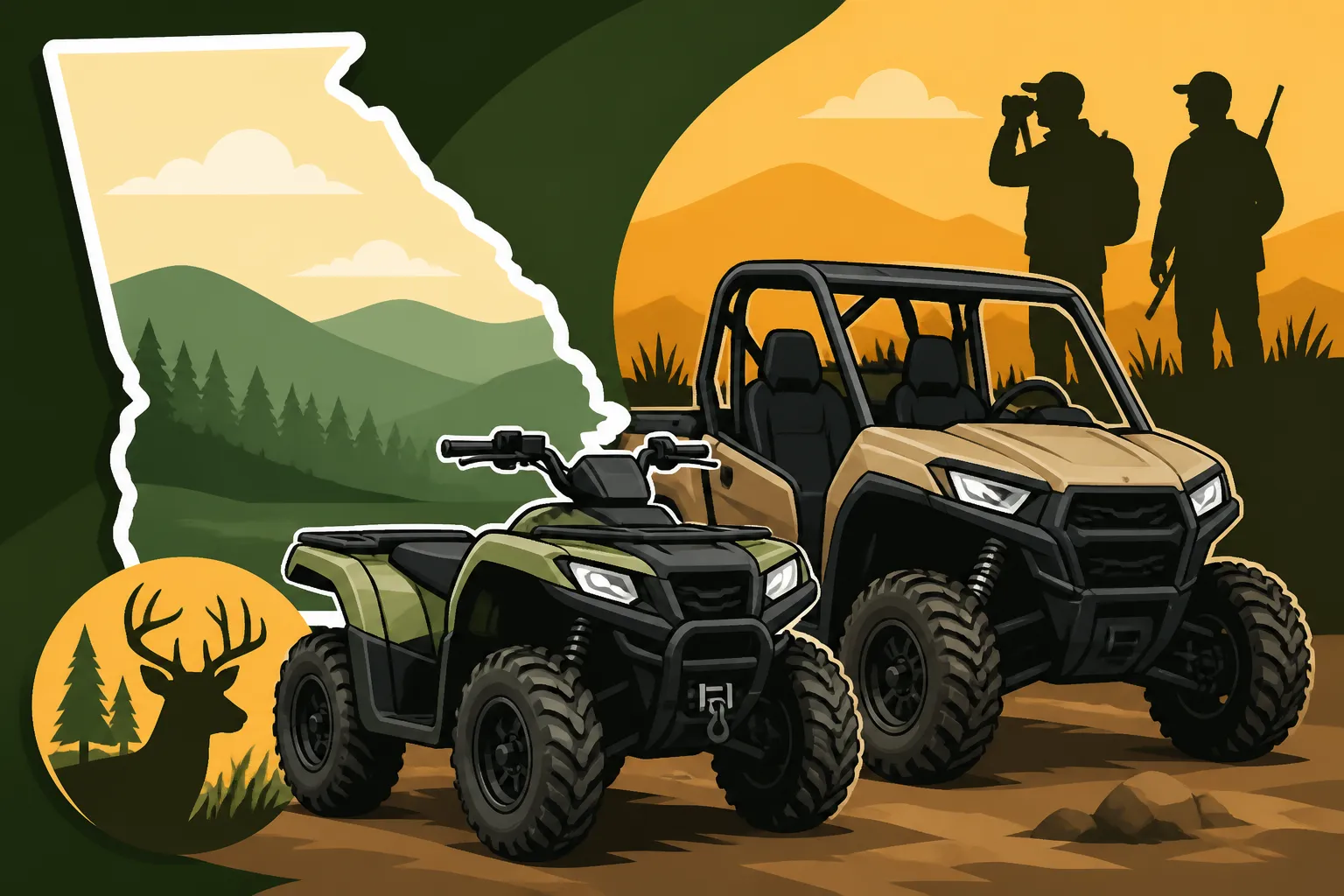
Running a hunting club in Georgia often means relying on trusty side-by-sides or other utility vehicles to haul gear, move hunters, and maintain food plots across various parcels of land. However, a common headache arises when these essential machines need to leave private property, even just for a moment, to get to the next section of your lease or grab a quick resupply. This guide is here to untangle the specifics of Georgia's MPOHV registration for hunting clubs, helping you navigate the requirements so your club's machines can legally traverse those crucial public roads.
Understanding MPOHV Registration for Club Use
For many hunting clubs, the idea of registering their utility vehicles might seem like an unnecessary hoop to jump through. After all, these machines spend most of their lives on private land, far from paved roads. But Georgia's law recognizing "Multi-Purpose Off-Highway Vehicles" (MPOHV) really changed the game for situations just like this, offering a path for certain machines to gain limited access to county roads. This isn't about making your side-by-side fully street-legal like a car; it's about providing a designated, legal framework for those short but vital road crossings.
Imagine your club leases multiple tracts of timberland, separated by a county road. Before MPOHV registration became an option, moving a UTV from Tract A to Tract B meant trailering it, which is a huge time-sink and often impractical in the middle of a hunt. Or, worse, it meant risking a citation for illegal road use. Now, with proper registration, your club's qualifying machines can make these transitions legally and safely. It's about providing flexibility and peace of mind, ensuring your operations aren't hindered by a few hundred yards of public pavement. The core idea is to legitimize the necessary movement of these vehicles on county roads, specifically excluding state highways and interstates, which remain strictly off-limits.
Why Your Hunting Club Might Consider Registration
The primary reason a hunting club would consider MPOHV registration is simple: legality and convenience. While unregistered ATVs and UTVs are perfectly fine on private land, any venture onto a public road without proper authorization can lead to fines, impoundment, and a significant disruption to your club's activities. For a club that frequently moves equipment or personnel between non-contiguous parcels, or perhaps needs to access a local store for supplies, registration eliminates a major logistical hurdle. It means your members can focus on the hunt, not on whether they're breaking the law by driving across a short stretch of road.
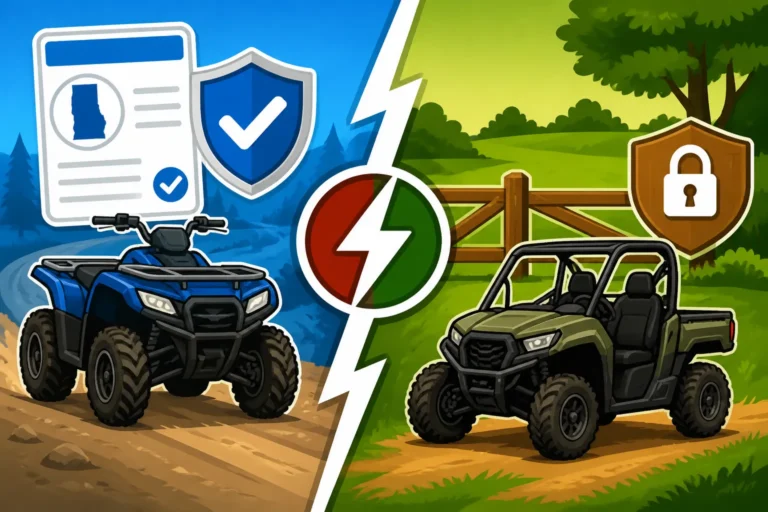
Beyond the practical aspects, registration often comes with the requirement for liability insurance. While some might see this as an added cost, it's actually a huge benefit for a hunting club. Accidents can happen, even on short road segments, and having [Georgia Liability Insurance Tied to Registration] helps protect the club and its members from potential financial devastation if a crash involves other vehicles or property. It also sends a message of responsibility and professionalism, which can be valuable for landowner relationships and club reputation. Think of it as a safety net that allows your club to operate with greater security and confidence, both on and off the trails.
The Distinction for Club-Owned vs. Member-Owned Machines
This is where it can get a little tricky for hunting clubs. Is the machine owned by the club as an entity, or by individual members who bring their own rigs to the property? The process and who is responsible for what will differ. If the club itself owns a side-by-side that's primarily used for general club operations—like maintaining roads, planting food plots, or moving deer stands—then the club, as a legal entity, would be the applicant for the MPOHV registration. This often means providing documentation proving the club's existence (e.g., articles of incorporation, bylaws, or an operating agreement if it's an LLC), a bill of sale for the machine, and designating an authorized signatory. Services like LawDepot might offer templates for club formation documents or bills of sale that can help streamline this process, ensuring all necessary legal paperwork is in order.
However, if individual members bring their own ATVs or UTVs to the club land, then the responsibility for registration falls squarely on them, the individual owners. The club generally won't be involved in registering those personal machines, though it might enforce rules about which machines are allowed on club property, especially if they are going to utilize any road access. It's crucial for clubs to clarify this distinction in their bylaws or operating agreements to avoid confusion and ensure that any machine venturing onto public roads is properly registered by its legal owner. Clear communication within the club about [Georgia MPOHV Registration Explained] is key to prevent misunderstandings and potential legal issues.
Eligibility Requirements for Hunting Club Machines
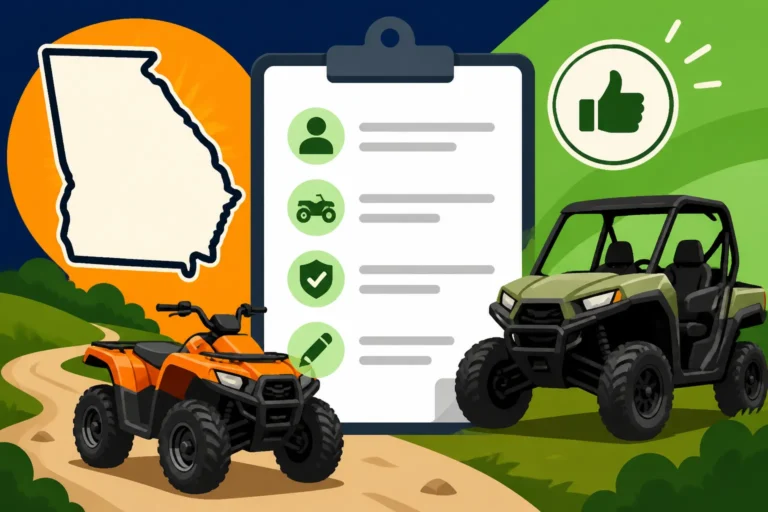
Georgia's MPOHV registration isn't a free pass for every off-highway vehicle. There are very specific criteria that a machine must meet to be deemed eligible. These criteria were put in place to ensure that only vehicles with certain safety features and operational characteristics are allowed on public roads, even on a limited basis. For hunting clubs, this means carefully checking each club-owned or member-owned machine against the full [Georgia MPOHV Eligibility: The Eight-Point Test]. Failing even one point on this checklist can mean the machine cannot be registered, regardless of how much you want it to be.
The typical machines hunting clubs use are side-by-sides (UTVs), which generally have a much easier time meeting these requirements than traditional ATVs. This is largely due to their design, which often includes features like steering wheels, non-straddle seating, and factory-installed safety equipment. Understanding these points is crucial for any club considering a new purchase or trying to register an existing machine.
The Eight-Point Eligibility Test: What to Look For
Let's break down the key aspects of the eight-point test that are most relevant to the types of machines a hunting club would typically use. First off, the vehicle must be between 25 and 65 mph. This means highly modified sport machines that exceed 65 mph, or very slow, specialized utility vehicles that can't hit 25 mph, won't qualify. The spirit of the law is for machines that can keep up with the flow of slow-moving county road traffic without becoming a hazard, but aren't designed for highway speeds.
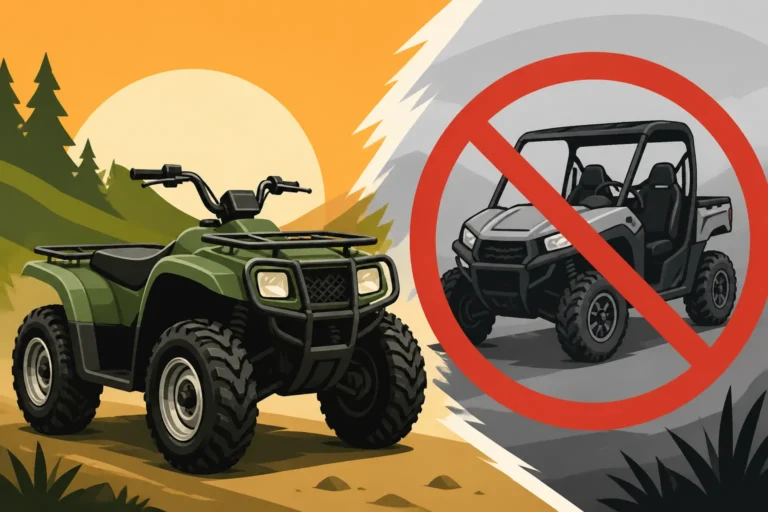
Next, and this is a big one for ATVs, the machine must have a steering wheel, not handlebars. This immediately disqualifies the vast majority of traditional quad ATVs that hunters might use. It also must have a non-straddle seat. This means you sit in it, like a car, not on it like a motorcycle or traditional ATV. Again, this points directly to side-by-sides. Factory-installed seat belts are another must-have, along with headlights, brake lights, and at least one rearview mirror. These are basic safety features required for any vehicle sharing a road, even briefly. Finally, there's a width limit of 80 inches and a gross vehicle weight ceiling of 4,000 pounds. Most side-by-sides fall comfortably within these limits, but it’s always worth double-checking the manufacturer's specifications. Don't forget the payload capacity; it must be able to carry at least 350 pounds. This is usually not an issue for utility-oriented side-by-sides often found in hunting club settings, but it's another point to verify.
Common Club Machines That Qualify (or Don't)
When it comes to hunting clubs, utility-focused side-by-sides like Polaris Rangers, Kawasaki Mules, John Deere Gators, or Can-Am Defenders are often the workhorses. These machines are generally designed with many of the MPOHV eligibility requirements in mind. They typically feature steering wheels, bench or bucket seating, seat belts, and standard lighting packages, making them strong candidates for [Registering a Side-by-Side in Georgia]. Their payload and gross weight capacities also usually fall within the specified ranges. For example, a club's Polaris Ranger used for hauling corn to a feeder or bringing out a harvested deer would likely meet most, if not all, of these criteria.
However, many traditional ATVs, even powerful utility models, will be excluded due to the handlebar and straddle-seat requirements. Dirt bikes and three-wheelers are explicitly excluded from MPOHV registration as well. So, if your club relies heavily on individual members bringing their personal quad ATVs, those machines will not be eligible for MPOHV registration, meaning they cannot legally operate on public roads even for short distances. It's a critical distinction that can influence equipment purchasing decisions for clubs looking to maximize their logistical flexibility.
The Registration Process for Your Club's UTVs
So, you've checked your club's side-by-side against the eligibility requirements, and it passes with flying colors. Now what? The actual registration process is handled through your local [Georgia County Tag Office Steps for an MPOHV], just like registering a car. However, because MPOHVs are a newer category and lack titles, there are some unique steps and documentation you'll need to gather, especially when registering a machine on behalf of a hunting club as a legal entity. It's not as straightforward as just showing up; a little preparation goes a long way to avoid multiple trips to the tag office.
The first thing to understand is that this is a voluntary registration. [Georgia MPOHV Registration Is Voluntary]. No one is forcing your club to register its machines if they'll never touch a public road. But if that road access is essential, then taking the time to compile the correct paperwork is well worth the effort. Getting organized upfront will save you headaches and potential delays, ensuring your club's machines are ready when you need them most.
Gathering the Necessary Paperwork
For a hunting club registering a machine, the paperwork can be a bit more involved than for an individual. You'll need proof of ownership, which typically means a bill of sale. If the club purchased the machine from a dealer, you'll have a formal dealer invoice. If it was a private sale, a detailed bill of sale signed by both parties is essential. This document should clearly identify the machine by VIN, the seller, and the purchasing club. Remember, using a reliable template, perhaps from a resource like LawDepot, can ensure your bill of sale includes all the necessary legal language.
Beyond the bill of sale, you'll need to fill out [Georgia Form MV-OHV and What It Asks]. This is the specific affidavit for MPOHV registration, where you attest that the machine meets all eight eligibility criteria. The person signing this form on behalf of the club must be an authorized representative, and you may need to provide documentation (like club bylaws or meeting minutes) proving their authority. You'll also need proof of Georgia residency for the club's designated contact person, proof that sales tax was paid on the purchase, and current liability insurance. This insurance must meet Georgia's minimum requirements for vehicles operating on public roads.
Visiting Your County Tag Office
Once you have all your documents in order, it's time to visit the county tag office in the county where the club's primary address is located (or where the authorized signatory resides, if the club doesn't have a physical office). Be prepared for questions, as MPOHV registration is still a relatively new process for some tag office clerks. It's helpful to have all your eligibility documentation handy, even if they don't ask for every single piece.
The tag office will review your paperwork, verify the VIN, and process your application. They will also collect any applicable registration fees. If everything is in order, they'll issue a branded certificate of registration and a specialized MPOHV license plate for your machine. This "branded" certificate is important; it signifies that the machine is registered as an MPOHV and is subject to specific limitations, primarily that it's not a standard street-legal vehicle. This is why you often see language like [What a Branded Registration Warns You About] in official documents. Once you have that plate, remember to display it clearly on the machine, as required by law, usually on the rear.
Benefits and Considerations for Registered Club Machines
Registering your hunting club's MPOHVs opens up new avenues for efficient operation, but it's also important to understand the limitations and ongoing responsibilities. This isn't a silver bullet for unlimited road access; rather, it's a tool to solve specific logistical challenges. Clubs need to educate their members and anyone operating a registered machine on the strict rules of the road that apply to these vehicles. Misunderstanding these rules could lead to citations, even with a valid MPOHV plate.
The peace of mind that comes with knowing your operations are compliant with state law is invaluable for any organization, especially a hunting club dealing with multiple machines and members. It helps foster responsible use and demonstrates a commitment to safety and legality, which are positive attributes in any community.
Navigating County Roads with a Registered MPOHV
The biggest benefit for a hunting club is the ability to legally use county roads. This means no more trailering a machine 500 yards to get to the next food plot or driving to the nearest gas station. However, this access is strictly limited to county roads. [Georgia MPOHV Road Rules: County Roads Only] are not suggestions; they are the law. Interstates, state highways, and municipal streets (unless specifically designated by local ordinance, which is rare for MPOHVs) remain off-limits. Crossing a state highway at a designated intersection is usually permitted, but riding along it is not.
It's absolutely vital that all club members and anyone operating a registered MPOHV understand these limitations. A common mistake is assuming that because a machine has a plate, it can go anywhere a car can. This is a dangerous misconception and can quickly lead to trouble. Club bylaws or operating procedures should explicitly outline the permissible routes and emphasize the importance of adhering to road rules, including speed limits, traffic signals, and using turn signals if equipped. Even on county roads, MPOHV operators are expected to follow the same basic traffic laws as any other vehicle.
Annual Renewals and Ongoing Responsibilities
MPOHV registration, like car registration, isn't a one-time thing. Your club will need to renew the registration each year. This typically involves paying an annual fee and ensuring that the liability insurance remains current. The county tag office usually sends out renewal notices, but it's the club's responsibility to track these dates and ensure timely renewal. [Georgia MPOHV Renewal Each Year] is a consistent requirement.
If you let the registration lapse, your machine essentially reverts to being an unregistered off-highway vehicle, and its legal road access is revoked. This means you're back to square one regarding county road use. Beyond renewals, the club also has an ongoing responsibility to ensure the machine continues to meet the eligibility requirements. If, for instance, a modification were made that pushed the machine over the 80-inch width limit, it would no longer be eligible, even if it was previously registered. Regular checks of the machine's condition and features against the eligibility list are a good practice for any club utilizing registered MPOHVs.
Considering Future Sales or Transfers of Registered Machines
What happens if your hunting club decides to sell a registered MPOHV down the line? Since Georgia does not issue a title for MPOHVs, the transfer process is different than for a car or truck. The certificate of registration is the primary document proving that the machine was registered, but it doesn't function as a title for ownership transfer. For a sale, a comprehensive bill of sale is critical, clearly stating the VIN, the selling club, the buying entity or individual, and the sale price. Again, using a reliable template, like those found on LawDepot, can help ensure your bill of sale is legally sound.
The club would essentially sign over the ownership on the bill of sale, and the new owner would then take that document, along with their own proof of insurance and sales tax payment, to their county tag office to register the machine in their name. If the new owner also intends to use the machine on county roads, they will have to go through the full eligibility process themselves. It’s important for the club to keep meticulous records of all sales and transfers, as this can prevent future headaches related to ownership disputes or unregistered use. [Selling a Registered MPOHV in Georgia] involves careful documentation to protect both the club and the buyer.
| MPOHV Eligibility Checklist for Hunting Clubs | Yes / No | Notes for Club Machines |
|---|---|---|
| Steering Wheel (Not Handlebars) | Common on UTVs like Rangers, Mules | |
| Non-Straddle Seating | Bench or bucket seats required | |
| Seat Belts (Factory Installed) | Essential safety feature | |
| Headlights, Brake Lights, Rearview Mirror | Standard on most new UTVs | |
| Speed Cap: 25 mph (min) to 65 mph (max) | Check manufacturer specs carefully | |
| Gross Weight: 4,000 lbs (max) | Most UTVs fit, but heavy models may push it | |
| Width: 80 inches (max) | Measure with widest point (e.g., tires) | |
| Payload Capacity: 350 lbs (min) | Easy for utility-focused UTVs | |
| Manufacturer Date: Jan 1, 2000 or Later | Older machines are ineligible |
Disclaimer
This article is for general informational purposes only and does not constitute professional advice. Laws, prices and regulations vary by location and change over time. Consult a qualified professional for guidance on your specific situation.