Georgia Registration for a Polaris Ranger
So, you're the proud owner of a Polaris Ranger here in Georgia, and you're probably wondering about the ins and outs of getting it registered so you can legally enjoy those county roads. It can feel like a maze, with lots of conflicting information out there, but this guide is here to walk you through exactly what you need to know to get your Polaris Ranger properly registered as a Motorized Off-Highway Vehicle (MPOHV) in our great state.
Understanding Georgia's MPOHV Rules for Your Polaris Ranger
For years, side-by-sides like your Polaris Ranger existed in a bit of a legal gray area when it came to road use in Georgia. Owners often felt frustrated, wanting to use their versatile machines for practical purposes or just to get to a hunting spot on a county road, only to be met with uncertainty or even fines. The good news is that Georgia has established a specific registration process for qualifying machines, opening up limited road access. This registration isn't about making your Polaris Ranger "street legal" in the same way a car is, but it does allow you to operate it on designated county roads under certain conditions.
What an MPOHV Means for Your Ranger
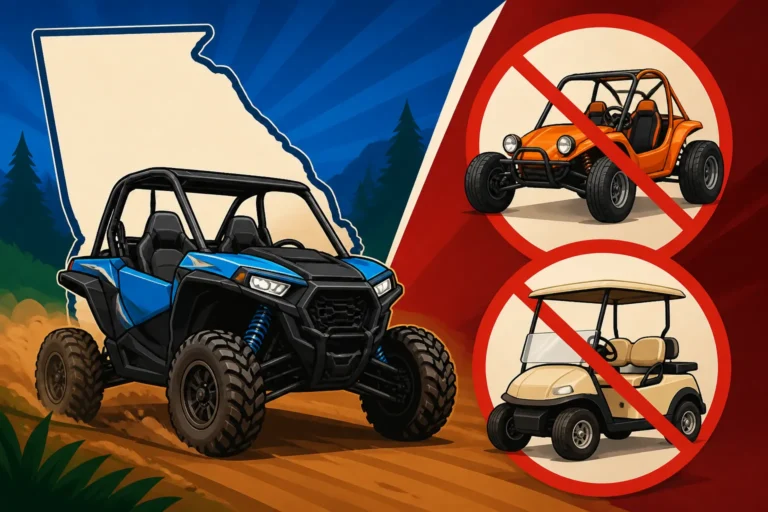
MPOHV stands for "Motorized Off-Highway Vehicle," and it's the classification that Georgia uses for side-by-sides that meet a very specific set of criteria. Unlike traditional ATVs or dirt bikes, which are generally designed for straddle-seat operation, MPOHVs are built with features more akin to a small car or utility vehicle. This distinction is crucial because Georgia explicitly excludes many common off-highway vehicles from this registration. For a Polaris Ranger owner, this MPOHV designation is your ticket to limited road access. It acknowledges that machines like yours, with their specific design, can operate safely under certain circumstances on public roads where other off-road vehicles simply cannot.
The "Why" Behind Registering Your Polaris Ranger
You might be asking yourself, "Why even bother with all this paperwork?" The primary benefit, and often the driving force for Polaris Ranger owners, is the ability to legally traverse county roads. Imagine you're heading to your favorite fishing spot, a remote trailhead, or simply need to get from one part of your property to another without trailering your machine everywhere. Before MPOHV registration, using a Polaris Ranger on any public road was technically illegal and could lead to citations. Now, with a proper MPOHV plate, you gain access to these county roads, which can be incredibly convenient and expand the utility of your Ranger significantly. It's a voluntary registration, but for many, the freedom it offers is well worth the effort. You can learn more about [What Registration Buys You on a County Road]. Keep in mind that this doesn't extend to state highways or interstates, but for getting around your local area, it's a game-changer.
Does Your Polaris Ranger Meet the Eligibility Requirements?
This is where the rubber meets the road, so to speak. Georgia has laid out a clear, eight-point eligibility test that your Polaris Ranger must pass to qualify for MPOHV registration. While many Polaris Ranger models are designed in a way that naturally aligns with these requirements, it's absolutely critical to go through each point and verify that your specific machine—or any modifications you've made—still fits the bill. A single missed point can mean a rejected application at the tag office.
The Eight-Point Test for Side-by-Sides
Let's break down each of the crucial criteria your Polaris Ranger needs to satisfy:
- Non-Straddle Seat: Your Polaris Ranger almost certainly comes standard with bucket or bench seats, meaning you sit in it, not on it like a motorcycle or traditional ATV. This is a fundamental design element that differentiates MPOHVs. [Why Georgia's MPOHV Rules Demand a Non-Straddle Seat] explains this in more detail.
- Steering Wheel Control: Just like the non-straddle seat, your Polaris Ranger is equipped with a steering wheel, not handlebars. This control mechanism is another key factor that Georgia considers for roadworthiness, aligning it more with conventional vehicles. For a deeper dive, check out [Georgia Requires a Steering Wheel, Not Handlebars].
- Width Limit (80 Inches): Most standard Polaris Ranger models are well within the 80-inch width limit. However, if you've added aftermarket accessories like wide fender flares, offset wheels, or oversized tires, you'll need to measure your machine from its widest point (excluding mirrors) to ensure it doesn't exceed this. This measurement is taken from the outermost points of the tires or any permanently affixed parts. [Georgia's 80-Inch Width Limit for Registration] can provide more context.
- Gross Vehicle Weight (Under 4,000 Pounds): This refers to the total weight of your Polaris Ranger, including any accessories, fuel, and the maximum payload it's designed to carry. Most Polaris Rangers, especially stock models, will fall comfortably under the 4,000-pound gross weight ceiling. Check your owner's manual for the official Gross Vehicle Weight Rating (GVWR) or a similar specification. For more on this, see [Georgia's 4,000-Pound Gross Weight Ceiling].
- Payload Capacity (Over 350 Pounds): Your Polaris Ranger must be designed to carry at least 350 pounds of payload (passengers and cargo combined). Given that most Rangers are utility-focused and designed to carry multiple passengers and gear, this is generally not an issue. Again, refer to your owner's manual for the official payload capacity. You can find more details at [Georgia's 350-Pound Payload Requirement].
- Speed Capabilities (25-65 MPH): Your Ranger needs to be capable of at least 25 miles per hour but not exceed 65 miles per hour on level ground. Most modern Polaris Rangers will fit perfectly within this speed range, as they are designed for both utility and recreational speeds that typically far exceed 25 mph but rarely go above 65 mph. Take a look at [Georgia's 25 to 65 mph Speed Requirement] for more information.
- Factory Seat Belts: Your Polaris Ranger must be equipped with seat belts as installed by the manufacturer. This is a standard safety feature on all Polaris Ranger models, crucial for passenger safety and compliance with MPOHV rules. [Georgia Requires Seat Belts on a Registered Machine] discusses this in detail.
- Manufactured After January 1, 2000: Most Polaris Rangers sold today will easily meet this requirement. This rule aims to ensure that registered machines meet modern safety and emissions standards. If you have an older Polaris Ranger, double-check its manufacturing date, which is usually found on the VIN plate or sticker. [Machines Built Before 2000 and Georgia Registration] provides further clarity.
Essential Equipment Requirements
Beyond the eight-point test, your Polaris Ranger also needs to have a few key pieces of equipment to be considered road-ready for MPOHV registration:
- Headlights: Your Ranger must have working headlights, essential for visibility, especially during dawn, dusk, or adverse weather conditions.
- Brake Lights: Functional brake lights are non-negotiable for safety, signaling to other drivers when you're slowing down or stopping.
- Rearview Mirrors: At least one rearview mirror is required. This is vital for situational awareness on shared county roads, allowing you to see traffic approaching from behind.
These items contribute to the overall safety profile of your machine when sharing roads with other vehicles, even if it's just a quiet county road.
Gathering Your Polaris Ranger's Paperwork for Registration
Navigating the paperwork can feel like a daunting task, but having everything in order before you head to the Georgia County Tag Office will save you immense time and frustration. Think of it as preparing for a big test; the more prepared you are, the smoother the process will be. For your Polaris Ranger, specific documents prove ownership, residency, and compliance with state regulations. Missing even one piece of information can send you home empty-handed.
Proving Ownership of Your Ranger
Since Polaris Rangers, like most ATVs and UTVs, are not titled in Georgia, proving ownership relies on a combination of documents.
- Manufacturer's Statement of Origin (MSO) / Manufacturer's Certificate of Origin (MCO): If your Polaris Ranger is brand new, the dealer will provide you with an MSO or MCO. This document is like a birth certificate for your machine and is critical for first-time registration.
- Bill of Sale: If you purchased your Polaris Ranger from a private seller, a detailed bill of sale is paramount. This document should include the full names and addresses of both buyer and seller, the date of sale, the purchase price, and a clear description of the Polaris Ranger, including its Vehicle Identification Number (VIN). Using a reliable template from a service like LawDepot can ensure your bill of sale includes all necessary legal language and fields, reducing potential issues at the tag office. Even if you don't have an MSO, a strong [Bills of Sale That Hold Up at a Tag Office] is crucial.
- Ownership Affidavit (Form MV-OHV): This is Georgia's specific form for MPOHV registration, and it often serves as a primary proof of ownership when traditional titles aren't available. You'll need to fill this out accurately, declaring you are the rightful owner. It asks for details about your machine, its purchase, and other relevant information. [Georgia Form MV-OHV and What It Asks] covers this in detail. Again, a service like LawDepot can guide you through understanding the requirements for an affidavit, or even help draft similar legal documents if needed, ensuring clarity and compliance.
- Previous Registration (if applicable): If you're bringing a Polaris Ranger into Georgia from another state where it was registered, bring those previous registration documents. While not a title, they can help establish a chain of ownership.
Establishing Your Georgia Residency
The county tag office needs to verify that you are a resident of the county where you are attempting to register your Polaris Ranger.
- Georgia Driver's License or ID Card: This is usually the easiest and most common way to prove residency, provided it has your current Georgia address.
- Utility Bills, Bank Statements, or Lease Agreements: If your driver's license doesn't reflect your current address, or if you need additional proof, recent utility bills, bank statements, or a lease agreement showing your name and current address in Georgia can serve as supplementary documentation. Make sure these documents are recent, typically within the last 30 to 60 days. You can refer to [Proof of Residence a Tag Office Accepts] for more options.
Proof of Insurance and Sales Tax Payment
Two critical financial and legal requirements must be met before your Polaris Ranger can receive an MPOHV plate.
- Liability Insurance: You must have proof of liability insurance that meets Georgia's minimum requirements for vehicles operating on public roads. Your insurance provider can issue you an insurance card or declaration page specifically showing coverage for your Polaris Ranger. This is not optional; road access demands it. For further details, see [Georgia Liability Insurance Tied to Registration].
- Sales Tax Payment Proof: Georgia requires that sales tax be paid on the purchase of your Polaris Ranger before it can be registered. If you bought it from a licensed dealer in Georgia, they would typically collect and remit the sales tax for you, and your bill of sale will often reflect this. If you purchased it privately, you may need to pay the sales tax directly at the tag office when you register. If your machine was acquired before June 30, 2024, there might be a presumption that tax was already paid, but it's always best to have clear documentation. [Georgia Sales Tax Paid Before Registration] provides context. This is where LawDepot can be helpful for understanding what constitutes proper documentation for a private sale, including clear itemization of purchase price to avoid issues with tax assessment.
VIN Inspection (Form T-22B)
In certain situations, especially if you're registering a machine from out-of-state or one that lacks clear paperwork, a VIN inspection might be required.
- Form T-22B: This form, the Vehicle Identification Number and Odometer Discrepancy Inspection Certification, must be completed by a Georgia law enforcement officer or certain certified personnel. They will physically inspect your Polaris Ranger to verify the VIN matches your paperwork and to ensure it isn't a stolen vehicle. It's not always needed for a brand new purchase from a Georgia dealer but is crucial in other scenarios, like bringing in an out-of-state machine or if there are any doubts about the machine's history. Consult [T-22B and When You Need It] for specific situations when this inspection is mandated.
Here's a quick checklist of documents you'll likely need:
| Document Type | Description | Common Sources |
|---|---|---|
| Proof of Ownership | Manufacturer's Statement of Origin (MSO/MCO) for new, detailed Bill of Sale for used (consider LawDepot templates), or Georgia MV-OHV Ownership Affidavit. | Dealer, Seller, Georgia DOR website, LawDepot |
| Proof of Residency | Valid Georgia Driver's License or State ID card with current address. | Georgia DDS |
| Proof of Insurance | Insurance card or declaration page showing liability coverage for your Polaris Ranger, meeting Georgia's minimums. | Your insurance provider |
| Sales Tax Payment Proof | Dealer invoice showing sales tax paid, or be prepared to pay at the tag office. | Dealer, Georgia County Tag Office |
| VIN Inspection (T-22B) | Required for out-of-state machines, some private sales, or machines with questionable paperwork. Completed by law enforcement. | Georgia Law Enforcement, Certified Inspector |
| Completed MV-OHV Form | The official Georgia MPOHV registration application form. | Georgia DOR website, County Tag Office |
The Registration Process at Your Georgia County Tag Office
With all your documents meticulously gathered, the next step is to head to your local Georgia County Tag Office. This is where your preparedness will truly pay off. While the process itself is fairly straightforward, understanding what to expect can ease any anxiety and ensure a smooth transaction for your Polaris Ranger's MPOHV registration. Remember, these offices handle a wide variety of vehicle registrations, so having your MPOHV-specific paperwork clearly organized will be a huge help to both you and the clerk.
Visiting Your Local Tag Office
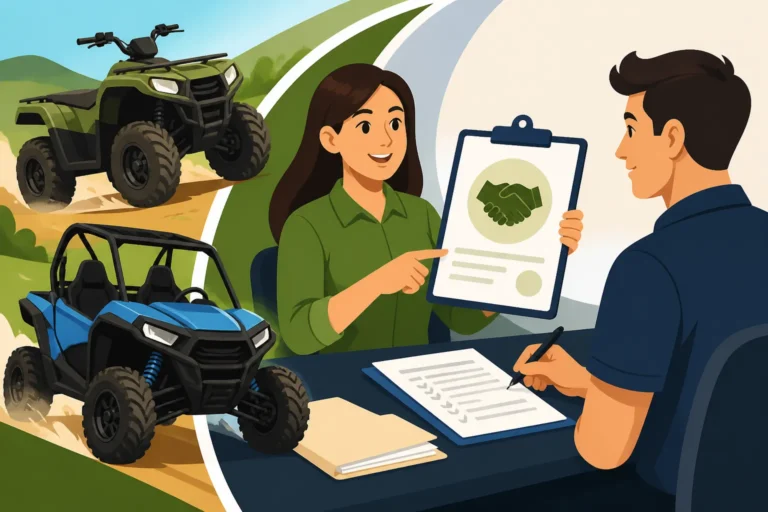
Your journey begins at the county tag office corresponding to your primary residence. You can't register your Polaris Ranger in a different county just because it's more convenient or you store it there; it must be the county where you live and typically claim residency. [Registering in the County Where You Live] is a crucial point to remember. Upon arrival, you'll typically take a number and wait for your turn. When called, present all the documents you've gathered. The clerk will review everything, checking for completeness and accuracy. If anything is missing or incorrect, they will inform you, and you may need to return with the corrected information. This is why a thorough pre-check of your paperwork, including leveraging resources like LawDepot for correct forms, is so important.
Submitting Documents and Paying Fees
Once the clerk confirms your documents are in order, you'll pay the applicable registration fees. Georgia's MPOHV registration has an annual fee, which is relatively modest compared to standard vehicle registration. Be aware that most tag offices accept various payment methods, including cash, check, and often credit/debit cards, though some may charge a small processing fee for card payments. It's always a good idea to confirm payment options with your specific county tag office before you visit. The clerk will process your application, and if everything is approved, you'll be issued your MPOHV plate and registration decal.
Receiving Your MPOHV Plate and Decal
Congratulations! Once approved, you'll walk out with your official MPOHV plate and a validation decal. The plate is specifically designed for off-highway vehicles and will need to be properly displayed on your Polaris Ranger. The law requires it to be clearly visible on the rear of the machine. The decal, which indicates your registration is current, will be affixed to the plate. It's important to keep your registration certificate (the paper document) with you when operating your Ranger, as law enforcement may ask to see it. [Georgia Plate Placement on a Side-by-Side] offers more guidance on where to put it.
Understanding Branded Registration
In some cases, your Polaris Ranger might receive what's called a "branded" certificate of registration. This isn't necessarily a bad thing, but it's important to understand its implications. A branded certificate indicates that the machine has a history that includes certain events, such as being deemed salvage, rebuilt, or possibly having an undisclosed lien. While rare for a new Polaris Ranger, it's more common if you're registering a machine with a complex past, like one brought in from out of state after an accident. The branded designation serves as a warning to future buyers about the vehicle's history. It's a consumer protection measure. For more information on this, check out [What a Branded Registration Warns You About]. If you're purchasing a used Ranger, it's wise to investigate if it has any such history, and LawDepot can provide insights into understanding vehicle history reports if you're drafting a purchase agreement.
Annual Renewal
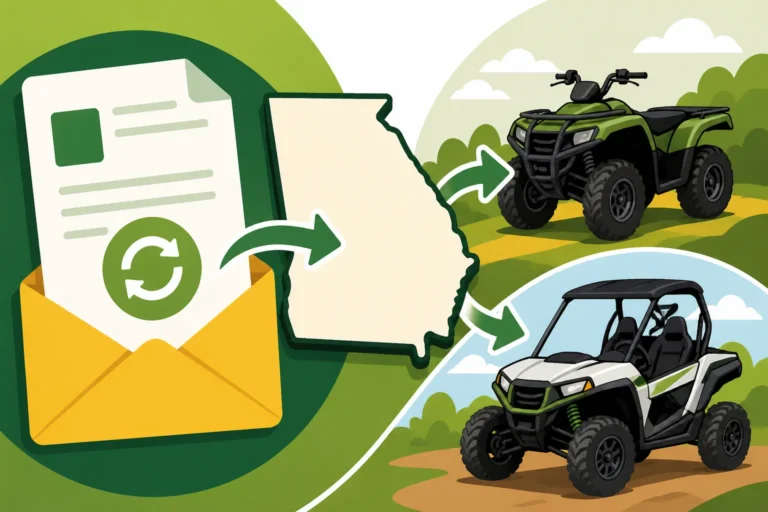
Your Polaris Ranger's MPOHV registration is not a one-time affair. It requires annual renewal, similar to car tags. You'll typically receive a renewal notice in the mail or via email as the expiration date approaches. Renewing on time is important to avoid any lapse in your legal road access. The renewal process is usually simpler than the initial registration, often doable online or through mail, but you'll still need to ensure your insurance is current. Information on [Georgia MPOHV Renewal Each Year] can help you stay on top of this.
Disclaimer
This article is for general informational purposes only and does not constitute professional advice. Laws, prices and regulations vary by location and change over time. Consult a qualified professional for guidance on your specific situation.