Georgia’s 25 to 65 mph Speed Requirement
It can be incredibly frustrating to gather all your paperwork, mentally check off every box for registering your off-highway vehicle in Georgia, only to discover one seemingly small detail can derail the entire process. One of those often-overlooked requirements is the specific speed range your machine must fall into: between 25 and 65 miles per hour. This guide will meticulously break down Georgia's speed requirement for MPOHV (Multipurpose Off-Highway Vehicle) registration, helping you understand why it exists and what it means for your vehicle.
Understanding Georgia's MPOHV Registration Basics
Getting your off-highway vehicle registered for limited road use in Georgia can feel like navigating a maze of rules and regulations. The state has a clear set of criteria designed to ensure that only certain types of machines, deemed suitable for shared road use, receive a special registration. Among these criteria, the speed capability of your machine plays a pivotal role. It’s not just an arbitrary number; it’s a foundational aspect of how the state categorizes and permits these vehicles on public roads.
What is an MPOHV in Georgia?
First things first, let's clarify what an MPOHV actually is in the eyes of Georgia law. MPOHV stands for Multipurpose Off-Highway Vehicle, and it's a specific classification created to allow certain side-by-sides, utility vehicles (UTVs), and similar machines to operate on designated county roads. It’s important to understand that this classification is distinct from traditional ATVs (All-Terrain Vehicles) or dirt bikes. These other types of machines, for instance, generally [Why Georgia Does Not Title an ATV] and have different rules. For an MPOHV, the registration process is voluntary, meaning you don't have to register it if you only plan to ride on private land, but it's essential if you want to take advantage of [What Registration Buys You on a County Road]. The definition of an MPOHV hinges on several factors, including its seating, steering mechanism, weight, and, critically, its speed capabilities.
This distinction is crucial because it immediately tells you what kind of machine Georgia envisions for limited public road use. It’s not about transforming every off-road vehicle into a street-legal car; it’s about acknowledging the utility and design of certain machines that can safely integrate with slower-moving traffic on specific types of roads. If your machine doesn't fit the MPOHV mold, it simply won't qualify for this specific type of registration, regardless of how much you might wish it would.
Why This Specific Speed Range?
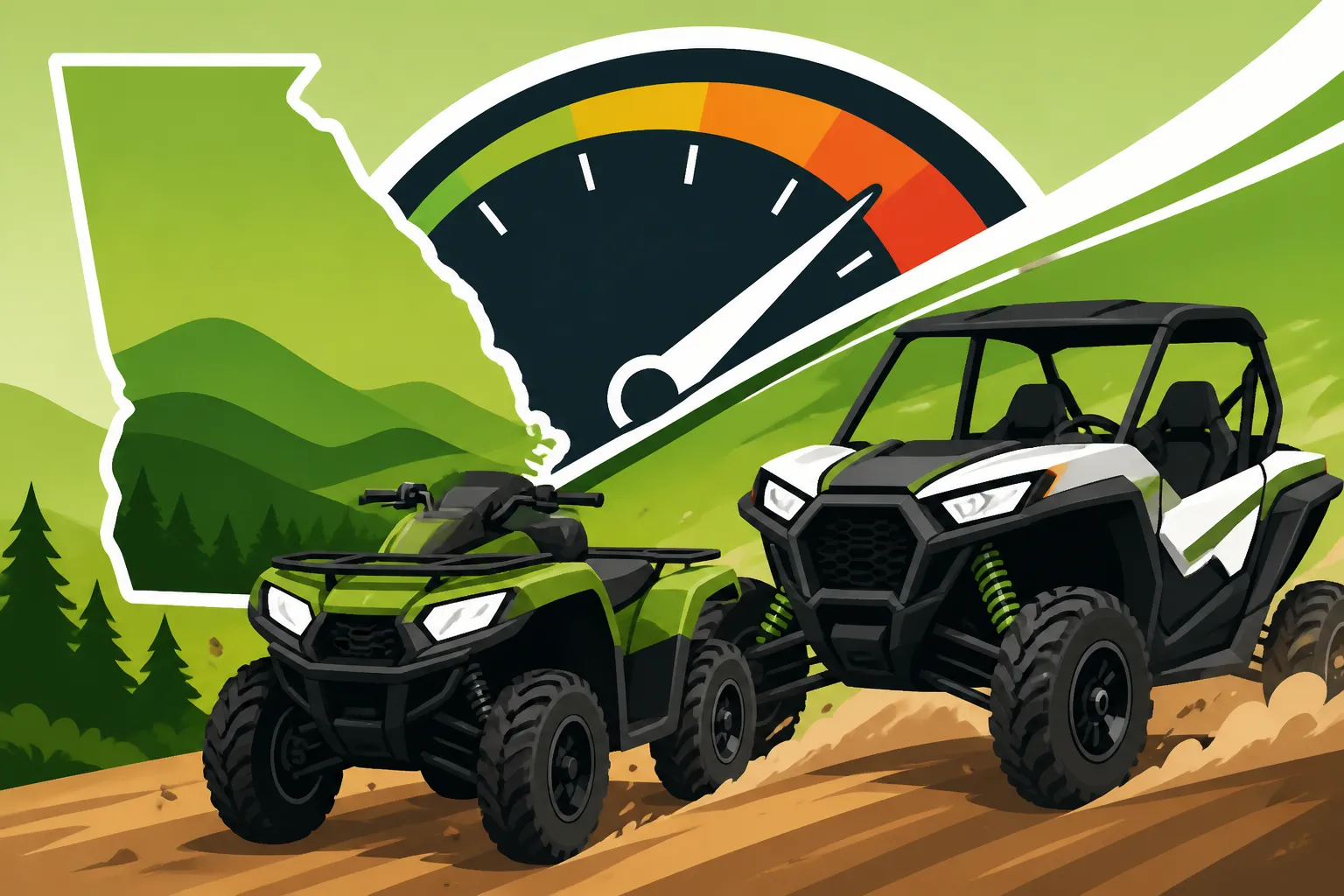
The 25 to 65 mph speed requirement isn't just a random set of numbers pulled from thin air. It's a carefully considered range designed to address several key concerns: safety, road integration, and the clear differentiation of MPOHVs from other types of vehicles. When a vehicle is too slow, it can become a hazard on roads where even agricultural equipment typically moves at a faster pace. Imagine a machine topping out at 15 mph trying to share a road with cars going 35 mph; it creates a significant speed differential and potential for accidents.
On the other hand, if a vehicle is too fast – exceeding 65 mph – it starts to encroach on speeds typically reserved for state highways or even interstates, which are explicitly off-limits for MPOHVs. The goal of MPOHV registration is to allow limited access to county roads, which usually have lower speed limits and are not designed for high-speed traffic. This speed cap ensures that registered MPOHVs remain within a reasonable speed envelope for these specific road types, reducing the risk of high-speed collisions and keeping these vehicles in their intended operational environment. It also helps differentiate them from street-legal cars and trucks, which have different safety standards and operational requirements. This balancing act ensures that MPOHVs can safely coexist with other vehicles without undue risk, aligning with Georgia's broader [Georgia MPOHV Road Rules: County Roads Only].
The "Too Slow" Problem: Machines Under 25 mph
One of the most common pitfalls for hopeful MPOHV owners in Georgia is having a machine that, while perfectly functional for off-road tasks, simply doesn't meet the minimum speed threshold of 25 mph. This can be a bitter pill to swallow, especially if you had your heart set on using your vehicle for quick trips down a county road. The state's intent here is clear: vehicles on public roads must be capable of keeping up with at least the lower end of traffic flow to prevent becoming a significant impediment or safety hazard.
Common Machines That Don't Qualify
When it comes to machines that fall short of the 25 mph minimum, several common examples come to mind, and it often surprises owners. Golf carts are perhaps the most frequent example. While many communities, like Peachtree City, have specific ordinances for Personal Transportation Vehicles (PTVs) and golf carts, these are distinct from MPOHV registration. Standard golf carts are typically designed to top out at 15-20 mph, making them too slow for MPOHV status. Similarly, some older utility machines, especially those primarily designed for very specific, low-speed agricultural tasks, might not reach the 25 mph mark. Even some smaller, youth-model ATVs or certain electric utility vehicles fall into this category.
It’s crucial to understand that even if your machine feels like it could go faster, the requirement is based on the manufacturer's stated top speed. This information is typically found in the owner's manual or on the manufacturer's website. Without official documentation supporting a top speed of at least 25 mph, your application at the county tag office is likely to be rejected. This is why it's so important to review your vehicle's specifications before you even begin the registration process.
Implications for Farm or Private Land Use
For owners of machines that are "too slow" for MPOHV registration, the primary implication is that their vehicle remains an off-road only machine when it comes to public access. This isn't necessarily a bad thing, depending on your intended use. If your primary purpose is [Georgia MPOHV Registration and Farm Use] or simply enjoying trails on private property, the speed requirement for road registration becomes irrelevant. You can continue to use your machine without any road-specific restrictions.
However, if you envisioned using your slow-poke utility vehicle for quick jaunts to the mailbox, visiting a neighbor down the road, or accessing a remote hunting spot via a county road, you'll need to adjust your expectations. These machines will not be granted a Georgia MPOHV plate, and operating them on public roads, even county roads, would be considered illegal. In such cases, your options are limited to private land, designated [Georgia ATV Trails: Where You Can Legally Ride], or private property where you have explicit permission. It's a clear line drawn by the state: if it can't maintain a reasonable minimum speed, it stays off the roads for MPOHV purposes.
The "Too Fast" Problem: Machines Over 65 mph
While many focus on the lower speed limit, another equally important aspect of Georgia's MPOHV speed requirement is the upper cap: your machine cannot be designed to exceed 65 miles per hour. This limitation is just as critical as the minimum speed, and it helps define the operational boundaries of MPOHVs on public roads. Just as a vehicle that's too slow can impede traffic and create hazards, one that's designed for excessive speeds can also pose significant risks, especially on county roads not built for such velocities.
High-Performance Side-by-Sides and Sport Quads
In today's market, there's an incredible array of high-performance side-by-sides and sport quads designed for thrilling off-road adventures, often boasting powerful engines capable of reaching speeds well over 65 mph. Think of some of the more aggressive sport UTVs from manufacturers like Polaris, Can-Am, or Yamaha, which are built for speed and agility in open terrain. While these machines are fantastic for tearing up a track or navigating challenging trails, their top-end speed disqualifies them from MPOHV registration in Georgia. The state isn't trying to curb your fun on the trails; it's simply defining what is and isn't appropriate for limited public road use.
The issue isn't whether you will drive it at 70 mph on a county road, but whether the machine is capable of doing so. The manufacturer's specifications are again the key here. If the published top speed for your model is, say, 75 mph, it will not meet the MPOHV criteria. This can be particularly frustrating for owners who invested in a powerful machine thinking it would offer the best of both worlds – trail performance and limited road access. It's a reminder that not all side-by-sides are created equal in the eyes of the Georgia Department of Revenue when it comes to registration.
Safety Concerns and Road Integration
The primary reason for capping the MPOHV speed at 65 mph is safety. County roads, while public, are often narrower, less maintained, and have more unpredictable obstacles than state highways. They frequently wind through residential areas, rural landscapes, or even agricultural zones where farm equipment might suddenly enter the road. A vehicle capable of exceeding 65 mph introduces a higher level of risk into this environment. Faster speeds mean longer stopping distances, reduced reaction time, and a greater potential for severe damage or injury in the event of a collision.
Furthermore, allowing high-speed vehicles to blend with traffic on county roads, which are often shared by slower-moving vehicles, pedestrians, and cyclists, undermines the very concept of "multipurpose off-highway vehicle" as intended by the state. MPOHVs are meant for utility and recreational access, not high-speed commuting. The 65 mph limit ensures that these vehicles operate within a speed range that is generally more compatible with typical county road conditions and speed limits, enhancing overall safety for both the MPOHV operator and other road users. This aligns with the limitations on where [Georgia Sheriff Enforcement on County Roads] can occur, reinforcing that these machines are not street-legal for high speeds.
Proving Your Machine Meets the Speed Criteria
Once you understand the 25 to 65 mph speed requirement, the next logical step is to figure out how to prove your machine falls within this range when you apply for registration. It's not enough to simply state that your UTV or side-by-side meets the criteria; the Georgia Department of Revenue, through your local county tag office, will require documentation. This often trips people up, as they might not realize the specific type of proof needed.
Manufacturer Specifications as Evidence
The most straightforward and generally accepted method of proving your machine's speed capability is through official manufacturer specifications. This typically means consulting your owner's manual. Most owner's manuals include a section detailing technical specifications, including the vehicle's top speed, engine displacement, weight, and other crucial data points. If you don't have a physical copy, many manufacturers provide digital versions on their official websites. Printing out the relevant page from the website or bringing a digital copy on your phone or tablet can often suffice.
It’s important that this documentation clearly shows the vehicle's make, model, and year, and that the stated top speed falls between 25 and 65 mph. The tag office needs to see an authoritative source that verifies this detail. If you've modified your machine's engine or gearing to significantly alter its top speed, the original manufacturer specifications might still be what the tag office refers to, potentially complicating your application if the modification pushes it outside the acceptable range. Always ensure the documentation you provide is clear, legible, and directly pertinent to your specific vehicle.
What Happens at the County Tag Office
When you visit your local [Where the County Tag Office Fits In] to register your MPOHV, the speed requirement is just one of several criteria they will review. The tag office clerk will likely ask for your proof of ownership, such as a bill of sale, and require you to complete the [Georgia Form MV-OHV and What It Asks]. During this process, they'll carefully check the vehicle's specifications against the eligibility requirements. This is where your manufacturer's documentation comes into play. You might be asked to point out the specific section in your owner's manual or on the printout that verifies the 25-65 mph top speed.
Beyond just the speed, they will also be looking at other physical attributes of your machine, such as whether it has a steering wheel (not handlebars), a non-straddle seat, seat belts, headlights, brake lights, and rearview mirrors. The speed check is part of a holistic review to ensure the machine truly qualifies as an MPOHV. If there's any ambiguity or lack of clear documentation regarding the speed, your application might be delayed or even rejected, requiring you to return with the proper proof. It's always best to be over-prepared with your documentation rather than under-prepared.
Alternatives and Workarounds for Disqualified Machines
Discovering that your beloved off-highway vehicle doesn't meet Georgia's 25 to 65 mph speed requirement for MPOHV registration can be a real letdown. However, it's not necessarily the end of your off-road adventures. While you might not be able to get that special plate for county road access, there are still plenty of ways to enjoy your machine legally and safely. The key is understanding your options and adapting your usage plans.
Private Land Riding and Trail Parks
For machines that don't qualify for MPOHV registration due to speed (either too slow or too fast), the most straightforward solution is to restrict their use to private land or dedicated off-road parks. Georgia boasts a fantastic array of [Georgia ATV Trails: Where You Can Legally Ride], including national forest OHV systems and private parks like [Iron Mountain Resort: Georgia's Biggest Private Park] or Highland Park. These venues are specifically designed for off-highway vehicles and don't require MPOHV registration for access (though they will have their own permit requirements, like [Georgia's Day and Annual Forest OHV Permits], and safety rules).
This is often the intended environment for many high-performance sport UTVs and ATVs anyway, where their speed and agility can be fully enjoyed without the constraints of public road regulations. For slower utility machines, private land or farm use remains perfectly acceptable and often their primary purpose. In these settings, you don't have to worry about the 25-65 mph rule, as you're not operating on a public road system. This allows you to fully utilize your machine for its intended design, whether it's hauling feed on the farm or tackling challenging trails in a controlled environment.
Modifying a Machine to Meet Requirements (If Possible)
The idea of modifying a machine to meet the speed requirements often crosses an owner's mind. For instance, can you add a governor to a high-speed side-by-side to limit its top speed to 65 mph, or somehow boost a slow utility vehicle to hit 25 mph? While technically possible in some cases, this route is generally fraught with challenges and not recommended as a reliable workaround for MPOHV registration.
First, proving such a modification to the Georgia Department of Revenue would be extremely difficult. They rely on manufacturer specifications, not aftermarket alterations. You would likely need specialized engineering certifications or a T-22B inspection form completed by a law enforcement officer who can attest to the modification, which is a rare and complex undertaking. Second, modifications that significantly alter a vehicle's intended performance can raise safety and liability concerns. If an incident occurs, and your machine was modified from its original manufacturer specifications to meet a registration requirement, it could complicate insurance claims or legal outcomes. Finally, the cost and effort involved in reliably and legally modifying a vehicle to meet these precise speed requirements, and then proving it to the state's satisfaction, often outweigh the benefits. It's usually far more practical to accept the machine's factory limitations and adjust your usage accordingly, or consider purchasing a different machine that already meets the criteria. When selling a privately modified machine, having clear documentation is paramount, and resources like LawDepot can help you draft a comprehensive bill of sale that outlines the vehicle's current state and any known modifications, providing transparency for both buyer and seller.
Broader Implications of the Speed Rule
The 25 to 65 mph speed requirement for Georgia MPOHV registration isn't just a hurdle you clear at the tag office; it has far-reaching implications for how you own, operate, and even insure your off-highway vehicle. Understanding these broader impacts can help you make informed decisions, avoid legal troubles, and ensure you're covered in the event of an unforeseen incident. It's all part of the larger picture of responsible MPOHV ownership in the state.
Impact on Insurance and Liability
One of the most significant implications of meeting (or failing to meet) the MPOHV speed requirement, and thus being eligible for registration, relates directly to insurance and liability. When your machine is properly registered as an MPOHV in Georgia, you are required to carry liability insurance. This isn't just a suggestion; it's a mandatory part of the registration process. The tag office will verify that you have [Georgia Liability Insurance Tied to Registration] before issuing a plate. This insurance is crucial because it provides financial protection in case you are involved in an accident on a county road and are found at fault, covering damages or injuries to other parties.
If your machine does not meet the speed criteria and therefore cannot be registered, operating it on public roads is illegal. In the event of an accident while illegally operating an unregistered vehicle on a public road, your personal liability could be enormous. Standard off-road insurance policies might not cover incidents occurring on public roads, and even if they do, the fact that you were operating the vehicle illegally could complicate or void your coverage. This could leave you personally responsible for significant medical bills, property damage, and legal fees. Therefore, the speed rule directly impacts your ability to secure the necessary insurance and protect yourself from substantial financial risk. Even when selling a machine that might have questionable registration status, having a robust bill of sale created through a service like LawDepot can help clearly define the terms and "as-is" condition, protecting both parties.
The Sunset Clause and Future Considerations
It's also essential to be aware that Georgia's MPOHV road access provisions are not permanent. The law includes a "sunset clause," meaning the current rules allowing MPOHVs on county roads are set to expire. This [Georgia's ATV Road Access Law Sunsets in July 2027] is a critical detail that every MPOHV owner in Georgia needs to keep in mind. While your machine might meet the 25-65 mph requirement and all other criteria for registration today, the landscape of MPOHV road use could change significantly after this date.
The existence of a sunset clause underscores the temporary and experimental nature of this road access. It suggests that lawmakers may revisit the issue to assess its impact on public safety and road management. While it doesn't immediately affect your ability to register your machine today, it highlights the need to stay informed about potential legislative changes. What happens to existing registrations or the future legality of MPOHV road use after July 2027 is yet to be definitively determined. This makes it even more crucial to adhere strictly to the current rules, including the speed requirements, to ensure you're operating within the bounds of the law for as long as these provisions remain in effect. For anyone navigating the sale or transfer of an MPOHV, especially close to a sunset date, a clear and legally sound document, which can be drafted with tools from LawDepot, is always a good idea to protect all parties.
Comparing Speed Capabilities for Georgia MPOHV Registration
To help you quickly gauge where your machine might stand, here’s a simple comparison of typical speed capabilities against Georgia’s MPOHV requirements. Remember, these are general examples, and you must always refer to your specific manufacturer's specifications for definitive proof.
| Vehicle Type / Design | Typical Top Speed Range | Meets Georgia MPOHV 25-65 mph? | Common Examples | Primary Use Implications |
|---|---|---|---|---|
| Standard Golf Cart / Low-Speed PTV | 15-20 mph | No | Club Car Precedent, EZ-GO Express, Yamaha Drive | Private property, designated golf cart paths (with local ordinance), very limited public road use with specific PTV ordinances (not MPOHV registration). |
| Heavy-Duty Utility Vehicle (older/smaller engines) | 20-28 mph | Borderline / Check Specs | Older Kawasaki Mules, some John Deere Gators, Polaris Rangers | May be too slow for MPOHV; often used for farm/private land. If it hits 25+, it could qualify if other criteria are met. |
| Mid-Range Utility/Recreational Side-by-Side | 35-60 mph | Yes | Polaris Ranger 570, Can-Am Defender DPS, Honda Pioneer 700, Yamaha Wolverine X2 | Excellent candidates for MPOHV registration, fitting within the legal speed window. Ideal for combining work, recreation, and limited county road access. |
| High-Performance Sport Side-by-Side | 65-85+ mph | No | Polaris RZR Turbo S, Can-Am Maverick X3, Yamaha YXZ | Too fast for MPOHV registration. Best suited for private land, dedicated Georgia Private Off-Road Parks Compared, or sanctioned racing events. Illegal for public road use, even county roads, under MPOHV rules. |
| Standard ATV / Quad (straddle seat) | 40-70+ mph | Not Applicable (Speed often fits) | Honda Foreman, Yamaha Grizzly, Suzuki KingQuad | While speed might fit, these are typically disqualified due to having handlebars and a straddle seat. Why Handlebars Disqualify a Machine and Why a Straddle Seat Disqualifies a Machine from MPOHV registration. Only for private land or designated ATV trails. |
Disclaimer
This article is for general informational purposes only and does not constitute professional advice. Laws, prices and regulations vary by location and change over time. Consult a qualified professional for guidance on your specific situation.