Georgia Online Safety Courses Riders Take Anyway
Georgia does not require a statewide ATV safety course, but riding without basic training can leave new operators guessing about hills, passengers, and trail rules. An online course can build useful knowledge before a ride, as long as you know what it does not replace: hands-on practice, local rules, permits, or protective gear.
What an online ATV safety course can and cannot do
For Georgia riders, an online safety course is generally a voluntary learning tool, not a state operating permit or a substitute for permission to ride. Georgia does not have a state ATV safety course requirement, but a private riding park, rental operator, landowner, or organized event may set its own conditions. Check directly with the place you plan to ride before relying on a course certificate.
A good course helps a rider think through common risks before they occur. Online lessons often cover topics such as:
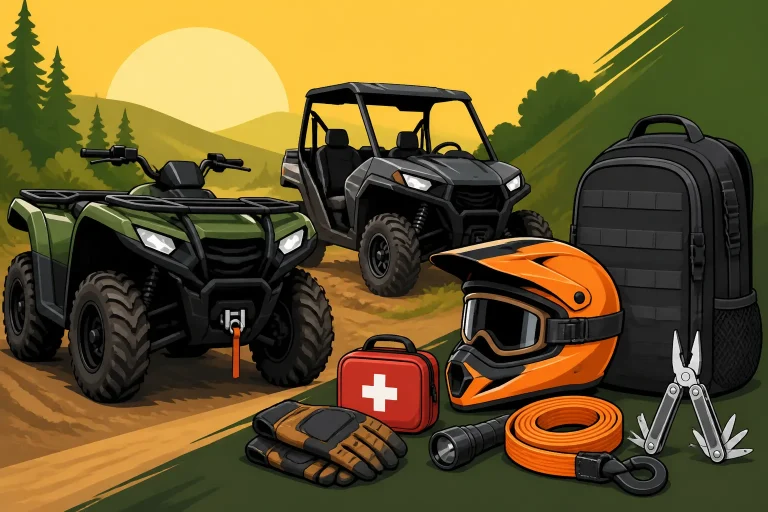
- Choosing protective equipment and checking that it fits
- Inspecting a machine before a ride
- Understanding controls and basic operating principles
- Adjusting speed and following distance to conditions
- Carrying passengers only when the ATV is designed for them
- Approaching slopes, turns, obstacles, and water carefully
- Communicating with a group and responding to an emergency
That knowledge can be useful at home, on private property, or before a first visit to a trail system. It can also give a parent and young rider a shared vocabulary for discussing safe decisions.
But a screen cannot teach every skill that matters on a moving machine. It cannot show whether a rider can control the throttle smoothly, shift body position, brake without losing control, or respond to a sudden change in terrain. Completing a quiz is not proof that someone can safely ride a particular ATV or UTV.
Treat a course certificate as evidence of course completion, not as a general license. A certificate may be accepted by one organization and not another. Before paying for a course or presenting a certificate, ask the relevant park, rental business, event organizer, or land manager what it accepts. For context on the state requirement, see Georgia Has No State ATV Safety Course. For options beyond online learning, see Georgia Safety Course Options That Exist.
| What you want to accomplish | Can an online course help? | What to confirm or do as well |
|---|---|---|
| Learn basic safety concepts | Yes. It can explain hazards and sound habits. | Practice controls in a supervised, low-risk setting. |
| Meet a park or rental rule | Maybe. Acceptance depends on that operator’s policy. | Ask whether it accepts that specific course and certificate. |
| Qualify to ride public land | Not by itself. A course is not a riding permit. | Check the land manager’s current access rules and permits. |
| Prepare a child for riding | Yes, as a discussion and learning aid. | Follow age, supervision, helmet, and machine-size rules. |
| Prove hands-on riding ability | No. Online completion cannot demonstrate practical skills. | Arrange suitable instruction and supervised practice. |
A course is most useful when it helps you make better decisions before the engine starts. It is least useful when someone treats it as permission to ride wherever they want, or as a replacement for experience.
How to choose a course that is worth your time
Online courses vary in format and purpose. Some are designed as broad introductions; others focus on a particular machine type, rider group, or organization’s requirements. A course with a certificate is not automatically the right course for your situation.
Before enrolling, check these details:
- Who provides the course? Look for a clearly identified organization and a description of its training approach. Avoid courses that make vague promises about licensing or legal approval without explaining who recognizes the credential.
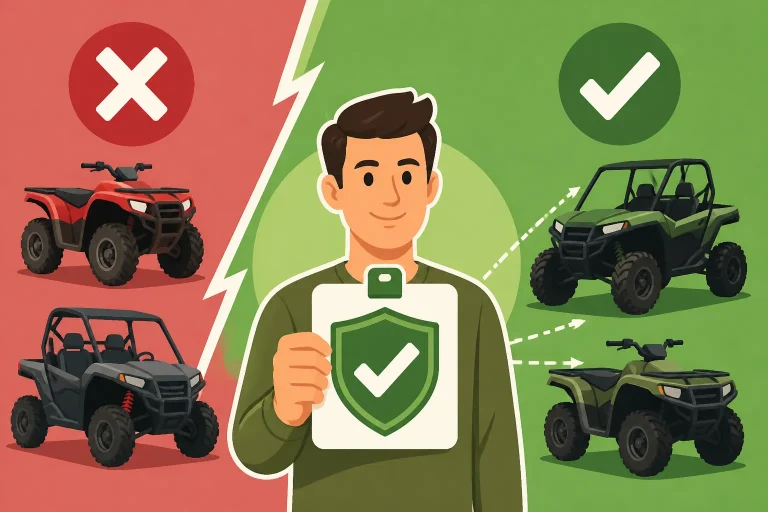
- What machines does it cover? An ATV and a side-by-side have different controls, seating, passenger arrangements, and handling. A course focused on one type may not address the other well.
- Does it teach practical safety, not just definitions? Look for lessons about risk assessment, terrain, equipment checks, and what to do when conditions change.
- Is there a knowledge check? A quiz or review can help reveal gaps, though passing it does not demonstrate riding skill.
- What does the certificate mean? Find out whether it records course completion, has an expiration or renewal condition, or is recognized by the organization you need to satisfy. Do not assume that a certificate is accepted everywhere.
- Does the course fit the rider? A new adult operator, a teen, and an experienced ATV rider moving to a side-by-side may need different instruction.
- Is hands-on training available? If the rider has never used the machine, practical instruction can address things an online module cannot.
Read the course description before entering payment details. Check the provider for current cost and terms, and confirm what the course includes. If a park or rental business requested training, ask it which course or proof it will accept first. That simple check can prevent paying for a certificate that does not meet its policy.
A short course can work well as a first step, especially if it uses clear explanations and realistic situations. A long course is not automatically more thorough, and a quick completion time does not necessarily mean the course is poor. Focus on whether it addresses the risks the rider will actually face and whether the rider understands the material well enough to use it.
For a new rider, an online course should come before—not instead of—careful practice. Begin on an appropriate machine in a controlled area, with a qualified adult or instructor supervising. Practice starting, stopping, turning, and controlling speed before attempting uneven ground or challenging trails. For youth riding, pair any course with the applicable rules in Georgia Supervision Rules for Minors and Georgia Under-18 Riders and the Helmet Rule.
Put the lessons into practice before riding in Georgia
A course is only useful if its lessons connect to the ride ahead. Georgia riders may use private property, private parks, or designated public riding areas, and the requirements differ. A completed safety module does not make a closed route open, satisfy every permit rule, or grant access to someone else’s land.
Before leaving home, identify the exact place where you intend to ride and check its current rules. A national forest riding area, for example, may have its own access requirements, designated routes, and permit process. See Georgia National Forest Permits Are Per Operator for the distinction between an operator permit and training. A permit addresses access under the relevant program; it does not certify that the operator has completed a safety course or has practical skill. What an Operator Permit Does Not Cover explains that difference.
Private riding parks set their own operating rules. They may establish age limits, supervision conditions, waiver requirements, machine restrictions, or expectations for protective gear. A general online certificate does not override those policies. Check Georgia Private Park Age Minimums and Georgia Private Park Waiver Forms, then verify the rules with the specific facility because policies can vary.
Use course material to build a simple pre-ride routine:
- Check the machine. Look over tires, controls, brakes, lights, and visible damage. Make sure the machine is appropriate for the rider and the planned route.
- Check the rider. Confirm that the operator understands the controls and can reach them comfortably. Use a properly fitted helmet and other suitable protective equipment.
- Check the route. Confirm that the route is open to the type of machine being used. Consider width, terrain, weather, and the rider’s skill.
- Check passengers. Carry a passenger only if the machine is designed and equipped for one, and follow its manufacturer’s instructions.
- Set group expectations. Agree on pace, spacing, hand signals or other communication, regrouping points, and what to do if someone becomes separated.
- Stop when conditions exceed the rider’s ability. Turning around is a safety decision, not a failure.
The lesson about terrain deserves particular attention. A beginner may know from an online module that hills and uneven ground can increase rollover risk, yet still misjudge a slope in the moment. Choose manageable routes and build experience gradually. Do not assume a machine’s power, four-wheel drive, or safety equipment will compensate for poor judgment.
Likewise, do not treat riding gear as a substitute for training. A helmet and other protective equipment can reduce exposure to some injuries, but they cannot prevent every crash. Georgia has specific rules that may apply to younger riders, and a venue may set additional requirements. Check the rule for the location and activity rather than relying on a course summary or a friend’s recollection.
If you ride on public land, distinguish among training, permits, and access rules. These solve different problems:
- A course teaches safety information and may issue proof of completion.
- A permit may authorize a person to use a particular riding area under its terms.
- Access rules determine where, when, and how a machine may be operated.
- A park or landowner policy may add conditions for that specific property.
Keeping those categories separate avoids a common mistake: assuming that one certificate makes a rider eligible to use every trail or road. For Georgia’s forest systems, check the requirements for the specific trail system and carry any required documentation. A course certificate is not interchangeable with a permit.
A practical plan for new and returning riders
The best use of an online course is as one part of a larger preparation plan. New riders can use it to learn terminology and understand hazards; returning riders can use it to refresh safety habits or prepare for a different machine. Neither group should treat online completion as a shortcut to challenging terrain.
A practical sequence is:
- Choose the riding location first. Identify whether it is private property, a private park, or a public riding area. Find the current rules from the operator or land manager.
- Ask about training requirements. If the location requests a course or certificate, confirm which ones it accepts before enrolling.
- Select a course suited to the machine and rider. An ATV course may not cover side-by-side passenger practices in enough detail, and an adult-focused course may not be suitable for a young rider.
- Complete the learning without rushing. Review sections the rider does not understand. Keep the completion record if the provider issues one, but do not assume it will satisfy every organization.
- Arrange hands-on practice. Start in a controlled setting with supervision. Build basic control before choosing a difficult route.
- Recheck rules and conditions before each outing. Access, closures, and local policies can change. Confirm them with the responsible organization.
- Use judgment on the ride. Slow down, leave space, and stop when visibility, weather, fatigue, or terrain makes continued riding unsafe.
For parents, an online course can be a helpful conversation starter, not a transfer of responsibility. Review the lessons together, ask the young rider to explain the main hazards in their own words, and watch how they handle the machine under supervision. A child who can pass a quiz may still need substantial coaching and practice. Follow the rules for the rider’s age and the location, including any conditions imposed by a private facility.
For experienced riders, a refresher is useful when moving from an ATV to a UTV, carrying passengers, riding with a group, or trying unfamiliar terrain. Familiarity with one machine does not guarantee competence on another. Controls, weight, visibility, passenger dynamics, and stopping behavior can differ. Read the machine’s manual and practice in a suitable area before riding at normal trail pace.
The bottom line is straightforward: an online safety course can improve preparation, but it is not a Georgia license, a trail permit, or proof of hands-on ability. Choose a course with clear, relevant instruction, confirm whether the organization you are dealing with recognizes it, and pair the lessons with practice and location-specific rule checks. That combination is far more useful than a certificate by itself.
Disclaimer
This article is for general informational purposes only and does not constitute professional advice. Laws, prices and regulations vary by location and change over time. Consult a qualified professional for guidance on your specific situation.