Carrying a Permit on the Trail
A permit is easy to forget when it lives in an email, glove box, or phone with no signal. For Georgia riders, the key is knowing which permit applies, whose permit it is, and how to show valid proof at a trailhead. A little preparation helps avoid a preventable delay and keeps a lost or dead phone from becoming the weak link in your ride.
Know which permit you need before you ride
Georgia does not have one universal ATV or UTV permit that covers every place you might ride. The permit discussed here is the OHV permit for designated off-highway vehicle areas in the Chattahoochee-Oconee National Forest. Private riding parks, Wildlife Management Areas, and other properties may have separate access rules, fees, waivers, or permit requirements.
Before setting out, confirm the requirements for the specific riding area and the type of vehicle you plan to use. A permit purchased for one kind of access does not automatically authorize riding on every nearby road, trail, or parcel of land. Forest trails may also have vehicle restrictions, seasonal closures, or other limits that apply even when you have a valid permit.
The Georgia forest system offers day and annual permit options. The right choice depends on how often you ride and the current terms for each permit. Check Georgia’s Day and Annual Forest OHV Permits and the official purchase instructions before buying. If you purchase through Recreation.gov, save the confirmation and read the instructions that come with it; the confirmation alone may not answer every question about how the permit must be carried or displayed.
It also helps to separate four things riders sometimes treat as interchangeable:
- A permit gives the permitted operator access under the terms of that permit.
- A vehicle registration is a separate matter and does not replace a trail permit.
- A park waiver or admission may be required at a private riding area.
- Landowner permission or other access rules may apply on land that is not part of the permitted forest trail system.
For a broader explanation of permit types and where they apply, see Georgia OHV Permits: What You Need Before You Ride. For rules that apply at privately operated parks, Georgia Private Park Waivers and Rules is a useful separate reference. The practical point is simple: carrying a forest OHV permit does not mean you can ride anywhere in Georgia.
A permit also does not override trail closures or machine restrictions. Check that your machine is allowed on the route you intend to use, and confirm the trail is open before loading up. The Georgia National Forest Trail-Only Rule explains why being on forest land does not, by itself, mean a rider can use any road or track.
Make the permit easy to show
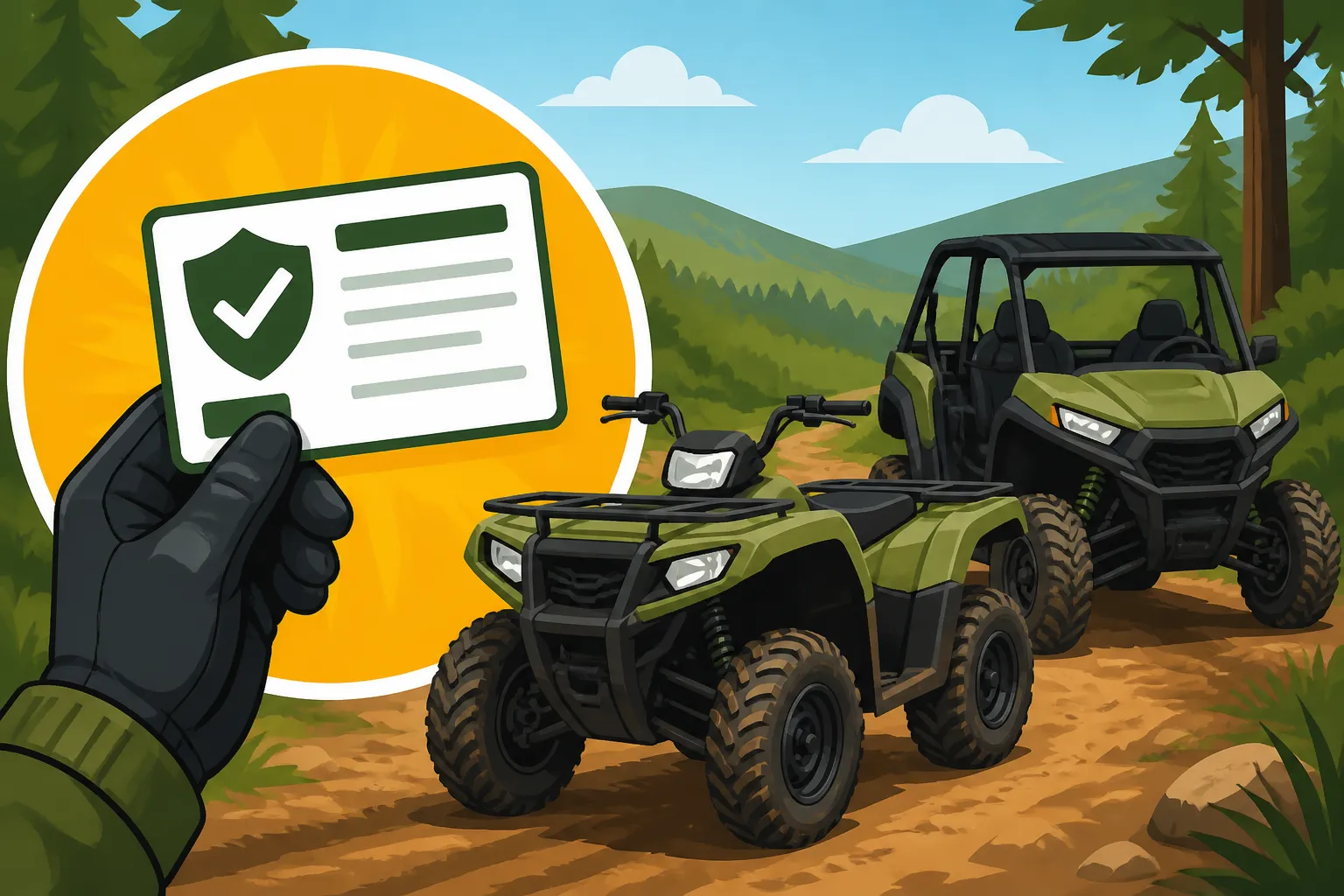
The best way to carry proof is the method required by the permit terms, with a backup that still works if your primary method fails. A phone can be convenient, but service, battery life, screen damage, and wet weather can all interfere. Paper is less dependent on technology, but it can get soaked, torn, or separated from the rider.
Read the current permit instructions before deciding what counts as proof. Do not assume that a purchase receipt, a screenshot, or a photograph of another document is interchangeable with the issued permit. If the instructions require a particular form of display or carrying method, follow that requirement rather than relying on what worked for another rider.
If you plan to use your phone
Keep the permit information somewhere you can reach without an internet connection. Download or save the issued document if the provider makes that option available, and open it before leaving home to make sure it is legible and complete. A screenshot can be a useful backup, but it should not be your only plan unless the permit terms say it is acceptable.
Practical phone precautions include:
- Charge the phone fully before leaving and bring a portable battery if you have one.
- Save the relevant permit information for offline use instead of relying on a trailhead signal.
- Make sure the screen can be read outdoors, and keep the file or image easy to locate.
- Protect the phone from rain, mud, dust, and accidental drops.
- Keep the phone accessible to the person who may need to show the permit, not buried under cargo.
A waterproof phone pouch can help protect a device, but it does not solve every problem. A pouch may fog, glare, or make a touchscreen difficult to use. Test it before ride day, and do not treat the pouch as a substitute for preserving the permit itself. A basic waterproof sleeve or document pouch from a retailer such as Amazon can be useful if it fits your phone or paper copy, but check that it closes securely and is practical to use with gloves.
If you carry a paper copy
A printed copy is a simple backup when service is weak or your phone battery runs down. Keep it readable and protected from water. A small resealable bag or waterproof document sleeve can help, but avoid folding the information so tightly that key details become hard to read.
Do not put the only copy somewhere that is difficult to reach on the trail. A document stored in a vehicle compartment may be inaccessible if you have left the vehicle, stopped at a checkpoint, or separated from your group. Keep the required proof with the appropriate operator, following the permit instructions.
Before printing, check that the full document is included and that any identifying information or terms are visible. A cropped image or partial page may leave out the information needed to verify the permit. Printing a Permit Before You Leave covers the preparation step in more detail.
Use a backup without creating confusion
A useful setup is one primary copy and one backup, both tied to the correct permit and operator. For example, an operator might keep the issued digital document on a phone and a printed copy in a protected pocket. The backup is there for a dead battery or damaged screen, not to replace compliance with the permit’s stated terms.
Keep your own copy rather than relying on a riding companion to show theirs. A friend’s permit may not cover you, even if you are riding together or using the same machine. The details depend on who is operating and on the permit rules, so check the per-operator requirement before the group leaves.
Understand who needs to carry a permit
The Georgia forest OHV permit is associated with the operator, not simply with a particular ATV or UTV. That distinction matters for groups, families, and riders who take turns driving. The permit information for Georgia National Forest Permits Are Per Operator explains the basic structure.
If one person operates a machine throughout the ride, that operator should have access to the proof required by the permit terms. If two people switch between driving and riding as passengers, do not assume one permit automatically covers both people. Check the current operator-permit instructions for each person who expects to operate. A passenger who never operates is not automatically in the same position as a person who takes a turn driving; verify the rule rather than guessing.
A shared machine does not mean a shared operator permit
A group may travel with several machines, or several riders may use one machine. In either case, work out who will operate before the group reaches the trailhead. If multiple people plan to drive, make sure each operator meets the permit requirements and can show their own proof as required.
This is especially important when plans change during the day. A rider may take over after a breakdown, a long stop, or a change in pace. If that rider is going to operate, the group should know whether that person has the required permit before handing over the controls.
A simple pre-ride check can prevent confusion:
- List the people who expect to operate a machine.
- Confirm the permit requirement for each operator.
- Match each permit to the person it belongs to.
- Make sure each operator knows how to access their proof.
- Check that the machine and route are allowed under the separate trail rules.
Do not rely on a single group leader’s phone as the only place where everyone’s permit information is stored. The leader may be separated from another rider, have a dead battery, or be unable to reach the phone quickly. Each operator should be able to present the required proof for themselves.
Keep passengers and vehicle paperwork separate
A vehicle’s registration, bill of sale, or insurance information may be useful for other reasons, but it is not the same document as a forest OHV permit. Likewise, showing a machine’s paperwork does not necessarily establish that the person operating it has the required permit.
Passengers should understand the distinction too. A passenger may not be the operator, but if they later take control, they should know what permit rule applies to them. For a private park, the operator and passenger may also have to meet different admission or waiver requirements. Check those separately rather than assuming a forest permit covers them.
Prepare for a check at the trailhead
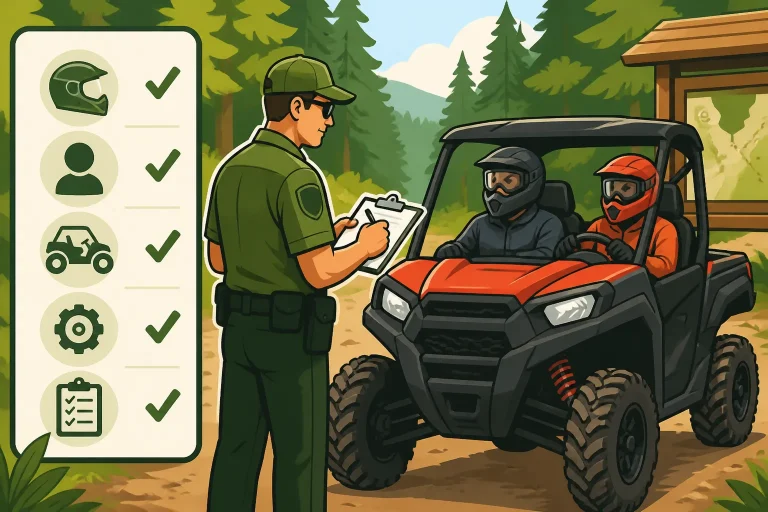
A ranger or other authorized staff member may need to verify that the rider has the required permit and is complying with the applicable access rules. The exact process can vary, so follow posted instructions and the permit conditions for the area you are visiting. What a Ranger Checks at a Georgia OHV Trailhead provides related context for what may be reviewed.
Keep your proof ready, but do not hand over your phone or paperwork casually. Open the relevant permit information yourself and present it when asked. If the document is on a phone, make sure the screen is awake and that you can find the permit without scrolling through unrelated messages or files. If you have a paper copy, keep it protected but reachable.
A calm, organized response helps the check go smoothly:
- Stop in a safe place and follow directions.
- Ask what information is needed if the request is unclear.
- Show the permit proof required by the current terms.
- Be prepared to identify yourself as the operator if asked.
- Do not argue that a registration or purchase receipt is “close enough” if it is not the required permit.
- If your proof is unavailable, explain the problem clearly and follow the staff member’s direction.
A receipt can help you locate a purchase record, but it may not substitute for the permit itself. Similarly, a saved image may be useful, but its acceptability depends on the applicable instructions. That is why it is worth checking the official directions before the ride rather than trying to resolve the issue at the trailhead.
Plan for communication problems. Some trailheads and routes have limited or no reliable mobile service. If you need an online account to retrieve your permit, do not wait until you are at the entrance to log in. Sign in at home, save the permitted proof in the form allowed, and bring a backup if practical. Georgia Permits on Recreation.gov covers the purchase channel; Showing a Permit on Your Phone focuses on using a mobile device to present it.
If you discover that the permit is missing, do not assume that riding first and sorting it out later is acceptable. Check the official instructions or ask the responsible staff before entering the permitted area. A purchase confirmation or payment record may help establish what happened, but the staff member is the right person to clarify whether it satisfies the requirement.
Avoid the most common carrying mistakes
Most permit problems are not complicated. They happen because a rider assumes the permit is stored in the right place, assumes one person’s permit covers everyone, or arrives without checking whether a document is still accessible.
| Common mistake | Why it causes trouble | Better approach |
|---|---|---|
| Depending on a live email or website | The trailhead may have poor service, or the account may require a new login | Save the permitted proof for offline access before departure |
| Keeping the only copy on a phone | A dead battery, damaged screen, or lost phone can make it unavailable | Carry a backup in a form allowed by the permit terms |
| Assuming one permit covers a whole group | The permit may be tied to each operator rather than each vehicle | Confirm the rule for every person who plans to drive |
| Showing a registration instead of an OHV permit | Vehicle paperwork and trail-access permits serve different purposes | Keep the correct permit proof separate and easy to identify |
| Relying only on a purchase receipt | A receipt may not be the issued permit or meet display requirements | Read the permit instructions and carry the required document |
| Forgetting seasonal or trail restrictions | A permit does not make a closed or restricted route available | Check current trail status, closures, and machine limits |
| Leaving paperwork in a locked vehicle | The operator may not be able to retrieve it when asked | Carry proof as directed, in an accessible place |
| Assuming a forest permit covers a private park | Each property can set separate access and waiver requirements | Check the destination’s rules before arrival |
Do not confuse carrying with displaying
Some permits or access programs may specify how a permit must be displayed, while others may describe how proof should be carried or presented. Those terms are not interchangeable. Follow the instructions attached to the permit you have, and do not rely on a generic practice from another state, trail system, or private park.
If the permit instructions are unclear, ask the issuing provider or the responsible land manager before riding. Keep a record of the answer if it affects how you plan to carry the permit. Avoid improvising a vehicle sticker, tag, or other display unless the instructions call for it; adding an unofficial display can create confusion rather than solve it.
Protect the permit without hiding it
The ideal storage place is protected from weather but accessible when needed. A paper copy should not be left loose where it can blow away or get soaked. A phone should not be buried beneath gear or mounted where it cannot be safely reached. At the same time, do not expose a phone or document to unnecessary risk while riding.
If you carry the permit in a pocket, choose a pocket that stays closed during movement. If it goes in a pack, tell the operator where it is and make sure the pack remains with that person. For group rides, assign each operator responsibility for their own proof rather than putting every document in one vehicle.
A quick check before unloading can catch simple problems:
- Is the permit for the right person and permit period?
- Can the operator open or retrieve it without internet access, if needed?
- Is the paper legible and protected?
- Does the permit instruction call for a particular display or carrying method?
- Is there a backup that will remain with the operator?
Keep the permit in context with other access rules
Carrying the permit is one part of legal and responsible trail access. Riders also need to follow the rules of the land they are on, the routes open to their vehicle, and any posted restrictions. A permit does not turn a closed route into an open one, authorize travel on an unapproved road, or replace permission from a private landowner.
For a National Forest OHV area, review trail information before leaving and again when you arrive. Conditions can change, and closures may be posted for safety, maintenance, or resource protection. Do not ride around a gate or closure sign because another route appears passable. If a route is closed, choose an open route or postpone the ride.
Wildlife Management Areas have their own rules, which are not the same as forest OHV trail rules. In some circumstances, vehicle access may be limited to designated roads and specific times or activities. Read Georgia WMA Riding Rules Explained before assuming a forest permit is enough for WMA access. Check with the managing agency about the specific area if the rules are not clear.
Private riding parks also set their own conditions. They may require separate admission, waivers, equipment, or proof of age, and those requirements can differ from one park to another. A forest permit should not be treated as a ticket into a privately operated park.
The same care applies when riding with a group. One person’s permit, waiver, or permission does not necessarily cover everyone else. Each rider should know which property they are entering and what proof or registration applies there. If a ride route crosses between different land managers or properties, identify the change in rules before setting off.
Finally, keep the permit accessible for the entire ride, not just at the entrance. A trail check may happen away from the first parking area, and a group can become separated. Carrying proof in a consistent place, knowing how to retrieve it offline, and understanding who needs an individual permit are small habits that make the day easier without replacing the need to check current official requirements.
Frequently Asked Questions
Does a Georgia forest OHV permit belong to the machine or the operator?
The forest OHV permit is structured around the operator, not simply the vehicle. Check the permit terms for who needs one, especially if several people expect to take turns driving.
Is a screenshot enough to show my permit?
Do not assume it is. Follow the current permit instructions about acceptable proof or display. Saving a screenshot may be a useful backup, but it should not replace the required form unless the terms allow it.
Should I carry a paper copy if I have the permit on my phone?
A printed backup can be helpful if your phone loses power or gets damaged. Make sure the paper copy is legible, protected, and carried in a way that follows the permit instructions.
Does a forest OHV permit cover a private park or WMA?
Not automatically. Private parks and Wildlife Management Areas may have separate requirements. Check the rules for the exact property and route you plan to use.
Disclaimer
This article is for general informational purposes only and does not constitute professional advice. Laws, prices and regulations vary by location and change over time. Consult a qualified professional for guidance on your specific situation.