Volunteer Trail Days and What They Involve
A volunteer trail day can be a satisfying way to give back to Georgia’s riding community, but it is not simply a matter of bringing a shovel to the trailhead. Work must be approved and coordinated, conditions can change, and riding privileges do not automatically include permission to repair trails. This guide explains how to find an organized workday, what to bring, and how to help without damaging the trail.
What happens on a Georgia volunteer trail day
A trail workday is usually a planned maintenance session, not an informal group ride with a little cleanup along the way. The land manager or event organizer identifies work that is needed, assigns volunteers to a task, and explains where people can work and what rules apply. That planning matters on public land, where even well-intended trail changes can cause erosion, create safety problems, or conflict with land-management requirements.
Georgia riders may be familiar with places such as Houston Valley near Dalton, Beasley Knob near Blairsville, and the OHV trail systems around Town Creek, Whissenhunt, Oakey Mountain, and Davenport Mountain. The presence of trails in an area does not mean volunteer work is happening there on a particular weekend. Ask the responsible land manager or authorized organizer whether an event is scheduled and what kind of help is wanted before making the drive.
Common trail-day tasks
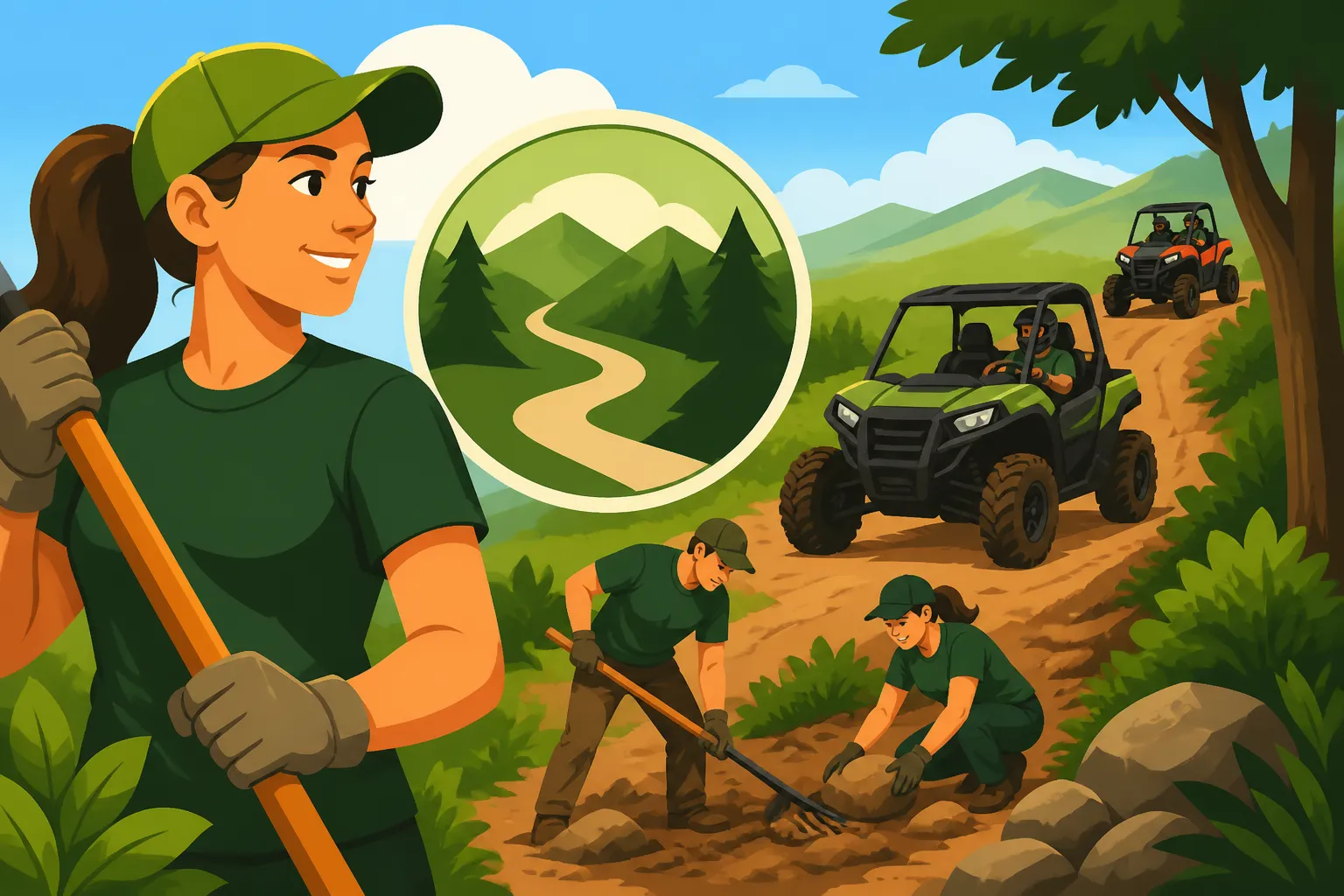
Tasks depend on the trail’s condition and the organizer’s priorities. Volunteers may pick up litter, clear small branches, remove leaves from drainage features, help maintain signs, or assist with approved erosion-control work. A crew may also walk or ride an assigned section to report hazards, such as a damaged marker, a blocked route, or a drainage problem that needs professional attention.
Not every task is suitable for every volunteer. Moving a small branch by hand is very different from cutting a tree, digging into a trail, operating powered equipment, or working near a steep slope. The organizer should explain which tasks are authorized and who is qualified to carry them out. If a job seems beyond your training or equipment, ask for a different assignment rather than improvising.
A useful rule is to leave the trail’s layout alone unless the work leader explicitly directs otherwise. Widening a narrow section, creating a bypass around mud, or cutting a new route can cause lasting damage even when the intention is to make riding easier. If you notice a problem that is not part of the work plan, point it out and let the organizer decide how to handle it.
Who organizes the work
Volunteer opportunities may be arranged by a land manager, an authorized partner group, or a private riding park. Those settings are not interchangeable. On public land, work must follow the land manager’s instructions and the specific permissions for that site. At a private park, the owner or operator sets the rules, assigns tasks, and determines what volunteers may access.
Before signing up, ask who is responsible for the event, where participants should meet, and whether registration is required. Confirm whether the workday is open to new volunteers, whether minors can participate, and whether tools or protective equipment are provided. If the event involves travel on an OHV trail, ask whether participants need a permit or other documentation for that access. A volunteer invitation should not be treated as a substitute for the site’s normal riding requirements.
For background on where trail access and riding rules differ by location, see Georgia ATV Trails: Where You Can Legally Ride and Georgia’s Six National Forest OHV Systems. If your plan includes riding before or after the work session, check the rules separately; volunteer access may be limited to the work assignment and the scheduled hours.
How to find and prepare for an event
The easiest way to have a frustrating morning is to drive to a trailhead with tools and no confirmed event. A better approach is to contact the organization or land manager responsible for the specific trail system. Ask whether a workday is planned, what tasks are approved, and whether the event could be postponed because of weather, trail conditions, staffing, or another operational issue.
Trail work is often seasonal and condition-dependent. Heavy rain can make soil work unsafe or counterproductive, while dry, hot weather can make strenuous work more demanding. A trail that looked ready for maintenance a week earlier may need a different response after a storm. Check for instructions shortly before the event and follow any cancellation or location updates.
Questions to ask before you go
Get the practical details before packing. Confirm the meeting point, arrival time, expected finish time, and whether participants will be walking, riding, or driving between work areas. Ask whether parking or trailer space is limited, whether restrooms or drinking water are available, and whether cell service is dependable. Remote trailheads can make small logistical surprises feel much bigger.
Also ask what to wear and bring. Some organizers provide tools, while others expect volunteers to bring basic items. Do not assume that a chainsaw, brush cutter, or other powered tool is welcome. Such equipment may require approval, training, and protective gear. If you have a medical condition, mobility concern, or limited experience with trail work, tell the organizer in advance so they can suggest a suitable role.
If you use a navigation app such as onX Offroad to find a trail system or plan the drive, treat it as a planning aid rather than the final authority on access. Confirm the exact meeting location and current instructions with the event organizer. Maps can help you understand the surrounding area, but they do not grant permission to enter a closed road, cross private property, or ride a route that is not open.
What to bring and wear
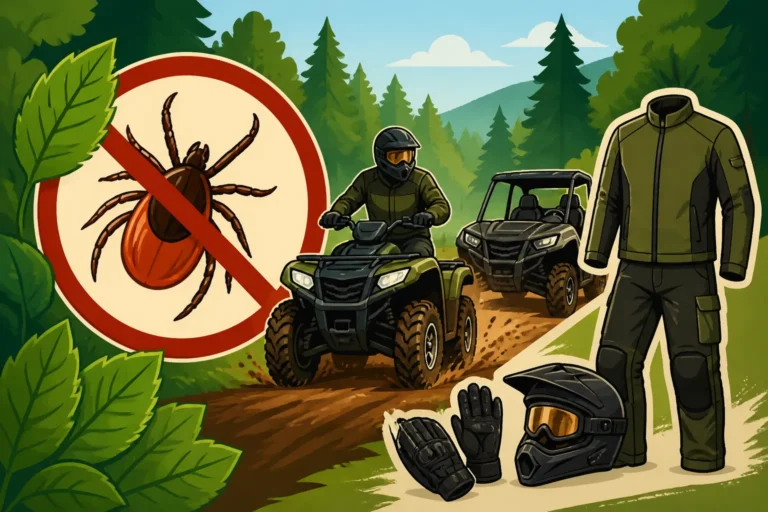
For a basic workday, think in terms of comfort, protection, and self-sufficiency. Sturdy footwear, long pants, work gloves, sun protection, and enough drinking water are sensible starting points. A small first-aid kit, any personal medication, and weather-appropriate layers can help you stay comfortable through a long morning outdoors. The organizer’s list should take priority, especially where required protective equipment is concerned.
Bring only tools the event leader has approved. A hand tool that is appropriate for one task may be unsafe or damaging for another. For example, cutting vegetation close to a trail marker or digging into a drainage feature without direction can make the problem worse. Leave power tools at home unless the organizer has specifically requested them and explained the safety requirements.
| Item or question | Why it matters |
|---|---|
| Event confirmation and meeting instructions | Helps you avoid arriving at the wrong trailhead or on a canceled workday |
| Sturdy footwear and work gloves | Protects hands and feet during ordinary outdoor tasks |
| Water and weather-appropriate clothing | Trail work can be strenuous and conditions can shift |
| Approved tools only | Prevents injury and unauthorized changes to the trail |
| Permit or access information | Volunteer work does not automatically replace site access rules |
| A charged phone and offline directions | Remote areas may have limited cell service |
For help checking conditions and closures before a trip, see Georgia Trail Conditions Before You Drive and How to Check Georgia Forest Trail Status. A volunteer day is not a reason to bypass a gate or enter a closed area; if access instructions are unclear, ask the organizer before leaving home.
Safety, access, and responsible trail work
Trail maintenance involves physical work in an outdoor setting, sometimes far from immediate help. Slippery ground, uneven terrain, heat, insects, low branches, and moving equipment can all create risks. Take the safety briefing seriously, stay with the assigned group, and tell the work leader if you are unsure how to perform a task. The right answer is sometimes to pause and ask.
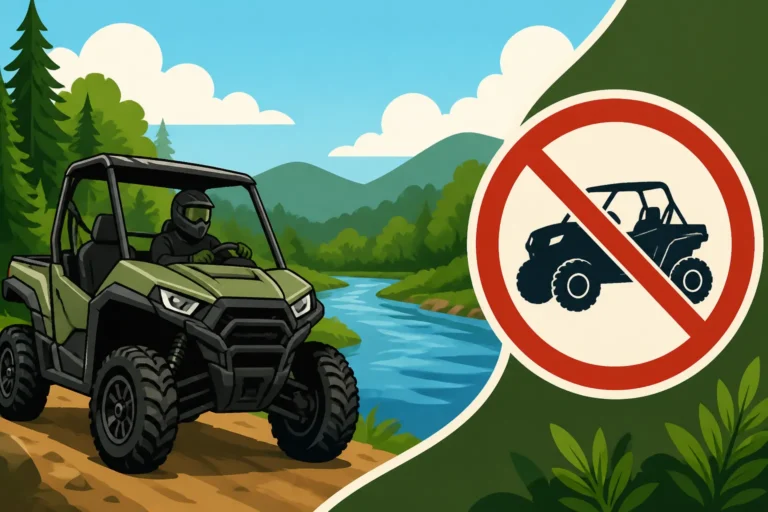
A workday may also take place while nearby routes are closed or restricted. Do not assume that a closed trail is available for recreational riding simply because volunteers have permission to reach a work site. The work authorization may be limited to a specific route, group, time, and activity. Follow signs, instructions, and closures throughout the day.
Avoiding damage while helping
The most helpful volunteer is not necessarily the person who does the most digging. Trail design and drainage are closely connected: water that runs down a trail can carve ruts, while a poorly placed berm or channel can send water somewhere it causes more harm. Follow the assigned method and do not reshape the trail based on what seems intuitive.
Mud is a common temptation for riders and volunteers alike. Creating a side route around a wet patch can widen the trail and damage surrounding vegetation. Do not move barriers, cut vegetation, or build a bypass to make a section easier unless the work leader directs you to do so. If the trail is too wet for the planned work, the organizer may change tasks or postpone the session.
When you see trash, damaged signs, or a hazard outside your assignment, report it rather than taking an unapproved action. A snapped signpost, for instance, might need a replacement installed in a specific location. A fallen tree may require trained operators and equipment. Clear communication helps the people responsible for the system decide what response is appropriate.
Riding, permits, and work access are different
A trail workday and a riding day have different purposes. Volunteers may be allowed to reach a work area under event instructions, but that does not necessarily mean they can ride the entire system or bring along friends who are not participating. Ask whether machines are needed for the work and whether a separate riding permit applies.
For public OHV systems, review the relevant permit and access details before traveling. Georgia OHV Permits: What You Need Before You Ride explains why a permit may be required and what it does not cover. If you are unsure whether a passenger needs separate authorization, consult Does a Passenger Need Their Own Georgia Forest Permit? and confirm any site-specific instructions with the event organizer.
The same distinction applies after the work is done. A volunteer may be tired, dusty, and ready to ride, but routes can remain closed for maintenance, weather, or other management reasons. Check posted signs and current directions before starting an optional ride. If you are attending with a group, make sure everyone understands the access rules; one person’s volunteer role does not automatically extend to the whole group.
Making the day useful for you and the trail
A good volunteer day is one where the crew completes the assigned work safely and leaves the trail in the condition the land manager intended. You do not need specialized experience to contribute to many basic tasks, but you do need to follow directions and be willing to ask questions. That can be especially reassuring if it is your first time: organizers would rather explain a task than have a new volunteer guess.
Set realistic expectations
Trail work can be repetitive. Picking up litter, carrying materials, clearing small debris, or walking a section to document problems may not feel dramatic, but consistent maintenance helps keep trails safer and easier to manage. Some tasks take longer than expected, and not every workday ends with a visible transformation. The result may be better drainage, a clearer marker, or a problem reported to the right person.
It is also possible that the event changes once you arrive. A crew might find that weather has made digging unwise, or that the original task needs to be handled by trained staff. Be flexible. If the planned work is not suitable for you, ask whether there is another role, such as litter pickup or helping organize supplies.
If you are bringing a teenager or a family member, check age rules and supervision requirements before signing up. Do not assume every task is appropriate for children. A family-friendly cleanup may be very different from a workday involving tools or machinery, and the event organizer should confirm who can participate and under what conditions.
Keep contributing between workdays
You can support a trail system even when you cannot attend an organized event. Follow closures, stay on designated routes, pack out trash, and report problems through the channel the land manager or park operator provides. Avoid posting unverified claims about access or trail status; inaccurate information can send riders to a closed gate or a route that is not suitable for their machine.
If you find yourself returning to the same system, consider asking how to hear about future workdays or whether the group needs help with event-day tasks. Some people are better suited to hands-on work; others can assist with check-in, supplies, communications, or documenting issues. A brief conversation with the organizer can help you find a useful role without taking on more than you can safely manage.
Before your next ride, revisit Georgia Trail Etiquette on One-Way Loops and Georgia Trail Closures After a Storm. Responsible riding complements volunteer work: respecting closures and avoiding damage can prevent extra maintenance from being needed in the first place.
Disclaimer
This article is for general informational purposes only and does not constitute professional advice. Laws, prices and regulations vary by location and change over time. Consult a qualified professional for guidance on your specific situation.