Georgia Trail Riding After Heavy Rain
A Georgia trail can look rideable from the parking area and turn into slick clay, deep ruts, or a rising creek a few miles in. After heavy rain, the safest choice is not always to wait a fixed number of hours; soil, slope, drainage, and land-manager closures all matter. This guide explains how to assess conditions, choose a sensible plan, and know when to turn back.
Why heavy rain changes Georgia trails
Red clay, slopes, and drainage create different hazards
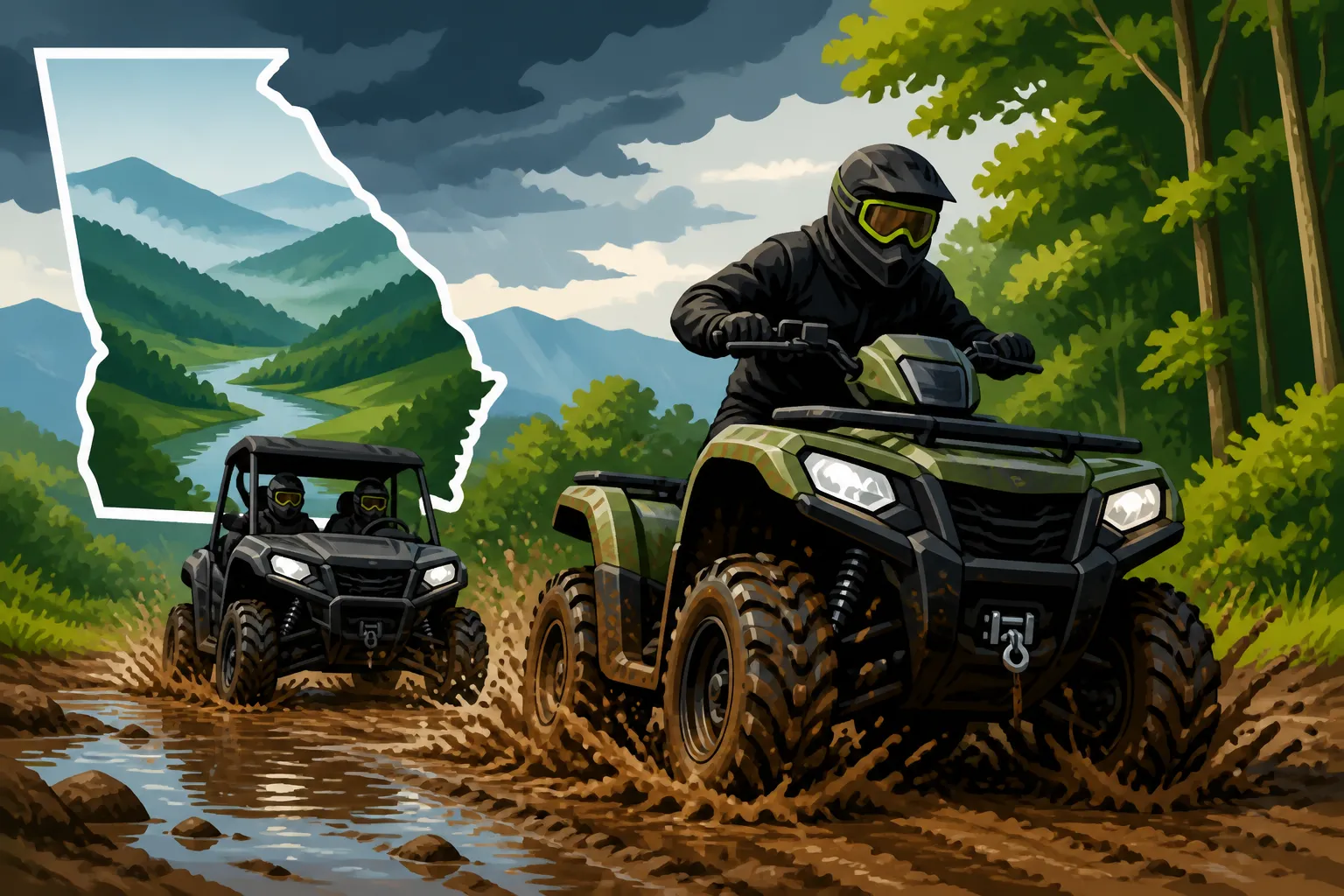
Georgia’s red clay can become slick when wet, especially where tires have polished the surface or water runs across a slope. A machine that handled a dry climb without trouble may struggle to steer or stop on the same stretch after rain. The risk is not just getting stuck: sliding sideways can send a vehicle into a ditch, tree, or eroded edge.
The ground can also be deceptively varied. A ridge may drain quickly while a low crossing remains saturated. On forest roads and OHV trails near the North Georgia mountains, water may collect in hollows, cross the trail in shallow channels, or expose loose rock. In flatter areas, puddles can conceal soft shoulders, holes, or a washed-out section.
A puddle is not a reliable measure of how deep the mud is. The trail surface beneath it may be firm, or it may give way under the weight of a UTV. If you cannot see the bottom and do not know the crossing, do not use the machine to probe it. A walking inspection can help where it is safe to approach, but stay out of fast-moving water and avoid stepping onto a soft, undercut bank.
Damage can happen even when you make it through
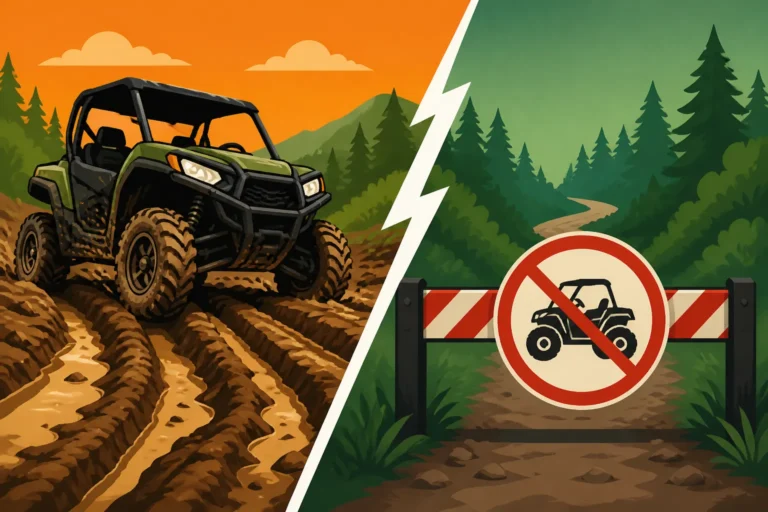
A rider may get across a muddy stretch and still leave damage behind. Spinning tires cut into wet soil, and repeated passes can turn a shallow rut into a channel that directs more water down the trail. That damage can make the route harder for everyone and may contribute to a closure. The practical rule is simple: if moving forward requires sustained wheelspin, aggressive throttle, or repeated attempts, stop and reassess rather than digging in.
Trail managers may close routes when wet conditions make erosion likely or create unsafe travel. Do not assume a trail is open because the entrance looks clear, because you rode it recently, or because other vehicles are already there. Review [Georgia Trails That Close After Rain] and [Rutting and Why Managers Close Trails] before planning a ride. Conditions can differ between trail systems, and the land manager’s current instructions take priority over a rider’s guess.
How to check conditions before leaving home
Look for official closure and access information
Start with the agency or private park responsible for the trail. Check its trail-status notices, alerts, and access rules, and contact the relevant office if the information is unclear. A map showing a trail does not confirm that it is open today. A route can remain visible on a map while access is temporarily restricted.
For National Forest riding areas such as Houston Valley, Beasley Knob, and the other Chattahoochee-Oconee OHV systems, confirm the status through the appropriate Forest Service or ranger district channels before towing out. A nearby community’s weather report may not describe conditions on the trail itself: rain totals, elevation, tree cover, and drainage can vary over a short distance. Use [Georgia Trail Conditions Before You Drive] and [Georgia Trail Closures After a Storm] as planning reminders, not substitutes for checking the land manager’s own notices.
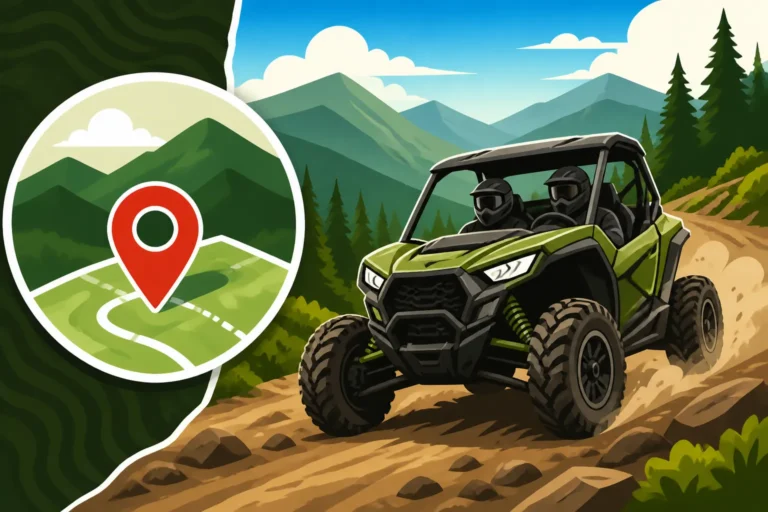
If you use onX Offroad to review routes, treat it as a navigation aid, not proof that a trail is open or passable. Compare what the app shows with official access information and posted signs at the trailhead. Save any map or route details you may need before entering an area with weak cell service, and do not follow a mapped line through a closed gate or around a closure sign.
Check more than the forecast
Rain in the forecast is only one part of the decision. Think about when the rain fell, how much water the area received, whether more rain is expected, and whether the trail has had time to drain. A short shower after a dry stretch may leave a different surface from repeated rain that has saturated the soil. A trail on a shaded slope may also stay soft after nearby pavement has dried.
Use a simple pre-ride checklist:
- Confirm that the trail system is open and that your vehicle type is allowed.
- Check recent rainfall and the forecast for the trail area, not only your home.
- Look for alerts about flooding, washouts, or closed sections.
- Ask the land manager or park staff about known trouble spots if details are not posted.
- Choose a shorter route with clear exit options if conditions are uncertain.
- Tell someone where you are going and when you expect to be back.
The onX Offroad map can help you understand the general layout and identify possible route options, but it cannot tell you whether a specific muddy dip is safe to cross. Build your plan around verified access and conservative judgment, rather than assuming a digital route line reflects current ground conditions.
| What you find | What it may mean | Sensible response |
|---|---|---|
| Official closure notice or closed gate | The route is not available for riding | Do not enter or ride around the closure |
| Shallow, firm surface with no wheelspin | Conditions may be manageable, but can change farther in | Ride slowly and reassess as the terrain changes |
| Standing water with an unseen bottom | Depth and firmness are unknown | Avoid crossing unless the route is confirmed safe |
| Tires begin spinning or cutting ruts | The surface is too soft for a clean pass | Stop, back out if safe, and choose another route |
| Creek is higher or faster than expected | Crossing conditions may be hazardous | Do not enter; turn around and report a problem if needed |
| New washout or exposed edge | The trail may be unstable or damaged | Keep clear and notify the land manager |
How to ride responsibly when trails are damp
Reduce risk with steady, conservative riding
If the trail is open and conditions are suitable, slow down before the slick section rather than braking hard once you are on it. Smooth throttle and steering inputs can help preserve traction. Keep extra space between machines so you are not forced into a sudden stop, and avoid climbing a wet slope if you cannot see a safe turnaround or a clear route over the top.
Stay on the designated trail. Going around a puddle by widening the route can damage vegetation and create a parallel rut that expands with every pass. If a marked route is becoming impassable, do not invent a bypass through the woods or across private land. Turn around where you can do so safely and use the official trail network or an approved alternate route. [Tread Lightly on Erodible Clay] offers useful context for why small choices on wet ground can have lasting effects.
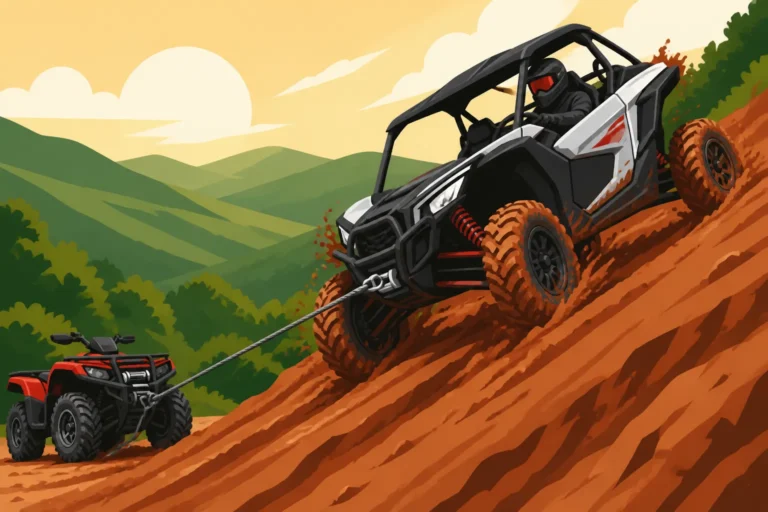
Carry recovery gear appropriate to your vehicle and know how to use it before you need it. A tow strap may help in some situations, but recovery can be dangerous if it is attached incorrectly or if people stand in the line of tension. Avoid improvised recovery from trees or other objects that could be damaged. For mountain rides, review [Carrying a Tow Strap in the Mountains] and make sure everyone in your group understands a clear stop signal and a safe place to stand.
Be ready to change the plan
A sensible ride plan has a point at which you stop, turn around, or switch to a different activity. Agree on that limit before anyone is frustrated or tired. For example, a group might decide not to cross unknown water, not to continue after repeated wheelspin, and not to use an unmarked detour. These rules are easier to follow when everyone knows them in advance.
Keep the group together, especially when visibility is poor or the trail forks. A rider who moves ahead may encounter a closure or hazard without being able to warn the others. If you are riding with less experienced drivers, choose terrain that leaves room to stop and turn around. Do not let pressure to keep pace turn a questionable crossing into a group recovery.
Use onX Offroad, a downloaded map, or another navigation tool to keep track of your general location, but do not let navigation override signs, barriers, or staff directions. The route you planned may no longer be the safest way out if a storm has changed conditions. Know how to retrace your route and keep enough fuel, daylight, and supplies for a slower return than expected.
What to do after rain or a wet ride
Clean and inspect the machine
After riding, rinse mud from the undercarriage, suspension, wheels, and cooling areas before it dries hard. Georgia clay can cling to components and make it harder to spot damage. Follow the owner’s manual for cleaning around electrical parts, bearings, seals, and radiators; high-pressure water in the wrong place can create new problems. [Washing Clay Off Before It Sets] covers why a careful cleanup matters after a muddy outing.
Once the machine is clean enough to inspect, check for packed debris, loose fasteners, damaged guards, unusual tire wear, and signs of impact. On a side-by-side, look over the belt area and cooling system according to the manufacturer’s maintenance guidance. If the vehicle was deeply submerged or began running abnormally, do not assume a quick rinse has addressed the issue. Consult a qualified mechanic when you suspect water intrusion or mechanical damage.
Also check the trailer and tie-downs before heading home. Mud can hide a loose strap or make a ramp slippery. Give yourself time to load safely rather than rushing because the ride ended early.
Report hazards and learn from the conditions
If you encounter a washout, damaged sign, blocked route, or unsafe crossing, report it to the agency or park that manages the trail. Give a clear location and description, and share a photo only if you can take it safely without entering the hazard. Do not move barriers or remove signs, even if the route looks passable from where you are standing.
For your next outing, note which parts of the area drained well and which stayed soft. That experience can help you choose a better route or postpone a ride after similar weather. Still, do not treat a previous ride as a guarantee: a new storm can change the same trail quickly. Check [Georgia Riding in Spring Mud] when seasonal wet conditions are part of your planning, and verify access again before you go.
Heavy rain does not make every Georgia trail unsafe, but it does make assumptions costly. Check official status, read the surface carefully, and be willing to turn around when traction, water depth, or trail damage is uncertain. A ride cut short is better than a damaged machine, an injured rider, or a trail left worse for the next group.
Disclaimer
This article is for general informational purposes only and does not constitute professional advice. Laws, prices and regulations vary by location and change over time. Consult a qualified professional for guidance on your specific situation.