Georgia Red Clay and What It Does to a Machine
Georgia red clay can turn a fun ride into a cleanup-and-repair headache when it cakes onto a machine, packs into cooling fins, or dries into a gritty layer around moving parts. This guide explains how clay affects ATVs and UTVs, how to ride through it with less risk, and what to inspect and clean afterward.
Why Georgia red clay is hard on ATVs and UTVs
Wet clay is slippery, sticky, and heavy
Georgia’s clay-rich soil can become slick after rain, especially on slopes, shaded trails, and churned-up sections. A machine may lose traction suddenly, even when the ground looks merely damp. That can mean sliding sideways, struggling to climb, or spinning tires until they dig into the trail.
Wet clay also clings to tires, fenders, suspension parts, and undercarriages. It adds weight and can build up quickly around components with tight clearances. A short muddy stretch may leave enough packed dirt to interfere with steering or suspension movement, particularly if the machine has already collected mud earlier in the ride.
The best response is often to slow down rather than add throttle. Spinning tires can dig ruts, make the machine harder to control, and damage the trail surface. If conditions are deteriorating, turn around before a small traction problem becomes a recovery job. Georgia trails can close after heavy rain or become unsuitable for riding, so check the specific riding area’s rules and conditions before heading out. [Georgia Trails That Close After Rain] offers more context on why wet-weather access matters.
Dried clay turns into grit and buildup
Clay that dries on a machine can harden in awkward places: around suspension arms, behind guards, inside wheel wells, and on the underside of the chassis. Once dry, it may break into gritty flakes that can rub against moving parts or make routine inspection harder. Leaving a heavy layer in place also makes it easy to miss a leak, damaged boot, loose fastener, or fresh scrape.
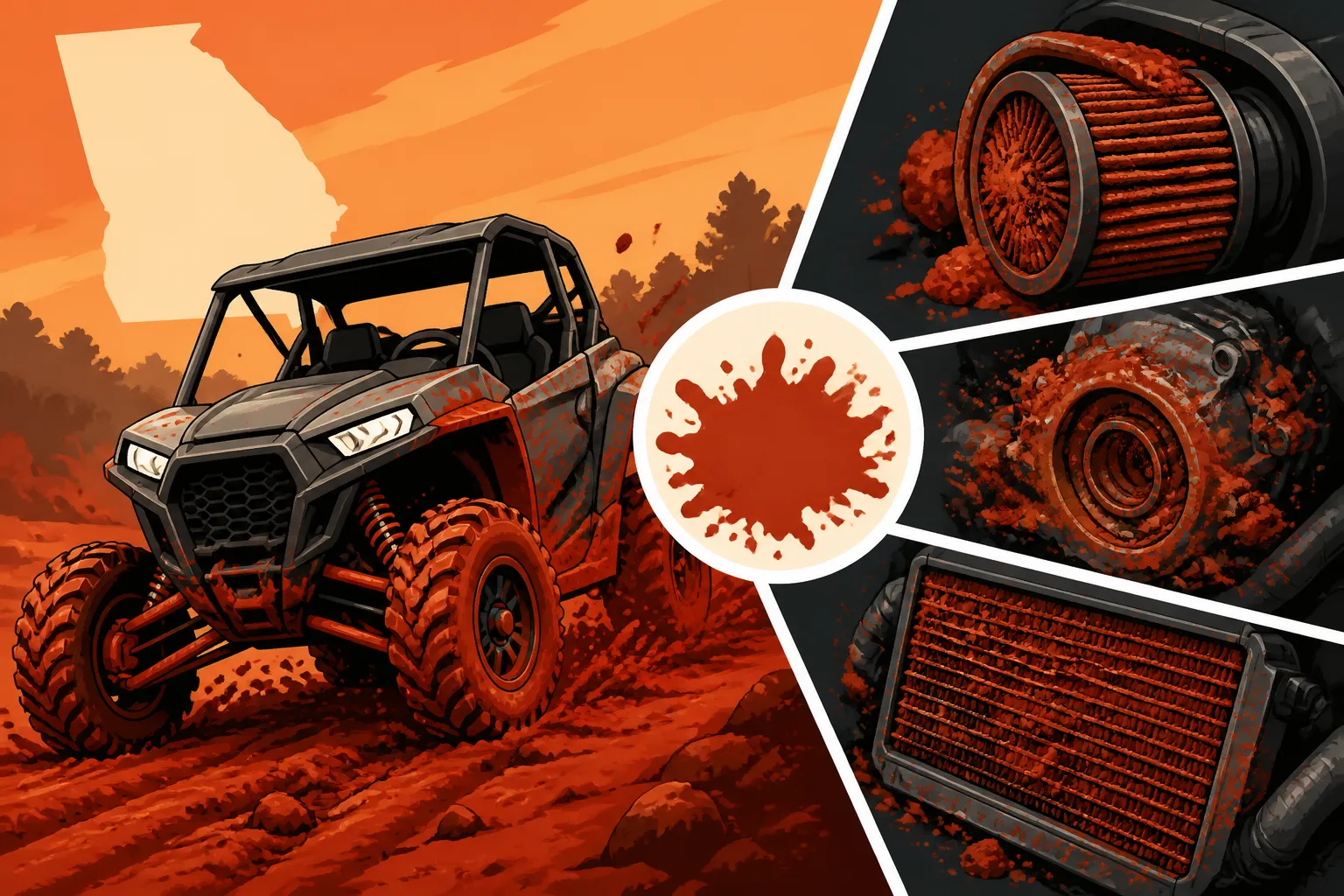
A layer of clay around the radiator can restrict airflow and contribute to overheating. This is especially worth checking after slow, muddy riding, when the machine has spent a lot of time moving at low speed and the radiator has been exposed to spray. Watch the temperature warning and follow the owner’s manual if the machine begins to run hot. Do not assume that a brief pause will solve the issue if mud is still blocking airflow.
Clay can also collect around brakes and driveline components. If the machine develops an unusual noise, braking feels different, or steering becomes stiff, stop somewhere safe and inspect it rather than riding on and hoping the problem clears. A basic post-ride check is far easier than discovering packed mud has caused damage on the next outing.
How to ride Georgia clay with better control
Adjust your speed and line before the slippery section
Approach slick clay at a controlled pace, with enough space to respond if the tires lose grip. Sudden acceleration, hard braking, and sharp steering inputs can all make a machine slide. Keep your movements smooth, look toward the route you want to follow, and leave extra room between your machine and the rider ahead.
When climbing, choose a line with steady traction and avoid stopping halfway up if you can safely keep moving. If the tires begin to spin, easing off may help more than pressing harder on the throttle. On a descent, use a low, controlled speed and avoid abrupt braking that could cause the tires to slide. Exact techniques vary by machine and terrain, so practice in a low-risk area and follow the operator’s manual.
Pay attention to trail conditions as you go. A stretch that was manageable on the way in may become slicker after rain, traffic, or changing temperatures. Navigation tools such as onX Offroad can help you understand your route and avoid getting turned around, but a map does not establish whether a trail is open or safe. Confirm access and closures with the land manager or riding area before you leave.
Reduce rutting and protect the trail
Clay trails are particularly vulnerable when they are saturated. Repeated tire spins can cut deep ruts, which channel water and make erosion worse. If the trail is becoming deeply churned, the responsible choice is to stop riding that section and find a route that is open and appropriate for the conditions.
Keep to established routes rather than making a new line around mud. Riding around a puddle can widen the trail, damage vegetation, and create more trouble for the next rider. Follow posted signs and one-way rules, and do not bypass a gate or closure. Trail etiquette and current access details are especially important on managed public land; [Georgia Trail Etiquette on One-Way Loops] explains why following the marked route helps everyone.
Before a trip, check the riding area’s official notices and trail information. You can use onX Offroad as a planning aid to review mapped routes, then verify that the route is currently open through the relevant land manager. It is also sensible to have a backup plan: a shorter loop, a different open trail, or a decision to postpone if the ground is too wet.
Cleaning clay off your machine after a ride
Start with a careful rinse and inspection
Let hot components cool before washing. Park on a stable surface, secure the machine, and remove loose gear that could trap water or mud. Use a moderate flow of water to loosen clay rather than aiming a pressure washer directly at seals, bearings, electrical connectors, radiator fins, or other sensitive areas. Excessive pressure can force water and grit into places that are meant to stay protected.
Work from the top down, paying close attention to the underside, wheel wells, suspension, and areas behind guards. If clay is packed tightly, soak it and let water loosen it before brushing. A soft brush or plastic tool is less likely to damage finishes than a metal scraper. Check the owner’s manual for machine-specific washing instructions, including any cautions about the air intake, belt housing, and electrical components.
Once the visible mud is gone, inspect the machine before storing it. Look for damaged wiring, torn boots, loose guards, bent components, and signs of fluid leaks. Check that steering and suspension move freely. If the machine overheated or felt different during the ride, do not treat washing as a substitute for diagnosing the problem.
Pay attention to the air filter, radiator, brakes, and belt area
The air filter deserves particular attention after dusty or muddy conditions. Follow the manual’s procedure for checking and servicing it; a wet or contaminated filter can restrict airflow or allow dirt to reach the engine if handled incorrectly. Do not run the engine with an airbox or intake component removed unless the manufacturer’s instructions specifically call for that step.
Check the radiator face for packed clay, leaves, or other debris. Clean it gently so the fins are not bent. If the machine has a temperature warning or continues to run hot after the radiator is clear, stop riding and arrange a proper inspection rather than continuing to test it on the trail.
Inspect the brakes and belt housing according to the machine’s design. Mud around brake components may affect performance, while water or debris in a belt enclosure can cause problems on some side-by-sides. Avoid improvising by spraying into openings or removing covers without knowing the correct procedure. The manual is the safer guide for access, draining, and inspection. For additional preparation advice, see [Georgia Red Clay and What It Does to a Machine] and [Georgia Trail Conditions Before You Drive].
| Area to check | Why clay matters | Practical action |
|---|---|---|
| Radiator | Packed clay can reduce airflow | Rinse gently and inspect for remaining debris |
| Air filter and airbox | Mud or moisture can restrict intake or contaminate the filter | Check and service according to the owner’s manual |
| Suspension and wheel wells | Clay can pack into moving or narrow spaces | Remove buildup and confirm parts move freely |
| Brakes | Debris may affect braking or conceal damage | Inspect for buildup and changes in braking feel |
| Belt housing | Water or debris can cause trouble on some machines | Follow the manufacturer’s inspection procedure |
| Undercarriage | Dried buildup can conceal leaks or damage | Clean, then look for loose parts, scrapes, and leaks |
A practical clay-riding routine
Before you leave home
Check the machine’s condition before loading it. Confirm that tires are in good shape, controls work normally, and the radiator and air intake are clear. Bring basic recovery and repair equipment suited to the machine and trip, along with drinking water, a first-aid kit, and a way to contact your group if someone becomes separated.
Look at the riding area’s posted information before driving there. Use a navigation app such as onX Offroad to help plan your route, but confirm that trails are open and permitted with the official land manager or park. Trail access, machine-width limits, and riding rules can differ from one area to another. [Georgia Trail Widths and What Fits] and [Georgia ATV Trails: Where You Can Legally Ride] can help you think through those planning questions.
Pack what you will need to manage a muddy return trip: gloves, a basic cleaning brush, suitable straps for securing the machine, and a tarp or washable mat if you do not want mud spread through your vehicle or trailer. A little preparation makes it easier to clean up at home without tracking wet clay into the garage.
After the ride
Give yourself time for the full cleanup rather than only rinsing the visible bodywork. Clay often hides underneath, around guards, and between components. Clean the machine before the mud dries hard, then carry out the checks in the table. If you notice overheating, unusual vibration, a change in steering or braking, or a warning light, address it before the next ride.
Record anything that needs follow-up. A quick note such as “check front brake after mud ride” or “inspect radiator guard” is more useful than relying on memory after unloading. If you regularly ride in muddy conditions, make cleaning and inspection part of the routine, not an occasional chore.
For riders who want to limit wear and avoid damaging trails, the key decisions often happen before the mud gets deep: check conditions, ride smoothly, turn back when the route is deteriorating, and clean the machine thoroughly afterward. Georgia clay is part of the riding experience, but it does not have to become a preventable repair problem.
Disclaimer
This article is for general informational purposes only and does not constitute professional advice. Laws, prices and regulations vary by location and change over time. Consult a qualified professional for guidance on your specific situation.