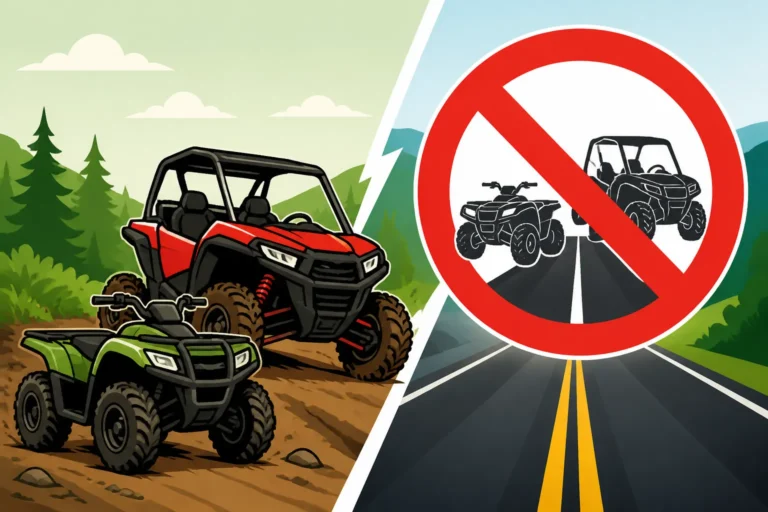
Can a Georgia County Close Its Roads to UTVs?
Navigating the rules for riding your UTV or side-by-side on Georgia's county roads can feel like deciphering a complex legal puzzle. Many riders assume that because state law now allows for MPOHV registration, every county road is fair game, only to discover that their local jurisdiction has different ideas. This guide will clarify the nuances of Georgia's MPOHV laws, explaining exactly how and why a county might choose to restrict or even close its roads to UTV traffic, and what you can do to stay informed and compliant.
The Framework: Georgia's State Law and County Authority Over UTVs on Roads
For years, the dream of taking your side-by-side or UTV legally onto a county road in Georgia felt out of reach for many. Machines were relegated to private land, trails, or special events, creating a divide between their utility and their potential for limited road use. That changed with the implementation of the MPOHV (Multipurpose Off-Highway Vehicle) registration system. This system was a game-changer, but it didn't completely remove all local control, which is where a lot of the confusion for riders comes from.
What State Law O.C.G.A. § 40-6-331 Allows and Disallows
Georgia's state law, specifically O.C.G.A. § 40-6-331, laid the groundwork for allowing certain off-highway vehicles, now officially termed MPOHVs, onto Georgia's extensive network of county roads. This was a significant step, recognizing the growing popularity and utility of these machines. The law outlines very specific criteria that a machine must meet to even qualify for registration, such as having a steering wheel (not handlebars), seat belts, a non-straddle seat, and specific speed capabilities. If your UTV or side-by-side meets these requirements and you go through the [Georgia MPOHV Registration Explained] process, you can then apply for a special branded certificate of registration and a license plate, allowing you to operate on most county roads.
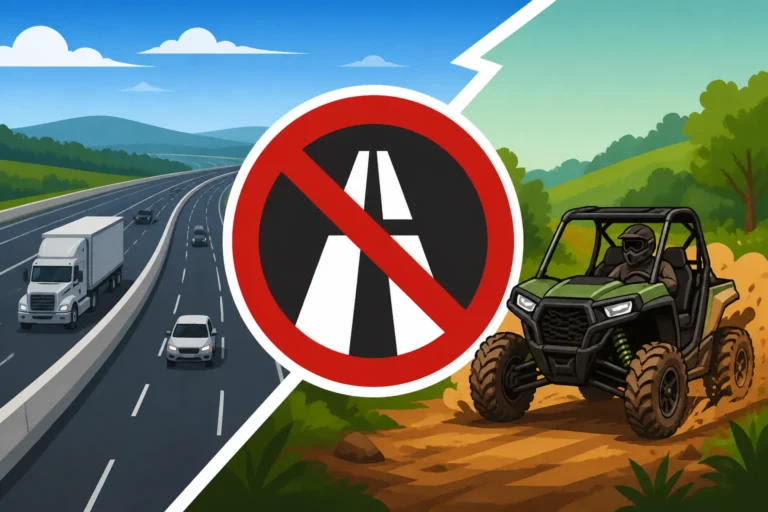
However, it's crucial to understand that the state law primarily dictates the eligibility of the machine and the general permission for county roads. It distinctly states that MPOHVs are only permitted on county roads; interstates, state highways, and municipal streets are still generally off-limits unless specifically designated for crossing or under local ordinances for golf carts. This limited scope of road access is a frequent point of frustration for riders who might mistakenly believe their newly registered UTV is "street legal" everywhere. The truth is, while it's legal for certain roads, it's far from the same status as a car or truck, and local governments retain some significant powers. For a deeper dive into the specific rules, check out [Georgia UTV Road Rules by County].
Why Local Control Matters: The County's Right to Regulate
Even with the state blessing MPOHV registration and county road access, local counties in Georgia aren't entirely powerless. The state legislation, while enabling registration, wisely left room for counties to implement their own regulations based on unique local conditions, public safety concerns, and the character of their road systems. This local control is not an arbitrary power; it’s a necessary tool for county commissions and boards of commissioners to address the specific needs and concerns of their residents. A densely populated suburban county, for example, might have vastly different concerns than a sparsely populated rural county where UTVs are primarily used for agriculture or hunting access.
Concerns that drive local regulation often include traffic congestion, noise complaints, increased wear and tear on roads, and, most critically, safety issues. Imagine a winding, narrow county road with blind curves, heavily used by school buses and residential traffic. A county commission might deem it unsafe for MPOHV operation, even if the state generally permits it. Similarly, counties might want to protect specific residential areas from increased UTV traffic, or manage the intersection of farming operations and recreational riding. This is where you might see counties enacting very specific ordinances. It’s a delicate balance between providing recreational and utility access for riders and ensuring the overall safety and quality of life for all county residents. Understanding this balance is key to understanding why Can a Georgia County Close Its Roads to UTVs? isn't a simple yes or no answer.
Mechanisms of Restriction: How Georgia Counties Can Close Their Roads to UTVs
While the state opened the door for UTVs on county roads, counties absolutely have the authority to manage, restrict, or even close specific roads to MPOHV traffic. This isn't about ignoring state law but rather about exercising powers granted within that framework to protect local interests and ensure public safety. It’s a crucial aspect that every Georgia UTV owner needs to be aware of, as what’s permissible in one county might be entirely prohibited just across the county line.
Enacting or Amending Local Ordinances
The primary tool a Georgia county uses to regulate MPOHV access on its roads is through local ordinances or resolutions. Think of these as local laws, passed by the county commission or board of commissioners, that apply specifically within that county's jurisdiction. The process typically involves public hearings, allowing residents, landowners, and UTV enthusiasts to voice their opinions. After public input, the commissioners will vote on the proposed ordinance. Once passed, it becomes legally binding for anyone operating an MPOHV within that county.
An ordinance might do several things. It could completely prohibit MPOHVs on all county roads, effectively closing them down. More commonly, however, ordinances will specify particular roads or areas where MPOHVs are not allowed, or impose additional restrictions beyond state minimums. For instance, a county might require MPOHVs to have more prominent reflective materials, specific types of flags, or even enforce stricter speed limits than the state maximum on certain roads. Some counties might designate specific hours during which MPOHV operation is permitted or restricted, perhaps banning night riding even if your machine has the [Headlights, Brake Lights and Mirrors on the Checklist]. These ordinances are where the rubber meets the road, so to speak, in terms of actual access. It's not enough to know the state law; you must also know your local county's specific rules.
Targeted Road Closures or Designations
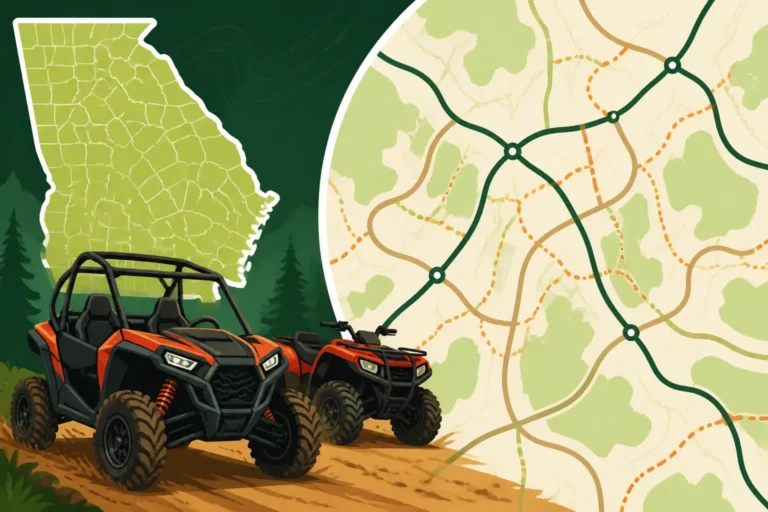
Beyond blanket ordinances, counties also have the power to implement more targeted road closures or to designate specific roads for particular uses. This means a county might not issue a county-wide ban, but could identify certain roads or road segments that are deemed too dangerous, too narrow, or too heavily trafficked for safe MPOHV operation. These might be roads leading to schools, through dense residential areas, or connecting to state highways where MPOHVs are already prohibited. You'll often see signage indicating such restrictions, and [Georgia Sheriff Enforcement on County Roads] will be vigilant in upholding these local rules.
These designations can also take the form of creating specific "MPOHV corridors" or recreational access points, while simultaneously restricting other areas. For example, a county might recognize that UTVs are vital for reaching hunting land or timber properties on the outskirts of the county, and keep those roads open, while closing more urbanized county roads. The beauty, and sometimes the challenge, of Georgia's county-based system is this localized decision-making. If you're planning a ride or rely on your MPOHV for specific tasks, always confirm the current status of the roads you intend to use. Remember, what looks like a harmless dirt road might have a specific county prohibition.
Distinguishing Between Closure and Strict Regulation
It’s important to understand that a "closure" doesn't always mean a complete ban. Often, what feels like a closure is actually a set of very strict regulations. For instance, a county might technically allow MPOHVs, but impose requirements that make casual use impractical or expensive for many riders. This could include mandatory inspections for specific safety features, or even a local permit fee on top of state registration. While not an outright closure, these stringent rules can certainly feel like one to the average rider.
For example, a county might require a full windshield, wipers, or even specific DOT-approved tires for any MPOHV using its roads. While these aren't state-mandated for MPOHV registration, a local ordinance could impose them for local road use. This is where companies like SuperATV come into play for many riders. If your county requires additional safety enhancements, you might find yourself looking at aftermarket windshields, mirrors, turn signal kits, or even specific lighting upgrades to comply. These regulations are designed to enhance safety, but they can also serve as a de facto barrier to entry for some riders, effectively limiting who can legally and practically use the county's roads. It highlights the importance of not just meeting state registration criteria, but also understanding any additional hoops your specific county might require you to jump through.
Your Role as a Rider: Navigating County Rules and Advocating for Access
Understanding that counties have the power to regulate MPOHV access means that as a rider, you have a responsibility to be informed and proactive. It’s not enough to simply register your machine with the state; you need to understand the local landscape of rules and regulations. This proactive approach can save you from potential fines, citations, or even having your machine impounded for illegal operation on restricted roads.
Researching Your County's Specific Ordinances
The absolute first step for any MPOHV owner in Georgia is to thoroughly research the specific ordinances of their county of residence and any other counties they plan to ride in. This isn't always as straightforward as it sounds, as county websites can vary in how easily accessible their legal documents are. Start by visiting your county's official government website. Look for sections related to "Ordinances," "Codes," or "County Clerk" documents. Search specifically for terms like "MPOHV," "Off-Highway Vehicle," "UTV," or "Side-by-Side." If you can't find clear information online, don't hesitate to call the County Clerk's office or the County Commissioners' office directly. They can often point you to the relevant sections of the county code or provide copies of applicable resolutions.
It's also a good idea to chat with local riding groups or other UTV owners in your area. They often have firsthand knowledge of specific local rules and enforcement patterns. Understanding [Georgia UTV Road Rules by County] is critical, as ignorance of the law is never an excuse. This research should ideally be done before you even consider taking your registered MPOHV onto a public road, and should be an ongoing effort as county rules can change over time. Being well-informed is your best defense against unintended violations.
The Importance of Safe and Responsible Riding
Regardless of how lenient or strict your county's rules are, operating your MPOHV safely and responsibly is paramount. Every instance of reckless driving, excessive noise, or disregard for property boundaries fuels negative perceptions and provides ammunition for those who want to see MPOHVs banned from public roads entirely. When you operate your UTV on a county road, you are sharing that space with cars, trucks, bicycles, pedestrians, and even farm equipment. This requires a heightened sense of awareness and adherence to all traffic laws, including posted speed limits and yielding requirements. Don't forget the requirements for [Georgia Driver's License Rules for MPOHV Operators] and [Georgia UTV Insurance Minimums] – these aren't just legal necessities, they're part of responsible operation.
Riding respectfully means keeping dust down on unpaved roads, avoiding excessive speeds, and being mindful of noise levels, especially in residential areas. It means being a good ambassador for the UTV community. Positive interactions with other road users, and a demonstrated commitment to safety, can go a long way in preventing calls for further restrictions. Conversely, a few bad apples can quickly lead to an entire county closing its roads, punishing all riders for the actions of a few.
Equipping Your UTV for Local Road Conditions and Compliance
Even if your county has minimal restrictions beyond state law, ensuring your UTV is properly equipped for road use is just good practice. State law requires basics like headlights, brake lights, seat belts, and mirrors, but local conditions or common sense might call for more. For instance, enhanced visibility is always a plus. Consider adding brighter LED lighting, reflective tape, or a brightly colored safety flag, especially if you're riding on roads with limited visibility or during dawn/dusk hours.
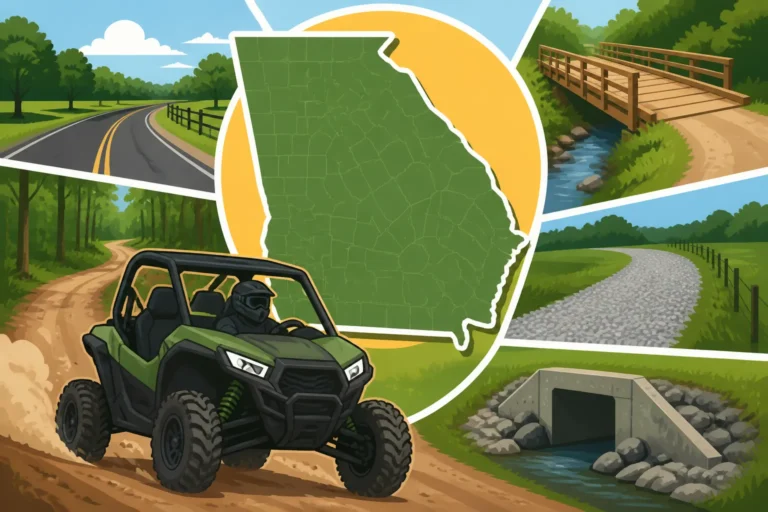
If you encounter a county with more stringent local ordinances, you might find yourself needing to upgrade certain components to achieve compliance. This is where companies like SuperATV become incredibly valuable. They offer a huge selection of aftermarket parts designed to enhance both the safety and utility of your machine. Whether it's a full DOT-approved glass windshield to meet specific county requirements, a robust turn signal kit for clear communication with other drivers, or upgraded rearview mirrors for better situational awareness, SuperATV provides options that can help you adapt your UTV to local road conditions and regulations. You might also consider SuperATV lift kits if you're navigating rough county roads that demand more ground clearance, or heavier-duty axles for the added stress of varied terrain. Making these thoughtful enhancements demonstrates responsibility and can make your riding experience safer and more enjoyable, regardless of the specific local rules you encounter.
| Aspect of UTV Road Use | Georgia State Law (General Provision) | Potential County Action (Local Ordinance) |
|---|---|---|
| Road Access | County roads generally allowed (if MPOHV registered) | Can designate specific roads as off-limits, restrict hours, or impose additional safety requirements. |
| Registration | [Georgia MPOHV Registration Is Voluntary] if state requirements met | Cannot override state registration process, but can enforce penalties for non-compliance on their roads. |
| Safety Gear | Minimum requirements (headlights, brake lights, mirrors, seat belts) | Can require additional safety equipment (e.g., specific reflectors, higher visibility flags) for their roads. |
| Operator Age/License | [Georgia Driver's License Rules for MPOHV Operators] apply | Cannot lower age or license requirements, but might add local educational requirements if they choose to open more access. |
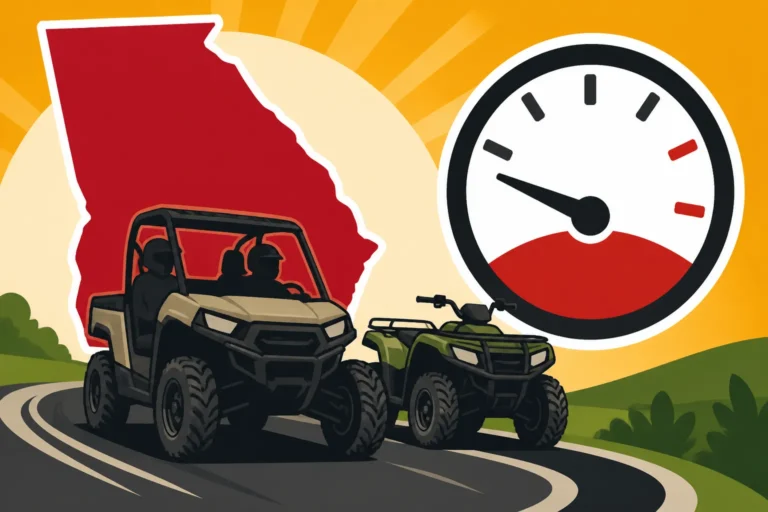
| Speed Limits | Must meet 25-65 mph criteria | Can impose lower speed limits on specific county roads, or prohibit MPOHVs on roads with higher existing limits. |
Disclaimer
This article is for general informational purposes only and does not constitute professional advice. Laws, prices and regulations vary by location and change over time. Consult a qualified professional for guidance on your specific situation.