Interstates and Why They Are Never an Option
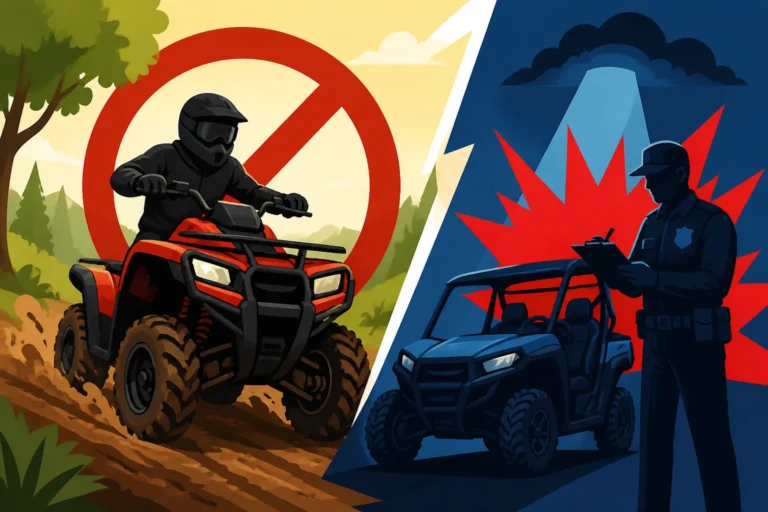
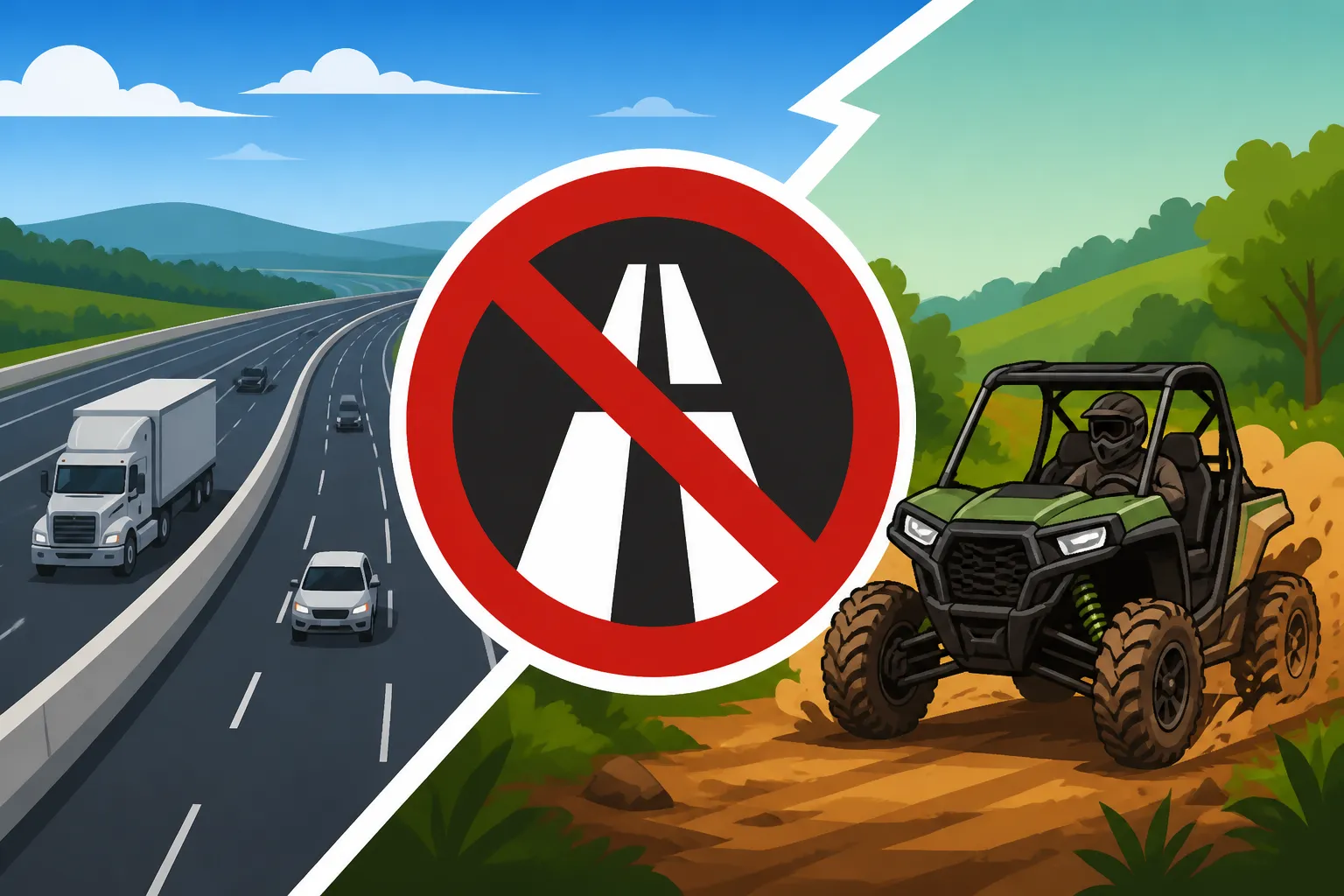
It's a familiar scenario for many Georgia ATV and UTV owners: you're out enjoying your machine, perhaps running an errand or heading to a nearby trail, and you glance at that big, open interstate. A thought crosses your mind – "Wouldn't it be great if I could just hop on that for a few exits?" The reality, however, is a firm and often frustrating "no." This comprehensive guide will break down exactly why interstates are unequivocally off-limits for your off-highway vehicles in Georgia, shedding light on the legal, safety, and practical reasons behind these crucial restrictions.
The Unspoken Rules of the Interstate System
For many of us who love the freedom of an ATV or side-by-side, the idea of extended road travel can be tempting. You see cars, trucks, and motorcycles zipping along, and your UTV, with its comfortable seats and sometimes even a roof, might feel capable of keeping up. But the interstate system operates under a very specific set of rules and design principles that simply don't accommodate the fundamental nature of off-highway vehicles, even those eligible for limited county road use. It's not just a matter of local preference; it's deeply ingrained in how our national road infrastructure is designed and regulated.
Defining What Belongs on an Interstate
Interstates are designed for high-speed, continuous flow traffic, typically with minimum speed limits. The vehicles allowed on them are subject to stringent federal motor vehicle safety standards (FMVSS) that govern everything from crashworthiness to lighting, braking, and emissions. These standards are in place to ensure a minimum level of safety and compatibility among vehicles traveling at high speeds. Your ATV or UTV, by its very design and classification, simply doesn't meet these requirements.
Think about the difference in construction between a car and a side-by-side. A car has crumple zones, airbags, reinforced cabin structures, and extensive lighting systems designed for high-speed impacts and visibility in all conditions. An ATV or UTV is built for different challenges – navigating rough terrain, absorbing shocks, and providing traction in loose conditions. Its frame, suspension, and overall protective features are optimized for off-road environments, not for surviving a collision with an 18-wheeler at 70 mph. This fundamental difference is a primary reason [Why Georgia Does Not Title an ATV] and why their road access is so restricted.
The Clear Legal Line in Georgia
Georgia law is quite specific about where off-highway vehicles can and cannot operate, even for those machines that qualify for the MPOHV (Multipurpose Off-Highway Vehicle) registration. While you might be able to register a qualifying side-by-side to use certain county roads, this permission explicitly does not extend to state highways, and certainly not to interstates. The language in the law draws a very clear line, and ignorance of that line is no excuse.
It's tempting to think that if your UTV can hit 60 mph, it should be fine on the interstate. But speed is only one small piece of the puzzle. The law considers the entire vehicle's design, its safety features, and its intended purpose. Interstates are federal-aid highways designed for vehicles meeting passenger car or truck standards, not for machines primarily designed for off-pavement excursions. Understanding [What MPOHV Actually Stands For] helps clarify this distinction; it's about multi-purpose, not all-purpose.
Safety and Design Shortcomings at High Speed
The reasons behind the interstate prohibition are rooted in practical safety concerns that go far beyond just "can it go fast enough?" When you consider the physics of high-speed travel and the design of ATVs and UTVs, it becomes clear why mixing them with interstate traffic is a recipe for disaster.
Structural Integrity and Crash Protection
Imagine your typical side-by-side, perhaps a popular model like a Polaris Ranger or a Can-Am Defender. These machines are robust for trail riding, but their open cabins, lack of airbags, and less rigid frames offer minimal protection in a high-speed collision. On the interstate, traffic moves at speeds where even minor incidents can have catastrophic consequences. The rollover protection structure (ROPS) on a UTV is designed to protect occupants in a low-speed rollover on uneven terrain, not against the forces of a multi-vehicle pileup at 70 mph.
Furthermore, ATVs, by their very nature, are designed for straddle-seat operation, demanding active body movements from the rider for stability. This design makes them inherently unsuitable for stable, high-speed road use, especially in situations requiring sudden evasive maneuvers at interstate speeds. They simply don't handle like a car or motorcycle at those velocities, making them unpredictable and extremely dangerous in dense highway traffic. Even with aftermarket accessories that add a bit of protection, like those you might find from a company like SuperATV for off-road durability, they don't transform the core vehicle into an interstate-ready machine.
Visibility, Handling, and Stopping Distances
Visibility is another critical factor. While MPOHVs require headlights, taillights, and mirrors for county road access, these are often less robust than those on road-legal vehicles, particularly in adverse weather conditions or at night. Their smaller stature also makes them less visible to drivers of larger vehicles on the interstate, who may not be expecting such a machine in their lanes. Imagine a side-by-side trying to merge into fast-moving traffic, its relatively small brake lights barely registering amidst the stream of full-sized vehicles.
The handling characteristics of an ATV or UTV are also fundamentally different. Their suspension is often tuned for off-road articulation, which can lead to more body roll and less precise steering at highway speeds. More importantly, their braking systems are not designed for repeated high-speed stops or for rapidly shedding speed from 70 mph. The stopping distances would be significantly longer than a standard passenger vehicle, creating a severe hazard when traffic suddenly slows or stops on the interstate. Even with improvements like enhanced tires for road use, the underlying design limitations persist, making [Why a Four-Wheeler Cannot Be Registered in Georgia] for full road access clear.
Enforcement, Penalties, and What to Expect
Riding an ATV or UTV on a Georgia interstate isn't just a minor infraction; it's a serious violation that can carry significant penalties. Law enforcement officers are well aware of the restrictions on these vehicles, and they will not hesitate to enforce them.
What Law Enforcement Looks For
Georgia State Patrol troopers and local sheriff's deputies are trained to identify vehicles that don't belong on interstates. An ATV or UTV, even a registered MPOHV, stands out immediately. It's not just the presence of a tag that matters; it's the classification of the vehicle itself. They'll know that machines like a Yamaha Viking or a Honda Pioneer, while fantastic for off-road adventures, are not designed or permitted for interstate travel.
If a law enforcement officer spots your ATV or UTV on an interstate, their primary concern will be public safety. They'll pull you over, and the conversation will quickly turn to why you're operating an off-highway vehicle on a road where it's explicitly prohibited. They aren't looking to give warnings for this kind of violation; they're looking to prevent potential accidents and ensure the safety of everyone on the road. This isn't like a minor speeding ticket; it's about operating an illegal vehicle in a high-risk environment. [Georgia Sheriff Enforcement on County Roads] is one thing, but on an interstate, the stakes are much higher.
Penalties That Hit Hard
The penalties for operating an ATV or UTV on a Georgia interstate can be severe. You're looking at fines, potential impoundment of your vehicle, and points on your driver's license. The cost to get your machine out of impound alone can be substantial, often involving towing fees, storage fees, and administrative charges. This financial burden can quickly overshadow any momentary convenience you thought you were gaining by taking the interstate.
Beyond the immediate financial hit, there's the risk of criminal charges if the situation escalates or if you're deemed to be operating the vehicle recklessly. Remember, these vehicles are not built for interstate speeds and conditions, and operating one there puts not only yourself but also every other motorist at extreme risk. Law enforcement takes this very seriously. Understanding [Georgia Penalties for an Unregistered Road Machine] gives you an idea of the kind of fines involved for unregistered machines; operating a prohibited machine on an interstate will likely incur even more significant repercussions due to the heightened danger.
Legitimate Alternatives for Road Access
While interstates are a definite no-go, Georgia does offer avenues for limited road use for certain off-highway vehicles, and there are plenty of places where you can truly enjoy your machine safely and legally.
Designated County Roads and Permitted Crossings
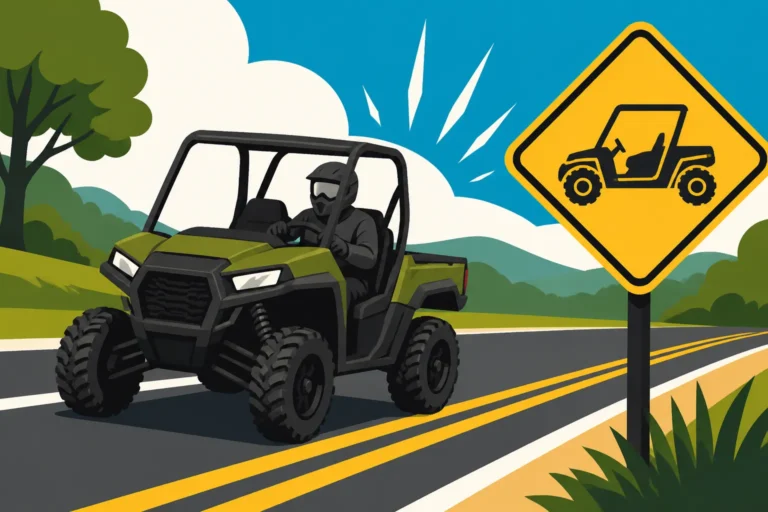
For qualifying MPOHVs, Georgia law does allow operation on certain county roads. This is a significant step for many owners, as it allows for practical travel between private properties, access to local trails, or quick trips to nearby stores. However, this privilege comes with strict conditions, including speed limits, specific equipment requirements (like lights, mirrors, and seatbelts), and of course, a valid MPOHV registration. It's crucial to know your local ordinances, as some counties may have additional restrictions or even prohibit MPOHV use entirely. You can learn more about these specifics in resources like [Georgia UTV Road Rules by County] and [Georgia ATV Road Law Explained].
Even with this county road access, there's still the hard line against state highways and interstates. You might be permitted to cross a state highway at a designated intersection, but you cannot travel along it for any distance. The idea is to allow practical local movement while keeping these vehicles off high-speed, high-volume roads. So, while you might connect two pieces of private land via a county road, or even cross a state route to get there, those multi-lane interstates will always remain out of bounds.
Embracing Off-Road Parks and Trails
The best and safest place to really let your ATV or UTV shine is on designated off-road trails and at private parks. Georgia is blessed with a fantastic array of options, from public lands within the national forests to privately owned, amenity-rich riding parks. These locations are designed specifically for the capabilities of your machine, offering everything from challenging technical trails to wide-open riding areas.
Parks like Iron Mountain Resort or Highland Park Off-Road Resort provide hundreds of miles of trails, catering to all skill levels. Here, you can push your machine's limits, navigate mud pits, climb rocky inclines, and enjoy the camaraderie of other riders, all in a controlled and legal environment. Many private parks even offer camping, cabins, and other amenities, making for a full weekend adventure. If you're looking to enhance your machine for these environments, companies like SuperATV offer a wide range of accessories, from lift kits and heavy-duty axles to winches and skid plates, that truly unlock your UTV's potential for serious off-roading, exactly what these machines are built for. Exploring [Georgia ATV Trails: Where You Can Legally Ride] will open up a world of possibilities far safer and more enjoyable than any interstate.
By understanding and respecting the limitations, we can all enjoy our ATVs and UTVs responsibly and safely, making the most of Georgia's diverse riding opportunities without risking severe penalties or, more importantly, serious accidents on prohibited roadways.
Table: Why ATVs/UTVs Don't Belong on Interstates vs. County Roads
To help clarify the distinctions, here's a comparison of why ATVs and UTVs are strictly prohibited on interstates, even when they might be allowed on certain county roads under Georgia's MPOHV registration.
| Feature / Aspect | Interstate Operation (Prohibited) | County Road Operation (Limited/Permitted for MPOHV) |
|---|---|---|
| Vehicle Design | Not built to federal motor vehicle safety standards (FMVSS). | Built for off-road, but can meet minimum MPOHV requirements for specific components. |
| Crashworthiness | Lacks crumple zones, airbags, reinforced cabin for high-speed impacts. | ROPS (Rollover Protection Structure) for low-speed rollovers; minimal protection for high-speed impacts. |
| Speed Limits | Interstates have high minimum & maximum speed limits. | County roads typically have lower speed limits, more compatible with MPOHV capabilities. |
| Visibility | Smaller stature, less robust lighting; easily overlooked by high-speed traffic. | Sufficient lighting/reflectors for lower speed, local traffic; better visibility on less congested roads. |
| Handling/Stability | Unpredictable at high speeds; prone to body roll; not designed for sudden evasive maneuvers at 70+ mph. | Adequate stability and handling for lower speed county road travel, but not for highway demands. |
| Braking | Not designed for rapid, repeated stops from interstate speeds; longer stopping distances. | Sufficient for lower speeds and less demanding stops on county roads. |
| Legal Status | Absolutely prohibited by Georgia state law. | Permitted with proper MPOHV registration, insurance, and adherence to local ordinances. |
| Enforcement | Immediate stop, severe penalties, potential impoundment. | Enforcement focuses on MPOHV compliance, speed, and local ordinances. |
| Risk Factor | Extremely high risk of severe accidents due to speed differential and lack of protection. | Lower risk due to reduced speeds and lighter traffic, but still requires cautious operation. |
Disclaimer
This article is for general informational purposes only and does not constitute professional advice. Laws, prices and regulations vary by location and change over time. Consult a qualified professional for guidance on your specific situation.