Trail Damage to a Georgia Registration Plate
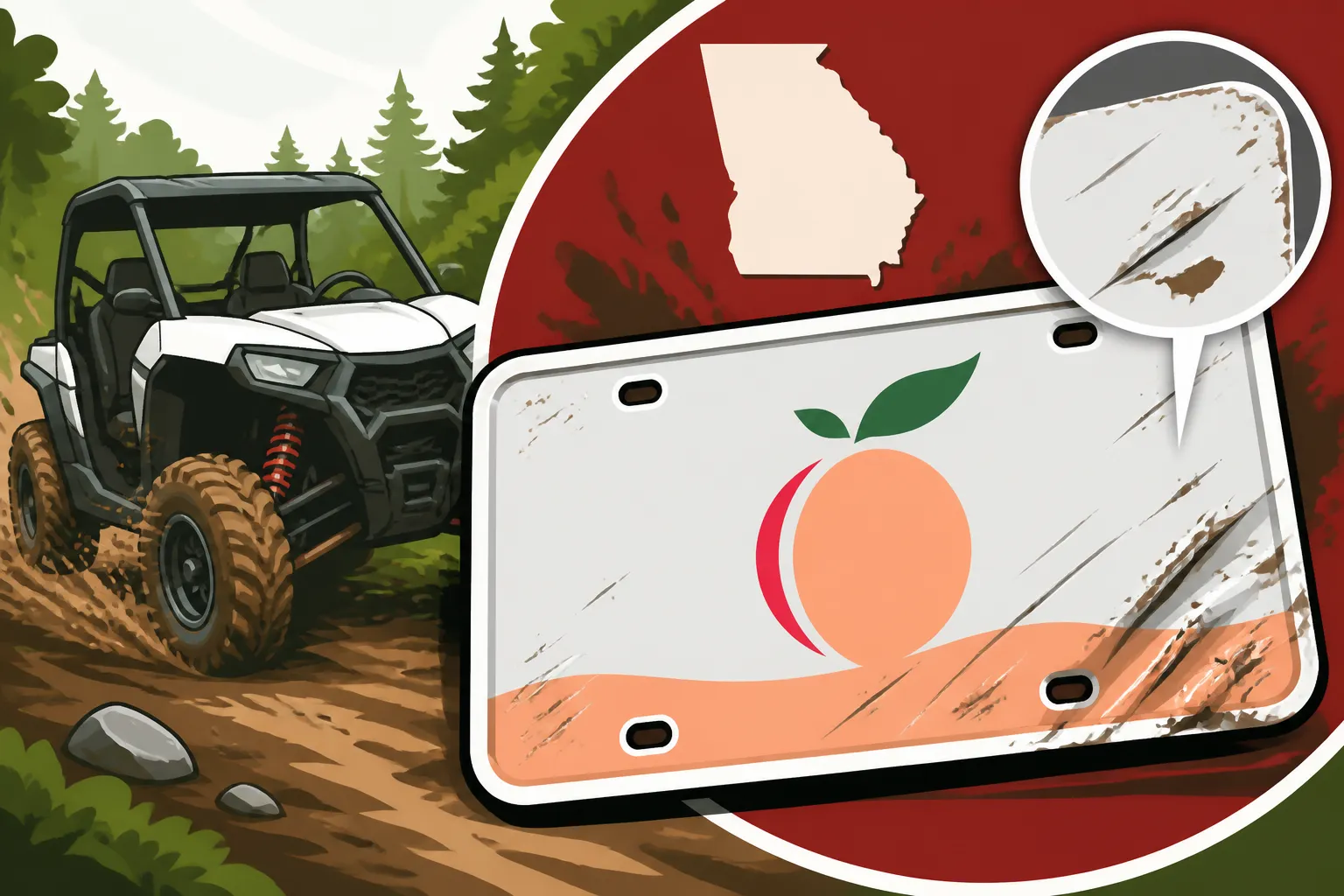
It's a familiar scenario for any Georgia off-roader who's taken their side-by-side or UTV out for some serious trail riding: you hit a tricky section, maybe slide through some mud, or navigate a tight squeeze between trees, and suddenly, you notice your shiny new Georgia MPOHV registration plate is bent, scraped, or even missing. This guide is here to walk you through exactly what to do when your plate gets dinged up on the trail, ensuring you stay compliant and get back to enjoying Georgia's beautiful landscapes without hassle.
The Reality of Off-Road Plate Damage in Georgia
Let's be honest, our machines are built for rugged environments. They're designed to tackle mud, rocks, fallen branches, and tight trails that would make an ordinary vehicle blush. But with all that adventure comes the inevitable risk of cosmetic, and sometimes structural, damage. Your Georgia registration plate, while made of durable material, isn't immune to the forces of nature or an accidental brush with a particularly stubborn sapling.
Think about it: where is your plate mounted? Often it's on the rear of your machine, sometimes low, sometimes high, but almost always in a spot vulnerable to impact. A stray rock kicked up by your own tires or a buddy's machine can ding it. A low-hanging branch on an overgrown trail can scratch or bend it. Backing up a little too close to that tree stump? Crunch. Even prolonged exposure to the elements, like heavy rain, mud, and sun, can start to fade the reflective coating or make the numbers less legible over time. It's not a question of if it will happen, but when it will happen to some degree. Many riders have experienced the frustration of realizing their once-pristine plate is now an unreadable mess, or worse, completely gone. This is especially true if you're frequently tackling the more challenging trails in places like Iron Mountain Resort or Beasley Knob.
Sometimes the damage is minor – a little bend or a few scratches that don't obscure the numbers. Other times, it's significant. The plate might be completely torn off its mount, folded in half, or so caked in dried Georgia red clay that you can't read a single character. Regardless of the severity, a damaged or unreadable plate presents a problem, and it's essential to address it promptly. Ignoring it could lead to more headaches down the line than the simple act of replacing it. Remember, these plates are a relatively new requirement, with [Georgia MPOHV Registration Started December 2023], and understanding how to maintain compliance is key.
Why a Clean Plate Matters: Legalities and Identification
A damaged or unreadable registration plate on your Georgia MPOHV isn't just an eyesore; it's a legal issue that can draw unwanted attention from law enforcement. When you take the step to register your side-by-side or UTV, it's for a very specific purpose: to gain legal access to certain county roads in Georgia. This access comes with responsibilities, and one of the most fundamental is ensuring your machine can be properly identified.
Imagine you're out enjoying a ride on a designated county road, perhaps heading to a favorite fishing spot or connecting two segments of private land. A Georgia Sheriff's deputy pulls up behind you. One of the first things they'll look for is that official MPOHV plate. If it's bent, muddy, or otherwise unreadable, it immediately raises a red flag. The deputy needs to verify that your machine is properly registered and that you're in compliance with [Georgia MPOHV Road Rules: County Roads Only]. An unreadable plate makes this verification process difficult, if not impossible, at a glance. It might lead to them pulling you over, asking for additional paperwork, and potentially issuing a warning or even a citation if they deem the plate's condition to be a deliberate attempt to obscure identification. This is why keeping your plate in good, visible condition is crucial for smooth interactions with [Georgia Law Enforcement Inspection for a Branded Plate].
Beyond law enforcement, your plate serves as a primary identifier in other scenarios. If your machine is ever stolen, having a clearly visible and documented plate number is vital for reporting it to the authorities and increasing the chances of recovery. Similarly, in the unfortunate event of an accident on a county road, an easily identifiable plate helps with insurance claims and official incident reports. It's a key piece of information that links your machine to its legal owner and registration status. While [Georgia MPOHV Registration Is Voluntary], choosing to register means you're accepting the responsibilities that come with it, including maintaining the plate's integrity. Don't underestimate the power of a clear, legible plate for your own peace of mind and protection.
Navigating the Replacement Process for Your Georgia MPOHV Plate
So, you've assessed the damage, and your plate needs replacing. Don't fret; the process for getting a new registration plate for your Georgia MPOHV isn't overly complicated, but it does require a few specific steps. The good news is that Georgia's system is designed to handle these common issues that off-road vehicles face.
First things first, you'll need to head to your local [Georgia County Tag Office Steps for an MPOHV]. This is the same place where you initially registered your machine. It’s always a good idea to call ahead or check their website to confirm their operating hours and any specific requirements they might have for plate replacements. This can save you a wasted trip, especially if you live in a more rural area.
When you go, you'll generally need to bring a few key items:
- Proof of Identity: Your Georgia driver's license or state ID is essential.
- Current MPOHV Registration Certificate: Even if your plate is damaged, you should still have the physical registration certificate that was issued to you. This proves that the plate was legitimately issued to your machine.
- The Damaged Plate (if applicable): If the plate is still physically attached to your machine, or you've removed it, bring it with you. The tag office will likely want to see it or take it as part of the replacement process. If it's completely lost or stolen, you'll need to state that, and they may require an additional form or affidavit.
- Payment for Replacement Fee: There will be a fee associated with replacing a lost or damaged plate. This fee is separate from your annual [Georgia MPOHV Renewal Each Year] fee. While I can't provide exact figures, expect a modest charge.
What if the plate is lost or stolen?
If your plate is completely gone, perhaps ripped off by a particularly aggressive tree branch or, in the worst-case scenario, stolen, you might need to file a police report. Some county tag offices require a police report for a lost or stolen plate before they will issue a replacement, while others might simply require you to sign an affidavit swearing that the plate is lost or stolen. It's best to confirm this with your local tag office when you call. Having a document prepared, such as a sworn statement of facts, could also be helpful. Services like LawDepot offer templates for various legal documents, which could be useful if your county tag office asks for a formal affidavit of loss or a statement concerning the circumstances of the plate's disappearance.
Once at the tag office, you'll likely fill out a specific form for plate replacement. The clerk will verify your information, process the fee, and issue you a new plate and potentially a new registration decal. It's usually a fairly quick process, assuming you have all the necessary documentation. You'll then be able to affix your new plate, ensuring it's securely mounted to avoid future issues. Consider using robust hardware or even a specific plate frame designed for off-road use to give it a little extra protection. You might also want to look into strategies for [Georgia Registration Decal Replacement] if that was damaged or lost along with the plate.
Securing Your New Plate and Preventing Future Damage
Getting a replacement plate is a relief, but it's also an opportunity to think about how you can prevent this from happening again. While some damage is unavoidable when you're out on challenging Georgia trails, there are definitely steps you can take to protect your investment.
First, consider the mounting location. Is your plate in a spot that's excessively exposed? While regulations dictate where the plate must be visible, there might be some flexibility within those guidelines. Could you mount it slightly higher, or perhaps recess it slightly if your machine's design allows? Sometimes, a simple relocation of a few inches can make a world of difference.
Next, think about the hardware. The thin screws that come with many plates might not be enough for the vibrations and impacts of off-road riding. Upgrading to sturdier bolts, perhaps with lock washers or nylon locking nuts, can help keep the plate firmly attached. You could also use a specialized license plate bracket designed for off-road vehicles. These are often made from thicker gauge steel or aluminum and can provide a bit more rigidity and protection than just mounting the plate directly to plastic. Some even incorporate a small lip or cage to help deflect impacts.
Finally, a bit of preventative maintenance goes a long way. Before and after each ride, especially through mud or dense brush, take a moment to visually inspect your plate. If it's starting to bend, you might be able to gently straighten it out before it becomes a major issue. If it's caked in mud, give it a good rinse so it remains legible. This simple routine can save you the hassle and cost of repeated replacements. It's about being proactive rather than reactive, much like you would check your tires or fluids before a big ride. Being prepared with all your [Georgia Registration Paperwork Checklist] documents on hand can also speed up any roadside checks.
What Happens If You Don't Replace Your Damaged Plate?
Ignoring a damaged or unreadable registration plate on your Georgia MPOHV might seem like a small thing, but it can lead to bigger problems than you anticipate. When you've gone through the trouble of registering your machine to legally operate it on county roads, failing to maintain the plate's legibility undermines the entire purpose of that registration.
The most immediate consequence could be a traffic stop by law enforcement. As we discussed earlier, a deputy needs to quickly verify your machine's legal status. If your plate is unreadable, it's a direct violation of the intent behind MPOHV registration. This could result in a citation for an obscured or improper plate, which carries a fine. While it might not be as severe as penalties for an completely [Georgia Penalties for an Unregistered Road Machine], it's still an unnecessary expense and a hassle you want to avoid. Being pulled over, even for a minor infraction, can also lead to more in-depth checks, such as verification of your driver's license and [Georgia Liability Insurance Tied to Registration].
Beyond legal issues, an unreadable plate can cause headaches in other situations. If you're involved in any kind of incident, even a minor one like bumping into a fence or another vehicle on private property while transiting via a county road, an unidentifiable machine can complicate things. Witnesses or other parties might not be able to properly identify your vehicle, leading to difficulties in resolving the situation or exchanging information. This is particularly true if you ever need to use official documentation like an affidavit of ownership. Organizations like LawDepot provide standardized legal forms that can simplify these exchanges, but they rely on accurate machine identification.
Consider also the perception of other riders and landowners. An MPOHV with a completely mangled or missing plate might be seen as unregistered or operated by someone trying to skirt the rules. While it might just be trail damage, it can create a negative impression, especially if you're riding in areas where landowners are already sensitive to off-road vehicle use. Keeping your plate in good order contributes to a positive image for all responsible MPOHV riders in Georgia. Ultimately, the small effort and cost to replace a damaged plate far outweigh the potential fines, legal troubles, and general inconveniences that can arise from neglecting it. Be sure to understand [What MPOHV Actually Stands For] and the responsibilities that come with it.
| Plate Condition | Immediate Action Recommended | Potential Consequences of Neglect |
|---|---|---|
| Slightly Bent/Scratched | Gently attempt to straighten, clean mud. | Legibility may worsen, minor fine risk. |
| Significantly Bent/Torn | Replace immediately at tag office. | High risk of citation, difficult ID. |
| Unreadable (mud/fade) | Clean thoroughly, replace if faded. | Risk of citation, potential impoundment. |
| Completely Lost/Stolen | File police report (if required), replace immediately. | Severe fines, no legal road use, difficult recovery. |
| Damaged Decal Only | Obtain [Georgia Registration Decal Replacement]. | Citation for expired or missing decal. |
Disclaimer
This article is for general informational purposes only and does not constitute professional advice. Laws, prices and regulations vary by location and change over time. Consult a qualified professional for guidance on your specific situation.