What Registration Buys You on a County Road
It's incredibly frustrating when you've invested in a side-by-side or UTV, only to feel limited to private land because the rules for road use seem so murky. You might have heard about Georgia's MPOHV registration, but what does that little plate actually buy you when it comes to hitting the pavement? This guide is here to cut through the confusion and clearly lay out the specific privileges and responsibilities that come with registering your machine for county road access in Georgia.
The Core Benefit: Legal Access to Georgia County Roads
For years, owners of off-highway vehicles in Georgia faced a challenging dilemma: their machines were perfect for land management, hunting, or just enjoying the outdoors, but getting them from one parcel to another often meant trailering or risking illegal road use. The introduction of the MPOHV (Multi-Purpose Off-Highway Vehicle) registration system changed that, creating a defined, albeit limited, pathway for legal road access.
What MPOHV Registration Truly Means for Road Use
Simply put, registering your eligible side-by-side or UTV as an MPOHV in Georgia grants you the legal right to operate it on designated county roads. This isn't a small perk; it's a game-changer for many owners. Before MPOHV registration, using an ATV or UTV on any public road, even a dirt county road, was largely prohibited and could lead to fines, impoundment, or worse. The MPOHV plate signals to law enforcement and other drivers that your machine meets specific criteria and has been authorized for this limited public use.
Imagine being able to ride your [Georgia Registration for a Polaris Ranger] from your home down a dirt road to your hunting lease without loading it onto a trailer. Or perhaps you use your [A John Deere Gator on Georgia's Eligibility List] for farm work, and the registration allows you to move between fields separated by a county road, making your operations much more efficient. This registration provides peace of mind, knowing that you're operating within the bounds of the law, rather than constantly looking over your shoulder. It transforms your machine from a strictly off-road tool into one with expanded utility on Georgia's vast network of county roads.
Differentiating from "Street Legal"
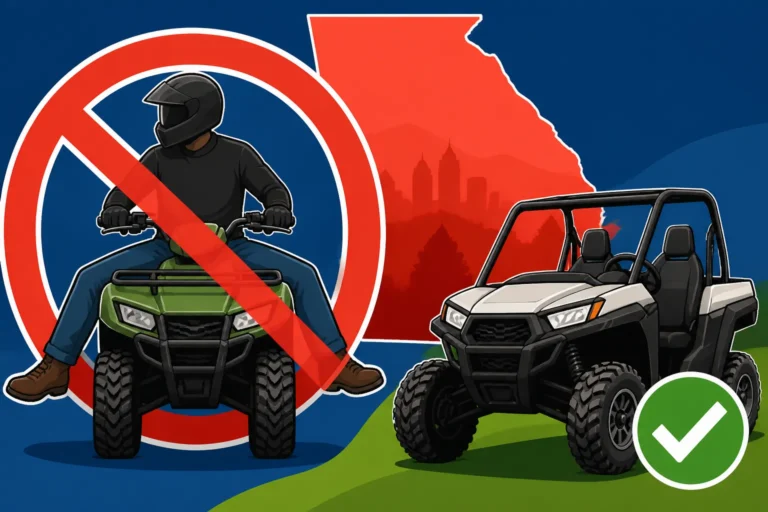
It’s crucial to understand that MPOHV registration does not make your side-by-side or UTV "street legal" in the same way a car or motorcycle is. This is a common misunderstanding that can lead to significant problems. A truly "street legal" vehicle can typically travel on any public road, including state highways, interstates, and municipal streets, provided it meets all federal and state safety and emissions standards. [Are Side-by-Sides Street Legal in Georgia?] addresses this directly.
MPOHV registration creates a very specific, limited exemption for certain types of off-highway vehicles. It's designed to provide utility and access on a particular class of roads – county roads – and nothing more. You won't be able to hop on I-75 or even cruise through the main street of your nearest town just because you have an MPOHV plate. The rules are much stricter, and failing to understand this distinction can lead to tickets and other penalties. Think of it as a special permit for a specific task, not a blanket authorization for all public roads. This nuanced approach allows Georgia to balance the needs of off-highway vehicle owners with public safety and road integrity.
Understanding the "Where" and "How": Rules and Restrictions
With the privilege of county road access comes a very clear set of rules and restrictions. The Georgia MPOHV system isn't a free-for-all; it's a carefully crafted set of guidelines designed to ensure safety and maintain order on public thoroughfares. Understanding these limitations is just as important as knowing the benefits of registration.
County Roads Only: A Crucial Limitation
The most fundamental rule of Georgia MPOHV registration is that your registered machine is permitted only on "county roads." This is not a suggestion; it's a legal boundary. County roads are generally maintained by the county government and are typically unpaved or lightly paved rural routes. They are distinct from state highways, U.S. routes, and interstate highways, which are managed by the Georgia Department of Transportation. You'll often see signs indicating "County Road XX" or simply the condition of the road itself might give you a clue.
This limitation means you cannot take your registered side-by-side on a busy state route like GA-400 or a U.S. highway like US-129. These roads are designed for higher speeds and heavier traffic, and MPOHVs simply don't belong there. Ignoring this rule is a surefire way to encounter law enforcement and face citations. It's vital for riders to understand their local [Georgia County Road Systems and Where They Run] and avoid venturing onto prohibited roadways. When in doubt, it's always best to err on the side of caution or consult local county maps which often delineate their road systems.
Speed Limits, Equipment, and Operator Requirements
Beyond the "where," there are also strict rules about the "how." Simply having a plate isn't enough; your machine and its operator must meet several criteria to legally use county roads. For starters, your machine must conform to specific design parameters to qualify for MPOHV registration in the first place, such as width limits and minimum/maximum speed capabilities, as detailed in [Georgia's 25 to 65 mph Speed Requirement]. If your machine falls outside these bounds, it won't even get the registration.
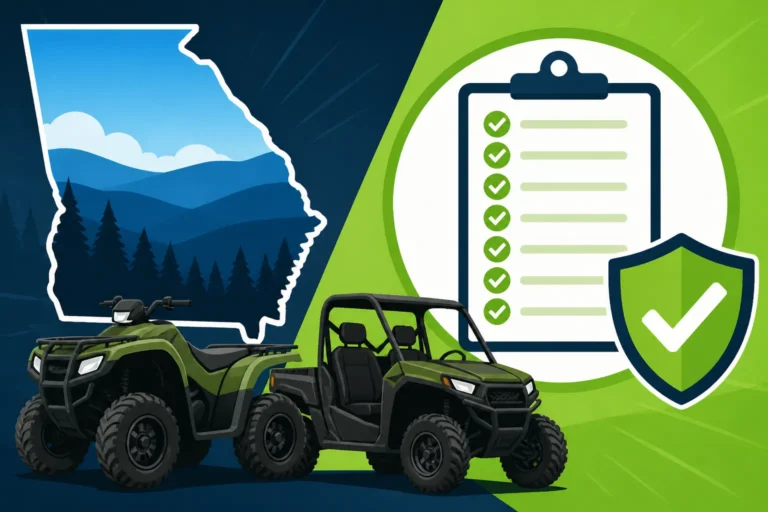
Once registered, the machine itself must be equipped with certain safety features. This includes working headlights, brake lights, and at least one rearview mirror. [Headlights, Brake Lights and Mirrors on the Checklist] is a good resource for verifying your setup. These items are not just for your safety, but for the safety of others sharing the road. Imagine trying to drive down a county road at dusk without proper lighting – it's incredibly dangerous. From an operator standpoint, you must possess a valid driver's license to operate a registered MPOHV on a county road. This means minors without a license cannot legally drive these machines on public roads, even with a plate. Understanding [Georgia Driver's License Rules for MPOHV Operators] is crucial for all potential riders. These combined requirements aim to ensure that only properly equipped machines and capable operators are granted the privilege of county road access.
Crossing State Highways and Interstates
While registered MPOHVs are strictly prohibited from traveling on state highways or interstates, Georgia law does allow for crossings. This is a critical distinction that provides a necessary level of practical utility. If your route on county roads is interrupted by a state highway, you can legally cross that highway at a designated intersection. You must do so safely and directly, not travel down the state highway for any distance.
This rule acknowledges the reality of Georgia's road network, where county roads often intersect or are bisected by busier state routes. However, it’s not an invitation to detour or travel parallel to a state highway. The intention is solely to allow for continuous travel on the permissible county road system. Crossing an interstate, however, is a different matter entirely. Interstates are high-speed, controlled-access roadways, and MPOHVs are never allowed to cross them. You’d need to find an underpass, an overpass, or an alternative route that doesn't involve traversing the interstate itself. This means that careful route planning is often necessary, especially when you're exploring new areas or traveling longer distances.
The Practicalities: Insurance, Enforcement, and Future Considerations
Having an MPOHV registration isn't just about the plate; it comes with practical responsibilities and a clear understanding of how law enforcement views these machines on public roads. It's also important to be aware that the landscape of MPOHV access is subject to future changes.
The Importance of Liability Insurance
One of the non-negotiable requirements for MPOHV registration in Georgia, and a critical component of responsible road use, is liability insurance. Just like with any other motor vehicle, if you're operating your side-by-side or UTV on a public county road, you are required to carry a minimum amount of liability coverage. This insurance protects you financially in case you are at fault in an accident that causes injury or property damage to another party. [Georgia Liability Insurance Tied to Registration] details these requirements.
Without proper insurance, not only are you in violation of the law, but you expose yourself to enormous personal financial risk. A simple fender-bender, let alone a more serious accident, could result in substantial medical bills or repair costs that you would have to pay out of pocket. Imagine a scenario where you accidentally swerve and damage a fence or a mailbox on the side of a county road; your liability insurance would cover the repair costs. Furthermore, law enforcement officers are within their rights to ask for proof of insurance if they pull you over, just as they would any other driver. Services like LawDepot can assist with various legal documents, but for insurance, you'll need a dedicated policy from an insurance provider. Don't skip this vital step; it's as essential as the registration itself.
Enforcement and Penalties
When you're operating a registered MPOHV on a county road, you are subject to Georgia traffic laws and enforcement. This means that a [Georgia Sheriff Enforcement on County Roads] deputy, a state trooper, or any other law enforcement officer can pull you over if they observe a violation, just as they would a car or truck. Common reasons for being pulled over could include speeding, reckless operation, driving under the influence, or operating on a prohibited roadway (like a state highway).
The penalties for violating MPOHV laws can range from fines and court costs for minor infractions to more severe consequences like impoundment of your machine, suspension of your driving privileges, or even arrest for serious offenses such as DUI. If you're caught operating an unregistered machine on a public road, or a registered MPOHV on a prohibited road, the penalties can be significant. This is not just a slap on the wrist; these are real legal consequences that can impact your finances, your driving record, and your ability to ride in the future. Always carry your driver's license, proof of insurance, and your MPOHV registration certificate when riding on county roads.
Here's a quick comparison of what you get (and don't get) with MPOHV registration:
| Feature | Unregistered ATV/UTV Use | Registered MPOHV Use |
|---|---|---|
| Public Road Access | Strictly Private Land | County Roads ONLY |
| Crossing State Highways | Prohibited | Permitted at designated intersections (direct crossing) |
| Interstate Access | Prohibited | Prohibited (no travel, no crossing) |
| Municipal Streets | Prohibited | Generally Prohibited (check local ordinances) |
| Driver's License Required | No (on private land) | Yes (on county roads) |
| Liability Insurance | Not required (on private) | Yes, required |
| Equipment Requirements | Variable | Headlights, brake lights, rearview mirror, seatbelts |
| Law Enforcement Stop | Possible (trespass, etc.) | Standard traffic stops apply |
| Penalties for Misuse | Trespassing, reckless op. | Traffic fines, impoundment, DUI, etc. |
The Sunset Clause: A Look Ahead
It's vital for all Georgia MPOHV owners to be aware of a specific provision in the law: the "sunset clause." This clause means that the legal framework allowing MPOHVs on county roads is not permanent. As of the time of the law's creation, the authorization for MPOHVs to use county roads is set to expire on a specific date, which is [Georgia's July 2027 Sunset on Road Access]. This means that unless the Georgia General Assembly takes action to extend or modify the law, the privileges granted by MPOHV registration for county road use will cease to exist after that date.
This future expiration date is a significant factor for owners to consider. While it doesn't impact your current ability to ride on county roads with a valid registration, it underscores the temporary nature of this access. It’s important to stay informed about any legislative discussions or potential changes to the law as this date approaches. Organizations representing ATV and UTV enthusiasts often advocate for extensions or permanent solutions, and staying connected with these groups or monitoring official state government announcements is a good practice. In the meantime, enjoy the access while respecting the rules, and be prepared for potential changes in the future. Just as you might use a service like LawDepot for updated legal forms, you'll want to stay updated on the legal status of MPOHV road access itself.
Navigating Georgia's MPOHV Landscape
Understanding what registration buys you on a Georgia county road is about more than just a piece of paper; it's about responsible recreation and utility. The MPOHV system provides a clear, legal path for using your side-by-side or UTV beyond private property, opening up vast networks of rural county roads for legitimate travel. This expanded access is a significant advantage, particularly for those using their machines for work, hunting, or simply enjoying the outdoors.
However, this privilege is not without its responsibilities. Strict adherence to the rules regarding permissible roadways, required safety equipment, operator licensing, and mandatory insurance is paramount. Ignoring these regulations can lead to severe penalties and undermine the very purpose of the MPOHV program. Always remember that your MPOHV is not a "street legal" vehicle; it's a special class of machine with specific, limited road privileges.
By educating yourself on the nuances of [Georgia MPOHV Registration Explained], making sure your machine meets the [Georgia MPOHV Eligibility: The Eight-Point Test], and understanding the specific [Georgia MPOHV Road Rules: County Roads Only], you can confidently and legally enjoy the freedom that your registered side-by-side or UTV offers on Georgia's county roads. Always plan your routes, carry your necessary documents, and ride safely and responsibly.
Disclaimer
This article is for general informational purposes only and does not constitute professional advice. Laws, prices and regulations vary by location and change over time. Consult a qualified professional for guidance on your specific situation.